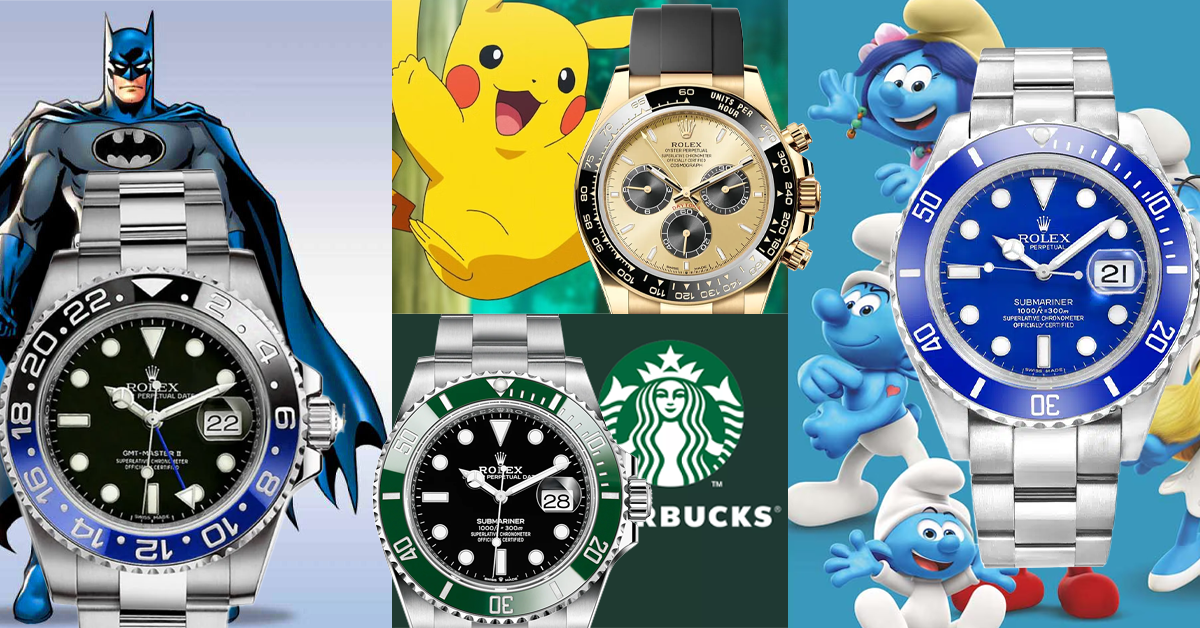
So you want to know Who’s better TAG Heuer vs Rolex? When it comes to TAG Heuer vs Rolex you are essentially deciding between luxury and luxury sport watches. Rolex is the #1 most valued watch brand in the world at 7.387 Billion CHF brand recognition. TAG Heuer is the 12th most recognized Swiss watch brand at 76 Million CHF brand worth. That drastic difference in brand status means there will be differences in price, prestige, and resale value. Brand value is one thing but there’s more that goes into it. We will be looking at movements, comparisons to famous line watches such as the TAG Heuer Aquaracer vs Rolex Submariner and much more. Let’s see which premium watch fits your budget and lifestyle.
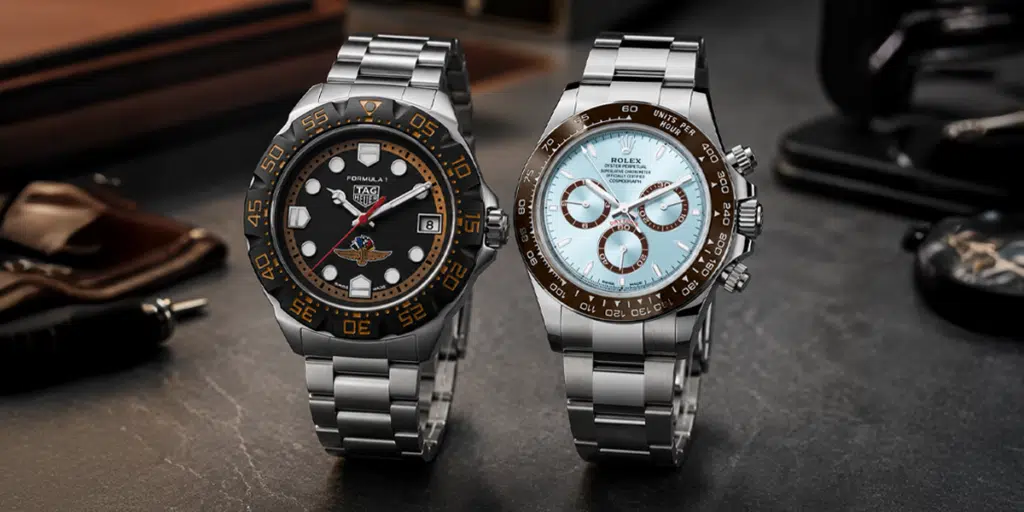
Table of Contents
Brand Heritage and History
TAG Heuer’s Origins and Development Since 1860
German-born Edouard Heuer founded a watchmaking workshop in Saint-Imier, Switzerland when he was 20 years old in 1860. Heuer originally produced pocket watches before his first significant innovation, an improved crown-operated keyless winding system was patented in 1869. Heuer’s patent on the oscillating pinion in 1887 was vastly more significant. This movement innovation enabled chronographs to start and stop instantly with the flick of a push-button. The oscillating pinion is still used as a foundational movement in nearly every modern mechanical chronograph.
Heuer began focusing on sports timing devices and motorsports timing. Heuer became the official timekeeper for three Olympic Games including Antwerp (1920), Paris (1924), and Amsterdam (1928). NASA astronaut John Glenn wore a Heuer stopwatch on his Mercury Atlas 6 mission in orbit around Earth in 1962. Jack Heuer, TAG Heuer’s fourth-generation timekeeper, introduced the Carrera in 1963 and the now-iconic square Monaco timepiece along with the first automatic chronograph movements two years later in 1965. Techniques d’Avant Garde purchased the Heuer company in 1985 and combined it with their TAG brand to form TAG Heuer. LVMH bought TAG Heuer in 1999.
Rolex’s Trip from 1905 to Today
Englishman Hans Wilsdorf founded his timepiece distribution company based in London in 1905 at age 24. Rolex would become the name he registered as a trademark two years later in 1908. In 1910, a Rolex wristwatch was the first timepiece to be awarded the Swiss Certificate of Chronometric Precision. Wilsdorf patented the Oyster case in 1926. Improvements to this design led to Rolex creating the first truly waterproof wristwatch. News of Mercedes Gleitze wearing an Oyster while completing a swim across the English Channel in 1927 provided worldwide publicity.
The Rolex Perpetual movement was released in 1931 and set the standards for automatic winding. Rolex earned brand recognition by being present at notable expedition accomplishments while TAG Heuer focused more on sport timing. Rolex watches were used on Sir Edmund Hillary’s team as they reached the summit of Mount Everest in 1953 and when filmmaker James Cameron reached the bottom of the Mariana Trench in 1960.
Most Important Changes That Shaped Both Brands
TAG Heuer released the Mikrograph chronograph in 1916 which offered manufacturers the first 1/100th of a second stopwatch accuracy. Heuer would become the first watchmaker to produce dashboard clocks and instruments for automobiles and aircraft. Rolex focused on improvements to the durability and reliability of cases and movements. Rolex developed their own 904L stainless steel called Oystersteel and created the first anti-magnetic hairspring called Parachrom.
How Each Brand Built Its Reputation
TAG Heuer made partnerships with motorsports companies and became the official timekeeper for Ferrari. TAG Heuer began placing their logo on Formula One race cars as early as 1969. Rolex focused on expedition watches and celebrity endorsements. Rolex associated their watches with historic human achievements rather than racing benchmarks.
Movement Technology and Accuracy
In-House vs. Outsourced Movements
Rolex produces every single movement component at their own facilities located in Geneva and Bienne, Switzerland. They produce their own alloys such as proprietary 904L stainless steel and 18k gold from their own foundry. Rolex controls the quality of every movement component because of vertical integration. TAG Heuer movements are predominantly sourced from other manufacturers such as Sellita and ETA. TAG Heuer does produce the Caliber 36 movement found in some of their chronographs. Caliber 36 is based on the Zenith El Primero movement and was previously used by Rolex in their Daytona watches for 12 years. TAG Heuer announced the release of their first in-house movement in late 2020 called Caliber Heuer 02. Caliber Heuer 02 features a power reserve of 80 hours and is COSC certified.
COSC Certification and Chronometer Standards
The Official Swiss Chronometer Testing Institute, better known by its French acronym COSC, only certifies timepieces that keep time to within -4/+6 seconds per day. Movements are tested for 15 days in 5 positions (up/down, left/right) and 3 temperatures. Less than 5% of Swiss made mechanical watches receive COSC certification. Rolex submits over one million movement chronographs per year for testing and certification. TAG Heuer’s current President stated in an interview that their watches meet the requirements of COSC testing but do not go through certification. He stated that the company does not want to add the cost of certification to the consumer.
Rolex Superlative Chronometer vs. TAG Heuer Precision
Rolex movements that pass COSC testing are put through further testing once they are assembled into finished watches at the Rolex factory. Rolex achieves accuracy of -2/+2 seconds per day with their in-house Superlative Chronometer testing. TAG Heuer watches that are COSC certified maintain accuracies of -3/+5 seconds per day. Rolex labels every dial with Superlative Chronometer. None of TAG Heuer’s dive watches are chronometer certified despite many Rolex Dive watches having this certification.
Quartz vs. Mechanical Options
TAG Heuer offers luxury quartz movements powered by standard batteries. Quartz movements will gain accuracy losses measured in seconds per month while mechanical movements will lose seconds per day. Rolex sold their Oysterquartz brand in the early 2000s and no longer offers quartz watches.
Popular Collections and Price Points
TAG Heuer Carrera, Monaco, and Aquaracer
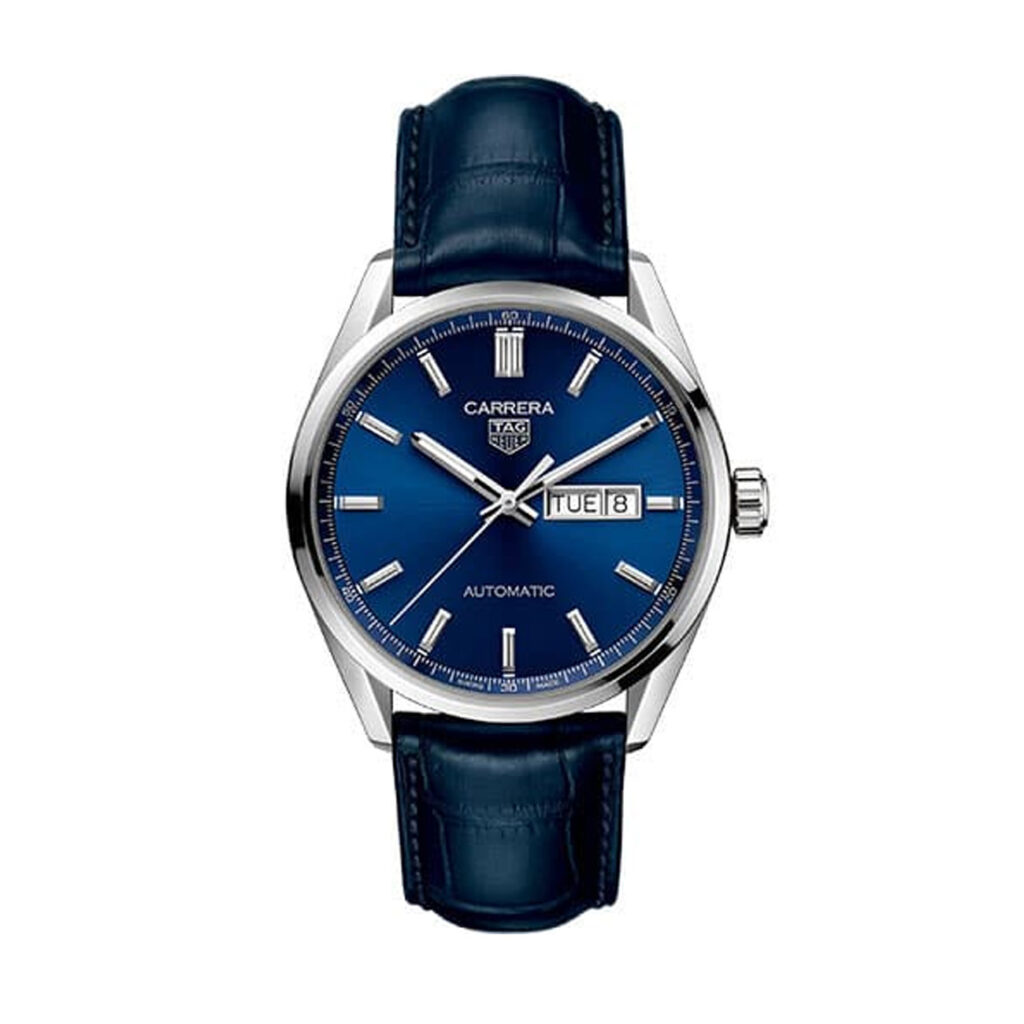
The Carrera chronograph draws inspiration from motorsport since 1963. Prices span USD 2,200 to USD 45,000 depending on complications and materials. Monaco’s distinctive square case ranges from USD 5,800 to USD 124,000. The Steve McQueen-worn Caliber 11 models average USD 5,000. The Aquaracer dive collection offers water resistance up to 500 meters with pricing between USD 1,600 and USD 15,000.
Rolex Submariner, Daytona, and GMT-Master II
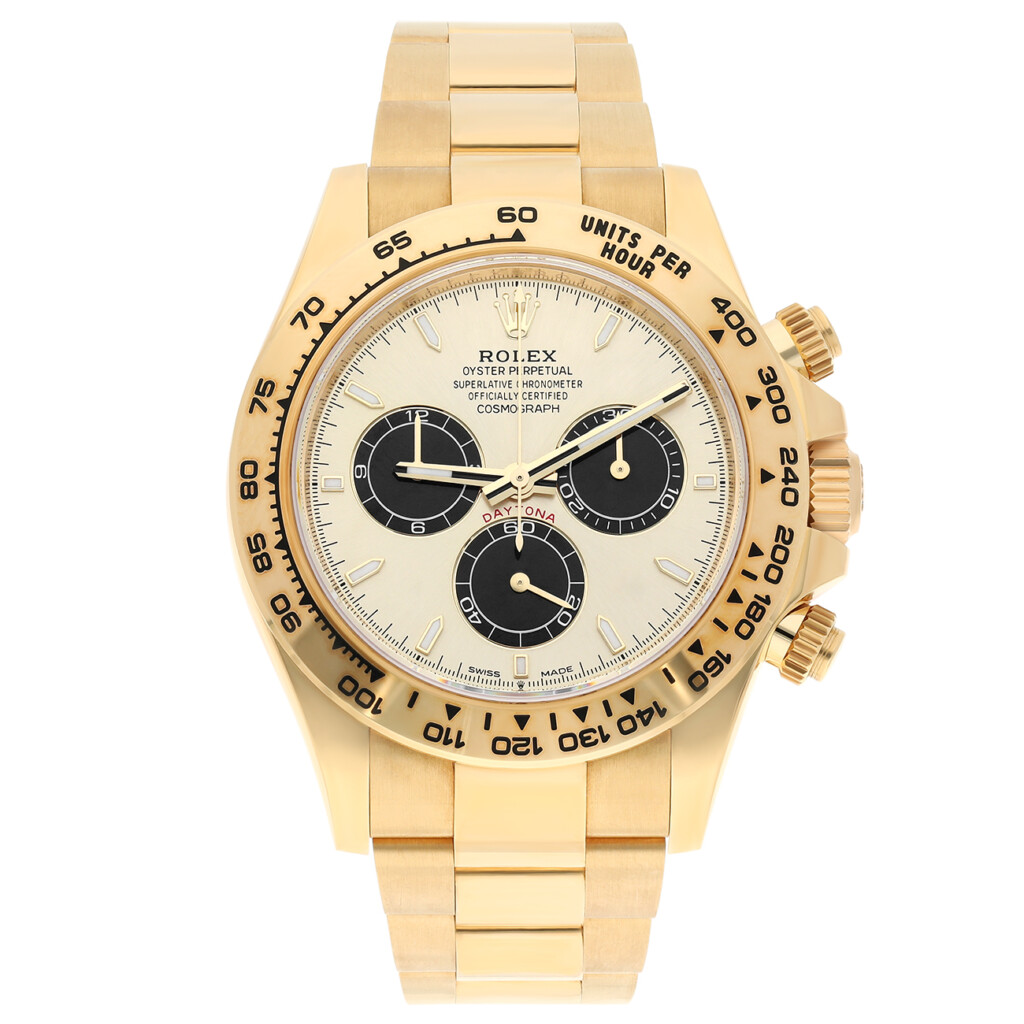
The Submariner starts at USD 9,100 for the no-date stainless steel model and USD 10,250 for the date version. Daytona chronographs begin at USD 15,100 for steel references, while GMT-Master II models range from USD 11,800 to USD 12,500 in stainless steel.
Entry-Level Pricing: TAG Heuer vs Rolex
TAG Heuer’s entry point sits around USD 1,500 to USD 3,000 for Formula 1 and Aquaracer models. Rolex’s most available option, the Oyster Perpetual 28mm, carries a USD 5,800 retail price.
Tag Heuer Aquaracer vs Rolex Submariner Comparison
The Aquaracer sells for around USD 2,000 with 500-meter water resistance. The Submariner costs around USD 8,000 with 300-meter depth rating. Rolex offers precious metal options while TAG Heuer focuses on stainless steel and rubber straps.
Mid-Range and High-End Collection Pricing
TAG Heuer’s mid-range Carrera and Monaco chronographs occupy the USD 3,000 to USD 6,000 bracket. Rolex’s mid-tier sports models, to name just one example the Explorer and GMT-Master II, range from USD 8,000 to USD 30,000.
Value, Resale, and Ownership Experience
Brand Recognition and Prestige
Rolex holds the #1 position among watch brands worldwide with an estimated brand value of 7.387 Billion CHF. TAG Heuer ranks 12th with 76 Million CHF. Rolex conveys achievement and high status. Sporting it makes a statement in professional settings without saying a word. TAG Heuer maintains strong recognition since 1860, yet doesn’t inspire the same consumer confidence as Swiss peers despite horological breakthroughs.
Resale Value: Which Holds Value Better?
Rolex dominates resale markets. Popular sports models sell above retail prices on secondary markets often. You’ll recover more of your investment selling a pre-owned Rolex than TAG Heuer. But specific TAG models like the Monaco and vintage Carrera from the 1960s-1970s demonstrate stronger value retention than standard TAG pieces. Condition and original documentation affect resale prices for both brands by a lot.
Warranty Coverage: 2 Years vs 5 Years
TAG Heuer provides a standard 2-year warranty, though registration extends coverage to 5 years. Rolex implemented a 5-year warranty in January 2015 and previously offered only 2 years.
Service Costs and Maintenance Requirements
Rolex servicing ranges from USD 800 to USD 2,800+ depending on model complexity. The brand recommends service every 10 years. TAG Heuer service costs approximately USD 500 and is needed every 4-5 years.
Which Watch Suits Your Lifestyle?
Choose Rolex for family heirlooms and superior resale value. TAG Heuer excels for motorsport chronographs and affordable high complications like the Carrera Heuer 02T tourbillon.
Comparison Table
TAG Heuer vs Rolex Comparison Table
|
Attribute |
TAG Heuer |
Rolex |
|
Brand Ranking |
12th most recognized Swiss watch brand |
#1 most recognized watch brand globally |
|
Brand Value |
76 Million CHF |
7.387 Billion CHF |
|
Founded |
1860 |
1905 |
|
Movement Production |
Outsources many movements from Sellita and ETA; introduced in-house Caliber Heuer 02 in 2020 |
100% in-house manufacturing (Geneva and Bienne facilities) |
|
COSC Certification |
Achieves COSC accuracy but skips certification to cut costs |
Over 1 million movements submitted annually for COSC testing |
|
Accuracy Standard |
Heuer 02: -3/+5 seconds per day |
Superlative Chronometer: -2/+2 seconds per day |
|
Quartz Options |
Yes, offers battery-powered quartz movements |
No, discontinued Oysterquartz in early 2000s |
|
Warranty Period |
2 years standard (5 years with registration) |
5 years (since January 2015) |
|
Service Costs |
Approximately USD 500 |
USD 800 to USD 2,800+ |
|
Service Frequency |
Every 4-5 years |
Every 10 years |
|
Entry-Level Pricing |
USD 1,500 – USD 3,000 (Formula 1 and Aquaracer) |
USD 5,800 (Oyster Perpetual 28mm) |
|
Popular Dive Watch |
Aquaracer: USD 1,600 – USD 15,000 (500m water resistance) |
Submariner: USD 9,100 – USD 10,250+ (300m water resistance) |
|
Popular Chronograph |
Carrera: USD 2,200 – USD 45,000 |
Daytona: USD 15,100+ |
|
Iconic Square Model |
Monaco: USD 5,800 – USD 124,000 |
N/A |
|
GMT Model |
Not mentioned |
GMT-Master II: USD 11,800 – USD 12,500 |
|
Mid-Range Pricing |
USD 3,000 – USD 6,000 |
USD 8,000 – USD 30,000 |
|
Resale Value |
Lower than Rolex; vintage Monaco and 1960s-70s Carrera hold value better |
Dominates resale market; popular sports models often sell above retail |
|
Brand Focus |
Motorsports and sports timing |
Expedition achievements and human accomplishment |
|
Best For |
Motorsport chronographs and affordable high complications |
Family heirlooms and superior resale value |
Enjoying our watch coverage? Get more of it in Google Search.