Deciding whether to purchase an Oystersteel or White Rolesor can be difficult when buying a Rolex .
Rolex makes their watches out of different metals to create different levels of luxury and function. Oystersteel is Rolex’s 904L family stainless steel alloy that is durable and scratch-resistant. White Rolesor features an Oystersteel case and bracelet with accents of 18-karat white gold. Rolex trademarked the name Rolesor in 1933 to signify a creation that incorporated two different materials.
Let’s explore the difference between these two finishes so you can pick the best option for your needs.
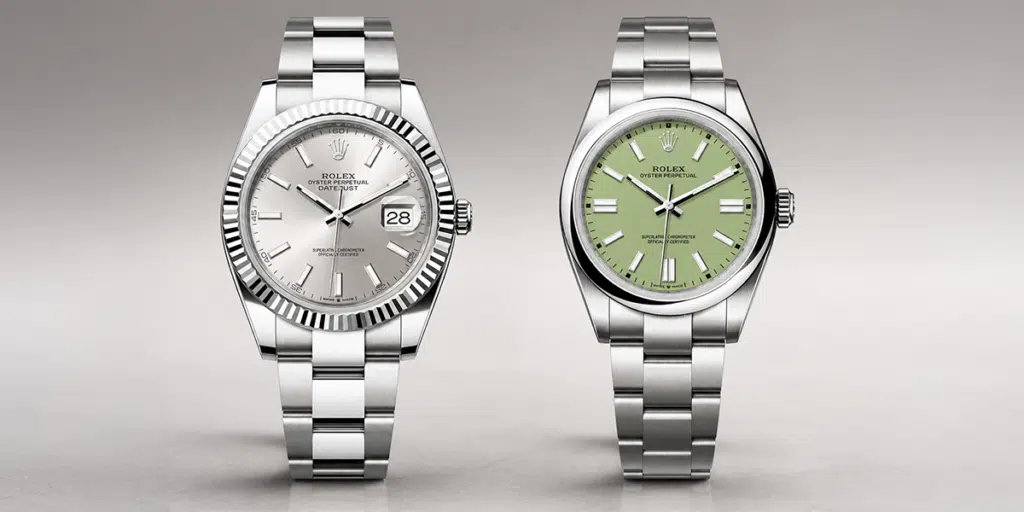
Table of Contents
What is Oystersteel?
Rolex produces Oystersteel from 904L steel, a high-grade alloy commonly found in aerospace and chemical industries where maximum corrosion resistance is required. Most watchmakers use 316L stainless steel, but 904L contains higher levels of chromium, nickel, and molybdenum with copper added to the composition. This specific blend gives Oystersteel performance characteristics comparable to precious metals.
Rolex began experimenting with 904L in the 1970s and 1980s after noticing corrosion in case threads and case backs of dive watches exposed to saltwater and sweat. The brand first adopted 904L for the Sea-Dweller in 1985 and then expanded its use. Rolex transitioned all stainless steel watches to this material in 2003. The term “Oystersteel” didn’t appear until 2018 at Baselworld.
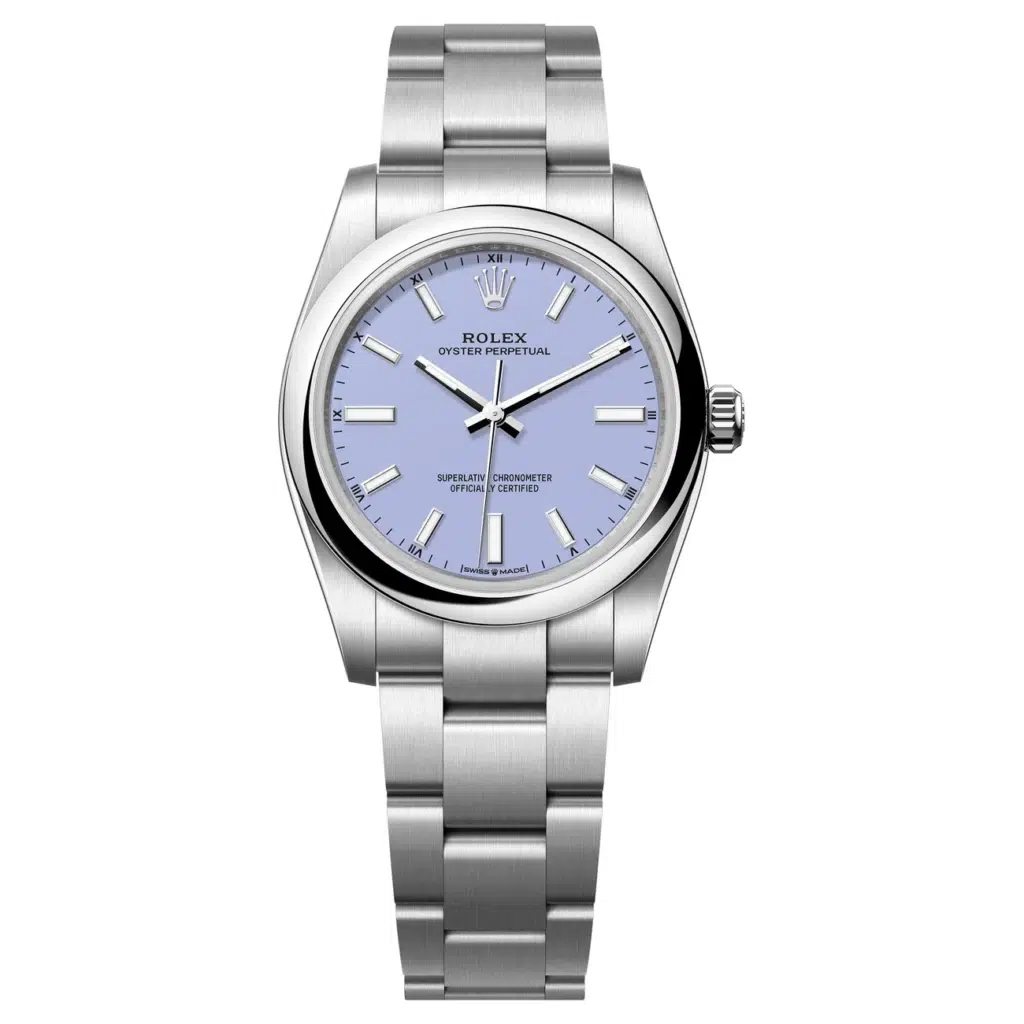
Manufacturing Oystersteel necessitates special tools since 904L is harder to work with than 316L. Rolex has their own foundry in Geneva where they cast and machine the alloy from solid blocks of metal. The finish is a brighter, whiter silver with greater reflectiveness. Watches made from Oystersteel keep their polish longer and are less likely to pit from chlorine exposure and daily abrasions thanks to the harder surface and alloy superiority.
What is White Rolesor?
White Rolesor is Rolex’s method of providing precious metal embellishments on stainless steel watches. The bezel is made of 18-karat white gold while the case, crown and bracelet are all Oystersteel. The hour markers and hands are also white gold. Yellow Rolesor and Everose Rolesor watches feature gold in the bezel and the center link of the bracelet.
That distinction is important to your wallet. White Rolesor watches are significantly cheaper than the yellow gold or rose gold options since the gold is only used on the bezel, not the bracelet. You get the look of precious metal without as high of a price. Many new buyers believe the center bracelet links are white gold but those are stainless steel on White Rolesor.
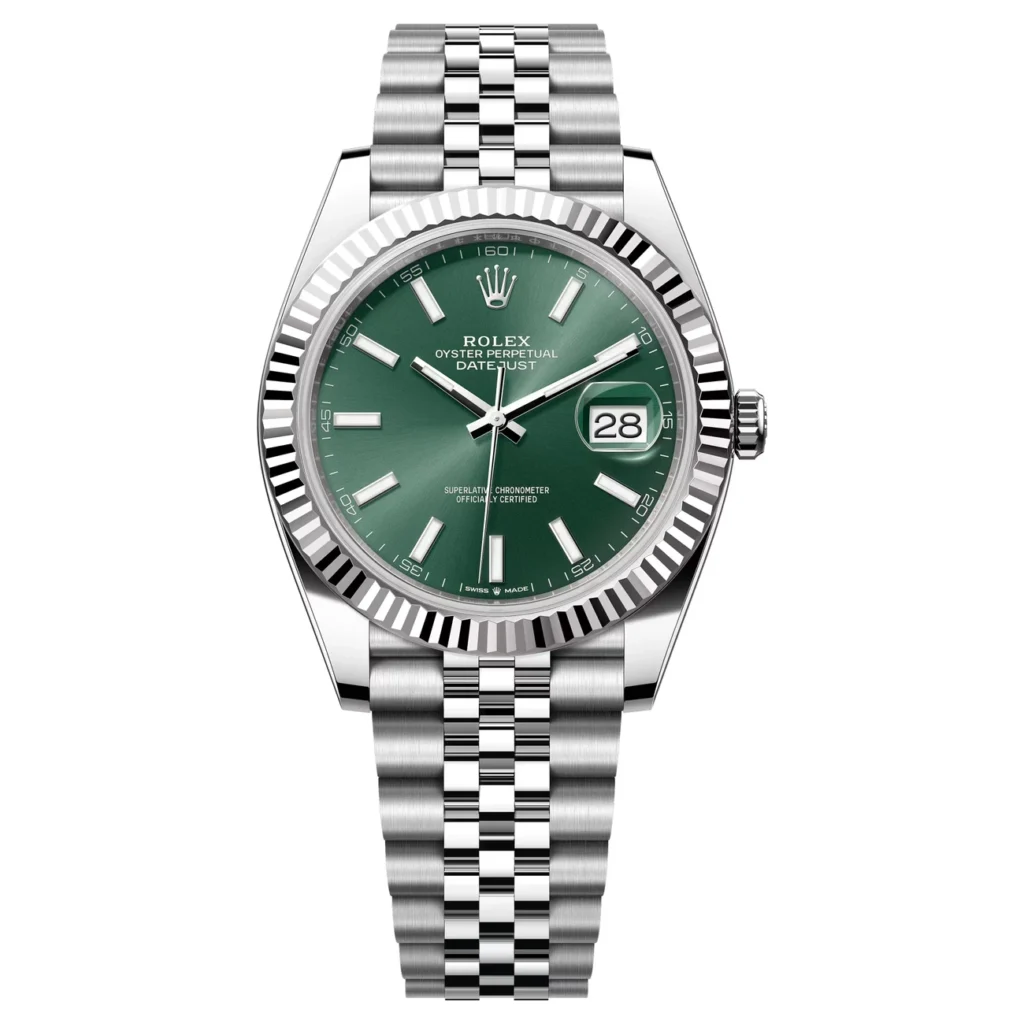
White Rolesor watches have a fluted bezel. Watches with steel cases only will have smooth bezels. You’ll know a White Rolesor when you see one because of the fluted bezel. The white gold bezel still has some shine against brushed steel but provides contrast even though they are similar colors.
Steel Sky-Dweller watches with mint-colored dials are another popular White Rolesor combo. The finish is appropriate for anywhere and has durability with luxe style. Rolesor has been featured on Rolex timepieces since the early 1930s.
Oystersteel vs White Rolesor: Direct Comparison
Now let’s compare these finishes side-by-side. How do they stack up for daily wear? Oystersteel offers a sleek monochromatic look with a clean, technical aesthetic. You can go from playing sports to wearing it with your business attire without a hitch. White Rolesor exudes more subtle luxury. 18k white gold surrounds the case and brushedsteel bracelet. It reflects light with a warm hue that steel cannot match. Additionally, the fluted bezel brings brilliance to the watch and moves it more into the fine jewelry realm.
One material will last longer than the other. No matter how you style your Rolex, both watches are built to last a lifetime. However, Oystersteel can handle a more rigorous lifestyle. Rolex uses 904L steel for its cases and bracelets which is harder and more scratch resistant. White Rolesor features that same hard stainless steel but includes white gold accents. 18k gold is softer than 904L steel. Therefore, the white gold bezel will scratch and ding easier with daily wear.
Steel is also lighter and stronger than gold. Your Oystersteel Rolex is inherently stronger as a whole. White gold adds wonderful weight to your wrist but isn’t as practical.
Price will vary since one watch has gold and the other does not. Oystersteel models are the most accessible entry into Rolex ownership. White Rolesor watches will cost you more because of the 18k gold used and attention to detail when marrying the two metals together. Each watch maintains their value extremely well when selling on the secondary market.
Comparison Table: Oystersteel vs White Rolesor
|
Attribute |
Oystersteel |
White Rolesor |
|
Material Composition |
904L stainless steel alloy with high levels of chromium, nickel, molybdenum, and copper |
Combination of Oystersteel (904L steel) case and bracelet with 18-karat white gold bezel |
|
Components |
Whole watch (case, bracelet, bezel, crown) made from 904L steel |
Case, crown, and full bracelet in Oystersteel; bezel, hour markers, and hands in 18k white gold |
|
Appearance |
Clean, monochromatic appearance; brighter, whiter shade of silver with improved luster |
Subtle glow from white gold bezel against brushed steel; fluted bezel adds brilliance and warmth |
|
Bezel Type |
Smooth bezel | Fluted bezel (18k white gold) |
|
Durability |
Superior hardness and scratch resistance; withstands hard knocks better; resists pitting from chlorine and daily wear |
Tough steel base, but white gold bezel is softer and more prone to scratching and dings from daily wear |
|
Weight & Strength |
Lighter and stronger; more robust overall |
Adds satisfying heft without compromising too much on practicality |
|
Price Point |
Most available entry to Rolex ownership |
Higher price due to 18k gold components and craftsmanship required to blend both metals |
|
First Introduction |
904L steel first used in Sea-Dweller (1985); all stainless steel watches transitioned by 2003; “Oystersteel” term introduced in 2018 |
Rolesor concept dates back to 1933 (registered name); White Rolesor variant available since early models |
|
Best For |
Sports activities to business settings; demanding lifestyle; maximum corrosion resistance |
Any occasion; balancing durability with luxury styling; fine jewelry territory |
|
Resale Value |
Holds value well on secondary market |
Holds value well on secondary market |
|
Popular Models | Various Rolex stainless steel models |
Steel Sky-Dwellers with mint dials |
Which Rolex Finish Should You Choose?
The choice between Oystersteel and White Rolesor comes down to your priorities. Oystersteel delivers maximum durability and the most available price point, perfect for active lifestyles. White Rolesor adds precious metal elegance through its 18k white gold bezel while keeping steel’s toughness, though at a higher cost and with slightly less scratch resistance. Both finishes hold their value well. Your budget and how you plan to wear your Rolex should guide your final decision.
Enjoying our watch coverage? Get more of it in Google Search.