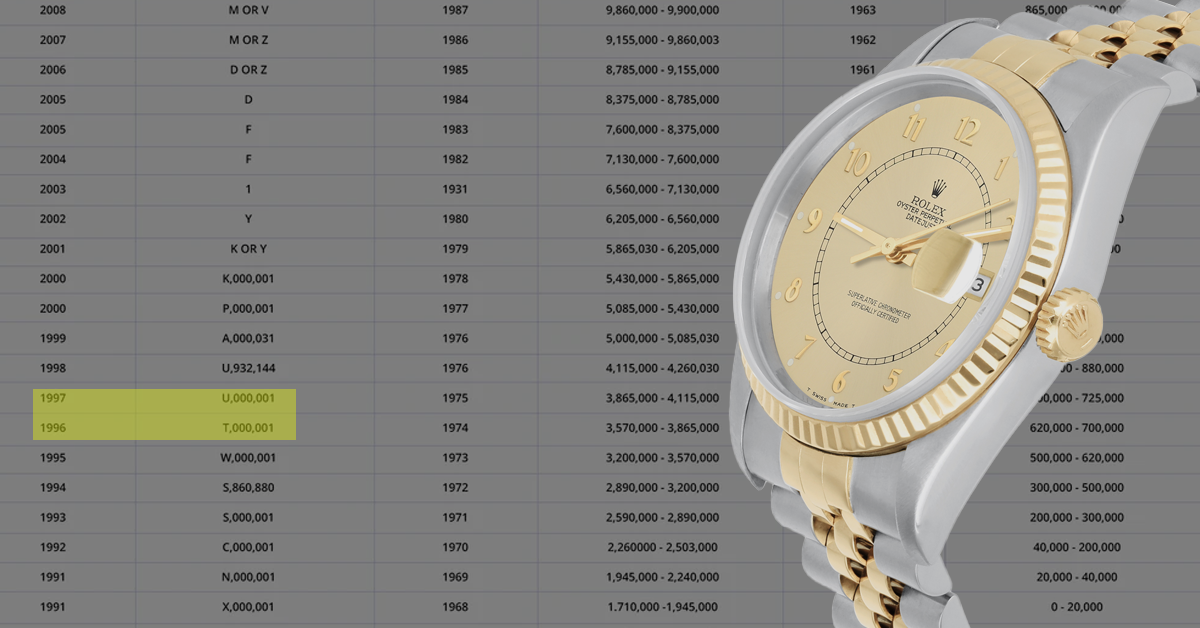
The rare metals used in luxury watches range from platinum, which is about 30 times rarer than gold, to tantalum, existing at just one atom per 181 billion atoms of other elements. These precious metals in watches command premium prices, yet many collectors wonder: are stainless steel watches worth anything compared to their platinum or gold counterparts?
I’ll walk you through the rare luxury watch materials in this piece, including exotic finishes like PVD/DLC coatings, frosted gold and tridor, explaining why they cost so much.

Table of Contents
What are watches made of: Common metals vs. rare metals
The standard metals in watchmaking
Stainless steel became the backbone of luxury watchmaking starting in the 1970s. Precious metals like gold dominated high-end timepieces before that move. The transformation happened because stainless steel offered something gold couldn’t: exceptional durability and corrosion resistance at a fraction of the cost.
The most common grade you’ll find is 316L stainless steel, which contains chromium and forms a self-repairing oxide layer that resists corrosion. People often call this grade medical or marine grade steel. Rolex takes it further by using 904L steel, a super alloy with higher corrosion resistance that’s reserved for medical applications.
Titanium emerged as another workhorse material in modern watchmaking. This metal weighs 45% less than stainless steel while maintaining equal strength. Brands like Richard Mille gravitated toward titanium for its impressive strength-to-weight ratio. The metal is hypoallergenic and corrosion-resistant, but it costs roughly double what you’d pay for stainless steel.
The rise of rare and precious metals in watches
Gold held its position as the standard for luxury timepieces for decades. Most watches use 18k gold, which consists of 75% pure gold mixed with other metals for strength. Pure 24k gold is too soft for watch cases. The Vickers hardness scale shows 18k gold scores just 140, while stainless steel ranges between 200-240.
Platinum sits at the top of the precious metal hierarchy. This silvery-white metal is produced in much smaller quantities than gold and makes it rarer. Platinum watches are much heavier due to the metal’s density. The metal displaces rather than loses volume when platinum scratches. You can polish away scratches without sacrificing any material.
Watchmakers have redefined the limits with innovative alloys and finishes. Rolex created Rolesium and combined 904L stainless steel with 950 platinum for a blend of durability and brilliance. Hublot spent two years developing Magic Gold and mixed 75% pure gold with ceramic to achieve a Vickers hardness of nearly 1,000. Omega introduced Ceragold and fused zirconium-based ceramic with 18K gold for ultra-smooth bezels.
Specialized finishes like PVD and DLC coatings add another dimension to watch materials. Physical Vapor Distribution applies condensed material as vapor to create even coatings with increased hardness. DLC (Diamond Like Carbon) coatings adopt qualities of diamond, the hardest substance on earth, and result in flawless black finishes. Frosted gold uses the Florentine finish technique to create textured surfaces. Tridor refers to tri-color gold designs incorporating yellow and white gold in a single timepiece.
Why rare metals command premium prices
The cost of rare luxury watch materials stems from multiple factors. Raw material lack drives base pricing. Tantalum exists at just one atom per 181 billion atoms of other elements and makes it extremely difficult to source.
Manufacturing complexity adds substantial costs. Tantalum destroys the very machine tools used to process it due to its extreme hardness. Titanium presents its own challenges: the metal becomes gummy when cut and sticks to machining heads. This requires specialized tools. The cutting surface also work-hardens and makes each pass more difficult than the last.
Market dynamics play a role as well. Stainless steel dominated the luxury watch market for over a decade, with models trading for two to three times their retail price. Gold watches have enjoyed a renaissance in the last few years. Gold bullion prices break records and buyers recognize that precious metal watches carry an inherent floor value that steel cannot match. Gold versions now command premiums over steel counterparts in some cases, a reversal that seemed impossible just a few years ago.
Rare precious metals in watches and their unique properties
Platinum: The powerhouse metal

Platinum watches use Pt950 as their standard alloy. This consists of 95% pure platinum mixed with 5% alloying elements. The remaining metals are ruthenium, cobalt, or iridium. Each serves specific purposes: iridium improves hardness, ruthenium boosts mechanical resistance, and cobalt helps machinability. This purity level exceeds any gold alloy used in watchmaking by a wide margin.
The metal’s density sets it apart right away. Pt950 weighs around 19.2 g/cm³. This makes it about one-third heavier than 18k gold. A platinum watch has substantial heft that telegraphs quality when you hold it. The metal scores around 4.5 on the Mohs hardness scale, harder than 18k gold’s 2.7-2.8 rating.
Platinum behaves differently when scratched. Gold loses material, but platinum displaces. It forms ridges that develop into a soft gray patina. You can polish away this patina over and over without sacrificing metal since you’re redistributing it rather than removing it. The metal appears white on its own and never requires rhodium plating. Brands like Rolex reserve platinum for their most prestigious models and often pair it with distinctive ice-blue dials.
Tantalum: Rarer than gold
People misunderstand tantalum’s rarity. Tantalum is the rarest stable element in our solar system, but within Earth’s crust it exists at about 1 part per million. Gold’s abundance sits at just 0.004 parts per million. This makes tantalum 250 times more common than gold. The metal rarely occurs in pure metallic form and requires harder refinement processes.
Tantalum’s density and appearance make it special in watchmaking. Tantalum sits between 18k gold (15.6 g/cm³) and platinum at 16.6 g/cm³. The metal displays a deep blue-gray tone that changes depending on light conditions. Tantalum ranks harder than platinum while remaining less dense with a Mohs hardness of around 6.5.
Tantalum resists corrosion almost entirely. The metal forms a protective oxide layer when exposed to air and creates a natural barrier that makes it stable. This same property makes tantalum hypoallergenic and suitable in medical implants. Its high melting point at 3017°C ranks fourth highest among all metals.
White gold, yellow gold, and red gold differences
White gold combines pure gold with nickel or palladium and often includes silver and zinc. Nickel-based white gold produces the hardest gold alloy at any given karat, though it can trigger allergic reactions in sensitive individuals. Palladium white gold offers a softer alternative that remains hypoallergenic.
Yellow gold mixes with copper and silver to achieve its warm tone. Rose gold uses the same base recipe as yellow gold but increases the copper share. The copper content determines color intensity: 18k red gold contains 75% gold and 25% copper, while 18k rose gold uses 75% gold, 22.25% copper, and 2.75% silver. Pink gold contains the least copper at 20%, with 5% silver making up the remainder.
Red gold delivers the deepest hue due to its maximum copper content. Some formulations reach 50% copper at 12k. Each step down in karat deepens the warm, copper-derived color while increasing mechanical strength.
Tridor: The tri-color gold state-of-the-art

Rolex introduced the Day-Date Tridor in 1988 as part of their Crown Collection. The white gold case paired with a bracelet featuring fused layers of three gold colors: rose, yellow, white, yellow, and rose again in perfect sequence. Standard bi-color watches place metals side by side, but Rolex fused multiple layers into single slabs.
Cut a center bracelet link from a Day-Date Tridor 18039B in half and the same color pattern runs through the entire depth. This technological feat required major R&D investment since fusing three different gold colors was thought impossible before. No other watch brand has copied this fused-layer technique to the same effect.
Exotic metal treatments and finishes that increase value
PVD and DLC coatings explained

Physical Vapor Deposition transforms base metals by vaporizing materials in a vacuum chamber at high temperatures. The process bonds a thin film of material onto watch cases and bracelets. These coatings range from a single micron in thickness. Brands use PVD to achieve bold colors, though the most common application produces deep black finishes or gold tones on stainless steel.
The coating material determines both appearance and durability. Manufacturers apply chromium carbide for black finishes, which resists wear and corrosion due to its hardness and oxidation levels. Gold-toned PVD can use actual gold particles, or titanium nitride creates a similar appearance with superior scratch resistance. Most gold PVD doesn’t contain any gold atoms at all.
DLC takes the PVD concept further by using carbon instead of metals. Diamond-Like Carbon coatings achieve hardness levels between 2,000-4,000 HV, several times harder than stainless steel. The carbon bonds to the substrate at a molecular level and creates an amorphous structure with the same sp³ bonds found in natural diamond. DLC proves tougher and more scratch-resistant than standard PVD, though both coating types share one limitation: they cannot be polished, touched up, or reapplied. Any scratches that occur become permanent.
Frosted gold: The Florentine finish

Audemars Piguet introduced frosted gold in 2016 through collaboration with Italian jewelry designer Carolina Bucci. The technique uses a diamond-tipped tool that strikes the gold surface tens of thousands of times and creates microscopic conical indentations. These facets scatter light in every direction and produce a sparkle reminiscent of diamond dust without setting any actual gemstones.
The Florentine finish originated in traditional Italian workshops, where craftspeople used engraving tools to create tiny cross-hatch lines on gold surfaces. The process demands substantial strength, patience, and hand-eye coordination, as each line must be perpendicular, evenly spaced, and consistent in depth. What may appear as a single engraved line often requires three, four, or five strokes of the engraving tool.
Brushed vs. polished metal finishes
Polished surfaces reflect light and create brilliance that makes watches more interesting to look at as you move your wrist. Dressy timepieces favor polished cases since wearers won’t subject them to the scratches and bumps that come with hiking or diving.
Brushed finishes create visible lines across the metal surface using steel brushes or specialized hand tools. The matte appearance conveys utility and modernity, though fully-brushed cases can look somewhat dull. So many brands combine both techniques: a brushed case paired with polished chamfers highlights edges and adds visual contrast.
Unconventional rare materials in luxury watchmaking
Bronze and its natural patina
Bronze watches develop character through oxidation. The alloy reacts to environmental factors including moisture, air exposure, and the wearer’s skin chemistry. This process creates a spectrum of hues ranging from warm earthy tones to deep green or brown shades. Each timepiece develops a unique appearance based on the owner’s lifestyle and environment.
The patina forms a protective layer that prevents deeper structural damage while altering surface appearance. Then, no two bronze watches look similar over time. The oxidation remains reversible and allows owners to restore the original finish or accelerate patina development through artificial means.
Ceramic: High-tech zirconium oxide
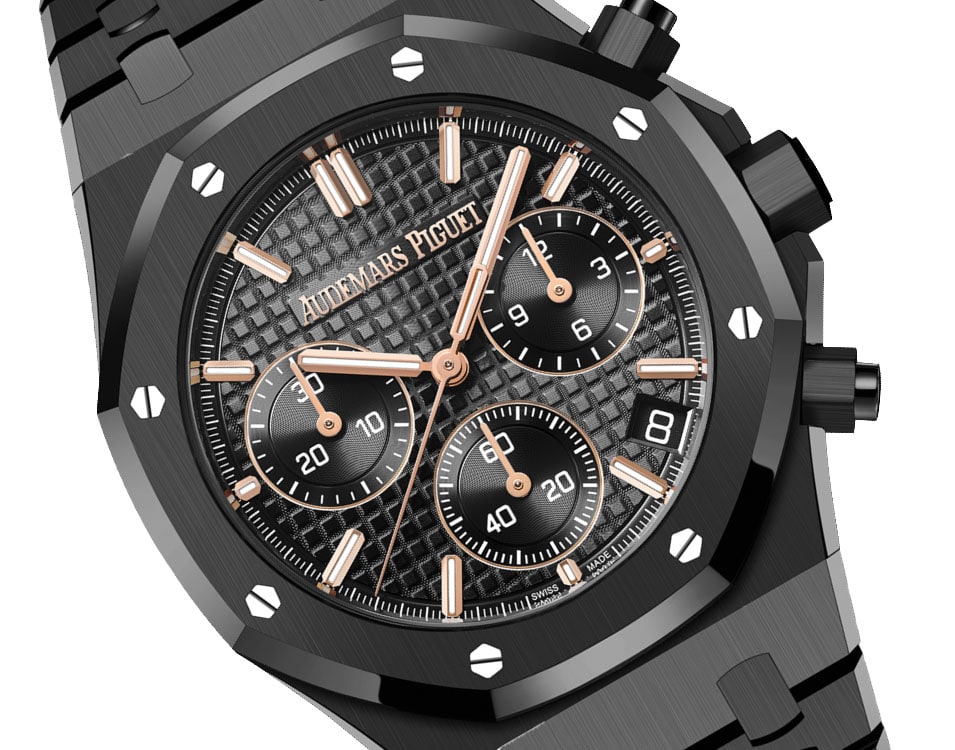
Zirconium oxide undergoes a five to six-week manufacturing process. Raw powder mixed with pigments gets injected under 1,000 bar pressure, then sintered at 1,450°C. The material shrinks by 25% during firing and achieves a final hardness of 1,250 Vickers. Ceramic is approximately five times harder than stainless steel and ten times harder than 18k gold.
The material exhibits a property called transition toughening. Crystals at the crack tip change shape when cracks begin forming. This creates compression forces that seal the forming crack. Diamond-coated tools are needed to machine ceramic because of its extreme hardness.
Carbon fiber composites

Carbon fiber weighs by a lot less than traditional metals. It has a density of 1.7-1.9g/cm³ compared to titanium at 5g/cm³, steel at 8g/cm³, and gold at 19g/cm³. A 40g steel case weighs over 95g in gold but under 10g in carbon composite.
The material proves three times stiffer than titanium while weighing two times less. The layered fiber structure becomes visible when machined from solid blocks and creates finishes unique to each case.
Sapphire crystal cases
Synthetic sapphire forms by crystallizing aluminum oxide powder at nearly 3,000 degrees Kelvin. The material scores 9 on the Mohs hardness scale and requires diamond tools to machine it. A single case demands over 1,000 hours of work to create. Sapphire watches cost $100,000 and above at present.
Why rare luxury watch metals cost so much
Raw material lack and extraction costs
Platinum mining produces just 150 tons annually, less than 10% of gold production. Mining operations capture only 65% of rare earths from ore and waste valuable material. Tellurium, used in some high-tech applications, is three times rarer than gold. Rare earth metal prices surged by 750% when China restricted trade back in 2011.
Complex manufacturing and machining processes
Platinum machining takes three times longer than gold because slower tool speeds prevent excessive friction and tool wear. Diamond cutting tools produce thousands of gold items but fewer than ten platinum pieces before degrading. Specialized equipment and contamination prevention add substantial costs. Platinum requires dedicated tools separate from gold-working equipment.
Labor-intensive finishing techniques
Hand-finishing techniques like anglage involve multiple steps: filing, burnishing and polishing with finer compounds. Bridges undergo over 200 machining steps with tolerances within 0.01mm. Roger Smith produces roughly 10 watches annually because hand-finishing cannot scale. Frosted gold demands tens of thousands of diamond-tipped tool strikes per case.
Material durability and longevity
Platinum’s durability justifies premium pricing. The metal displaces rather than loses volume when scratched and allows repeated polishing without material loss. Ceramic rates 1,250 Vickers hardness, five times harder than steel [provided in previous section context].
Brand exclusivity and limited editions
Manufacturers position platinum and exotic finishes like tridor as flagship offerings. Limited production runs and PVD/DLC coating applications create artificial lack that maintains elevated pricing structures.
Conclusion
Luxury watches incorporate much more than standard stainless steel. Platinum offers exceptional density while tantalum provides blue-gray depth. These rare metals deliver esthetic appeal and lasting value. Specialized treatments like PVD/DLC coatings add scratch resistance. Frosted gold creates diamond-like sparkle through thousands of tool strikes. Rolex’s tridor remains unmatched in fusing three gold colors into single components.
The premium pricing reflects genuine rarity and complex manufacturing. Labor-intensive finishing adds to the cost. These timepieces carry inherent floor values that standard materials cannot match. Choosing rare metals means investing in craftsmanship that appreciates over time rather than depreciates.
FAQs
What makes luxury watches more expensive than regular watches?
Luxury watches cost significantly more due to several factors: the use of rare and precious metals like platinum and tantalum, complex hand-finishing techniques requiring hundreds of hours of skilled labor, superior craftsmanship with tolerances within 0.01mm, and the scarcity of materials. Additionally, specialized manufacturing processes and the durability of these materials justify the premium pricing.
Why is platinum used in high-end watches?
Platinum is used in luxury watches because it’s approximately 30 times rarer than gold and offers exceptional density and durability. When platinum scratches, the metal displaces rather than loses volume, allowing repeated polishing without material loss. It’s also naturally white, never requiring rhodium plating, and brands reserve it for their most prestigious models.
Are mechanical luxury watches more accurate than quartz watches?
No, mechanical luxury watches are actually less accurate than inexpensive quartz watches. High-end mechanical watches may drift by several seconds per day, while quartz watches are accurate to within seconds per month. However, luxury mechanical watches are valued for their intricate craftsmanship, hand-assembled movements with dozens of moving parts, and artistic appeal rather than pure timekeeping precision.
What is the difference between white gold, yellow gold, and rose gold in watches?
The color differences come from the alloy composition. White gold combines pure gold with nickel or palladium, yellow gold mixes with copper and silver, and rose gold contains a higher percentage of copper (around 22-25% in 18k rose gold). All maintain 75% pure gold content in 18k versions, but the additional metals determine both the color and mechanical properties of the final alloy.
Enjoying our watch coverage? Get more of it in Google Search.