The 904L vs 316L debate has become a hot topic among luxury watch enthusiasts. Rolex became the first wristwatch manufacturer to use 904L grade steel in its watches in 1985. The industry standard stainless steel remains 316L, but 904L stainless steel offers superior corrosion resistance, especially in acidic environments. On top of that, 904L steel watches command a premium. Raw material prices run about 2-3 times greater than 316L. The 904L stainless steel vs 316L comparison extends beyond corrosion resistance to scratch resistance and polishing quality. We’ll break down the key differences between these materials and get into why Rolex 904L has become synonymous with luxury. The 904L vs 316L price implications matter, and we’ll help you determine whether the premium is justified for your next watch purchase.
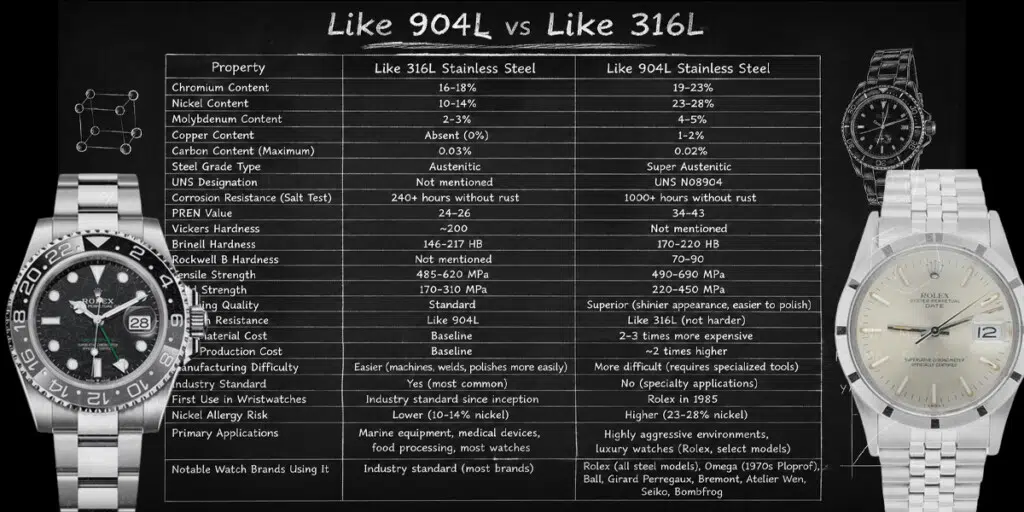
Table of Contents
Learn About 316L and 904L Stainless Steel
What is 316L Stainless Steel
316L is by far the most widely used corrosion resistant stainless grade globally. The L suffix indicates it is a low carbon version of 316 stainless steel with less than or equal to 0.03% carbon content. Chromium, nickel, and molybdenum contents are 16-18%, 10-14%, and 2-3% respectively. Because of the low carbon content, 316L is softer and more ductile than other grades of stainless steel, making it easier to machine. Because of this low carbon content and favorable mechanical properties and corrosion resistance, this grade is often used in marine applications, medical implants, and food processing equipment. The added molybdenum increases corrosion resistance to chloride environments and reducing acids such as sulfuric acid.
What is 904L Stainless Steel
904L is a super austenitic stainless steel grade developed for even more aggressive environments than 316L can withstand. It is also known as UNS N08904 and is considered a high alloy grade due to its expensive composition. Chromium, nickel, and molybdenum contents are lowered to 19-23%, 23-28%, and 4-5%, respectively. There is also 1-2% copper added to the composition. This stainless steel was originally developed for better-than-grade 316 corrosion resistance to dilute sulfuric acid. Due to its excellent corrosion resistance, it is used in various applications. Its hardness ranges from 70-90 on the Rockwell B Scale. It is softer than 316L. Addition of copper sets 904L apart from normal austenitic stainless steel and allows for better resistance to sulfuric, phosphoric, and acetic acid.
Elemental Composition Comparison
The main difference between these alloys centers around how much of each element is added to the base metal. 904L contains almost twice as much nickel as 316L. (23-28% vs. 10-14% respectively). Molybdenum content is also increased from 2-3% to 4-5%. Copper is added to 904L at 1-2% while none is found in 316L. Maximum carbon content is decreased from .03% in 316L to .02% in 904L. All these increased alloying elements contribute to forming a stronger passive film on the surface of 904L. Therefore it has improved resistance to chloride stress corrosion cracking as well as pitting.
904L Stainless Steel vs 316L: Key Performance Differences
Corrosion Resistance in Daily Wear
Ground testing reveals stark differences between these alloys. Laboratory simulations of salty conditions show that 316L stainless steel remained rust-free for over 240 hours, while 904L lasted more than 1000 hours without corrosion. The copper addition in 904L provides superior resistance to sulfuric, phosphoric and acetic acids. 904L demonstrates high resistance to pitting in chloride solutions and exceptional resistance to both crevice and stress corrosion cracking.
The Pitting Resistance Equivalent Number quantifies this advantage. 904L achieves a PREN of approximately 34-43. This makes it nowhere near as easy to corrode from chloride-induced pitting as 316L’s 24-26. Watch wearers will see better performance in saltwater environments and humid climates.
904L vs 316L Scratch Resistance
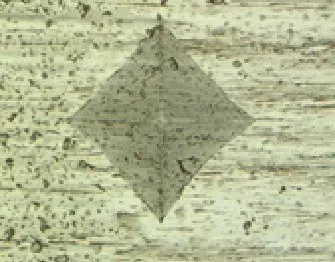
904L does not offer harder protection than 316L, contrary to popular belief. 316L scored around 200 on the Vickers hardness scale. 904L also exhibits a Brinell hardness of 170-220HB compared to 316L’s 146-217 HB. While these values overlap, watch manufacturers prioritize 904L mainly due to its high luster and perceived difference in scratch resistance.
Polishing and Finishing Quality
904L achieves a visibly shinier appearance than 316L. 904L polishes more easily due to its high alloy content. Pre-owned watch dealers note that Rolex watches using 904L steel clean up nicely after refinishing. The material achieves superior surface finish quality and creates the subtle yet noticeable difference in appearance.
Hardness and Durability Comparison
Mechanical properties favor 904L in specific metrics. 904L has a tensile strength of 490-690 MPa and a yield strength of 220-450 MPa. 316L delivers a tensile strength of 485-620 MPa and a yield strength of 170-310 MPa. 904L is not harder than 316L, though.
Why Rolex Uses 904L Steel (And Other Watch Brands Don’t)
Rolex 904L Marketing Strategy
Rolex began experimenting with 904L steel during the 1970s and 1980s after dive watches arrived at service centers with corrosion in case threads and case backs. Salt from seawater and sweat seeped into screw threads and caused pitting in 316L steel. Rolex adopted 904L for dive watches in 1985, which improved the longevity of Submariner and Sea-Dweller models. The company expanded 904L use through the 1990s before switching all steel models by the early 2000s. Rolex rebranded 904L as “Oystersteel” in 2018, linking the material with their historic Oyster case . The renaming made the steel sound proprietary, though Oystersteel remains chemically standard 904L.
Manufacturing Challenges and Costs
904L required Rolex to design specialized tools and use a 250-ton press to stamp original cases. Therefore, most brands stick with 316L because it machines and polishes more easily. Smaller manufacturers producing watches around 1500 euros would compress margins or push retail prices into a different category if they switched to 904L. Rolex absorbs these costs through standardized cases at high volume.
Other 904L Steel Watches on the Market
Omega used 904L in early 1970s Ploprof models and called it “Uranus Steel”. Ball released the Railmaster Icebreaker in 2019. Girard Perregaux launched Laureato chronographs in 904L that same year. Bremont, Atelier Wen and Seiko also use 904L in select models. The first batch of Bombfrog BT25 Kampfschwimmer watches used 904L in 2012, with prices around USD 300.
904L vs 316L Price and Value for Watch Buyers
Raw Material Cost Differences
Material pricing reveals a large gap between these alloys. 904L steel costs 2-3 times more than 316L when you compare raw material prices among suppliers. This premium stems from 904L’s elevated nickel and molybdenum content. Both are expensive metals. But pricing information for 316L appears more available due to common use, while 904L data remains scarcer.
Effect on Watch Pricing
Manufacturing expenses compound the material cost difference. Most factories configure equipment for 316L processing. This makes 904L production more complex. The total case production cost for 904L runs about 2 times higher than 316L cases. Smaller brands that produce watches around 1500 euros would eliminate profit margins or force price increases into different market categories if they adopted 904L. The Ball Watch Roadmaster Icebreaker in 904L launched below $2000. This demonstrates that 904L doesn’t push watches into premium pricing automatically.
Is the Premium Worth It for Daily Wearers
316L performs well for typical watch ownership scenarios. Watches that spend most time under dress shirts and get regular cleaning show no distinguishable difference between materials over realistic ownership periods.
Considerations for Nickel Allergies
Nickel allergies affect 15-16% of women and 4-5% of men. 904L contains 23-28% nickel compared to 316L’s 10-14%. High nickel content in 904L can trigger skin irritation, especially with sweat involvement. Titanium remains the optimal choice if you have severe allergies.
904L vs 316L Stainless Steel Comparison Table
| Attribute | 316L Stainless Steel | 904L Stainless Steel |
| Chromium Content | 16-18% | 19-23% |
| Nickel Content | 10-14% | 23-28% |
| Molybdenum Content | 2-3% | 4-5% |
| Copper Content | Absent (0%) | 1-2% |
| Carbon Content (Maximum) | 0.03% | 0.02% |
| Steel Grade Type | Austenitic | Super Austenitic |
| UNS Designation | Not mentioned | UNS N08904 |
| Corrosion Resistance (Salt Test) | 240+ hours without rust | 1000+ hours without rust |
| PREN Value | 24-26 | 34-43 |
| Vickers Hardness | ~200 | Not mentioned |
| Brinell Hardness | 146-217 HB | 170-220 HB |
| Rockwell B Hardness | Not mentioned | 70-90 |
| Tensile Strength | 485-620 MPa | 490-690 MPa |
| Yield Strength | 170-310 MPa | 220-450 MPa |
| Polishing Quality | Standard | Superior (shinier appearance, easier to polish) |
| Scratch Resistance | Like 904L | Like 316L (not harder) |
| Raw Material Cost | Baseline | 2-3 times more expensive |
| Case Production Cost | Baseline | ~2 times higher |
| Manufacturing Difficulty | Easier (machines, welds, polishes more easily) | More difficult (requires specialized tools) |
| Industry Standard | Yes (most common) | No (specialty applications) |
| First Use in Wristwatches | Industry standard since inception | Rolex in 1985 |
| Nickel Allergy Risk | Lower (10-14% nickel) | Higher (23-28% nickel) |
| Primary Applications | Marine equipment, medical devices, food processing, most watches | Highly aggressive environments, luxury watches (Rolex, select models) |
| Notable Watch Brands Using It | Industry standard (most brands) | Rolex (all steel models), Omega (1970s Ploprof), Ball, Girard Perregaux, Bremont, Atelier Wen, Seiko, Bombfrog |
Veredict
There is no obvious choice between 904L vs 316L for all buyers. 316L does great job for everyday wear and is significantly cheaper. 904L offers much better protection under extreme conditions if ultimate corrosion resistance is your thing and you don’t mind spending extra. Personally, I would stay away from 904L if you’re allergic to nickel. Consider how you will use your watch and your budget.
Enjoying our watch coverage? Get more of it in Google Search.