When you think about the Omega watch company and its reputation, you might assume production remains limited. Omega produces approximately 500,000 watches annually. This figure positions the luxury brand differently than you’d expect. The omega brand captured 8.8% market share in 2020 and competed against renowned names such as Patek Philippe and Longines. Understanding how many watches does omega make a year reveals the sort of thing I love about where are omega watches made, the omega wrist watch production capacity, and who owns omega watch company. This piece gets into Omega’s annual output and compares production figures across luxury watchmakers. We explore model-specific manufacturing numbers and identify the factors that determine the omega watch company history of consistent growth and market influence.
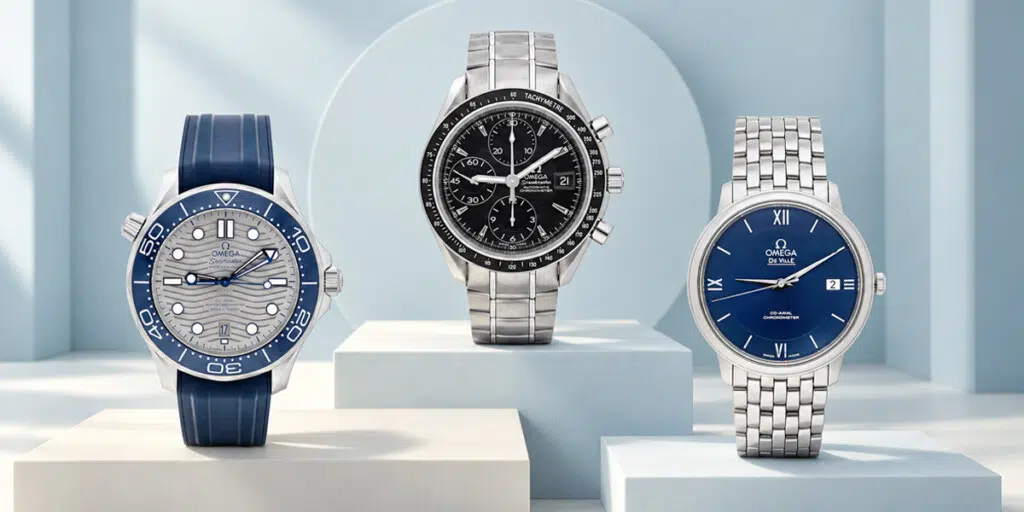
Table of Contents
How many watches does Omega make a year
Estimated annual production figures
Omega produces approximately 500,000 watches each year, though recent data shows a strategic change. The omega brand adjusted its production to around 460,000 units for 2025-2026 and increased retail prices at the same time. This calculated reduction from peak production levels of 505,000 units reflects a move toward higher value positioning.
The omega watch company history reveals substantial growth over more than a century. When founders Louis-Paul and César Brandt passed away in 1903, the company already manufactured 240,000 watches each year with just 800 employees. Omega now contributes a lot to the conglomerate’s total output of 2.5 million watches produced in 2020 as part of the Swatch Group.
Omega’s position among Swiss watchmakers
Omega ranks among Switzerland’s highest-volume luxury watchmakers. The brand operates multiple facilities, more than most Swiss competitors. This makes sustained high production possible without compromising quality standards. The manufacturing infrastructure allows Omega to produce complex timepieces like tourbillons and high-volume models.
The omega wrist watch portfolio spans price points of all types and demographics, contributing to strong production volumes. Omega secured an 8.8% market share in 2020. The brand generated approximately CHF 2.21 billion in sales (about USD 2.67 billion) with those 460,000 watches sold in 2025 and captured roughly 6% of the Swiss watch market.
Where are Omega watches made
Where are omega watches made? Exclusively in Switzerland. Omega concentrates its manufacturing in Biel/Bienne and has evolved from its early days in La Chaux-de-Fonds. The brand maintains in-house manufacturing capabilities across its Swiss facilities. Every component meets rigorous standards. This geographic concentration, combined with multiple production sites, allows Omega to balance substantial output with the precision that Swiss watchmaking demands.
Omega production by watch model and collection
Speedmaster annual production

The iconic Speedmaster Moonwatch accounts for roughly 10,000 units each year. This represents a fraction of Omega’s total output. Yet the Moonwatch maintains extraordinary cultural significance. Today’s annual Speedmaster production is five times the entire 13-year production run of caliber 321 Speedmasters combined.
Historical production figures reveal the Speedmaster’s development. Omega manufactured about 80,000 to 83,000 Speedmasters fitted with the caliber 321 movement from 1957 to 1969. Individual references varied: the ST 145.012 saw production of 27,000 to 28,000 units from 1967 to 1969. The earlier CK 2915 reached only 3,000 to 4,000 pieces from 1957 to 1959.
Specialized Speedmaster variants occupy an even more exclusive tier. The caliber 321 watches assemble in a dedicated workshop within Omega’s facilities. They produce between 1,000 and 2,000 pieces each year through entirely hand-completed processes.
Seamaster production numbers

The Seamaster line dominates Omega’s manufacturing output at more than 190,000 watches per year. This volume positions the Seamaster as the omega brand’s highest-production collection by substantial margin. The Seamaster Diver 300M first launched in 1993. Sales remained modest at about 4,500 pieces during its original two years. The watch appeared in the 1995 James Bond film Goldeneye. Sales surged past 50,000 units the year after.
De Ville and Constellation output

Production specifics for De Ville and Constellation collections remain undisclosed. These dress watch lines contribute to Omega’s diverse portfolio strategy.
Limited edition and special pieces
Omega’s approach to limited editions has moved dramatically. Traditional releases specified exact quantities: 1,014 pieces for the Apollo XI Moonshine, 2,012 for the SpeedyTuesday II Ultraman, or 7,007 for most James Bond collaborations. The omega watch company now favors “limited production” without stated numbers. This allows production adjustments based on what customers want.
Ultra-complex pieces like tourbillons require exceptional time investment. Each tourbillon takes over 500 hours to produce, so annual output stays at minimal quantities.
How Omega’s production compares to other luxury watch brands

Rolex production vs Omega
Rolex outproduces Omega by a wide margin. Industry estimates place Rolex’s 2025 output at around 1.15 million watches, more than double Omega’s 460,000 units. Availability tells a different story. You can walk into most Omega boutiques and purchase a Speedmaster right away, but Rolex waitlists extend months or years for steel sports models.
Rolex trimmed production by 2% in 2025. This marked the second consecutive annual reduction. The company maintains demand through this approach despite producing over one million timepieces. With 60 million millionaires worldwide, Rolex manufactures enough watches for roughly 2% of their target demographic each year.
Patek Philippe and boutique manufacturers
Patek Philippe operates at much lower volumes. The Geneva manufacture produced around 72,000 watches in 2025, roughly one-sixth of Omega’s output. Vacheron Constantin produces even fewer at 31,000 pieces a year. These boutique manufacturers rely on hand-finishing that limits production capacity. Patek Philippe invests up to 38.6 watchmaker-hours per piece. Omega spends 3-6 hours per watch through more automated processes.
Longines and Swatch Group brands
Production volumes vary widely across the Swatch Group hierarchy. Tissot produces nearly 3 million watches each year and leads in volume. Longines manufactures around 1.6 million pieces a year, three times Omega’s output despite both brands sharing the same parent company. This stratification prevents internal competition while serving different market segments.
What drives production differences
Ownership structure shapes production philosophy. Rolex, Patek Philippe, and Audemars Piguet remain privately held and can pursue long-term scarcity strategies. Omega operates within publicly traded Swatch Group and faces quarterly reporting pressures. Automation levels also matter. Tissot uses automated assembly lines for mass-market Swiss watches. Patek Philippe’s hand-finishing restricts them to under 70,000 units.
Factors that determine Omega’s annual output
Movement complexity and assembly time
Production speed associates directly with movement architecture. Simple three-hand movements contain 70-120 parts and assemble in 30 minutes to several hours using automated factory lines. Chronographs increase complexity to 250-400+ parts and require one to five days of skilled labor per watch. High complications housing 600-1,200+ components just need weeks or months to complete. So assembling movements can require up to several weeks depending on intricacy.
Manufacturing facilities and capacity
Physical infrastructure sets production ceilings. Factories with 1,000-square-meter dust-free assembly workshops and specialized production lines for cases, dials, and movements can produce 400,000 to 600,000 watches annually. Standard bulk orders reach 50,000 pieces monthly at maximum capacity. High-complexity custom orders require dedicated production teams. Extreme cleanliness and low humidity levels remain critical throughout assembly.
Market demand and brand strategy
Manufacturers select materials, design elements and sizes to meet evolving consumer priorities with care. Rising gold and precious metal prices force manufacturers to reduce gold model production and compress margins. The omega brand balances portfolio expansion against material cost pressures.
Quality control standards
Testing protocols limit throughput substantially. COSC chronometer certification requires 15-day testing across temperature variations and five positions. The omega watch company employs Master Chronometer certification exclusively and adds eight METAS tests including exposure to magnetic fields exceeding 15,000 gauss. This guarantees 0/+5 seconds daily accuracy.
Conclusion
Omega’s annual production of approximately 460,000 watches reveals how the brand balances luxury positioning with available supply. Unlike ultra-exclusive manufacturers like Patek Philippe, yet more selective than mass-market alternatives, Omega occupies a middle ground that works. Master Chronometer standards and a variety of models explain why you can purchase that Speedmaster today rather than joining a waitlist.
Show facts
Enjoying our watch coverage? Get more of it in Google Search.