The Patek 4700 will sell for prices between $49,000 – $49,500. Is the small nautilus worth the money?
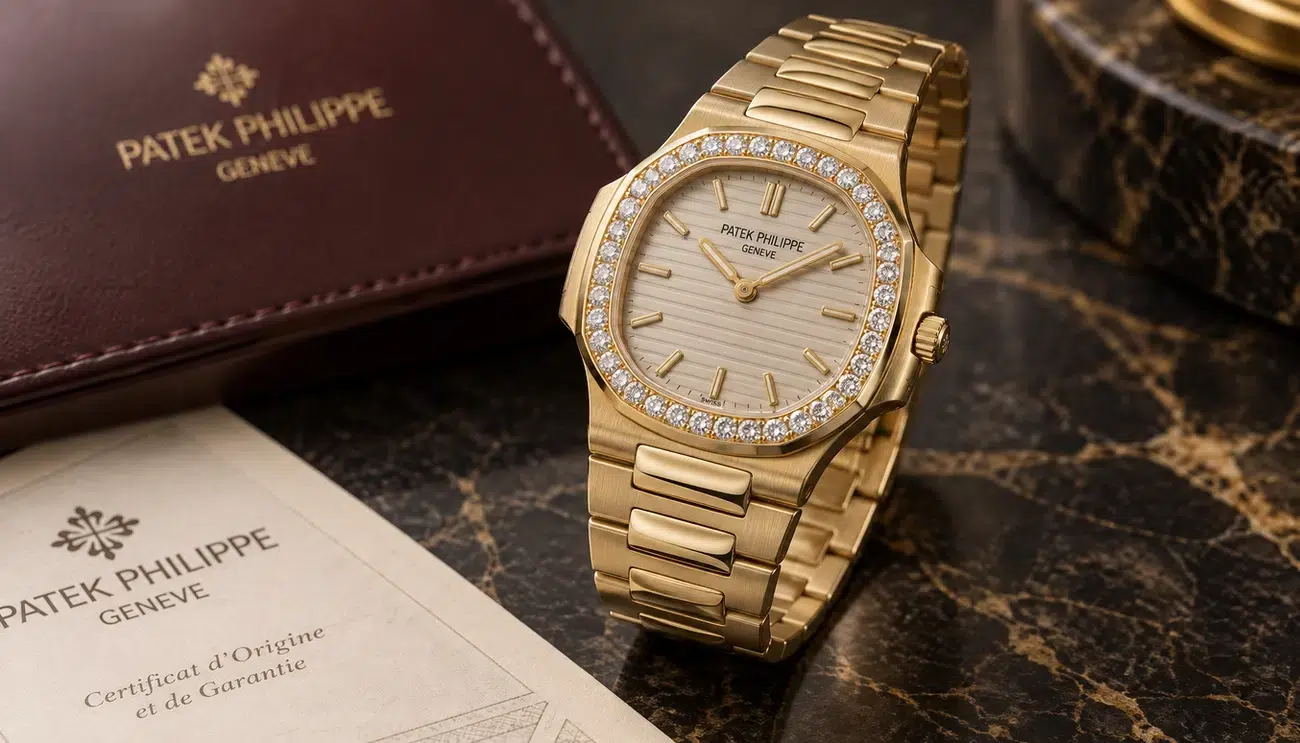
The 28mm watch is a little bit of something new when it comes to the Patek Philippe Nautilus 4700. A Quartz watch that is luxurious. There are many versions of the Patek Philippe Nautilus 4700. Some being the Patek Philippe 4700/1J yellow gold and caliber E19C movement. And the 4700/53 which has diamonds on the bezel. 32 brilliant cut diamonds to be exact. Maybe your interested in the patek 4700 gold or you may be looking at the patek 4700/3. Its important to know what makes these different.
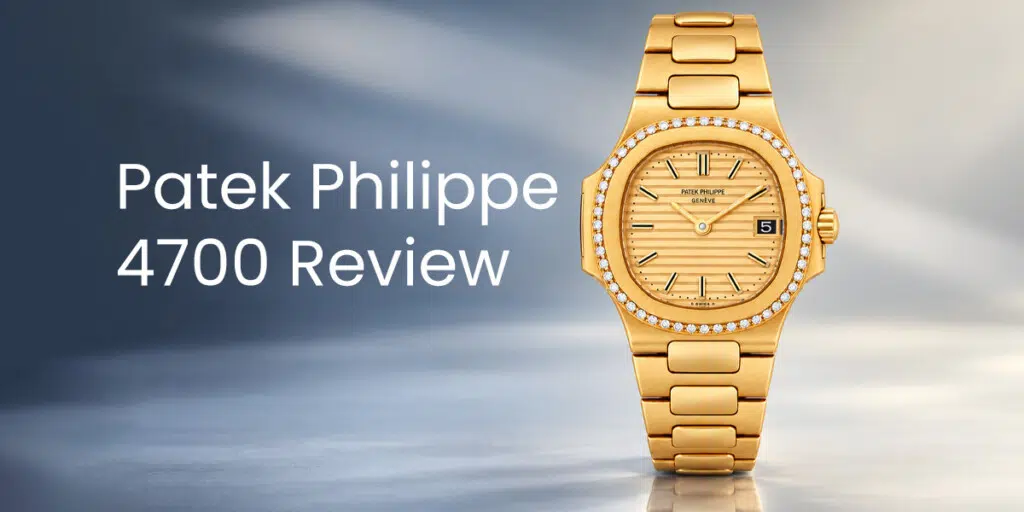
Table of Contents
What Is the Patek Philippe Nautilus 4700 And Who Is It For?
Patek Philippe launched the reference 4700 in 1980 as the collection expanded beyond its original 42mm “Jumbo” sizing. This introduction marked a change toward more compact proportions while maintaining Gérald Genta’s porthole-inspired design language that defined the Nautilus identity.
Brief History of the Nautilus 4700 Line
When the nautilus 4700 came out it was a time where patek philippe had many sizes they were producing. The 4700 was produced until 2004 and it is known for being the smallest nautilus that has been documented ranging from 26mm to 28mm. As it was in production for such a long time there were many different versions of this model. From basic steel models to gems set.
It was also available in steel and two tone with champagne and gilt dials. As it progressed through it’s life cycle it became available in yellow and white gold and even platinum with more elaborate dials. There was some very rare versions such as the 4700/6 which had baguette diamonds on the dial with sapphire hour markers. The white gold 4700/153 towards the end of production had an emerald and diamond dial with diamond set bezel. A 4700/153 recently sold for $115,000 in June of 2026.
Key Specifications: Case Size, Movement, Materials
Its small 27mm case is what makes the Patek Philippe Nautilus 4700 stand out. Some will vary in size anywhere from 26mm to 28mm. All of which are smaller than the mid size 3800 at 37.5mm and 3900 at 33mm. Both of these sizes were produced in the 1980’s.
All of these references had the same movement. The Quartz Caliber E19C with a date function. Unlike many of the bigger nautilus models this caliber was not an automatic movement. Since it was quartz there was no need for winding the watch.
Stainless steel, Yellow Gold/Steel two tone and 18k yellow gold. 18k white gold and Platinum all had cases offered. From a simple horizontal ribbed dial to a full pave diamond dial with sapphire stones. Water resistant to 60 meters or 3 ATM with a sapphire crystal.
Target Audience: Collectors vs Daily Wearers
Whether your looking for something rare or want to wear one on the daily the Patek 4700 has something for everyone. There are many collectors that will seek out these models. Gem set options or even Rm variations if your trying to collect every piece of jewelry patek made during this period. If your collecting nautilus’ you may want a 4700/153 with emerald hour markers or maybe a 4700/158 with pave diamonds on the dial and sapphire hour markers.
If your looking for a daily wear watch the quartz movement makes this watch very easy to pick up and wear. No winding it and worrying if its running or not. Great size for those with smaller wrists and an affordable option into the nautilus line. Models such as the 4700/1J can be sporty yet dressy enough to wear on many occasions.
Design & Build Quality: Case, Dial, and Bracelet

Gérald Genta’s porthole-inspired architecture translates to remarkably compact proportions in the Patek 4700. The rounded octagonal bezel sits atop a case measuring 27 x 29mm and is secured by screws that echo the maritime design language of the original 3700, now over four decades old. This sizing diverges substantially from the 42mm “Jumbo” yet retains the visual signatures that define Nautilus identity.
27mm Case Size: Compact Elegance
The cases come in different sizes some are 26mm and others 27mm or even 28mm. There is a 27mm case for the 4700/1J in yellow gold and some of the two tones can be 26mm as well. All over the years there have been slight differences in size.
You have steel, two tone which is steel with 18k yellow gold and yellow and white gold. Some such as the 4700/1JA from the mid 80’s have a steel mid case and yellow gold bezel. Others that are in precious metals have their whole case and bracelet in the corresponding gold. There are also diamond set variations like the 4700/2 which has a diamond set yellow gold case.
Dial Options: Champagne, White, and Blue Variants
The different variations have different colors that go along with there aesthetics. The champagne dials can be found on yellow gold versions. They have gold applied batons and a date at 3 o’clock. Two tone versions will have white or cream colored dials and black dials are available on steel and gold.
There are some blue dials that are found on diamond set variations. The platinum 4700/4 with diamonds on the dial has this. On the 4700/1JA you will see a black date wheel which was changed to match the dial color on later models. Diamonds set into the dial take the place of the batons on models such as the 4700/1J with a champagne dial and diamonds.
Integrated Bracelet: Gold and Steel Options
It just extends off of the case and continues the look of an integrated bracelet like Genta always had. Depending on what metal the case is it will come with the corresponding bracelet. Steel case steel bracelet, Yellow Gold will have yellow gold bracelet and two tone will be steel and gold links.
There is brushed and polish on the links. It has the Patek Philippe logo on the fold over clasp. I’ve seen some bracelets with 21 links. 5 of which can be removed. There bracelet will range from about 140mm-175mm depending on example and should fit up to a 6 1/2″ wrist.
Sapphire Crystal and Water Resistance
Sapphire crystal protects the dial and offers scratch resistance and clarity. The flat profile matches the original Nautilus design esthetic rather than employing a domed configuration. Water resistance reaches 50 meters (5 ATM) on most variants, sufficient for incidental water exposure though not intended for swimming or aquatic activities.
Movement Performance: Quartz Caliber E19C
The Nautilus 4700 houses the seven-jewel quartz Caliber E19C with date display, setting it apart from the automatic movements found in larger contemporary Nautilus references. This movement choice reflects both practical reasons for the compact case size and Patek Philippe’s deep expertise in quartz technology.
Quartz vs Automatic: Why Patek Chose Quartz
It was not only known for producing some of the best quartz movements but they also had the first quartz regulated time piece in their manufacture in 1939. Patek also showed there first quartz clock in 1952. They made the Chronotome in 1962 which was the first mass produced quartz chronometer to surpass the Geneva and Neuchatel Observatory testing equipment for a brief period of time.
Back in 1969 Patek was involved in a project with 19 other swiss brands to create a quartz movement that would live up to the standards of a watch makers movement. Only a handful of patek philipps were made with the beta 21 inside a huge 43mm gold case. So they knew how to make a quartz movement when the time came.
The compact 27mm Nautilus 4700 made quartz the better option. The E19C’s architecture eliminated winding requirements while maintaining accuracy in a size constraint where automatic movements would struggle. Fewer moving parts translate to greater reliability under shock and vibration, making the watch more practical for daily wear without concerns about power reserve depletion.
Accuracy and Maintenance Requirements
The Caliber E19C delivers accuracy that automatic movements cannot match. Quality quartz movements lose about half a second per day, translating to roughly 15 seconds per month. Automatic movements, by contrast, deviate anywhere from 4 to 25 seconds daily even when well-regulated.
Quartz wins on maintenance requirements. Your Patek 4700 needs battery replacement every few years instead of the complete servicing automatic movements require every three to five years. Mechanical service involves full disassembly, cleaning, and relubrication at much higher cost than simple battery changes.
The movement’s simplicity boosts long-term reliability. With minimal moving components compared to automatic calibers, the E19C experiences less wear under regular use. This makes the Nautilus 4700 suitable for those who wear the watch from time to time rather than daily.
Battery Life Expectations
Battery life for the Patek 4700 extends from two to three years under normal usage. Patek Philippe recommends visiting an Authorized Retailer for battery replacement to ensure proper servicing and maintain water resistance integrity.
Actual duration depends on several factors. Date complications consume more power than simple time-only displays. Temperature extremes can affect battery performance, as can moisture ingress if seals have degraded. Replacing the battery before complete depletion prevents potential leakage issues that could damage the movement.
You’ll notice performance indicators as the battery weakens. The watch may stop from time to time rather than maintaining consistent operation. Mechanical movements slow down over time, but quartz calibers exhibit more abrupt changes in behavior when power depletes. Addressing battery replacement right away ensures your Patek Philippe Nautilus 4700 maintains the accuracy and reliability that justified Patek’s quartz investment decades ago.
Patek Philippe 4700 Variants: Which Model To Choose?
Choosing between Nautilus 4700 variants depends on your preference for precious metals, gem settings and dial esthetics. Production variants span from straightforward steel models to diamond-set executions. Each commands different price points in the current market.
4700/1J: Yellow Gold Classic
The 4700/1J represents the reference in its most elegant solid gold form. Crafted in 18K yellow gold with matching bracelet, this variant features champagne or blue dials. Diamond hour marker configurations lift certain examples and add brilliance without compromising the dial’s architectural integrity. Current market prices for the 4700/1J range from $49,500 to $67,500. Diamond-set dial versions command premiums around $52,500. Good condition examples without diamond markers start around $12,000, though prices have remained stable in the last four years.
4700/3: Unique Dial Configuration
The 4700/3 distinguishes itself through specific dial treatments and case configurations. This variant appeared in the early 1980s with black dials featuring diamond indexes. The same E19C quartz caliber with seven jewels powers it. The 4700/3 measures 25 x 28mm, slightly smaller than standard 4700 references. Recent auction results show freshly serviced examples with Patek service papers dated through 2026 priced at $54,288. The reference showcases yellow gold construction with diamond appointments on both bezel and dial.
4700/53: Diamond Bezel Edition
Factory diamond bezels define the 4700/53 and feature 32 brilliant-cut diamonds set in 18K yellow gold. Champagne dials with diamond hour markers appear on this reference. The diamond bezel frames the porthole silhouette and adds visual weight to the 27mm case. Market pricing for the 4700/53 spans $43,835 to $59,995 depending on condition and documentation. Examples with both box and papers command the higher end of this range.
Steel and Gold Combinations

Two-tone configurations pair stainless steel cases with yellow gold bezels and bracelet elements. The 4700/1AJ combines these materials with white dials featuring raised yellow gold baton and Roman numeral hour markers. These two-tone variants offer available entry to the Patek 4700 gold esthetic at $32,500. Pure stainless steel versions like the 4700/1A feature black dials with steel bracelets, documented from around 1986.
Investment Analysis: Current Market Value & Price Trends
Current market activity shows Patek Philippe Nautilus 4700 references trading between $19,630 and $69,189, with pricing determined by material composition and embellishment level. Two-tone vintage examples in certified condition start the range at $19,630, while diamond-set variants like the 4700/005 with yellow gold, champagne diamond dial, and diamond bezel reach $69,000.
Price Range: $20,000 to $70,000
Yellow gold 4700/1J references occupy the mid-range, trading from $43,835 to $49,500 depending on condition and service history. Diamond bezel editions command premiums, with the 4700/54 featuring champagne diamond dial priced at $59,995. Stainless steel variants like the 4700/51 trade around $27,710, offering entry-level access to the reference.
Factors Affecting Resale Value
Condition drives pricing more than any other variable. Unpolished cases with original geometry attract 8-12% premiums over refinished examples. Dial color influences value substantially, with blue dials generally outperforming champagne or white variants in collector demand. Diamond-set bezels and dial configurations add $10,000 to $20,000 over standard executions.
Box and Papers Impact on Pricing
Complete sets with original box and papers add 10-15% to transaction values across the Nautilus family. For a $50,000 reference 4700, this documentation premium translates to $5,000-$7,500 in additional proceeds. Extract from the archives, particularly when combined with service records, can push this premium to 15-25% on higher-value variants.
Comparison to Modern Nautilus Models
By contrast, discontinued steel 5711/1A references trade between $130,000 and $160,000 in clean condition with documentation. The current-production white gold 5811/1G asks $150,000 to $190,000, while complicated references like the 5712/1A moonphase fall in the $125,000-$160,000 range. The Patek 4700 gold variants at $40,000-$50,000 represent substantial savings compared to modern steel sport models.
Long-Term Investment Outlook
Patek Philippe watches average 95-100% value retention, with popular models trading at 150-300% above retail. The Nautilus 4700 benefits from discontinued status and limited production volume spanning 1980-2004. Auction estimates for various 4700 references range from $7,000 to $30,000 depending on configuration, suggesting room for appreciation as collector attention shifts toward vintage quartz Nautilus references.
Conclusion
I think its a great way to get into the world of the patek nautilus. Modern steel models go for over 130,000 so if your looking to spend around 43-50k the nautilus in yellow gold will give you that feel.
If your into mechanical watches you may be disappointed that its quartz. But you can never go wrong with a quartz watch. Just change the battery once in a while.
The 4700/1J is what I would go with if you want to own a nautilus. Diamond ones look cool but you will be paying an extra 10-20k for those diamonds.
Enjoying our watch coverage? Get more of it in Google Search.