What is a Tourbillon Watch?
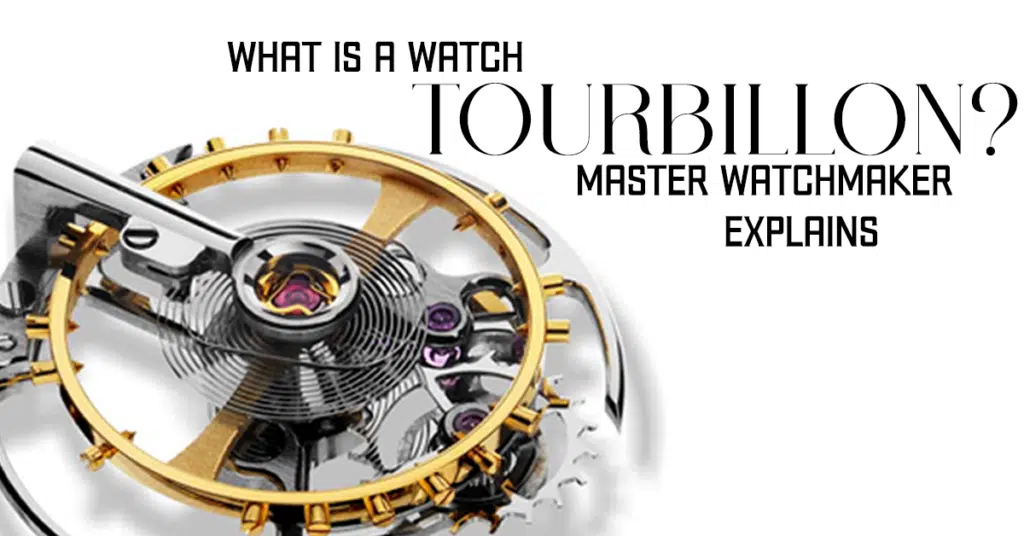
The tourbillon is a luxury complication for mechanical watches, invented in about 1795 by Abraham-Louis Breguet and patented by him in 1801. The name tourbillon is French for “whirlwind” or “whirlpool” – hardly surprising when you see it in action! It takes the form of an enclosure (or cage) that rotates around its own axis, typically once per minute, and contains the escapement and balance wheel. Breguet devised the tourbillon to try to overcome the effect of gravity on a watch’s accuracy. Gravity has an adverse effect on any watch movement that spends any time in a fixed position because it constantly pulls the escapement components in the same direction. A tourbillon works by enclosing the escapement (balance wheel and spring, escape wheel and pallet fork) in a cage that rotates once per minute, thereby averaging out the position of the components relative to gravity.
The tourbillon’s development aimed to help pocket watches perform better. These timepieces usually sat upright in waistcoat pockets, so the mechanism needed to normalize energy transfer between the watch’s regulating parts. The rotating components moved through every vertical position to reduce gravity’s uneven effect on the hairspring. This resulted in steadier timekeeping.
Modern wristwatches don’t really need tourbillons since they constantly change position during wear. Yet these mechanisms remain prized symbols of watchmaking excellence. Their complex construction requires exceptional skill, making them rare and expensive. Watchmakers produced fewer than 1,000 tourbillons worldwide between 1801 and 1945.
Tourbillons do more than serve a technical purpose – they offer a stunning display of mechanical artistry through an opening in the watch face. Their visual appeal and rich history keep them popular among collectors and enthusiasts, even as timekeeping technology advances.
Today’s versions include flying tourbillons without upper bridges, multi-axis tourbillons, and gyrotourbillons. Each design builds upon Breguet’s original concept. Leading brands like Patek Philippe, Audemars Piguet, and Girard-Perregaux have created unique interpretations that establish the tourbillon as watchmaking’s ultimate complication.
Table of Contents
How does a tourbillon movement work?
The tourbillon movement works through an ingenious mechanical system with a rotating cage that houses the main timekeeping parts. The mechanism places the escapement, balance wheel, and hairspring—parts that regulate a watch’s accuracy—inside a mobile carriage.
The system’s mechanical structure connects several parts together. The escapement part has the hairspring, balance wheel, and pallet fork. These components control how energy moves to the timekeeping mechanism and let the gears move forward at set intervals. The cage holding these parts spins once every minute in a complete 360-degree turn.
The power distribution is described below. There is a pinion positioned under the cage that mates with a turning gear train. The gear train wheels distribute energy from the mainspring to rotate the cage. There are gear teeth machined into a fixed fourth wheel that is soldered to the movement baseplate underneath the cage. As the cage rotates, the pinion for the escape wheel remains engaged with these teeth.
With the tourbillon cage turning, the rotation of the escape wheel pinion is caused by it remaining meshed to the fixed fourth wheel. This causes the lever to oscillate which actuates the balance wheel back and forth. The escape wheel will index back and forth locking and unlocking as it does in a normal movement.
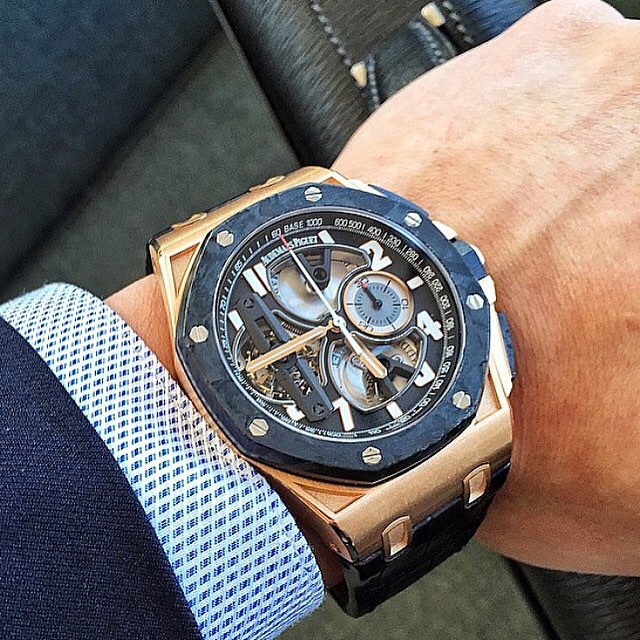
The tourbillon must be precisely engineered and balanced to function as intended. Because the cage abruptly stops and kicks back into motion with each beat of the escapement, a movement beating at 21,600vph will halt and restart once every vibration per second. That equals six times per second or 360 times per minute. This rigorous movement places demands on a mainspring to generate more power.
Balance: Tourbillon cages must be balanced. Generally, watchmakers accomplish this by adding mass to the side opposing the escapement or by removing mass from the escapement side. An imbalanced cage will impart gain or loss of power when held in an upright position.
Rotation: Every change in position the rotating cage presents the escapement will change the influence of gravity on the timekeeping elements. Rotating the cage averages out any positional inconsistencies causing error. Ideally this will result in greater accuracy.
Types of tourbillon watch movements
Tourbillon movements have come a long way since Breguet’s original design. Watchmakers have created several variants that tackle different technical challenges and match different priorities. Each type has its own way to fight gravity’s effects on timekeeping accuracy.
Single-axis tourbillon
The single-axis tourbillon shows off Breguet’s 1801 patent in its most basic form. The escapement spins around one axis and usually makes a complete turn every minute. A fourth pinion carries the cage inside a fixed fourth wheel, and the escape pinion meshes with this wheel. The escape wheel turns as the carriage rotates. This classic design works well to minimize rate differences in vertically held pocket watches. The benefits aren’t as strong when you lay the watch flat because the tourbillon’s effect doesn’t work as well.
Double-axis tourbillon
Anthony Randall came up with the double-axis tourbillon in 1977, and Richard Good built the first one in 1978. This version spins like a gyroscope on two perpendicular planes at once, unlike its single-axis cousin. The hairspring moves through more positions this way. Wristwatches get better chronometric stability from this setup because it handles position changes better. Many luxury models add a constant-force mechanism to balance out changes in mainspring tension, friction, and gravity.
Triple-axis tourbillon
Triple-axis (or tri-axial) tourbillons stand at the peak of mechanical complexity. Thomas Prescher brought these to wristwatches in 2004. The escapement never sits still relative to gravity thanks to its three rotation planes. Smart engineering has helped watchmakers overcome challenges like tall movements and high energy needs. Vianney Halter, Girard-Perregaux, Purnell, and Jaeger-LeCoultre make some notable triple-axis tourbillons.
Flying tourbillon
Alfred Helwig at the German School of Watchmaking created the flying tourbillon in 1920 by removing the upper support bridge. The cage looks like it’s floating because it’s only supported from below. Without the top bridge, you get a clear view of the spinning mechanism, and the watch might end up thinner. These might be more fragile than fully-bridged tourbillons, but collectors love them for their refined looks.
Gyrotourbillon
Jaeger-LeCoultre’s gyrotourbillon from 2004 takes the dual-axis concept to new heights. Their first version used a light aluminum cage that moved in two directions – the outer part turned once per minute while the inner section spun backward every 24 seconds. Newer models feature floating designs, spherical hairsprings, and different rotation speeds. The Gyrotourbillon 3 shows what’s possible by mixing a double-axis tourbillon with a monopusher chronograph and day/night display.
Why are tourbillon watches so expensive?

Tourbillon watches sell at exceptional premiums in the luxury timepiece market. Their prices range from tens of thousands to millions of dollars. These mechanical marvels blend precision engineering and artistic expression in ways that other watchmaking complications rarely match.
Craftsmanship and complexity
Tourbillon watches are expensive because their manufacture requires incredible precision. The tourbillon mechanism itself contains 40-70 delicate components that must fit together seamlessly into an area roughly the size of a penny. Only master watchmakers are skilled enough to achieve the requisite hand-finishing techniques, delicate assembly, and precise adjustments. A single tourbillon may take hundreds of hours to construct, with component tolerances measured in microns.
But tourbillon watches require even more expertise than just intricate assembly. The movement mechanisms are made with lightweight materials such as aluminum and titanium to optimize performance while minimizing weight. Each component must be refined using traditional hand-finishing techniques like polishing pivots, beveling bridges, and rounding jewel countersinks. These time-consuming processes require specialized tools and the world’s most experienced craftspeople.
Limited production
Making tourbillons takes so much work that only a few can exist. Many watchmakers create these timepieces in tiny numbers. To cite an instance, Pequignet makes just 24 flying tourbillons worldwide, Breguet produces 50 Classique Tourbillon Sidéral 7255 pieces, and Frederique Constant creates 150 Classic Tourbillon Manufacture watches.
The lack of these watches makes sense given how they’re made. Assembly, adjustment, and finishing take enormous time, which limits how many can be produced. The small number of qualified watchmakers who can do this work keeps these timepieces rare. Modern manufacturing has brought prices down somewhat, but tourbillons remain too complex for mass production.
Luxury branding
Tourbillon watches do more than tell time – they make powerful status statements. These mechanisms lift a timepiece to new heights, drawing collectors who love both mechanical complexity and exclusivity. Top watchmakers put tourbillons in their best products to show their highest skills.
The brand’s reputation plays a huge role in pricing. Well-known companies charge more based on their history and proven skills. Brands like Cartier, TAG Heuer, and IWC SCHAFFHAUSEN make use of tourbillons as symbols of excellence. A tourbillon in a wristwatch shows the brand’s respect for history, craft, and complexity. It proves they can create incredibly sophisticated mechanisms at microscopic sizes.
Modern tourbillon watches and their appeal
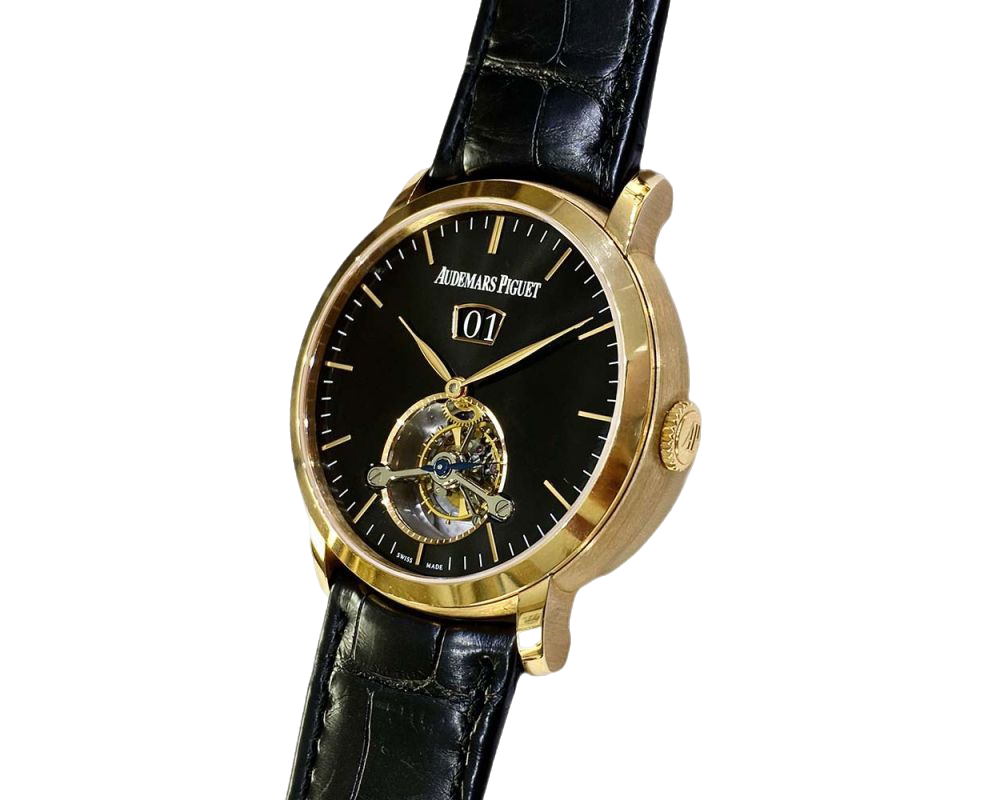
Modern tourbillon watches have grown beyond their roots to showcase mechanical artistry and technical breakthroughs. Over the last several years, forward-thinking watchmakers have worked to improve durability and wearability. These timepieces now suit everyday use rather than just sitting in display cases. Most modern designs feature a dial window that lets owners watch the mesmerizing mechanical dance of the tourbillon.
Leading manufacturers now offer their unique takes on this complication. Jaeger-LeCoultre launched its multi-axis Gyrotourbillon in 2004. This masterpiece features an outer cage that rotates once per minute, while its inner cage spins every 24 seconds in the opposite direction. Richard Mille revolutionized sports-ready tourbillons with models like the RM002-V2. These watches use advanced materials such as titanium and composite alloys. Patek Philippe’s Sky Moon Tourbillon “988” stands out as one of the most intricate wristwatches, combining a tourbillon with 12 other complications.
The tourbillon market has grown well beyond traditional luxury brands. Chinese watchmakers now make these mechanisms more available, with some watches priced under USD 10,000. This wider accessibility has brought these once-exclusive pieces to more enthusiasts without losing their appeal among collectors.
Today’s tourbillons blend beauty with function. Some designs use the tourbillon as a second hand with a one-minute rotation cycle. Others spin faster, like Greubel Forsey’s 24-second tourbillon. Bulgari’s achievements in miniaturization shine through their Octo Finissimo Tourbillon, which measures just 1.95mm thick.
New shock absorption systems, better power reserves, and improved water resistance have made these delicate mechanisms more reliable timekeepers. Yes, it is remarkable that athletes now wear some tourbillon watches during competitions, which proves their improved durability.
People’s fascination with tourbillons comes from their perfect mechanics and precise timekeeping – a never-ending quest for perfection. Though wristwatches no longer need them mechanically, tourbillons remain powerful symbols of a brand’s dedication to horological history, craftsmanship, and complexity.
What to consider before buying a tourbillon watch
Buying a tourbillon timepiece needs careful thought about several key factors that affect both quality and value.
Swiss vs Chinese movements
Swiss tourbillons remain the gold standard in watchmaking with their exceptional craftsmanship and detailed hand-finishing. These mechanisms start at USD 17,000 from prominent brands like TAG Heuer. Sea-Gull, which launched its ST80 tourbillon movement in 2005, makes more affordable alternatives starting around USD 3,000-5,000. Quality of finishing, chronometric performance, and production methods create the main differences. Chinese movements employ more automated manufacturing processes.

Brand reputation
A watchmaker’s heritage shapes both quality and investment potential substantially. Companies with centuries of experience command premium prices based on their proven expertise. Swiss and German manufacturers, especially those from Glashütte, maintain the strongest reputations. Sea-Gull and other Chinese producers have earned recognition through exhibitions, strategic collaborations, and quality improvements.
Design and materials
Quality tourbillons showcase cases made from premium metals, sapphire crystal that resists scratches, and precise finishing details. These include polished movement parts and hand-engraving. The watch’s water resistance ratings matter for daily wear, and strap quality ensures long-term comfort.
Price vs value
High prices don’t guarantee quality or longevity automatically. Each watch deserves assessment based on movement materials, build quality, and manufacturer’s reputation. Swiss-made tourbillons cost more than USD 30,000, yet more affordable options from alternative brands start around USD 1,999.
FAQs
What is a tourbillon watch and how does it work?
A tourbillon watch is a high-end mechanical timepiece featuring a rotating cage that houses the escapement and balance wheel. This mechanism constantly rotates, typically once per minute, to counteract the effects of gravity on the watch’s accuracy. The tourbillon’s continuous motion averages out positional errors, theoretically improving timekeeping precision.
Why are tourbillon watches so expensive?
Tourbillon watches are expensive due to their complex craftsmanship, limited production, and luxury branding. Each tourbillon mechanism consists of 40-70 intricate components that require meticulous hand-finishing and assembly by highly skilled watchmakers. The labor-intensive process and scarcity of qualified craftsmen result in limited production, further driving up costs.
Are there different types of tourbillon movements?
Yes, there are several types of tourbillon movements. These include single-axis tourbillons (the traditional design), double-axis tourbillons (rotating on two planes), triple-axis tourbillons (rotating on three axes), flying tourbillons (without an upper bridge), and gyrotourbillons (spherical dual-axis tourbillons). Each type offers unique approaches to countering gravitational effects and enhancing visual appeal.
Do tourbillon watches require batteries?
No, tourbillon watches do not require batteries. They are mechanical timepieces powered by a mainspring, which stores energy when wound. The tourbillon mechanism is part of the watch’s mechanical movement and operates without any electrical components.
What should I consider before buying a tourbillon watch?
When considering a tourbillon watch purchase, evaluate factors such as the movement’s origin (Swiss vs. Chinese), brand reputation, design and materials used, and the price-to-value ratio. Swiss tourbillons are generally more expensive but known for exceptional craftsmanship, while Chinese alternatives offer more accessible price points. Also, consider the watch’s overall quality, durability, and potential as an investment piece.
Enjoying our watch coverage? Get more of it in Google Search.