
Rolex 16200 Datejust Watches
The Rolex Datejust 16200 is the all-steel Datejust 36 with a smooth bezel: a 36 mm Oyster case in 904L stainless steel, a polished, domed steel bezel, and a Jubilee or Oyster bracelet. Rolex made it from 1988 until the mid-2000s with the calibre 3135 movement, alongside the engine-turned-bezel 16220, and replaced it with the 116200.Category: Datejust
Browse and filter this collection
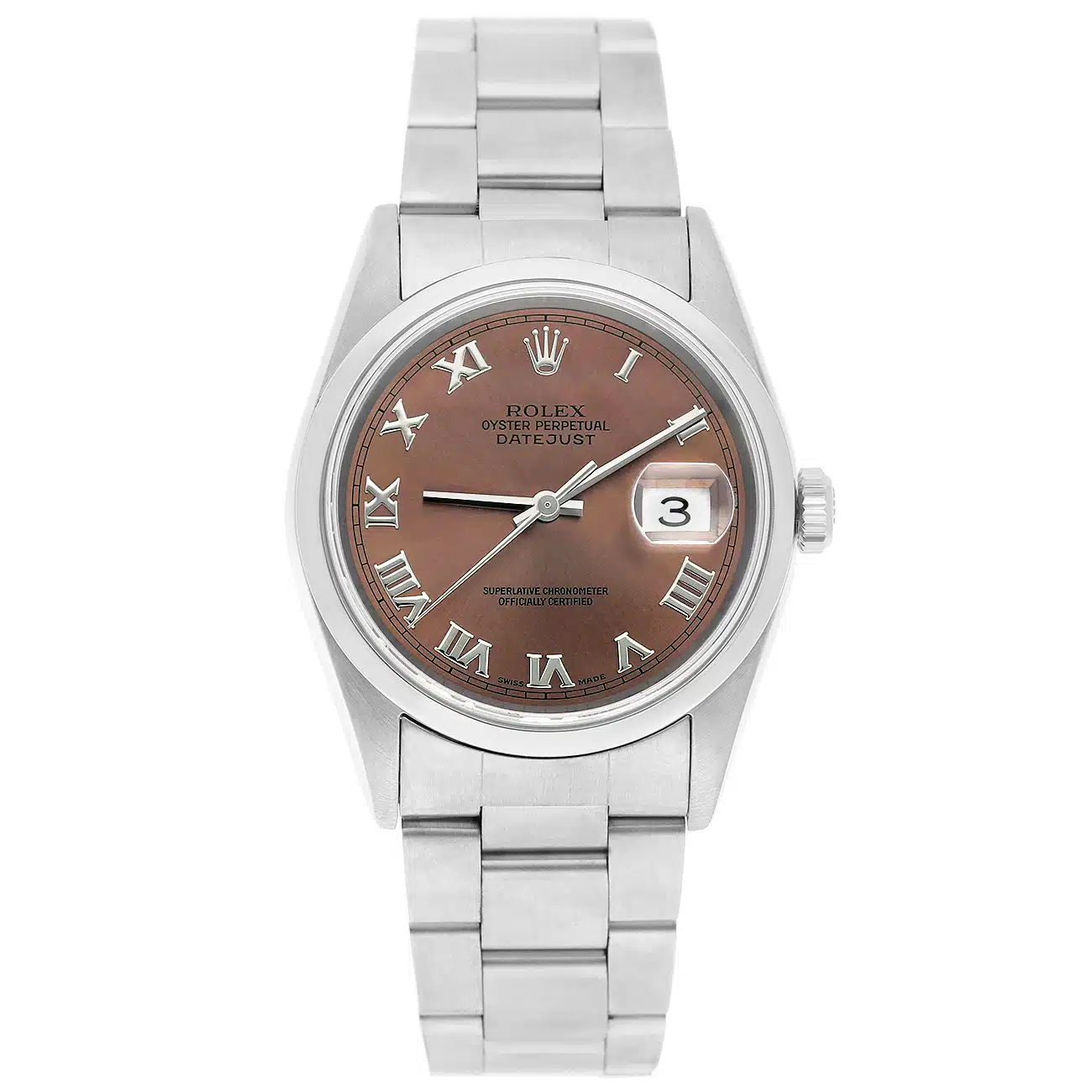
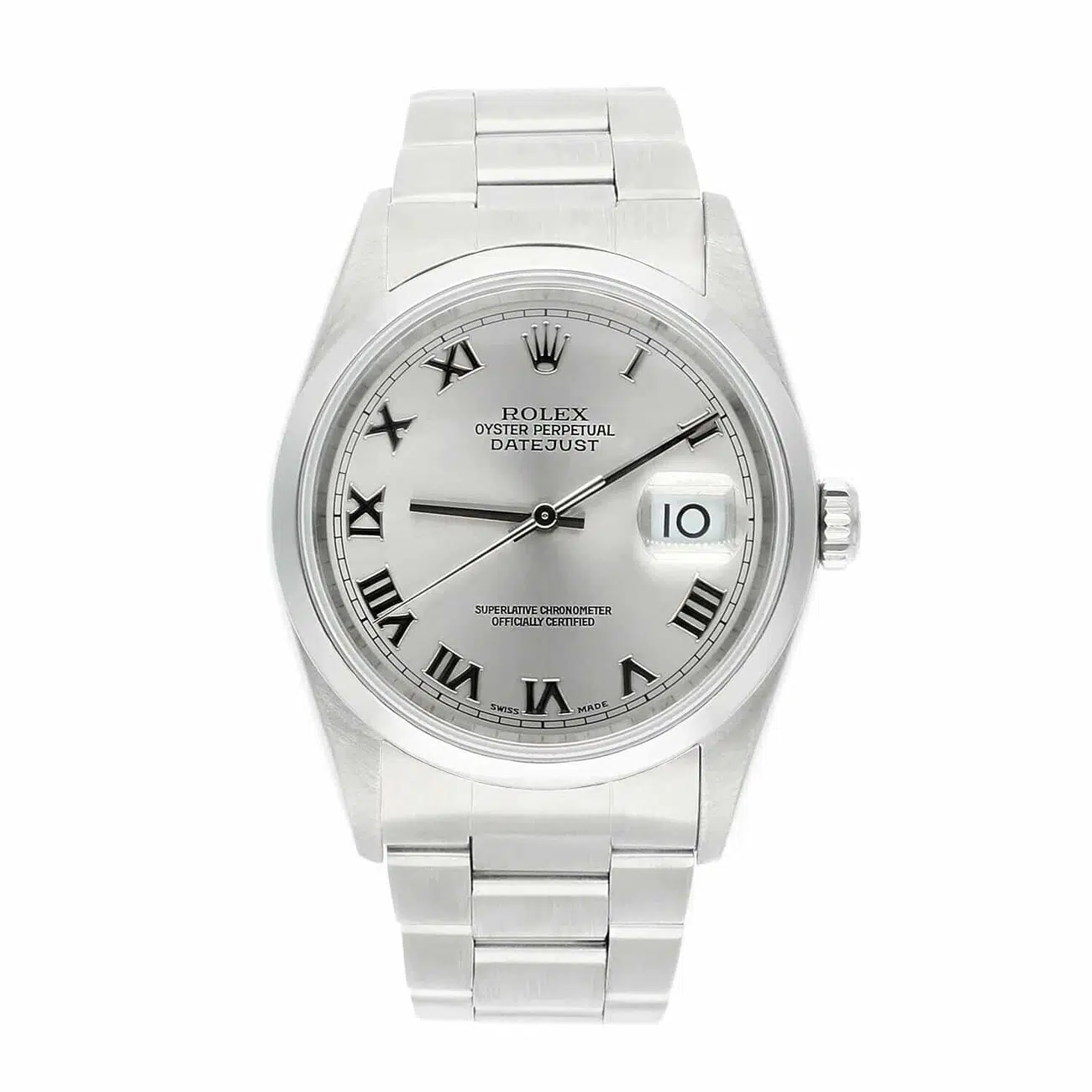
Rolex Datejust 16200 Price
At Watch My Diamonds, Rolex Datejust 16200 watches range from $7,099 to $8,999 across 2 priced listings.
Rolex no longer makes the 16200, so each watch is priced on its own merits: whether the dial and hands are original, how much the case has been polished, the state of the bracelet, the service history, and whether the box and papers are present. A complete watch with an unpolished case and its original dial is the one collectors pay more for.Rolex Datejust 16200 Specifications
| Reference | 16200 |
| Production | 1988 to the mid-2000s |
| Case | Oyster, 36 mm, screw-down case back |
| Case material | 904L stainless steel |
| Bezel | Smooth (domed), polished stainless steel |
| Crown | Screw-down, Twinlock double waterproofness system |
| Crystal | Scratch-resistant sapphire, Cyclops lens over the date |
| Water resistance | 100 m / 330 ft |
| Movement | Calibre 3135, Manufacture Rolex, self-winding mechanical, certified chronometer |
| Frequency | 28,800 vibrations per hour (4 Hz) |
| Power reserve | Approximately 48 hours |
| Functions | Center hour, minute and seconds hands; date at 3 o’clock with rapid setting; stop-seconds |
| Bracelet | Jubilee (five-piece links) or Oyster (three-piece links) in stainless steel, with hollow end links and a folding clasp |
| Luminescent material | Tritium until about 1998, then Luminova and, from 2000, Super-LumiNova |
Is the 16200 Made of 904L Steel?
Yes, the case is. Rolex first used 904L steel in 1985 and moved its steel watches over to it during the following years; the alloy resists corrosion better than the 316L steel used before, and Rolex now calls it Oystersteel. The 16200 belongs to the first generation of Datejusts with 904L cases. On early examples the bracelet was still 316L; Rolex moved the bracelets to 904L later in the production run.How to Read the Reference: 16200, 16220 and Their Siblings
In the five-digit Datejust 36, the last two digits of the reference tell you the bezel and the metal. The fourth digit is the bezel: 0 for smooth, 2 for engine-turned, 3 for fluted. The last digit is the metal: 0 for steel, 3 for steel and yellow gold, 4 for steel and white gold. So 16200 reads as a smooth bezel on an all-steel watch.| Reference | Bezel | Metal |
| 16200 | Smooth, steel | Steel |
| 16220 | Engine-turned, steel | Steel |
| 16234 | Fluted, 18 kt white gold | Steel and white gold |
| 16203 | Smooth, 18 kt yellow gold | Steel and yellow gold |
| 16233 | Fluted, 18 kt yellow gold | Steel and yellow gold |
16200 Dials
Rolex offered the 16200 with a long list of dials. Silver, white, black and blue are the most common, and salmon is among the rarer colors, with baton (index) hour markers or Roman numerals. The dial color and markers of each watch are listed on its card above. To compare the 16200 with other Datejusts in the same color, browse our silver dial Datejusts and chocolate dial Datejusts.What to Check Before Buying a 16200
- The dial. Check that the dial and hands are original and match the watch’s age. The markings at 6 o’clock tell you the luminous material: “T SWISS T” or “SWISS T<25” means a tritium dial from before about 1998, “SWISS” alone a Luminova dial from 1998 or 1999, and “SWISS MADE” a Super-LumiNova dial from 2000 on. Many older watches were fitted with a replacement dial and hands during a Rolex service. That is not a sign of a fake, but collectors pay more for the original dial.
- The case. Steel shows polishing clearly. Look at the lugs and the sides of the case: sharp edges and well-defined lug profiles mean little polishing, while rounded, thinned lugs mean the case has been polished many times.
- The bezel. The smooth steel bezel scratches easily and can be refinished, but repeated polishing flattens its dome. Check the profile from the side.
- The bracelet. Bracelets of this period loosen with wear, which collectors call stretch, and the five-piece Jubilee is more prone to it than the Oyster. Hold the watch by the case with the bracelet level: a noticeable sag means the pins and links are worn. Check too that the bracelet is a Rolex one, since replacement bracelets are common on watches of this age.
- The serial number and papers. The serial number is engraved between the lugs at 6 o’clock. It should match the papers and place the watch within the 16200’s years of production, from 1988 on.
- The service history. The calibre 3135 is a robust movement, but a watch of this age should have been serviced. Ask when, and by whom.