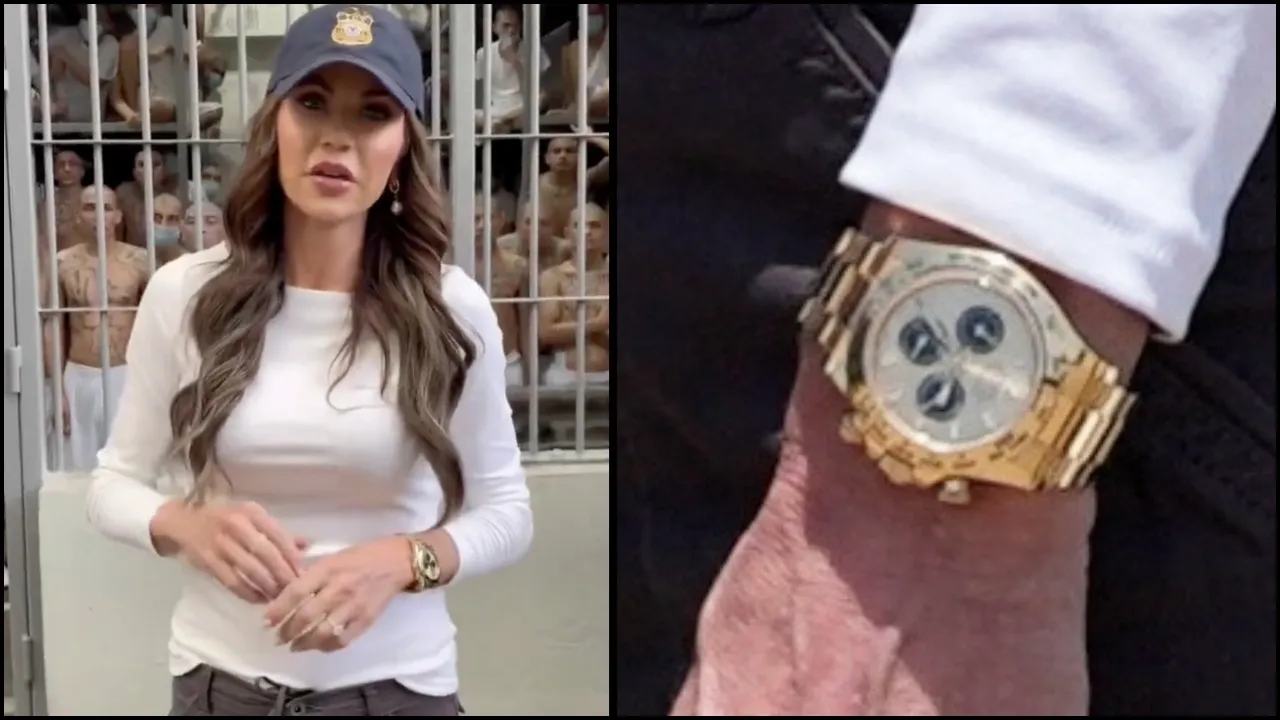
You won’t believe what Kristi Noem wore to a Salvadoran prison. During her controversial visit to see deported Venezuelans, she sported an 18-karat gold Rolex Cosmograph Daytona valued at $47,000. The watch’s market scarcity makes it worth even more than its retail price.
This Rolex controversy played out at Cecot prison, which can hold up to 40,000 inmates. The facility’s conditions are harsh – inmates sleep on bare metal bunks and can’t receive family or legal visits. The timing couldn’t have been worse, as El Salvador ranks among the Western Hemisphere’s poorest nations. Its citizens earn less than $5,000 per person annually, which means Noem’s watch costs ten times what an average Salvadoran makes in a year. The Trump administration had sent 261 Venezuelans to this prison, claiming they belonged to the Tren de Aragua gang. Civil rights groups slammed Noem for displaying such luxury, highlighting the stark income gap between the United States and El Salvador.
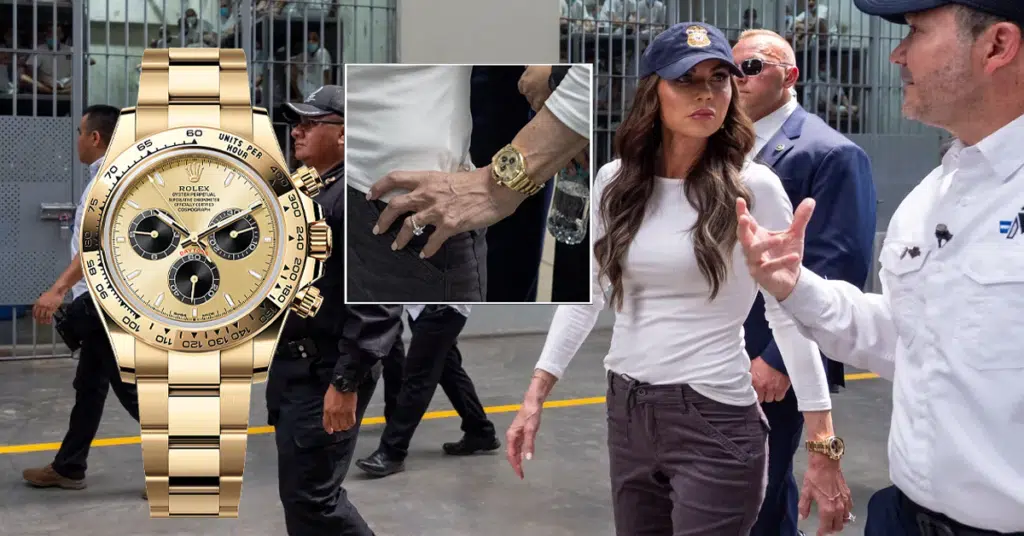
Kristi Noem wears $50K Rolex during El Salvador prison visit
Homeland Security Secretary Kristi Noem visited El Salvador’s Terrorism Confinement Center on March 27, 2025. She wore a white long-sleeve top, gray slacks, and an ICE baseball cap. Her wrist displayed an eye-catching 18-karat gold Rolex Cosmograph Daytona. The luxury timepiece, worth about $50,000, drew immediate attention while she filmed a video showing prisoners packed into bunked cells behind bars.
“If you come to our country illegally, this is one of the consequences you could face,” Noem stated in her social media video post. Her flashy watch remained clearly visible against the stark prison backdrop throughout her visit.
DHS Assistant Secretary Tricia McLaughlin addressed questions about Noem’s watch. She explained that Noem “chose to use the proceeds from her New York Times best-selling books to purchase an item she could wear and one day pass down to her children”.
Watch experts consider this Daytona model one of Rolex’s most coveted pieces. The watch’s popularity soared after Paul Newman started wearing it following its 1963 debut. Official dealers now have years-long waitlists, which forces buyers toward secondary markets with inflated prices. “It’s a flex piece. It’s a signifier of wealth. It’s not subtle at all,” one expert remarked.
Critics question optics of luxury watch in austere setting
The sight of Noem’s luxury timepiece next to imprisoned Salvadorans triggered swift criticism from human rights groups and political observers. Washington Office on Latin America analyst Adam Isacson highlighted this jarring contrast: “You’re in front of all these people in a very poor country, who are in the bottom 10 or 20 percent of their country… and it looks like you’re just flaunting your wealth while you flaunt your freedom”.
Critics quickly pointed out the gap between Trump administration’s populist message and Noem’s luxury display. Social media lit up with comments like this one from lawyer Tristan Snell: “Tell me again how these Trumpers are just regular folks rather than wealthy oligarchs looting and grifting America”.
People beyond political circles joined the conversation. A TikTok user noted sharply, “What did we learn from this video where they’re using people as props, men behind cages to present theatrics to the world? We learn if you’re gonna do it, get your Daytona Rolex Watch”.
Former Progress Texas president Ed Espinoza raised a pointed question: “How is a public servant able to flaunt these kind of accessories? This is the kind of things we’re used to seeing in other countries”. Many drew parallels to Melania Trump’s controversial 2018 jacket choice during her visit to migrant children, which read: “I REALLY DON’T CARE, DO U?”.
Notwithstanding that, some supporters brushed off these concerns on social media. Newsmax host Rob Schmitt defended her: “She’s successful. I’m sure that pissed you nerds off”.
DHS defends Noem’s Rolex purchase amid scrutiny
The Department of Homeland Security moved to defend Secretary Kristi Noem’s controversial timepiece amid growing criticism. A DHS spokesperson issued an official statement that emphasized Noem’s watch as a personal investment rather than government spending.
“Secretary Noem purchased the watch with her own money earned from private sector success,” the spokesperson clarified. “Public officials are entitled to spend their personal funds as they see fit, just like any other American citizen.”
DHS officials emphasized Noem’s transparency throughout her career and confirmed her proper filing of all financial disclosures. The watch controversy had overshadowed her El Salvador visit’s actual purpose: the administration’s steadfast dedication to address illegal immigration and gang violence.
The Secretary’s supporters within the department believed the focus on her wristwatch stemmed from political motives. “There are more important matters concerning national security than what the Secretary chooses to wear,” remarked one senior official who requested anonymity.
Questions still linger about Noem’s watch value compared to her government salary and the economic conditions in countries she visits officially. This ongoing debate reflects the tension between personal choices and public perception in high-profile diplomatic settings.
Conclusion
GOP Rep. Kristi Noem spent $50,000 on a Rolex watch, and took a tour of a Salvadorian prison where inmates sleep on metal slats while wearing it. The scandal serves as Exhibit A for why wealth-flaunting politicians just can’t seem to stay out of trouble. DHS spokeswoman Katie Waldman responded to criticism of Noem wearing her watch in prison by saying she is allowed to spend her money however she wants. We understand that, but connecting that to why she was wearing the Rolex while incarcerated Salvadorans slept on the ground just highlighted the cognitive dissonance rich people have when they encounter poverty.
There’s plenty of hypocrisy to pick apart here about taxpayer dollars being spent on Noem’s wardrobe and optics of her wearing a Rolex during her trip, but her gold wristwatch became a symbol that completely drowned out her tough-on-immigration message. Melania Trump didn’t invent the trend of wealthy officials having their outfit/news conference/message upstaged by their accessories. 2018 happened.
Republicans like Noem love to wag their finger about Democrats being out of touch elites, but then Noem sports a gold Rolex to a prison and everyone forgets she was even talking about immigration. She shouldn’t have worn that watch and we’ll see this fracas continue every time a politician wears high-end jewelry or a watch to poor communities in America. Venezuelans not returning to El Salvador’s Cecot prison because of Trump are forgettable. A gold watch that costs more than the average Salvadorian’s yearly salary is a headline.
Enjoying our watch coverage? Get more of it in Google Search.