A choice between Breitling and Omega watches puts you at a crossroads of two legendary Swiss watchmaking traditions. Omega’s journey began in 1848, and the brand made history as the first watch worn on the moon during the Apollo 11 mission in 1969. Breitling has ruled the skies since 1884 with its precision aviation timekeepers. These heritage brands hold different positions in the luxury watch hierarchy. Omega stands as the second most recognizable Swiss watch brand, with almost 70% international recognition. Breitling takes the 15th spot in this prestigious lineup.
The quality differences between Omega and Breitling reveal distinct design philosophies and technical approaches. Omega’s watches showcase clean, minimalistic designs that exclusively use in-house movements. These movements go through rigorous Master Chronometer certification. Breitling’s timepieces feature busier dials with multiple complications that appeal to aviation enthusiasts. Your choice between these brands largely depends on your personal style and functional needs. Both brands are a match for each other price-wise – Breitling starts around $3,000 while Omega begins at $2,500. This guide will help you decide which prestigious watchmaker deserves a spot on your wrist.
Table of Contents
Brand Heritage: Omega’s Moon Legacy vs Breitling’s Aviation Roots
The Swiss watchmakers earned their legendary status through distinct historical paths. Each brand created its unique place in the watchmaking world through decades of breakthroughs and specialization.
Omega’s Milestones: From 1848 to the Moon
Louis Brandt started his small workshop in La Chaux-de-Fonds, Switzerland in 1848, marking Omega’s beginning. The brand gained real momentum in 1894 after creating the groundbreaking 19-ligne caliber “Omega” movement. This movement proved so precise and innovative that it became the company’s new name.
Omega built its reputation for accuracy in the early 20th century by serving as the official timekeeper for over 20 Olympic Games. Their partnership began with the 1932 Los Angeles Olympics and showcased their precision globally.
The brand’s legacy transformed in 1957 with their “Professional” collection launch, featuring three iconic models:
- The Speedmaster chronograph
- The Seamaster 300 diving watch
- The Railmaster antimagnetic watch
July 21, 1969 marked Omega’s most historic moment when the Speedmaster Professional became the first watch worn on the moon. Buzz Aldrin wore his Omega during humanity’s first moonwalk, which earned it the lasting nickname “Moonwatch.” The Speedmaster remained NASA’s official watch for all manned space missions after passing their rigorous testing.
Breitling’s Aviation Legacy: Navitimer and Chronomat Origins
Breitling’s heritage connects deeply with aviation, unlike Omega’s space exploration. Léon Breitling opened his workshop in Saint-Imier, Switzerland in 1884, focusing on precise chronographs and timers.
The 1930s saw Breitling’s strong aviation connection emerge as aircraft instruments grew more complex. The company created cockpit clocks and specialized timing instruments that became standard equipment in many aircraft.
Breitling’s aviation legacy stands on two remarkable models. The Chronomat, launched in 1942, featured a circular slide rule designed specifically for pilots and engineers to perform vital flight calculations. The iconic Navitimer followed in 1952 and quickly became the Aircraft Owners and Pilots Association’s (AOPA) official watch. Pilots used the Navitimer’s distinctive slide rule bezel to calculate fuel consumption, airspeed, and distance.
Breitling concentrated on creating practical tools for professional aviators while Omega explored space. Their timepieces served as functional instruments that pilots relied on before modern digital avionics existed. This technical approach to watchmaking—creating specialized tools rather than simple timekeepers—remains Breitling’s identity cornerstone today.
Breitling and Omega’s heritage comparison shows two manufacturers that reached excellence differently—one aimed for the stars, while the other mastered the skies.
Design Language: Minimalist Elegance vs Technical Boldness
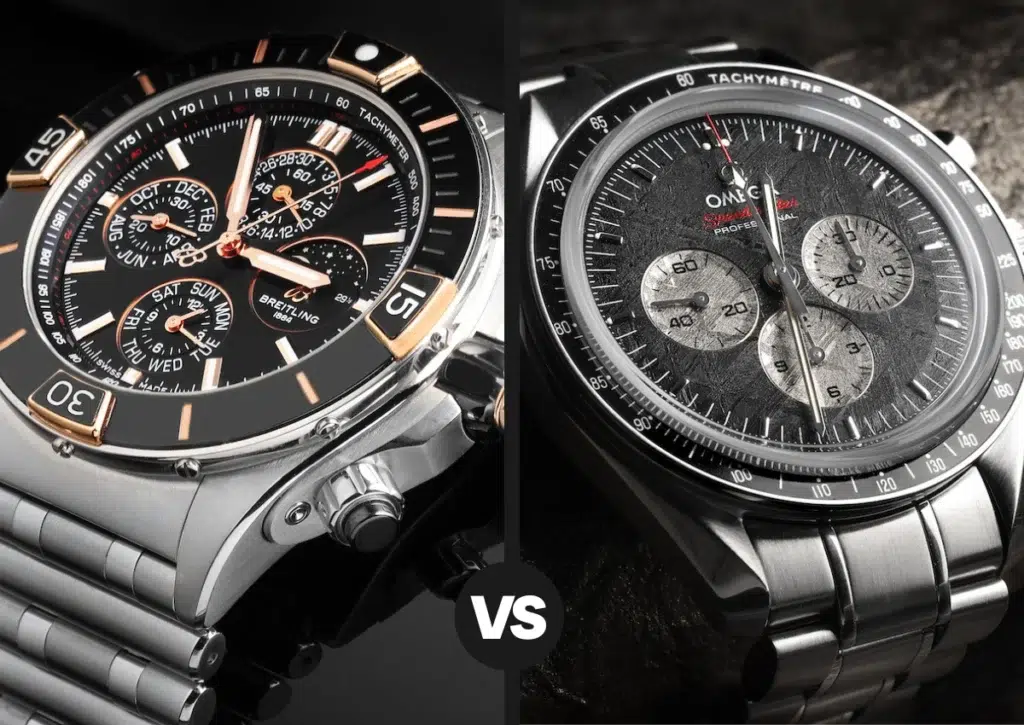
A luxury timepiece tells its story before it even touches your wrist. Looking at Breitling and Omega watches side by side reveals their distinct design philosophies that reflect their unique heritage and purpose.
Dial Esthetics: Clean vs Complication-Rich Layouts
Omega’s designs embrace minimalism with clean, symmetrical dials that feature flowing lines and subtle markings. Their refined approach lets functions blend naturally without cluttering the display. Even their sportier Seamaster models show thoughtfully placed complications rather than a crowded face. The brand’s design philosophy values versatility and timeless appeal, combining vintage-inspired elements from earlier diving watches with modern relevance.
Breitling takes pride in its technical esthetic with detailed dials that highlight functionality. These watches draw inspiration from cockpit instruments and often include multiple timers, tachymeters, and their signature slide rule bezels—a direct nod to their aviation roots. Pilots and aviation enthusiasts appreciate this bold styling that turns their watch into practical equipment rather than just an accessory.
Case Sizes and Wearability: 38mm–44mm vs 40mm–46mm
Each brand’s sizing reflects its unique approach to design. Omega’s range runs from 38mm to 44mm, which fits different wrist sizes and style priorities. These moderate dimensions match their balanced design philosophy.
Breitling’s cases tend to run larger, usually between 40mm and 46mm, making a strong statement on the wrist. These substantial sizes perfectly match their technical, aviation-focused identity but might not suit everyone’s wrist. The brand now offers more compact options—their men’s collection starts at 34mm, with women’s pieces beginning at 32mm.
Strap Options: NATO, Leather, and Rubber Variants
Both brands give you plenty of ways to customize your watch strap. Omega’s selection includes NATO straps in polyamide, polyester, leather, and even denim combinations. You can choose from classic black and navy to bold multicolor patterns, with prices ranging from $190-$370.
Breitling really shines with its strap variety, offering everything from elegant alligator leather to technical rubber options. Their rubber collection stands out with the Diver Pro featuring “BREITLING” text across the straps, the textured Mesh Rubber, and the perforated Ocean Racer that helps your wrist breathe. The brand also offers eco-friendly choices like ECONYL® yarn NATO straps made from recycled ocean nylon.
Your choice between Breitling and Omega comes down to what speaks to you—whether it’s Omega’s versatile elegance that works with both dive watches and formal wear, or Breitling’s bold technical character that proudly shows off its aviation heritage.
Movement Technology and Accuracy Standards
A luxury timepiece’s soul exists in its movement—the complex mechanical system that drives the watch. Let’s look at how Breitling and Omega differ in their technical approaches and precision standards.
In-House Movements: Omega Co-Axial vs Breitling B01
Omega’s signature Co-Axial escapement sits at the core of their watches. This ground-breaking system cuts down friction between parts and lets you go longer between services. You’ll find this technology in their Master Co-Axial anti-magnetic movements. Watch lovers often pick Omega because these advanced in-house movements show up in most of their collection.
Breitling’s star player, the B01 caliber, comes with a complete chronograph system. It features a column wheel, vertical clutch, and an impressive 70-hour power reserve. While Breitling used outside movements more often than Omega in the past, their B01 shows they’re serious about making their own. Notwithstanding that, some experts think Breitling watches with outside movements don’t match up to Omega’s in-house options in terms of value.
Certification: Master Chronometer (METAS) vs COSC
These watchmakers chase excellence through different certification paths. Omega sets a high bar with their Master Chronometer label. Their watches must pass both COSC testing and extra METAS certification. After getting COSC certified (which allows -4/+6 seconds daily variance), Omega movements face eight more METAS tests in ground conditions. These include exposure to 15,000 gauss magnetic fields, with tighter accuracy needs of 0/+5 seconds per day.
Breitling keeps its standards high through traditional COSC certification on many models. The process involves testing movements for 15 days at three temperatures and five positions to ensure they keep perfect time.
Quartz Precision: SuperQuartz vs Standard Quartz
Breitling shines brightest in battery-powered options with their SuperQuartz technology. These movements earn COSC Quartz Chronometer certification, showing precision that beats standard quartz calibers by miles. Watch experts say “Breitling in many cases wears the crown with the Breitling SuperQuartz calibers”.
Omega makes reliable standard quartz watches, but they don’t match Breitling’s SuperQuartz certification levels. This creates an interesting split: Omega leads mechanical watch accuracy with Master Chronometer certification, while Breitling rules the quartz category.
Your perfect choice between these brands might come down to movement preference. Mechanical purists often lean toward Omega’s state-of-the-art features, while those who want the best in quartz precision might find Breitling’s SuperQuartz technology more appealing.
Use Case Focus: Sea Explorers vs Sky Navigators
Breitling and Omega create specialized timepieces that shine in specific environments. Each brand’s unique heritage and engineering priorities shape their distinctive approaches.
Diving Capabilities: Seamaster 300M vs Superocean 44
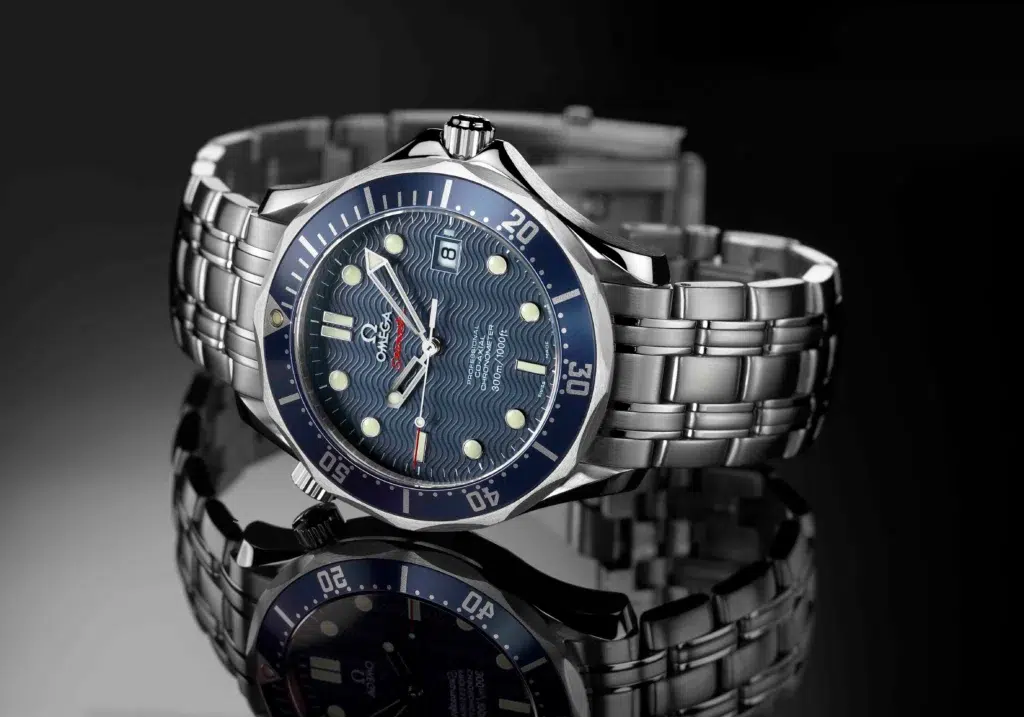
The Seamaster and Superocean lines have taken different paths since their birth in 1957. Omega’s Seamaster 300M stands out with its ceramic bezel and wave-pattern dial. Its helium escape valve is vital for saturation diving. The watch’s 300-meter water resistance pairs with the Naiad crown system that naturally tightens as depth increases, which creates exceptional water protection.
The Superocean 44 takes a different approach with its focus on rugged functionality. It boasts a 1,000-meter depth rating and extremely bright lume. The watch’s captive bezel design gives better grip in wet conditions. This design proves more practical than the Seamaster’s knurled bezel, which users find harder to turn with wet hands.
Chronograph Utility: Speedmaster Racing vs Navitimer B01
The Speedmaster Racing and Navitimer B01 show two distinct paths to chronograph design. The Speedmaster features a clean dial layout with classic tachymeter functions – qualities that made it NASA’s choice for space missions.
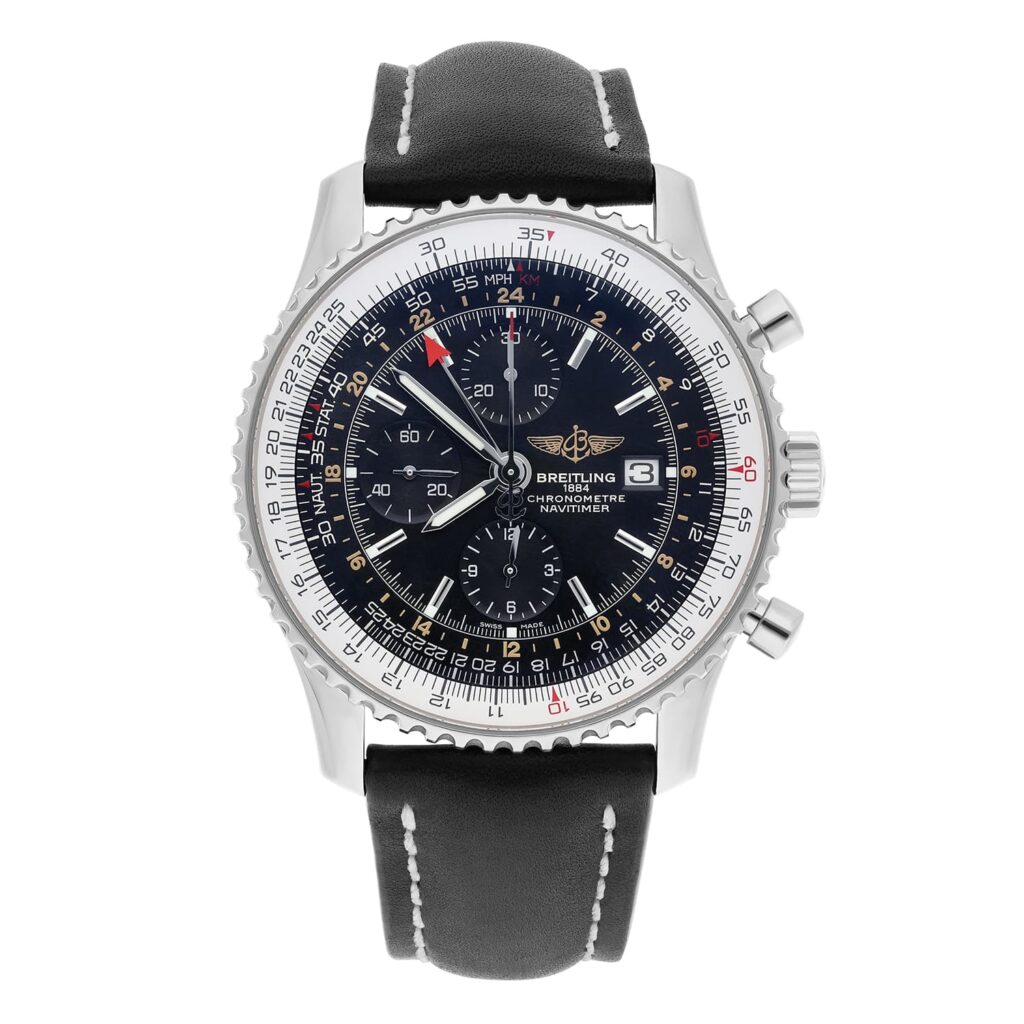
The Navitimer B01 takes pride in its complexity. Its signature slide rule bezel works as a functional calculator. Pilots use it to compute vital measurements like fuel consumption, airspeed, and distance. This reflects Breitling’s practical view of chronographs as working tools rather than simple timekeepers.
Everyday Versatility: Aqua Terra vs Premier
Omega’s Aqua Terra serves as an excellent daily watch that moves naturally between casual and formal settings. Its balanced design and 150m water resistance make it perfect for modern lifestyles.
The Premier collection from Breitling combines sporty and sophisticated elements. These watches fit well in both professional settings and casual occasions. While it may not match the Aqua Terra’s water resistance, the Premier makes up for it with aviation-grade precision and elegant styling.
These brands differ mainly in their specialized functions. Omega creates refined tools for specific environments, particularly underwater exploration. Breitling focuses on aviation functionality with technical interfaces that professional pilots value.
Pricing and Resale Value: Investment or Passion Purchase?
Luxury timepiece investments go way beyond the original purchase price. A good look at Breitling vs Omega’s long-term value helps you decide if your purchase will be just an investment or a passion project.
Entry-Level Pricing: $3,000 vs $2,500
Both brands give new collectors a great starting point into Swiss luxury. You can get entry-level Omega models like the Constellation and Aqua Terra starting at $3,000. Breitling matches this price point with their most affordable watches such as the Endurance Pro, give or take a few hundred dollars.
Omega offers a broader price range from starter models to exclusive limited editions. This makes Omega more appealing to first-time luxury watch buyers. Breitling tends to price higher because they focus on complex aviation chronographs with special features.
Resale Trends: Speedmaster Snoopy vs Navitimer 806
Omega has a slight advantage in the secondary market for holding value. The brand’s connection to NASA, James Bond, and the Olympics creates wider recognition and steady demand. The Speedmaster Professional “Moonwatch” holds its value exceptionally well, and some editions have increased by a lot in price.
Snoopy editions are a great investment chance. The original Snoopy model (ref. 3578.51.00) now sells for about $20,000—nowhere near its retail price. The 1967 “Ultraman” Speedmaster sells for around $40,000 today.
Breitling’s Navitimer 806 and vintage Navitimers keep their value well. Yet all but one of these iconic aviation models show mixed resale performance. Breitling’s specialized appeal creates strong collector demand for certain models while others might struggle to hold value.
Limited Editions and Collector Demand
Limited edition watches are the best investment picks for both brands. Omega releases special production models tied to Olympic Games, James Bond films, and space exploration anniversaries. These numbered editions often come in quantities that match significant years (like 2,020 pieces for Tokyo Olympics) and collectors love them.
Over time, Omega shows better stability and steady value growth. Vintage Speedmasters with Lemania caliber 321 remain highly sought after, along with special editions like the Alaska Project. Breitling’s limited aviation editions like the Navitimer Cosmonaute attract dedicated fans, though from a smaller group of collectors.
Your choice between Breitling and Omega comes down to what matters more to you – Omega’s wider market appeal or Breitling’s rich aviation heritage.
Comparison Table
| Feature | Omega | Breitling |
|---|---|---|
| Founded | 1848 | 1884 |
| Brand Recognition | 2nd most recognizable Swiss watch brand (70% recognition) | 15th most recognizable Swiss watch brand |
| Historical Achievement | First watch worn on the moon (1969) | Official timepiece of Aircraft Owners and Pilots Association |
| Design Philosophy | Clean, minimalist esthetics | Complex dials with multiple features |
| Case Size Range | 38mm – 44mm | 40mm – 46mm |
| Movement Type | Exclusively in-house movements | Combination of in-house and external movements |
| Movement Technology | Co-Axial escapement | B01 caliber with column wheel |
| Power Reserve | Not mentioned | 70 hours (B01 caliber) |
| Certification | Master Chronometer (METAS + COSC) | COSC |
| Accuracy Standard | 0/+5 seconds per day | -4/+6 seconds per day (COSC) |
| Water Resistance | 300m (Seamaster 300M) | 1,000m (Superocean 44) |
| Entry-Level Price | Starting around $2,500 | Starting around $3,000 |
| Resale Value | Strong, especially with Speedmaster models | Variable, robust for vintage Navitimers |
| Primary Focus | Marine/Space exploration | Aviation/Navigation |
| Quartz Technology | Standard quartz | SuperQuartz (COSC certified) |
Conclusion
Final Verdict: Two Icons, Different Wrists
Your lifestyle and priorities will determine whether Breitling or Omega belongs on your wrist. These pillars of Swiss horology each bring their unique approach to watchmaking.
Both brands share remarkable heritage but took different paths. Omega grew from small workshops in La Chaux-de-Fonds to create timepieces that reached the moon’s surface. Their focus stayed on achieving precision in extreme conditions. Breitling built its name by crafting practical aviation tools. Professional pilots trusted these instruments before digital cockpits became the norm.
These manufacturers have strikingly different design philosophies. Omega’s watches feature clean, versatile looks that work just as well in meetings as they do at the beach. Breitling’s timepieces make bold statements with their technical dials and larger cases that honor their aviation roots. This contrast shows in their movements too. Omega uses only in-house calibers with Master Chronometer certification to deliver exceptional accuracy. Breitling mixes in-house and sourced movements to focus on specialized functions.
Your daily routine plays a big role in choosing between these brands. Divers and underwater enthusiasts might lean toward Omega’s Seamaster with its helium escape valve and wave-pattern dial. The Breitling Navitimer’s slide rule bezel appeals more to pilots, aviation fans, and those who love technical complexity.
Looking at investment value, Omega watches tend to hold their worth better across their range, especially Speedmaster models. Breitling shows more variation – some vintage Navitimers fetch impressive prices while other models lose value faster.
Both brands showcase Swiss watchmaking excellence in their own way. You’ll end up with a genuine piece of heritage whether you pick Omega’s clean sophistication that went to the moon or Breitling’s bold technical mastery that ruled the skies. These timepieces carry craftsmanship that lasts generations.
FAQs
Is Omega considered superior to Breitling?
While both are respected Swiss watchmakers, Omega generally ranks higher in brand recognition and prestige. However, the “better” brand depends on individual preferences for design, functionality, and heritage.
What sets Breitling apart from other luxury watch brands?
Breitling is known for its aviation-inspired designs, technical dials with multiple complications, and precision chronographs. Their SuperQuartz technology also offers superior accuracy in quartz models compared to many competitors.
How do Omega and Breitling compare in terms of water resistance?
Both brands offer excellent water resistance in their diving models. Omega’s Seamaster 300M is water-resistant to 300 meters, while Breitling’s Superocean 44 can withstand depths up to 1,000 meters.
Which brand offers better value retention?
Generally, Omega watches tend to retain their value better in the secondary market. However, certain Breitling models, especially vintage Navitimers, can also hold their value well. Ultimately, value retention varies by specific model and market conditions.
How do the movements in Omega and Breitling watches differ?
Omega exclusively uses in-house movements, including their innovative Co-Axial escapement. Breitling uses a mix of in-house and sourced movements, with their flagship B01 caliber featuring an integrated chronograph mechanism. Both brands offer high-quality, precise movements, but Omega’s are often considered more technologically advanced.
Enjoying our watch coverage? Get more of it in Google Search.