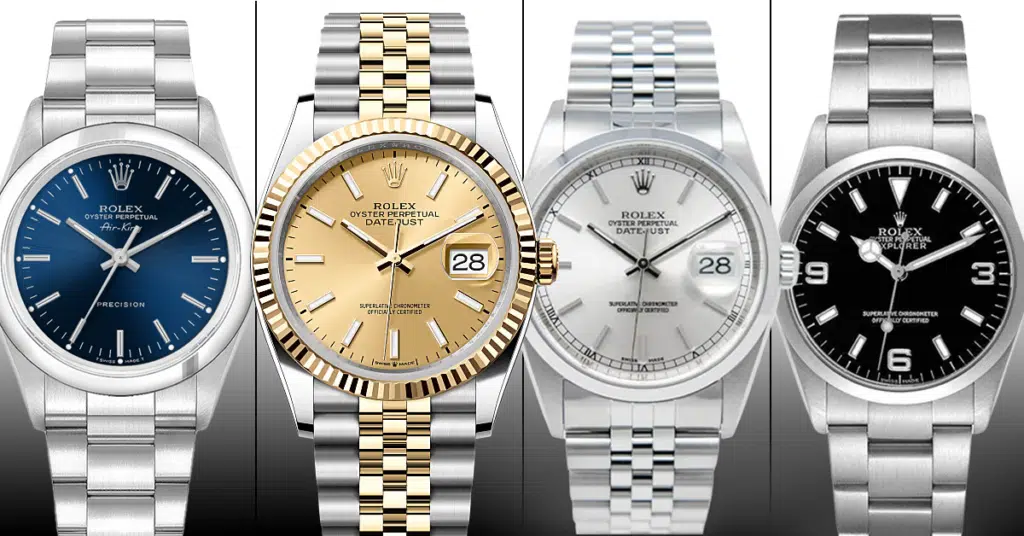
A starter Rolex will set you back anywhere from $5,000 to $8,000, based on your choice of model and its condition. The stainless steel Oyster Perpetual 28 stands as the most budget-friendly option in the Rolex lineup, with a price tag of $5,800. You’ll find great choices among the classic Datejust, the no-nonsense Explorer, and the pilot-inspired Air-King. The Air-King reference 14000 starts at around $4,500, while a Lady-Datejust reference 69173 in excellent shape with complete documentation begins at about $4,100.
This piece walks you through the best-value entry-level Rolex models. You’ll learn what makes each watch unique and how to pick the right one, whether new or pre-owned. New Rolex enthusiasts will get a perfect glimpse into why this legendary brand has earned its reputation.
Table of Contents
Oyster Perpetual Lineup: The Purest Entry-Level Rolex
The Oyster Perpetual embodies everything in Rolex’s design, with roots going back to the original waterproof Oyster case from 1926. This watch stands as Rolex’s most available model and shows off the brand’s core design without extra complications.
Sizes and Reference Numbers
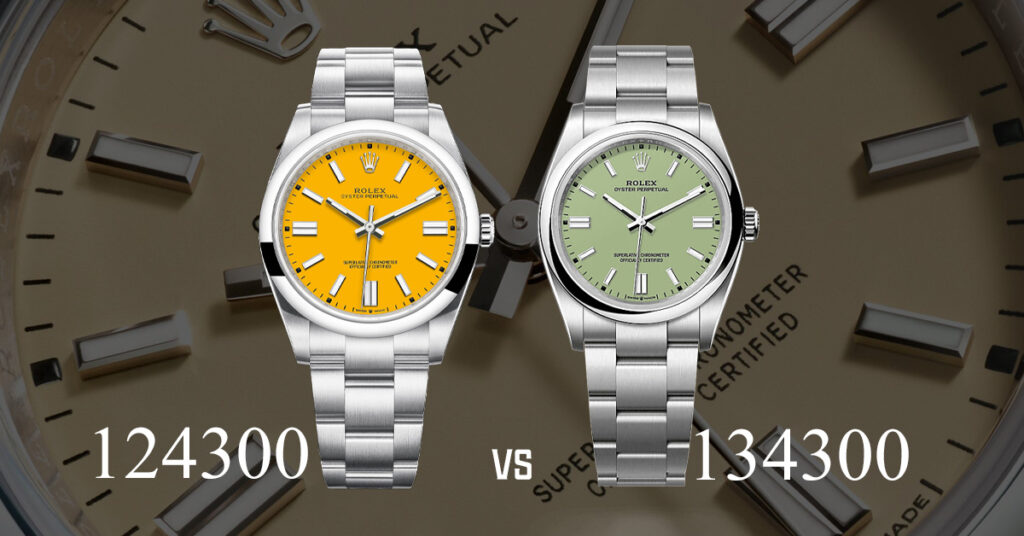
Rolex makes the Oyster Perpetual in five different case sizes that fit almost any wrist. You can pick from 28mm, 31mm, 34mm, 36mm, and 41mm models. These sizes replaced older versions including the 24mm, 26mm, and the fan-favorite 39mm that left the lineup in 2020.
Modern production watches use new reference numbers: 41mm (124300), 36mm (126000), 34mm, 31mm, and 28mm. Each watch keeps Rolex’s classic Oyster case design with 100-meter water resistance. The cases come in Oystersteel with smooth bezels and Oyster bracelets. The bracelet’s Easylink system lets you quickly adjust it by about 5mm.
Dial Color Options and Popularity
Rolex brought new life to the Oyster Perpetual in 2020 with bright lacquered dials that took inspiration from vintage “Stella” Day-Dates of the 1970s. People love these colors:
Turquoise blue (nicknamed “Tiffany blue”)
Coral red
Yellow
Green
Candy pink
Each case size doesn’t get all dial options. The 31mm watch offers the most choices with nine colors, mixing bright lacquers and classic sunray finishes. The 28mm size comes with just four options: bright blue, silver, black, and pink—all in sunray finish. Rolex added new matte pastels in 2025 like pistachio, beige, and lavender.
Movement and Power Reserve
Two different in-house movements power the Oyster Perpetual line based on size. The bigger 36mm and 41mm models use the advanced caliber 3230 that runs for 70 hours. This movement has Chronergy escapement and Parachrom hairspring to resist magnetism better. It’s the same engine that powers the no-date Submariner, making these watches great value.
The smaller 28mm, 31mm, and 34mm watches run on caliber 2232 with 55 hours of power and a silicon (Syloxi) balance spring. Both movements work with amazing precision as Superlative Chronometers that stay within +/- 2 seconds per day.
Retail vs. Secondary Market Pricing
The 2025 retail prices start at $5,800 for the 28mm and go up to $6,650 for the 41mm. The 31mm costs $5,950, the 34mm $6,050, and the 36mm $6,350. Even though these watches are Rolex’s entry-level models, many sell for much more on the secondary market.
The turquoise blue dial has become a collector’s favorite and sells between $10,000 and $22,500—triple its store price. Coral red dials go for $9,000 to $14,000. Regular models usually sell above retail too, averaging around $8,500.
Buyers looking to spend less can find older pre-owned models starting around $2,000, but these might not have all their papers. Smaller watches and traditional dial colors usually have least expensive Rolex prices than bigger sizes with bright colors.
Datejust Models: Classic Design with a Date Function

The Datejust has grown into one of the most versatile entry level Rolex watches since 1945. This iconic timepiece blends practical functionality with classic styling. You’ll spot it by the signature date window at 3 o’clock with its Cyclops magnification lens – a perfect mix of elegance and function.
Datejust 36 vs 41: Key Differences
The biggest difference between these popular Datejust variants shows up in their case sizes. The Datejust 36 comes with a classic 36mm diameter that hasn’t changed much since the original model. This versatile size works great for most wrist types. Watch collectors love these vintage proportions, which look exceptional on wrists up to 6.5 inches around.
The Datejust 41 takes a more modern approach with its 41mm case that makes a bold statement. This larger version replaced the Datejust II to match current priorities for better visibility and stronger wrist presence. It looks best if you have wrists bigger than 7 inches.
Both models share Rolex’s advanced Caliber 3235 movement. The movement delivers an impressive 70-hour power reserve and stays accurate to +/- 2 seconds daily. Price-wise, you’ll pay about $600 more for the 41mm compared to its 36mm sibling in similar setups.
Bracelet and Bezel Variants
Your bracelet choice changes the Datejust’s personality completely. The five-link Jubilee bracelet, created for the original Datejust in 1945, brings a jewelry-like look with great flexibility. Light dances beautifully between its polished inner links and brushed outer sections. The three-link Oyster bracelet offers a sportier look with wider, flatter links.
Bezels come in three main styles. A smooth domed bezel keeps things subtle, while the iconic fluted bezel made only from 18k gold has become a Rolex signature. Diamond-set bezels add luxury and come with a hefty price increase.
Entry-Level Datejust Price Range
The full stainless steel Datejust with smooth bezel and Oyster bracelet makes the most budget-friendly choice. Here are the 2025 retail prices:
Lady-Datejust 28mm: $7,200
Datejust 31mm: $7,300
Datejust 36mm: $7,750
Datejust 41mm: $8,350
Premium features boost prices quickly. A fluted bezel adds about $1,600. Two-tone Rolesor models start at $13,550 for the 36mm and $15,250 for the 41mm.
The pre-owned market offers great deals. You can find well-kept steel Datejust models from the 1970s-80s starting at $3,500. The stainless steel Datejust 36 reference 1601 gives excellent value at around $4,200.
Vintage models let you enjoy the classic Datejust experience without spending too much. These pieces keep the timeless design that has made this collection a symbol of accessible luxury in the entry level Rolex lineup.
Explorer and Air-King: Entry-Level Rolex Sports Watches
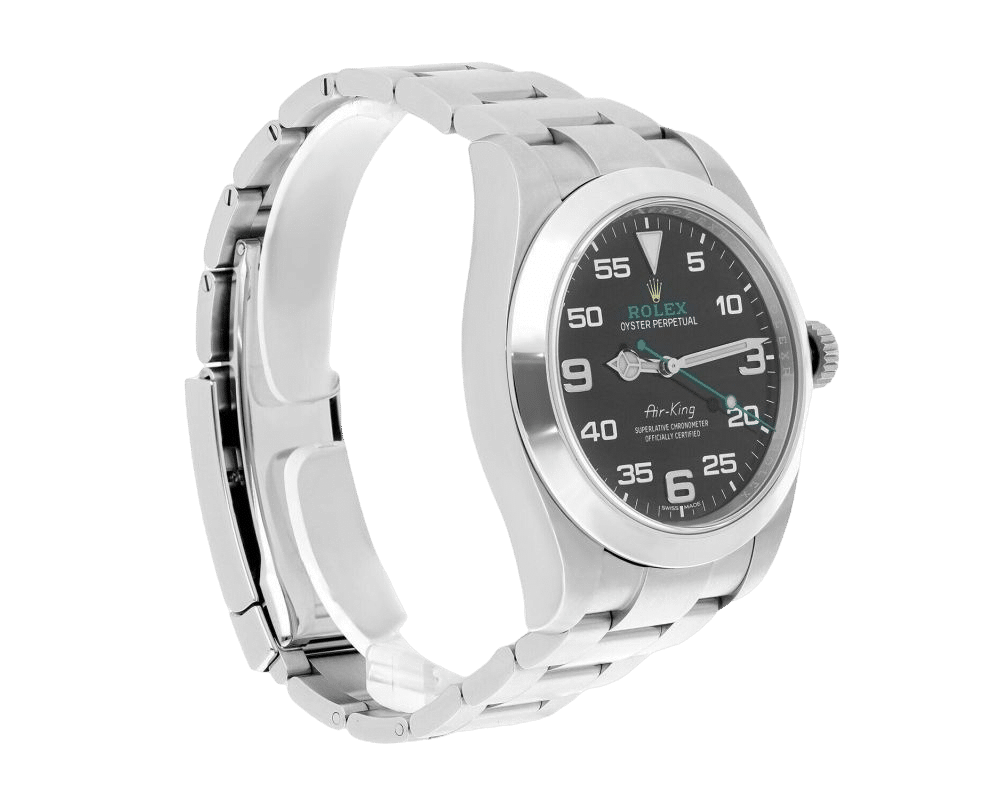
Sports watch enthusiasts looking for tough timepieces with rich heritage will find the Explorer and Air-King models as a great option of Rolex for beginners. These watches are durable with distinctive styling but cost less than Submariner and GMT-Master models.
Explorer 36mm vs 40mm
The Rolex Explorer’s size tells an interesting story. Rolex briefly made it 39mm in 2010, then went back to the classic 36mm size in 2021 with reference 124270. The company surprised collectors in 2023 by adding a 40mm Explorer (reference 224270), letting customers choose between both sizes.
Each size creates its own unique feel. The 36mm version stays true to the original 1953 mountaineering watch that went up Everest, with a compact profile perfect for smaller wrists. The lug width is just 19mm while the 40mm model has a wider 21mm spacing.
The 40mm Explorer works better for larger wrists. Both models share the same movements, materials, and dial layouts. The prices show small differences – the Explorer 36mm costs about €7,250 while the 40mm version is €7,650.
Air-King Design and Specs
The Air-King reference 126900 looks different with its aviation-inspired style. The 40mm Oystersteel case has large 3, 6, and 9 hour numbers and a bold minute scale for navigation timing.
This Rolex stands out with special colors – a green seconds hand matching the green Rolex name, plus a yellow crown symbol. Most other Professional models stick to one color scheme.
The Air-King runs on the advanced caliber 3230 movement that lasts 70 hours between winds and keeps time within -2/+2 seconds daily. The case now has crown guards (added in 2022) and resists water to 100 meters. Its Oyster bracelet comes with the Easylink 5mm comfort extension to adjust easily.
The Air-King retails for USD 7,750 (2025).
Which Sports Model Offers Better Value?
The Explorer gives you more value between these two entry level Rolex sports watches. Its clean, easy-to-read design works well everywhere from outdoor trips to business meetings. The watch’s background as the original tool watch gives it special historical importance.
The Air-King costs just a bit more than the Explorer and has unique aviation styling that some people love. It uses the same caliber 3230 movement as the Explorer but protects better against magnets.
Used watch prices tell an interesting story. You can find vintage Explorer models like reference 114270 starting at USD 6,500, and they hold their value well. Older Air-King models like the 14010 start around USD 5,000, making them a good way to start collecting Rolex watches.
First-time Rolex buyers who want versatility should pick the Explorer, especially the classic 36mm version. People who care more about unique design and aviation history might prefer the distinctive Air-King.
Neo-Vintage Rolex Picks Under $6,000
Neo-vintage Rolex watches from the late 1990s through early 2000s give collectors great value. These watches serve as an excellent gateway to Rolex ownership without paying premium prices for current models.
Air-King 14000 and Explorer 114270
The Air-King reference 14000 (1999-2007) stands out as an ideal first Rolex watch. This 34mm model showcases a clean, simple dial that comes in silver and white variations. Its caliber 3130 movement provides a solid 48-hour power reserve. You can find most pieces trading between $4,500-5,500, making them some of the most budget-friendly Rolex watches in the secondary market.
Buyers who want something more durable should look at the Explorer 114270 (2001-2010). It keeps the classic 36mm case size but adds modern improvements over its previous version. The watch features solid end links and better luminescence, powered by the precise caliber 3130 movement. Good condition pieces with complete papers sell for about €7,150. This price point makes it a compelling alternative to the current 124270 model.
Oyster Perpetual 114300 (39mm)
The Oyster Perpetual 114300 has gained a strong following among collectors since its discontinuation. Made from 2015-2020, this 39mm model fits most wrists perfectly. The caliber 3132 movement includes the Paraflex shock system and Parachrom hairspring, which ensures reliable performance. Popular dial choices include rhodium gray with blue indices and red grape. These versatile watches originally sold for under $6,000 but now sell for $7,000-9,000 in the secondary market.
Datejust 16200 and Rolex Date 115200
The Datejust 16200 series delivers excellent value with its classic Rolex design and date function. The Rolex Date 115200 costs even less while still offering genuine Rolex quality. Its 34mm case, black dial with silver hands, and caliber 3135 movement make it a complete package. Secondary market prices stay around $6,390, below similar Datejust models.
Pros and Cons of Neo-Vintage Models
These neo-vintage options come with several benefits and drawbacks:
Pros: They hold value well, work reliably, have classic proportions, parts are easy to find, cost less than new models, and come with known service records.
Cons: The lume isn’t as bright as newer models, bracelets use older technology with basic Rolex clasps, power reserves run shorter than current versions, and service costs might increase as these watches age.
In spite of that, neo-vintage models hit a sweet spot for many collectors. They deliver authentic Rolex craftsmanship without waitlists or the high prices of current models.
Buying Tips: Retail vs. Secondary Market
Your choice between authorized dealers and secondary markets shapes your buying experience as you look for an entry-level Rolex.
Authorized Dealers vs. Gray Market
Rolex Authorized Dealers (ADs) give you authentic watches with full manufacturer warranties. They keep interest lists instead of traditional waitlists. Gray market dealers get authentic watches through other channels and sell them right away, but you won’t get manufacturer backing. Steel Daytonas sell for 58.9% more on gray markets. All but one of these models like Two-Tone Submariners sell for 3.4% less than retail.
How to Avoid Overpaying
Take time to check a dealer’s reputation before buying. Private dealers usually give better prices because they spend less on running their business. They cost less than platforms like eBay (9.15%), StockX (12.9%), or Chrono24 (14% total fees). The quickest way to save money is to think over your payment options. Wire transfers cost just $25-30 while credit cards charge up to 3.5% extra.
Documentation and Warranty Importance
Your warranty card is the foundation of ownership. It has vital details like model numbers, serial numbers, and purchase dates. Rolex’s five-year warranty passes on to new owners and adds much value to pre-owned watches. New warranty cards now have better security with NFC chips and UV-visible holographic elements.
Condition and Service History Checks
Ask for clear photos from every angle and videos that show all features working. Check the watch’s mechanical health with timegrapher results. Rolex says you should get professional service every 10 years to keep your watch running perfectly.
Conclusion
There’s no need to drain your bank account or join a waitlist at your local boutique just to buy your dream entry level Rolex. In this article, we will go over some of the best Rolex watches for beginners at various price points and styles. Owning a Rolex is more accessible than you think!
The Iconic Rolex Oyster Perpetual is as close to “pure Rolex” as you can get. Starting at $5,800 for the 28mm model, you are sure to receive legendary Rolex quality at a lower price. Gold plated options with turquoise blue and coral red dials are incredibly popular these days. Classic dial colors and small cases (26mm, 28mm) will usually yield a lower price.
The timeless Rolex Datejust allows you to wear a Rolex any day of the week thanks to its handy date feature. Depending on whether you choose classic 36mm or modern 41mm, you will pay a different price and significantly change how your Rolex looks on your wrist. Be sure to look at options with a smooth bezel and Oyster bracelet for the lowest prices. Looking for even better deals? Shop vintage models that have been well cared for starting at $3,500.
Rolex Watches with Sports Origins such as the Explorer or Air-king. The Explorer is available in 36mm and 40mm giving you tons of versatility while keeping up that coveted Rolex heritage. The funky-looking Air-king showcases an aviation-inspired style that sets it apart from its Professional brothers.
However, purchasing pre-owned or vintage may give you the best value. Vintage Rolex watches such as the Air-king 14000, Explorer 114270, and vintage 39mm Oyster Perpetual 114300 allow you to own a Rolex without the insane markup or waitlist you will find with new watches today. These watches feature outdated technology by Rolex standards these days but have proven to be just as reliable while keeping that classic look we all love.
No matter which watch you decide on, it is important to understand the differences between buying new from an authorized dealer versus the secondary market. Purchasing from a brand authorized dealer will ensure 100% authenticity of your timepiece but you may be stuck on a waitlist for months. Purchasing from a gray market watch dealer allows you to receive your watch instantly – sometimes at a cheaper price too depending on the reference number.
There is no one “best” entry level Rolex and it really depends on what you’re looking for. If you like simplicity and versatility, go with the Oyster Perpetual. Adventure? Go with the Explorer. Looking for the best bang for your buck? Neo-vintage models like the Datejust 16200 or Date 115200 are great options.
An entry level Rolex is the beginning of your journey into the world of luxury watches. Not only will you get a watch that will last you for lifetimes, but the crown logo on your wrist represents quality, tradition, and sophistication all while not breaking the bank.
FAQs
What is the most affordable Rolex model in 2025?
The Oyster Perpetual 28mm is currently the most affordable Rolex model, with a retail price of $5,800. It offers the quintessential Rolex quality and design in a compact size.
Which Rolex model is best for first-time buyers?
The Oyster Perpetual line is often recommended for first-time Rolex buyers. It offers classic styling, various size options (28mm to 41mm), and vibrant dial colors at a relatively accessible price point for the brand.
How do the Rolex Explorer and Air-King compare as entry-level sports watches?
The Explorer offers a more versatile design and is available in both 36mm and 40mm sizes, while the Air-King features a unique aviation-inspired 40mm design. Both models house similar movements, with the Explorer generally considered to offer better overall value.
Are pre-owned Rolex watches a good option for budget-conscious buyers?
Yes, pre-owned Rolex watches, especially neo-vintage models from the late 1990s to early 2000s, can offer excellent value. Models like the Air-King 14000 or Explorer 114270 provide authentic Rolex quality at lower price points than current production pieces.
What should I consider when buying a Rolex from the secondary market?
When purchasing from the secondary market, prioritize sellers with strong reputations. Ensure the watch comes with proper documentation, including the warranty card. Verify the watch’s condition and service history, and consider having it authenticated by a professional if you have any doubts.
Enjoying our watch coverage? Get more of it in Google Search.