If you are debating between Breitling vs Rolex vs Omega you have entered the very top tier of watches. Each brand has cemented its legacy by establishing unique histories in the watch world. Omega was founded in 1848. They are famous for being the first watch worn on the moon during the Apollo 11 mission in 19 69. Rolex has engineered many legendary watches that were involved in life risking missions. Breitling became watchmakers when they developed the world’s first self winding chronograph movement in 1969. The Swiss company is now 139 years old.
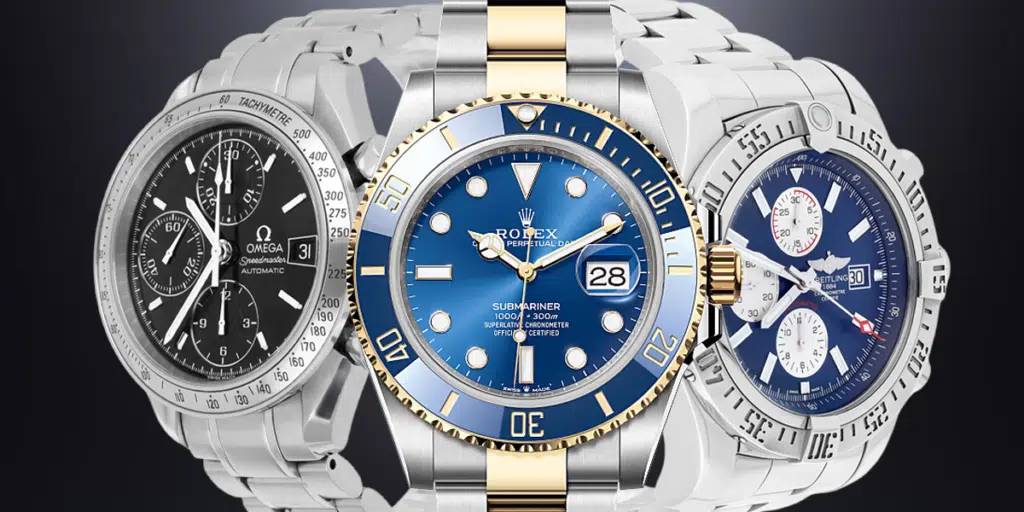
Looking at Breitling vs Omega shows two brands with remarkable sporting achievements. Omega has kept time at the Olympic Games since 1932. It stands as Switzerland’s second most recognized watch brand, with almost 70% of people worldwide knowing the name. The Omega vs Rolex vs Breitling comparison reveals unique strengths for each brand. Omega’s most precise mechanical watches stand out with both METAS and COSC certification. Breitling boasts numerous COSC-certified Chronometer watches. Your attention is drawn to Rolex’s legendary status (the Daytona became the priciest wristwatch ever after Paul Newman wore it), Breitling’s adventure-ready designs, or Omega’s precision and rich heritage. This piece will guide you to the perfect luxury timepiece that belongs on your wrist.
Table of Contents
Brand Heritage and Legacy
Founding Years: Rolex (1905), Omega (1848), Breitling (1884)
Breitling, Rolex, and Omega each have unique founding stories. Louis Brandt started Omega in 1848 in La Chaux-de-Fonds, Switzerland, making it the oldest of these prestigious brands. Léon Breitling created his company in 1884 in Saint-Imier, Switzerland, with a focus on precise chronographs and timers. Hans Wilsdorf and Alfred Davis brought Rolex to life in 1905 as Wilsdorf and Davis in London, and registered the Rolex name in 1908.
Historical Milestones: Moon Landing, Aviation, Olympic Timekeeping
These brands achieved remarkable feats that shaped watchmaking history. Buzz Aldrin’s Speedmaster made Omega famous in 1969 during humanity’s first moonwalk, earning its legendary nickname “Moonwatch”. The brand’s Olympic Games journey began in 1932 as the first official timekeeper, and its precision improved from 1/10th of a second to 1/1000th today.
Breitling earned its reputation as the premier aviation watchmaker. The company’s specialized cockpit clocks became standard equipment in aircraft. Rolex changed the industry with two groundbreaking developments: the waterproof “Oyster” case in 1926 and the Perpetual rotor in 1931, which changed self-winding mechanisms forever.
Cultural Impact: James Bond, Paul Newman, Bentley Partnership
These prestigious brands left an indelible mark on popular culture. James Bond has worn Omega’s Seamaster in every film since 1995, chosen by costume designer Lindy Hemming who saw it as perfect for “a naval man, a diver, and a discreet gentleman of the world”.
Paul Newman’s Rolex Daytona made history in 2017 with its record-breaking $17.75 million auction price. The auctioneer remarked, “This watch surpasses watch collecting… it has roots and ties in so many collecting communities”.
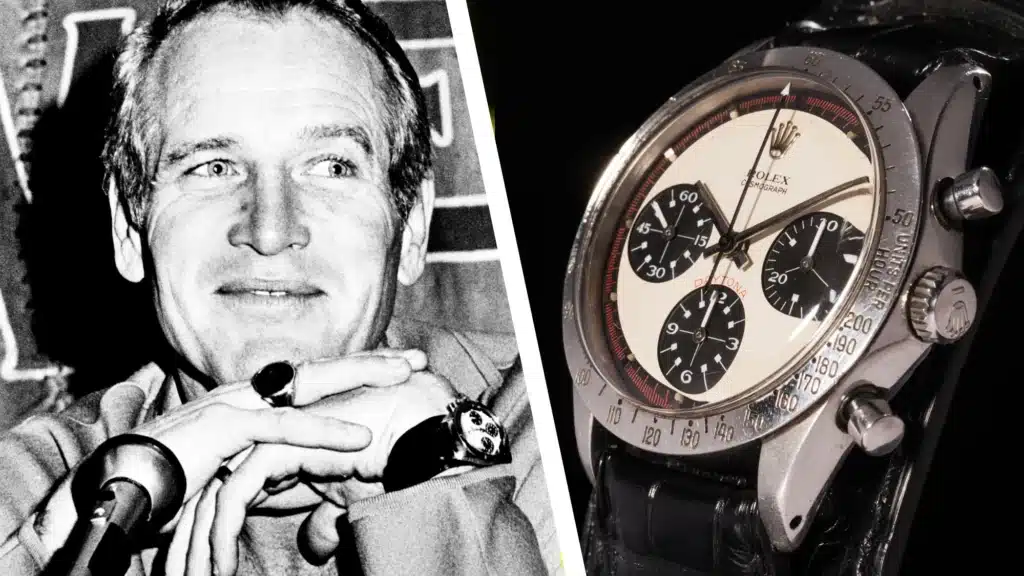
Everett Collection; Courtesy Image
Breitling’s partnership with Bentley Motors lasted nearly two decades (2002-2021), becoming one of the longest relationships between Swiss watchmaking and luxury automobiles. This collaboration started with Breitling’s design of the Continental GT’s dashboard clock and later featured luxurious options like a $160,000 Breitling Tourbillon clock for the Bentayga.
Design Philosophy and Esthetic Appeal
Each luxury watchmaker’s design philosophy shows their unique character and approach to horology. Breitling, Rolex, and Omega each speak their own design language that connects with watch enthusiasts’ priorities and lifestyle needs.
Dial Design: Clean vs Busy vs Iconic
Breitling watches showcase complexity through information-rich dials with extensive complications that cater to specific users. Their bold, oversized look has created a loyal following among people who love the technical, instrument-like esthetic. Breitling dials stand out with their busy bezels, slide rules, and polished cases.
Omega timepieces showcase clean dial faces with their prestigious omega symbol at the crown. The brand keeps its classic and traditional look with balanced proportions. This versatility lets Omega mix sporty and refined elements seamlessly, from the Speedmaster’s professional tool-watch look to the modern elegance of the Aqua Terra.
Rolex sticks to a timeless design language that builds on subtle refinements rather than dramatic changes. Their watches feature iconic elements that have stayed almost the same for decades. This creates instantly recognizable timepieces that look great anywhere.
Case Sizes: 34mm–44mm Range Across Brands
Breitling leans toward larger cases, usually 42mm and above, built for maximum visibility and strong wrist presence. These bigger dimensions make room for their signature extensive complications and aviator-focused features.
Rolex creates more universal case sizes between 36mm and 41mm that fit most wrists perfectly. Their Submariner shows this approach best – it keeps similar wearing comfort despite subtle size increases over time.
Omega gives you the most size options, from subtle dress watches under 40mm to sturdy professional dive watches at 44mm or larger.
Material Choices: Steel, Gold, Ceramic, Titanium
These three brands use premium materials in different ways. Rolex manages its entire manufacturing process and creates proprietary materials like 904L Oystersteel and scratch-proof Cerachrom ceramic bezels. Breitling and Omega love trying new materials – Omega works with titanium, gold, and liquid metals, while Breitling pushes boundaries with carbon fiber.
Strap Options: NATO, Leather, Rubber, Metal
Your choice of strap changes how a watch looks and feels. Leather straps bring classic elegance but need care and don’t handle water well. Rubber straps last long and resist water, making them ideal for dive watches. NATO straps give you military toughness and extra security with their unique pass-through design. Metal bracelets last long and work with everything but add weight to your wrist.
Breitling stands out by giving you more customization options than Omega. You can pick from various stylish straps for any watch they make.
Movement Technology and Accuracy
A luxury timepiece’s heart lies in its movement technology and precision standards. Technical aspects often determine which watch delivers better performance when comparing Breitling, Rolex, and Omega investments.
In-House Movements: Rolex vs Omega vs Breitling
These manufacturers have developed sophisticated in-house calibers. Rolex makes all movements internally and controls every production aspect. Omega’s modern models feature advanced Co-Axial calibers made entirely in-house instead of generic movements. Breitling launched its first in-house chronograph movement, the B01, in 2009, which now includes GMT and split-second functionality.
Certification Standards: COSC vs METAS vs SuperQuartz
Watch excellence depends on the chronometer designation as a key measurement. COSC certification requires movements to achieve -4/+6 seconds per day accuracy after testing at three temperatures across five positions for two weeks.
Omega’s Master Chronometer certification goes beyond this standard. It combines COSC testing with eight additional METAS tests that will give a 0/+5 seconds daily accuracy and resistance to 15,000 gauss magnetic fields. Rolex’s Superlative Chronometer certification demands exceptional -2/+2 seconds daily precision after thorough internal testing.
Breitling stands out with their SuperQuartz technology. It achieves remarkable accuracy of ±10 seconds per year—about ten times more precise than standard quartz movements.
Co-Axial Escapement vs SuperQuartz vs Rolex Calibers
George Daniels invented Omega’s groundbreaking Co-Axial escapement, implemented in their movements since 1999. This state-of-the-art design substantially reduces friction between components. It eliminates frequent lubrication needs and improves long-term accuracy.
Rolex uses the proven lever escapement refined over a century, upgraded with their Chronergy escapement since 2015. Their Parachrom hairspring technology provides exceptional stability and magnetic resistance.
Magnetic Resistance and Durability
Modern electronics create big challenges for mechanical watches through magnetic interference. Omega’s Master Chronometer certification requires resistance to 15,000 gauss—matching an MRI machine’s strength. Silicon components provide this remarkable protection instead of protective shielding.
Rolex’s Milgauss resists fields up to 1,000 gauss using a soft iron inner case and paramagnetic materials like their niobium-zirconium Parachrom hairspring. Breitling ensures COSC certification for all timepieces, guaranteeing both precision and durability.
Each brand shows extraordinary technical expertise through different movement approaches—whether through Omega’s innovative escapement, Rolex’s refined reliability, or Breitling’s exceptional accuracy options.
Iconic Models and Everyday Usability
Omega Speedmaster vs Rolex Submariner vs Breitling Navitimer
Each brand’s flagship models showcase a unique approach to horological excellence. The Omega Speedmaster got its “Moonwatch” nickname after becoming the first watch worn on the moon during the Apollo 11 mission in July 1969. Rolex introduced the Submariner in 1953, creating the blueprint for dive watches with its distinctive 37mm steel Oyster case, black dial with inverted triangle at 12 o’clock, and rotating bezel. The Submariner’s water resistance has improved from 100m to today’s standard 300m. The Breitling Navitimer stands out with its signature slide rule bezel that lets pilots calculate complex flight measurements.
Water Resistance: Seamaster 300M vs Superocean vs Yacht-Master
These premium timepieces offer different water resistance levels. The Omega Seamaster 300M comes with a helium escape valve crucial for saturation diving, and its Naiad crown system tightens naturally as depth increases. The Breitling Superocean features an impressive 1,000-meter depth rating, which surpasses the Seamaster’s 300-meter specification. The Superocean now comes in multiple sizes (36mm, 42mm, 44mm, and 46mm), with many wearers preferring the 42mm version. The Rolex Yacht-Master takes a different approach by focusing on elegant sportiness rather than extreme depth capabilities.
Chronograph Functions: Navitimer vs Daytona vs Speedmaster
Each iconic model brings its own approach to chronograph functionality. The Speedmaster Racing shows a clean dial layout with classic tachymeter functions—features that made it NASA’s choice for space missions. The Breitling Navitimer B01 embraces complexity with its signature slide rule bezel that works as a calculator for vital measurements like fuel consumption, airspeed, and distance. Rolex introduced the Daytona in 1963 with a 40mm case that houses their in-house chronograph movement with three signature subdials.
Dress vs Sport: De Ville vs Datejust vs Premier
Daily versatility makes these watches practical choices. The Omega De Ville brings elegant simplicity that works well with formal attire. Rolex launched the Datejust in 1945 to mark their 40th anniversary, creating the first self-winding wristwatch with an automatic date-changing mechanism. The watch’s timeless design moves naturally between casual and formal settings. The Breitling Premier collection blends sporty and sophisticated elements that fit both professional environments and casual occasions.
Pricing, Resale Value, and Warranty
A luxury timepiece represents more than its price tag. Smart buyers look beyond the retail cost to understand the watch’s long-term value and maintenance expenses.
Entry-Level Pricing: Starting at $3,000–$5,000
Each luxury brand sets its own entry point into the market. Breitling watches are available starting around $2,000 with models like the Colt Skyracer. The De Ville Prestige from Omega starts at about $4,400. Rolex sets the bar highest – their Oyster Perpetual retails between $6,400-$6,700, but market demand pushes prices to $8,900+.
Resale Value: Rolex Dominance vs Omega Stability vs Breitling Niche
Rolex stands out as the clear winner in value retention. Their watches often sell above retail price. The strong brand recognition helps Omega secure second place with stable resale values. Standard Breitling models keep 50-60% of their retail value, though signature pieces like the Navitimer perform better at 60-70%.
Warranty Coverage: 5 Years Across All Brands
These three manufacturers offer similar five-year warranties. Mechanical movements from Breitling come with an extended warranty option. Rolex and Omega’s coverage stays consistent worldwide.
Servicing Costs and Frequency
Each brand follows its own service schedule. Rolex watches need service every 10 years, while Omega recommends checks every 5-8 years. Breitling suggests maintenance every 4-6 years. Service costs vary too. Rolex charges $800-$1,200 for standard service, with complex models costing $2,000+.
Comparison Table
|
Feature |
Breitling |
Rolex |
Omega |
|
Founded |
1884 |
1905 |
1848 |
|
Notable Achievement |
First self-winding chronograph (1969) |
First waterproof case (1926) |
First watch on the moon (1969) |
|
Movement Certification |
COSC |
Superlative Chronometer (-2/+2 sec/day) |
METAS + COSC (0/+5 sec/day) |
|
Magnetic Resistance |
Not mentioned |
1,000 gauss |
15,000 gauss |
|
Signature Model |
Navitimer |
Submariner |
Speedmaster |
|
Case Size Range |
42mm+ (typically larger) |
36mm-41mm |
34mm-44mm |
|
Water Resistance (Flagship Dive Model) |
1,000m (Superocean) |
300m (Submariner) |
300m (Seamaster) |
|
Entry-Level Price |
~$2,000 |
$6,400-$6,700 |
~$4,400 |
|
Resale Value |
50-60% retention |
This is a big deal as it means that retail |
Strong, second to Rolex |
|
Warranty Period |
5 years |
5 years |
5 years |
|
Service Interval |
4-6 years |
10 years |
5-8 years |
|
Brand Recognition |
Not mentioned |
Highest |
~70% international recognition |
Rolex, Breitling, and Omega all have something special to offer and reasons you should buy from them. Rolex sits at the top as the king of prestige and value retention. Watches from Rolex can easily sell for over retail after buying and only require service once every ten years. The brand has the highest watch prices but typically has the best resale value.
Omega manufactures some of the most advanced watches out of these three brands. Their dedication to modern watchmaking is unmatched with their Master Chronometer Certification that boasts 15,000 gauss of magnetic resistance and Co-axial escapement. What’s more, their watches range from 34mm-44mm case sizes.
Breitling offers something different from the other two with its pilot inspired styling and $2,000 price tag. Its Superocean is 1,000 meters water-resistant which outperforms both Omega and Rolex’s best dive watches. Breitling is also the king of chronographs as they invented the first automatic chronograph back in 1969.
Really your decision will come down to what you care about most. Buy Rolex if you want a watch that can act as an investment and offers timeless styling. Buy Omega if you care about advanced technology and proud history at a good price. Buy Breitling if you want unique styling, unique features, and don’t mind saving some cash.
Rolex, Omega, and Breitling are three of the best at what they do. All come with 5 year warranties and have been around for hundreds of years combined. There really is no right or wrong watch to buy it all about your style and needs. Find your perfect watch with either the crown, the seahorse, or the wings.
.
Enjoying our watch coverage? Get more of it in Google Search.