You’ve been eyeing Rolex Datejust two tone diamond dial ladies watches, but are they worth the money?
They range in price from $15,000 for used watches to $60,999 for the top-end models. The stainless steel and gold combined with diamond dials is certainly eye catching.
In this review we dive deep on the rolex ladies datejust 28mm and 31mm models through actual use. We check out the construction of the two tone rolex women’s watches and see how the ladies diamond rolex watches hold up to daily wear. We’ll even compare the gold diamond rolex to the competition to help you decide.
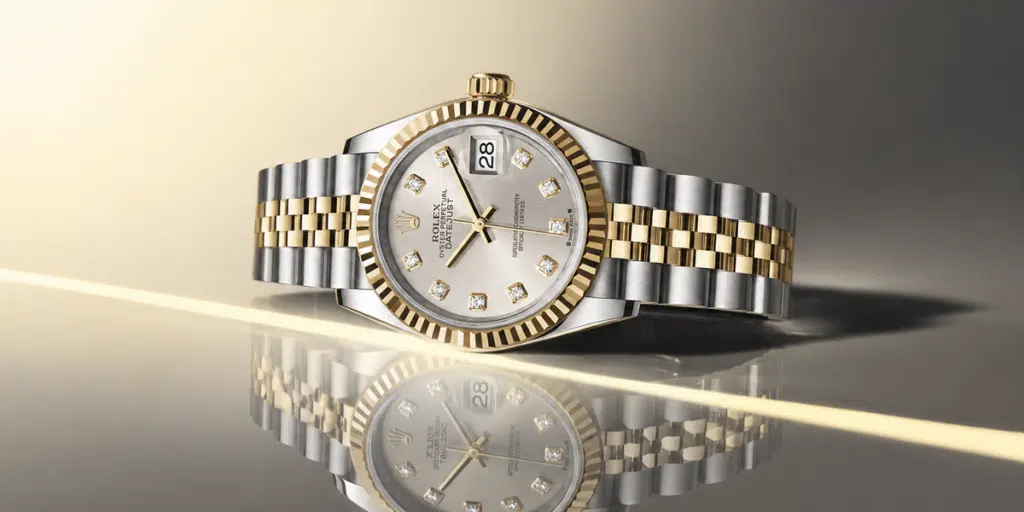
Table of Contents
Technical Specifications: Size And Material Options
28mm vs 31mm: Which Size Fits Better?
The rolex ladies datejust 28mm works best for wrists measuring between 5.5 to 6.5 inches and offers a delicate presence that feels jewelry-like on smaller frames. Petite wrists under 5.5 inches make this the preferred choice, as the 31mm can overwhelm with lugs that may extend beyond your wrist’s edges.
The 28mm model has a lug-to-lug distance of about 32mm and creates an anchored feel without excessive coverage. The 31mm expands this to roughly 35mm, commands more visual attention and gives a timepiece esthetic rather than a bracelet vibe. Both sizes house the Caliber 2236 movement and feature Rolex’s proprietary Syloxi silicon hairspring for precision and magnetic resistance, with a 55-hour power reserve.
Wrists 6 inches and larger find the 31mm proportionally balanced, and it projects authority without sacrificing femininity. The larger Cyclops lens over the date window on the 31mm provides improved legibility at a glance. The dial’s larger surface accommodates intricate designs like floral motifs and complex diamond pavé settings that wouldn’t fit on the 28mm.
Two Tone Steel And Yellow Gold Construction
The two tone rolex women’s models feature Yellow Rolesor, Rolex’s proprietary combination of Oystersteel and 18k yellow gold. The gold appears on the fluted bezel, crown, and center links of the Jubilee bracelet. The case and outer bracelet links use Oystersteel.
Oystersteel is a lighter and more durable metal that handles daily wear. The 18k yellow gold adds weight and luxury without compromising functionality. This construction creates a harmonious contrast that distinguishes two-tone models from full gold or steel alternatives. The Oyster case maintains waterproofing to 100 meters across all configurations.
Diamond Dial Configurations
Factory-set diamond hour markers are available across multiple rolex ladies datejust two tone diamond dial references, with diamonds set in 18kt gold settings. The champagne dial features 10 diamonds replacing hour markers and creates a balanced esthetic without overwhelming the dial’s warm tone.
Factory authentication matters a lot. Aftermarket diamond dials are common in the pre-owned market but don’t carry the same value as genuine Rolex factory configurations. Pre-owned factory diamond champagne dial models trade $1,500 to $3,000 above comparable non-diamond references, depending on condition.
Champagne Diamond And White MOP Dial Choices
The champagne-color dial provides highly legible esthetics with long-lasting blue luminescence through Chromalight display technology. This configuration works across 28mm, 31mm, and 36mm case sizes in Yellow Rolesor construction when paired with diamonds.
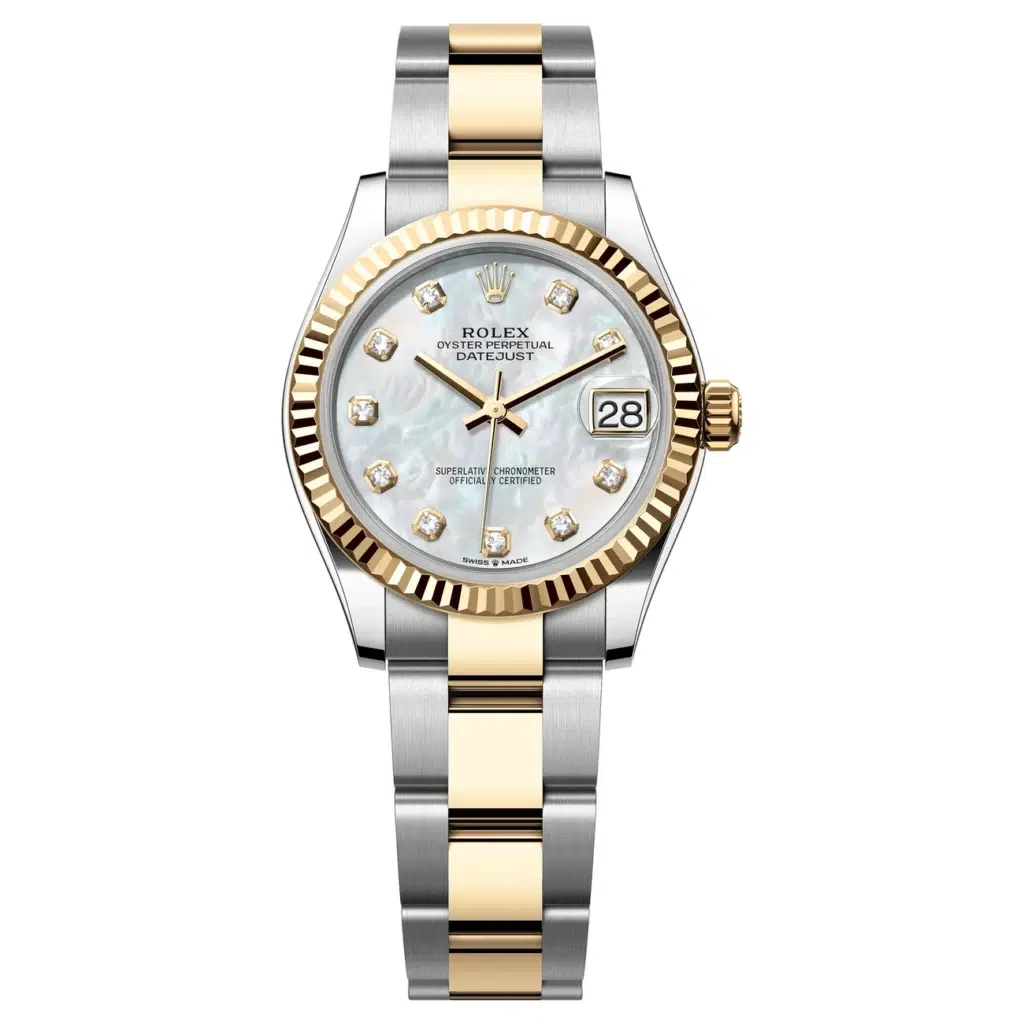
White mother-of-pearl dials offer a distinct alternative and resemble an oyster shell with natural iridescence. Each MOP dial has a unique appearance due to the production process. Variations in pattern and light reflection make every watch one of a kind. MOP dials appear on higher-end configurations, with mother-of-pearl models ranging from $4,200 to $40,000 depending on case size, material, and diamond settings.
How’d It Perform? The Rolex Datejust 41 Day-in-Life Report
Keeping Time Throughout The Day
The Caliber 2236 movement experienced some inconsistencies during our daily wear-test, but maintained relative accuracy overall. Mechanical movements that are certified as COSC Chronometers are allowed to gain or lose between 4 seconds and 6 seconds per day. Our tester gained right at 3 seconds per day on average and fell well within regulation. It was not inside the -2 seconds to +2 seconds required for Rolex Superlative Chronometer status.
The orientation your watch is sleeping in affects accuracy more than most consumers might think. We found that if we slept with the watch resting on its bracelet it tended to gain a few seconds. Keeping it rested on its side diminished performance slightly. By the end of week three, wearing the watch while awake settled into a regular pace of +2.5 seconds per day.
Scratch Resistance
The Oystersteel case and Jubilee bracelet developed cosmetic damage quicker than we had expected. Scratches from “desk diving” were evident across the polished center links after about five days of normal office wear. Rolex’ steel is softer than most 316L stainless steels so it will scratch more easily. Rolex steel is also corrosion resistant.
Polished surfaces on the bracelet showed far more scratching than the polished bezel. The sapphire crystal endured up a couple bangs on countertops and door frames. Salt water stirred up from sand at the beach also left our tester. Make sure you rinse your Rolex if that happens. Tiny grains of sand can work their way into the gaps between bracelet links and cause scratching. Rolex tests watches by dropping them in every direction possible before they ever reach a dealer. Saltwater, chlorine, hot and cold temperatures are all part of daily life for a Rolex watch that’s tested properly. We discovered during daily wear that the polished gold scratches easier than the brushed steel portions of the bracelet.
Comfort
The Datejust’s Jubilee bracelet flexes along with your wrist. It never pulled hairs or felt uncomfortable in any position. The weight is distributed evenly on your wrist, but the two-tone bracelet feels a bit heavier than an all steel watch might. We wore our Datejust for hours at a time without it causing pressure points or needing readjustment.
Sleeping with a watch hasn’t been part of our daily routine but we tried it on a few occasions with the Datejust. The fluted edge of the bezel got caught in bed sheets and the 31mm case felt bulky when laying on your side. Datejusts are everyday watches for Rolex but we found ourselves thinking of it more as a dress watch than tool watch while snoozing.
How The Diamond Dial Holds Up Over Time
Factory-set diamonds retained their secure mounting throughout testing. No stones loosened, and the 18kt gold settings showed no signs of wear. The champagne dial kept its warm tone without fading, though fingerprint smudges on the sapphire required weekly cleaning for optimal clarity.
Chromalight lume remained visible in darkness for approximately four hours after exposure to bright light. The diamonds themselves created subtle light reflection indoors and added visual interest without appearing ostentatious. Dust accumulation around the diamond settings became noticeable after two weeks. This necessitated professional cleaning to restore the original sparkle between facets.
The Differences Between Two Tone & Full Gold Datejust Watches
Price Point
Rolexes made completely of gold will typically have a retail price north of $40,000. Two-tone watches fall squarely in the middle of Rolex’s price spectrum – you get the prestige of gold without spending a fortune. There’s a $25,000 minimum spread between entry-level two-tones and similar full gold watches as a result.
Entry level two tones open the door for new Rolex customers. They also appeal to more advanced collectors who want versatility in their watches. The problem is middle-of-the-road two tones struggle to find buyers. Entry level buyers will gravitate towards stainless steel for value. Luxury buyers will wait until they can afford an all gold watch. Two tones simply don’t hold the same demand as solid watches.
Aesthetics: How Gold And Steel Look Together
18k gold and steel contrast beautifully on your wrist. There’s enough gold to look nice without shining too much. You can dress up or dress down a two-tone Datejust. It goes well with business clothes and casual outfits. Rolex wisely balances the materials by making the case steel and adding gold on the bezel, crown, and center bracelet links.
Different people will have different opinions here. Two-tones can come off as gaudy or trying too hard depending on who you talk to. You won’t get the sleek and modern look of all steel watches. Gold Rolex watches are the standard for luxury so two tones don’t hit that luxury ceiling either. If you’re a collector who loves the unique look of two tones however, you can understand why so many owners cherish the yellow gold / steel combination.
Depreciation
Speaking of selling your watch, two-tone Datejust watches typically depreciate to around 60-90% of their retail price. Solid stainless steel watches and solid gold watches have been known to sell for higher percentages of their initial cost. Part of the reason two-tones sell more often has to do with depreciation as well. Since they are more common than solid gold or solid steel watches, they aren’t seen as exclusive.
Steel is harder than gold. Watches with two different materials will show wear faster than an all steel watch. You’re going to begin to notice your two-tone watch looking dingy before your all steel watch does. Future buyers will also take notice of the visible wear and might not want to pay as much to buy your watch. While you can send your watch in to Rolex to get it polished up, consider the cost of these services over time as well. For the most part, any Rolex is a good choice for your first watch. Stainless steel sport models and solid gold Datejust models are typically more sought after than two-tone Datejust watches.
How Much Does a Diamond Rolex Ladies Datejust Two Tone Cost?
Authorized Dealer Pricing
How Much Does The Rolex Ladies Datejust Two Tone Cost?
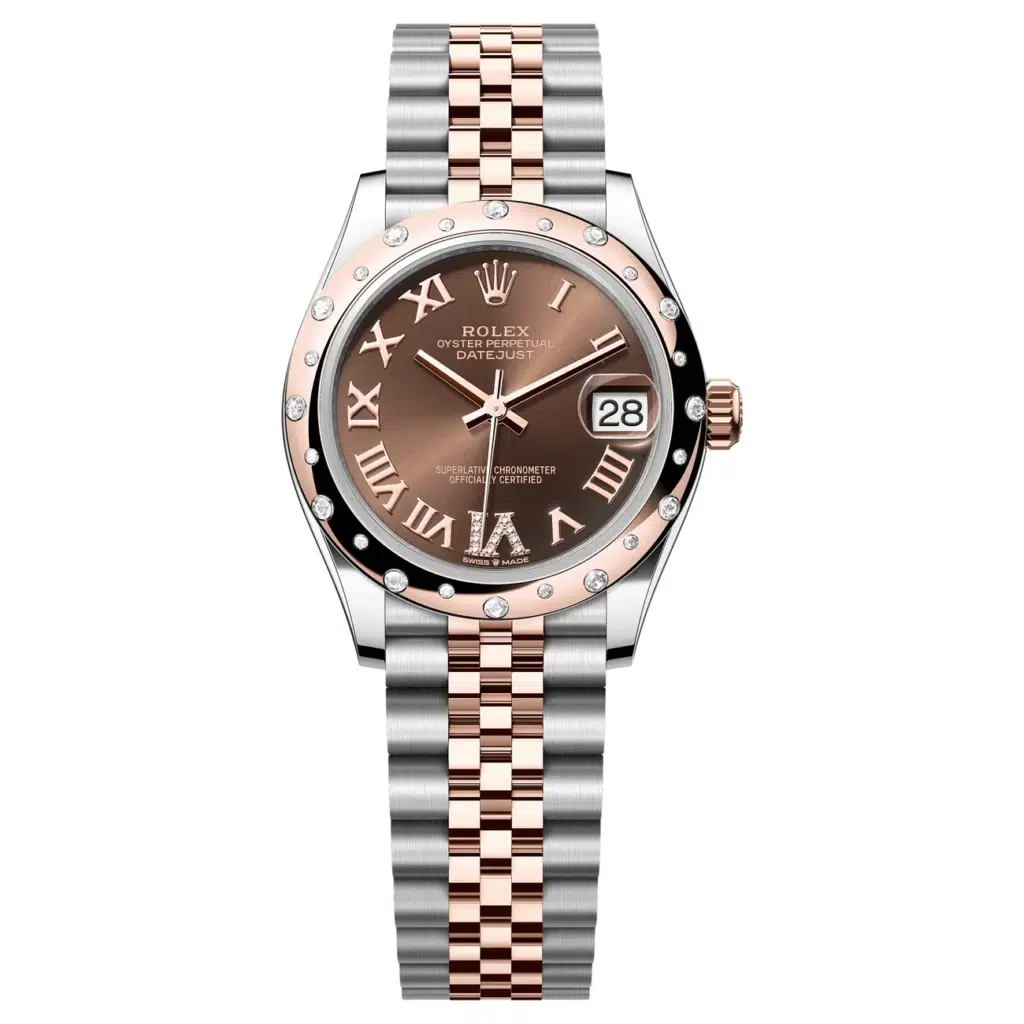
Rolex lists retail pricing for the rolex ladies datejust two tone diamond dial at $12k for reference 279173 fluted bezel starting at and prices increase to $15,400 depending on dial color. Diamond-set models are expensive premiums. 279381RBR with Oystersteel and Everose gold case with factory diamonds list between $19,500 and $22,900 through authorized dealers.
January 2026 price increases have been confirmed across the board for Rolex watches. Rolex is increasing prices on all two tone Rolesor models between 5-10% based on the reference number. For example, the retail price on a two tone ladies diamond rolex watch you were waiting to purchase could be $15,000. Once the price increase rolls into effect in January, that same watch will start at closer to $16,500. Models constructed with gold and other precious metals will see higher increases. Prices on select Day-Date models are up nearly 10%.
Gray Market Considerations
Certified Pre-Owned dealers from Rolex authenticate watches factory direct and provide a 2 year international guarantee on timepieces that are at least 2 years old. Authorized jewlers with an active RCPO plaque will sell watches that have been verified by Rolex itself. Each watch will include a unique seal and guarantee card to further differentiate them from watches sold on grey market websites. Pre-owned two tone Rolex watches with diamond dials sell for prices ranging from $9,000 to $14,000 on the secondary market. This provides ample savings compared to the manufacturers suggested retail prices on new watches.
Certified Pre-Owned pricing will fluctuate by retailer. Watches from The 19TH Company have a median markup of 6.2% over watch value. Watches of Switzerland has RCPO inventory marked up 27.4% on average. That’s a significant difference when buying a watch that costs tens of thousands of dollars. RCS dealers sold nearly 1,000 watches online during 2025. Boutiques and brick-and-mortar stores typically have smaller selection than online marketplaces.
Grey market dealers will have lower prices than Rolex’s Certified Pre-Owned dealers, but don’t have factory support. Vintage models such as the rolex ladies datejust 26mm two tone champagne diamond dial 69173 sell for prices ranging from $3,500 – $5,500 on grey market websites. Saving money is the main attraction to these dealers, but missing documentation and service histories are usually given as reasons to avoid buying from them.
Trade-In Value Expectations
Two-tone datejust watches with diamonds retain between 60-75% of original retail value if they are in pristine condition and come with full documentation. If you purchased a 279173 retail for $14,750, you could expect to receive $9,000 – $11,000 for that same watch traded in with normal wear. Modern references grade more heavily on condition. Polished center links will decrease value by $1,000 to $2,000 if scratches are present. Watch that are missing papers trade for below market value as soon as the question is brought up.
The best way to insure future liquidity on your watch is to take care of it. Having your watch serviced at the factory and keeping all documentation will only help you if you decide to trade your watch in down the road. Any aftermarket alterations will severely decrease value.
Final Verdict: Is The Ladies Diamond Rolex Datejust Worth It?
Who is the ideal candidate for purchasing this watch?
Buyers who want a watch they can wear to work and nice events without having multiple watches will love this datejust 2 tone rolex. The Datejust 2 tone rolex lady looks great when you wear mismatched metals as your other jewelry because it features both steel and gold. If you’re a fan of the prestige that comes from wearing something with brand recognition, this rolex datejust 2 tone ladies watch will have you noticed the second you put it on.
Better Alternatives To Think Over
The Omega Seamaster Aqua Terra presents the most compelling alternative. It offers Master Chronometer certification with exceptional anti-magnetic properties and finishing that rivals or surpasses Rolex. The Aqua Terra exceeds the Datejust in several areas from a technical viewpoint, making it worth serious thought at comparable price points.
The Patek Philippe Twenty~4 Automatic features a 36mm stainless steel case with 160 diamonds set into the bezel for those drawn to diamond bezels. It’s priced at $29,330. Tudor Glamor represents the most direct alternative from Rolex’s sister brand and shares design DNA at more available pricing. The Longines Master Collection offers the most compelling value proposition. It delivers first-class quality and elegant styling at prices much lower than the Datejust. Even the Cartier Santos provides an alternative personality with its distinctive square case and universal dress-sport character.
Our Overall Rating
We rate the rolex ladies datejust 28mm and 31mm two-tone diamond configurations 7.5 out of 10. The watch delivers on build quality, movement reliability and visual appeal. Factory diamond settings remain secure. Materials feel substantial. The design carries timeless elegance that exceeds trend cycles.
All the same, the value proposition falters when you get into it. Competitors offer superior technical specifications at similar prices, while the two-tone construction faces polarizing esthetic reception and middling resale performance. This gold diamond rolex serves buyers who prioritize brand recognition above pure horological merit.
Enjoying our watch coverage? Get more of it in Google Search.