What Is a Rolex Rehaut? Everything You Need To Know
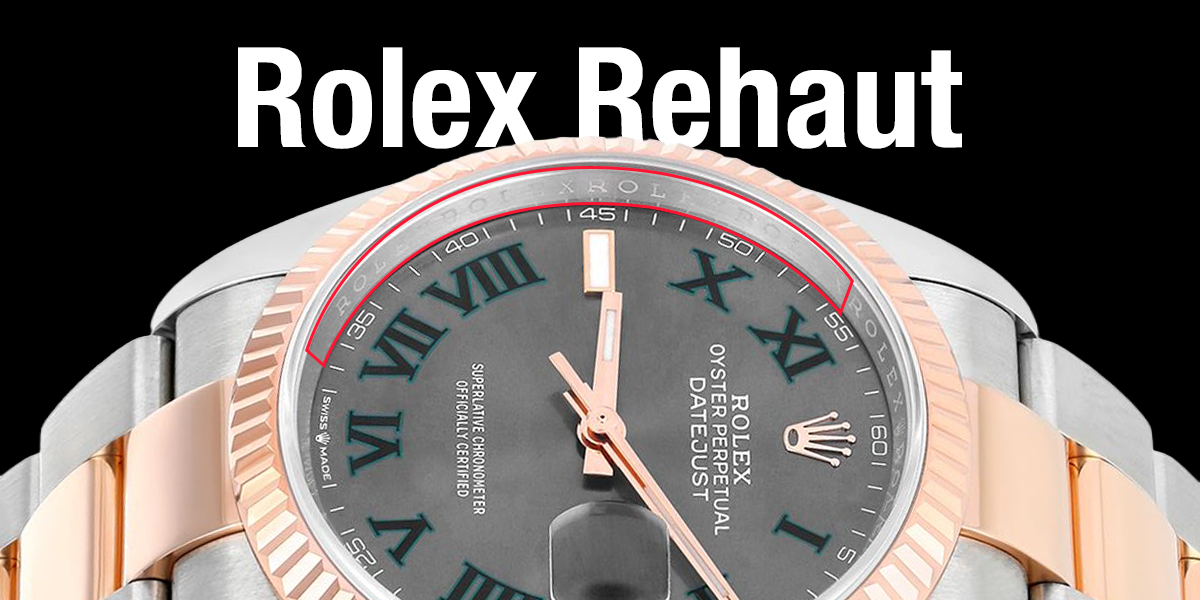
What is a Rolex Rehaut? A Rolex rehaut is the inner ring that surrounds the dial and sits between the watch face and the crystal.

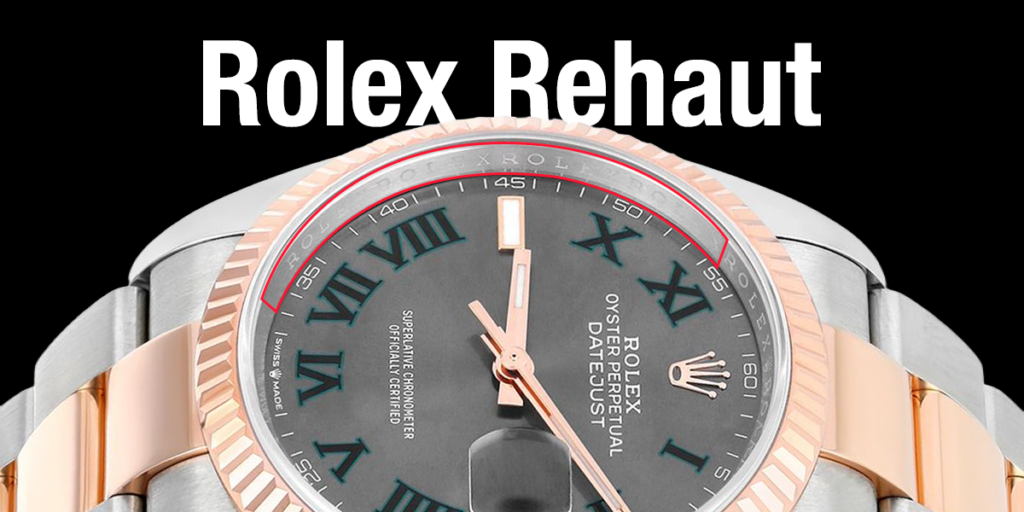
A Rolex rehaut is the inner ring that surrounds the dial and sits between the watch face and the crystal. This component, also called a flange, functions as both a structural and decorative element within the watch case. The rehaut maintains proper spacing between the dial and crystal. All internal components remain positioned at the correct height.
The surface can be either flat or angled depending on the watch design. Manufacturers typically craft it from the same material as the watch case to maintain visual consistency. Collectors distinguish between engraved and non-engraved rehauts in Rolex timepieces. The engraving consists of the word “ROLEX” repeated around the inner ring. This pattern leaves space for a serial number engraved at the 6 o’clock position and a crown logo at the 12 o’clock position.
The rehaut serves multiple functional purposes beyond its decorative appearance. It acts as a transitional element between the dial and crystal. This contributes to the watch’s structural integrity and overall design harmony. The component adds depth to the watch face and creates dimensional perspective that boosts readability. Therefore, the rehaut provides anti-counterfeiting protection through its engraved details and makes unauthorized replication more difficult.
Modern Rolex watches feature the serial number etched on this inner reflector ring at the bottom position. The repeated “ROLEX ROLEX ROLEX” engraving appears around the circumference. The engraved rehaut represents an authentication feature unique to Rolex and distinguishes these timepieces from other manufacturers. This security element becomes visible at the time you explore the watch face directly, though the fine engraving requires close inspection to read. The metal band separates the crystal front from the dial face and creates a defined border that frames the watch display.
Watches from manufacturers of all types feature the rehaut, but the specific engraving pattern and anti-counterfeiting application have become associated with Rolex’s authentication protocols. Other brands use this space for different purposes, including tachymeter scales or minute markers.

Rolex introduced laser-engraved rehauts in 2004 as an anti-counterfeiting measure. The Turn-o-graph model received this feature first around 2004. This marked the original application of the engraving technology. These first examples appeared in 2004, but the engraved rehaut did not become widespread throughout the lineup until 2005. The Datejust model became one of the earliest references to receive this treatment during the 2005 rollout. The GMT-Master II followed in 2005, with the all-gold version (reference 116718) featuring the engraved rehaut among other technical updates.

The engraving pattern consisted of the word “ROLEX” repeated around the inner ring. Space was reserved for a crown logo at 12 o’clock and a serial number at 6 o’clock. Counterfeiters found this laser-engraving technique difficult to copy with accuracy, especially when it comes to the precision and alignment of the lettering. The white gold Daytona on Oyster bracelet, introduced at Basel 2004, also featured the engraved rehaut from its original release.
Rolex implemented engraved rehauts throughout its product range between 2004 and 2008. Every Oyster reference featured the engraved rehaut by 2008. Sports models including the Submariner and Explorer II received the engraving midway through the Z serial production in 2007. The stainless steel Daytona acquired the feature around 2007 with Z-series watches. The Explorer II reference 16750 received the engraving during this same period.
The Milgauss reference 116400 featured the engraved rehaut on all production units. Certain references never received the engraving despite being in production during the transition period. The GMT-Master II reference 16710 and the Explorer 14270 remained without engraved rehauts throughout their production runs. The final examples of the Explorer 114270 did receive the inner engraving near the end of the model run before the updated version appeared.
The engraved rehaut was phased in from about 2004 to 2008 on both 6-digit and remaining 5-digit models. So the presence of an engraved rehaut does not separate 5-digit from 6-digit references, although the feature does roughly coincide with the introduction of the 6-digit era. Some original 6-digit Rolex watches feature plain rehauts, while certain final 5-digit models display engraved rehauts.
Early examples of the 114270 rehaut remain plain, but aside from this exception, all 6-digit Rolex sports models feature engraved rehauts. 5-digit Rolex sports models began receiving engraved rehauts in 2007. Serial number production created overlap periods where either style could appear. The D and F serials overlap, and watches from either serial could feature the engraving. The Z and M serials overlap regarding the rehaut on stainless steel models. All Rolex Oyster models contain an engraved rehaut since 2008, with the exception of dress watches such as the discontinued Cellini lineup.
Rolex added rehaut engraving as an anti-counterfeiting measure to distinguish genuine timepieces from counterfeit replicas. The precision needed to execute these engravings creates most important technical barriers for counterfeiters who attempt to copy the feature. Low-quality rehaut engravings serve as an immediate indicator of counterfeit watches, as most unauthorized manufacturers cannot achieve the same level of engraving quality.
The laser-engraving technique produces lettering with exceptional precision and alignment that proves difficult to replicate. Genuine Rolex pieces display sharp, clean edges with consistent depth that creates a three-dimensional effect. This quality distinguishes authentic engravings from counterfeit attempts, where the engraving appears shallow, poorly etched, or misaligned with hour markers. The intricate nature of the engraving work makes it easier to distinguish genuine Rolex watches from counterfeits, especially when counterfeit watches display poorly engraved or misaligned rehaut markings.

The engraved rehaut serves esthetic purposes beyond anti-counterfeiting protection by adding sophistication and detail to the watch design. The repeated “ROLEX” text creates a subtle visual effect that boosts the overall appearance. The Rolex crown logo positioned at 12 o’clock reinforces brand identity and adds a unique signature to each timepiece.
The transition from case-side to rehaut engraving improved serial number accessibility. Verifying serial numbers required bracelet removal before, whereas the rehaut location allows immediate verification without disassembly. This placement also provided better protection against wear on gold models where tight bracelets could erode digits over time.
The rehaut design incorporates multiple authentication points through the combination of repeated “ROLEX” text pattern and crown logo at 12 o’clock, with serial number at 6 o’clock. These elements create a detailed security system that counterfeiters find very difficult to replicate. Advanced engraving machinery deployed during manufacturing will give consistent quality across all production units. The alignment specifications require precise positioning, with specific hour markers that line up with designated letters in the engraving pattern.
Alignment on engraved rehauts does not require absolute precision, though the positioning should remain close to centered. The hash mark at the top of the dial may not bisect the engraved crown logo with perfection, but acceptable alignment allows for minimal deviation in either direction. The crown on the rehaut is etched at the 12 o’clock position relative to the case, with the “ROLEX” letters spaced to correspond with minute markers on the dial. This design will give visual coherence between the rehaut engraving and dial elements.
The rehaut forms part of the watch case and remains fixed in position. The letters “ROLEX” are engraved into this component with high precision. Alignment variations occur because the dial can move during assembly when screwed to the movement plate. The dial attaches to the movement with dial feet welded to the bottom, fitting into specific holes that allow minimal lateral movement. Watchmakers tighten the screws that secure the movement to the case, and this action can cause imperceptible shifts in dial position.
Misalignment issues stem from dial positioning rather than rehaut engraving errors. The ceramic bezel insert may also appear misaligned with the rehaut when clicked to the 12 o’clock position. The dial can move fractionally as the case screws tighten during assembly, and this results in the engraved crown appearing left or right of the 12 o’clock marker. Manufacturing tolerances account for these minor variations.
Rolex Service Centers classify minor misalignments as within specification and decline to adjust them. The movement locking screws anchor the mechanism to the case, and loosening these allows for repositioning. Adjustments impose potential risks on the stem and may affect the date window position relative to the cyclops magnifier.
Visual inspection requires perusing the relationship between the rehaut crown logo and the 12 o’clock hour marker on the dial. The assessment should occur under direct viewing angles, as photographic distortion can make aligned elements appear skewed. Proper evaluation involves checking whether the engraved letters line up with their corresponding minute markers around the dial circumference. The bezel triangle should also line up with the 12 o’clock position when rotated to its starting point.
The original engraving method featured hollow block letters that created an outlined appearance of the repeated “ROLEXROLEXROLEX” text. This outline style produced a more subdued and elegant finish compared to later iterations. The hollow lettering provided sufficient anti-counterfeiting protection while maintaining visual refinement around the dial perimeter.
Rolex updated the engraving technique in 2014-2015, transitioning from hollow block letters to an etched sandblasted finish[261]. The sandblasted style produces brighter and bolder text with improved visibility. Production year 2014 represented an overlap period where both styles appeared. Newly introduced references like the 116600 received the sandblasted rehaut while existing models continued using hollow lettering from available case inventory.
Ladies’ models display flatter and more spaced text compared to men’s watches. This adjustment accommodates the smaller rehaut dimensions on women’s timepieces. Later ladies’ models received the same sandblasted typeface update that was implemented on men’s references[211].
The rehaut material matches the watch case composition[211]. Gold and two-tone models feature gold rehauts, whereas stainless steel models use steel rehauts. This material consistency maintains visual cohesion throughout the watch construction.
What is a Rolex Rehaut? A Rolex rehaut is the inner ring that surrounds the dial and sits between the watch face and the crystal.
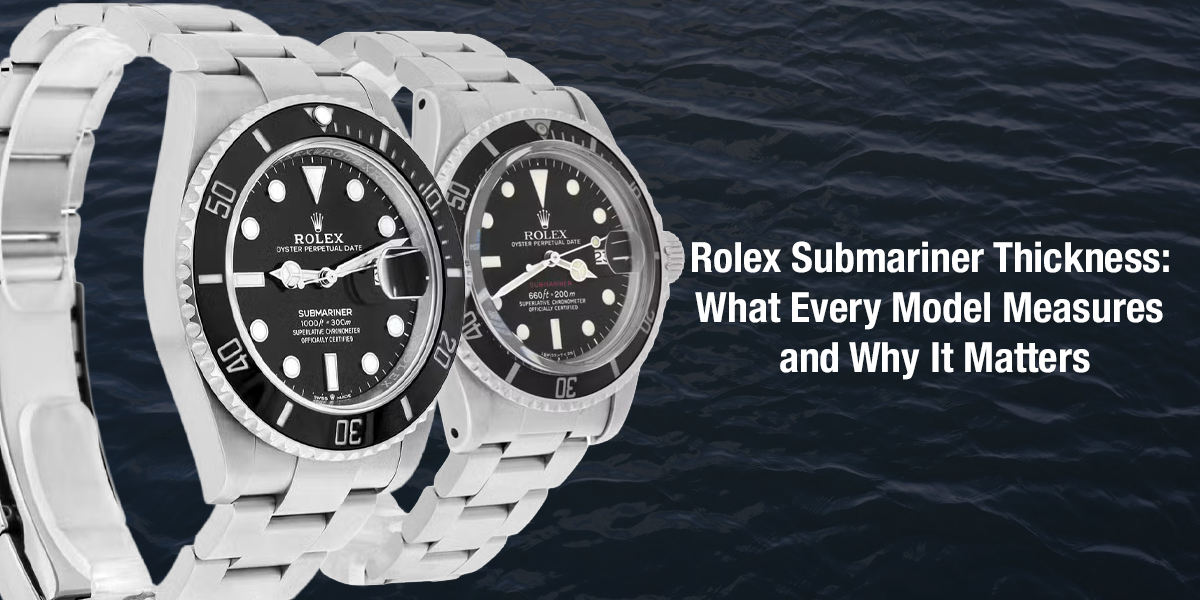
The Rolex submariner thickness has varied by a lot throughout its history. It ranges from 12.2mm to 15.2mm depending on the model and era. This

Since Rolex’s inception in 1905, the company has produced over 15 lines of timepieces, but choosing the right types of Rolex watches for your lifestyle