
Submariner Date vs No Date: What Rolex Experts Actually Choose [2026]
Choosing between the Submariner Date vs No Date means deciding between two legendary Rolex watches that share a rich diving heritage. The original Submariner made

Choosing between the Submariner Date vs No Date means deciding between two legendary Rolex watches that share a rich diving heritage. The original Submariner made its debut in 1953 as a pure, time-only tool watch built for professional divers. The Date version joined the classic model in 1969, expanding the iconic collection.
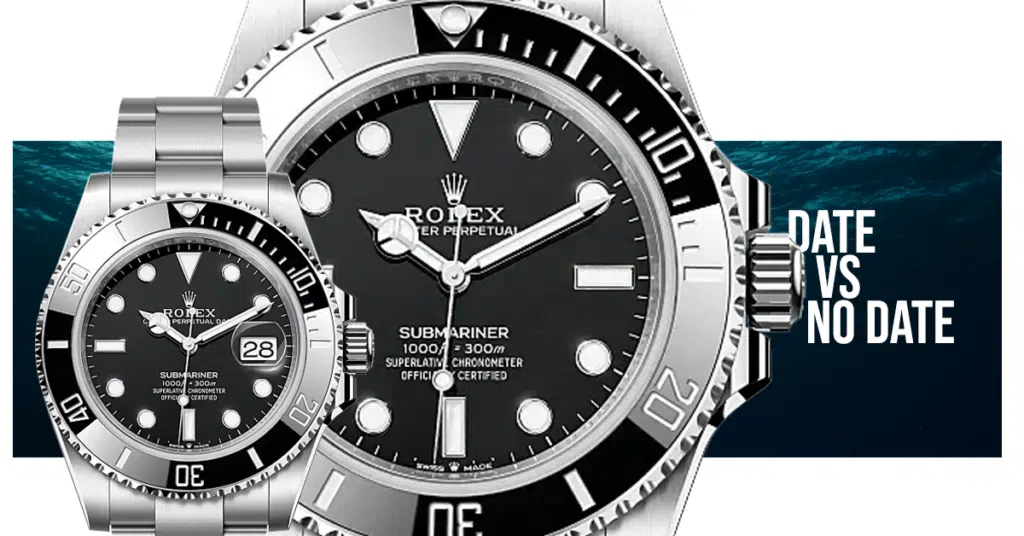
The addition of a date window creates more than just a feature difference – it sparks passionate debates among watch enthusiasts. The No Date Submariner stays true to its historical roots with a clean, symmetrical dial. The Date model’s distinctive Cyclops lens adds practical functionality and has gained massive popularity over the last several years. Both versions feature similar 300-meter water resistance, but their visual appeal and collector interest vary substantially. Understanding these subtle yet important differences will help you find the perfect Rolex Submariner that belongs on your wrist.
The esthetic difference between these iconic timepieces goes well beyond just having or not having a date function.
The Submariner No Date shows off a perfectly symmetrical dial layout that watch enthusiasts call the purest expression of this legendary timepiece. This direct descendant of the 1953 original model keeps an uncluttered visual balance with evenly spaced hour markers. The Date model takes a different approach with its iconic Cyclops lens that makes the date 2.5 times larger. This creates an asymmetrical look that breaks up the dial’s flow. The date window at 3 o’clock needs slight tweaks to marker placement, which changes the overall symmetry.
These models share core design elements but show very different personalities. The No Date captures an understated, classic “if you know, you know” charm. It has a clean look without the date window’s added complexity. The basic Submariner elements really stand out with this simple design. The Date version, on the other hand, shows off Rolex’s signature design through its distinctive Cyclops lens. You can spot it right away, even from far away.
Both Submariner models have grown from 40mm to 41mm cases, but they feel quite different on the wrist. The No Date looks bigger because of its wider lugs – it feels more like a 42mm watch despite what the specs say. The newest version comes with slimmer lugs and thinner crown guards. This creates a more tapered profile that many people like better than the bulkier older models. The bracelet has grown from 20mm to 21mm wide, which subtly changes how it sits on your wrist.
The rise of Rolex’s iconic diver watch shows how two distinct models came to coexist in the Submariner lineup.
Rolex started the Submariner story in 1953 with the reference 6204—the world’s first watch guaranteed water-resistant to 100 meters. This watch was a specialized diving instrument that became the blueprint for all future Submariners. The 6204’s design included a modest 37mm case, pencil-style hands, and had no date function. During its one-year production run, the 6204 built Rolex’s reputation as a maker of strong tool watches rather than mere luxury items.
Rolex made one of its most important changes to the Submariner line when it revealed the reference 1680 in 1969—the first model with a date function. Many purists saw this addition as a departure from the model’s utilitarian roots. The ref. 1680 brought two major changes: a date window with cyclops lens and the first Submariner in 18k yellow gold. Early models had “SUBMARINER” text in red, which changed to all-white by the mid-1970s.
James Bond films helped make the No Date Submariner legendary. Sean Connery wore the reference 6538 “Big Crown” in four consecutive 007 movies from 1962-1965. The watch’s military connections added to the No Date variant’s tough reputation. The British Ministry of Defense ordered special MilSub versions that featured fixed bars, sword hands, and fully graduated timing bezels. These rare watches are now among the most sought-after vintage timepieces, with only 1,200 military-issued Submariners made between 1971-1979.
Modern Submariner models feature state-of-the-art Rolex engineering under their iconic exterior that sets them apart from earlier versions.
The Submariner No Date uses Rolex’s Caliber 3230, while the Date model runs on Caliber 3235. These movements share similar technology and represent Rolex’s latest generation advances. The Chronergy escapement stands out as their defining feature, which runs 15% better than traditional systems. Both calibers use paramagnetic blue Parachrom hairsprings that make them 10 times more resistant to shocks than standard hairsprings.
These calibers pack an impressive 70-hour power reserve, which beats the 48-hour limit of older models. You can leave your watch off all weekend and pick it up Monday without resetting it. The extended power comes from better barrel design and the Chronergy escapement’s enhanced performance.
Rolex patented the Cyclops lens in the early 1950s to magnify the date display 2.5 times and make it easier to read. The company added double-sided anti-reflective coating in 2005 to cut down on glare. All the same, watch enthusiasts remain split – some love its practical benefits and iconic look, while others think it throws off the dial’s balance and might scratch more easily.
Both Submariner models can handle depths of 300 meters (1,000 feet). The watches use the resilient Oyster case construction that has been a hallmark of Rolex dive watches from day one.
Rolex’s Submariner variants hold unique positions in their lineup. This affects both their market standing and how well they might serve as investments.
The Submariner No Date stays true to its roots. It comes only in stainless steel with a black dial and black bezel throughout its history. The Submariner Date takes a different approach and embraces luxury through various materials. You can find it in stainless steel, yellow gold, two-tone (Rolesor), and white gold. The Date version also offers more color choices with black, blue, and green dials and bezels. Some Submariner Date models feature precious gems for those who want extra luxury – from subtle diamond hour markers on “Serti Dials” to fully gem-encrusted showpieces.
These watches hold their value remarkably well. The No Date (ref. 124060) had a 2023 retail price of about $8,100, while the Date (ref. 126610LN) cost $9,150. These retail prices don’t tell the whole story since most buyers face long waitlists. The secondary market shows higher prices, with pre-owned No Date models selling for $9,000-$13,000 and Date versions going for $10,000-$15,000. Market data suggests collectors prefer the No Date variant, but the Date version tends to sell faster when owners want to part with it.
Watch enthusiasts respect the No Date for its symmetrical dial, historical authenticity, and clean design. One expert puts it well: “many watch aficionados are likely to favor the No Date version, which is pure not only in terms of its design but also its purpose”. The Date model brings everyday practicality with its distinctive Cyclops lens. Celebrity choices reflect this split – Bruce Springsteen wears a No Date while Tom Hardy prefers a Date version.
“Walking into a boutique and buying a Submariner off the shelf is pretty much a fantasy”. Both models have waitlists at authorized dealers that stretch from 1-3 years. Your chances depend on location and relationship with the dealer. The lack of readily available pieces drives up prices in the secondary market. Your choice between Date and No Date might come down to which one becomes available first through your authorized dealer.
|
Feature |
Submariner No Date |
Submariner Date |
|
Design & Esthetics | ||
|
Dial Layout |
Perfectly symmetrical |
Asymmetrical due to date window |
|
Visual Identity |
Clean, understated design |
More recognizable with Cyclops lens |
|
Date Display |
None |
Yes, with 2.5x Cyclops magnification |
|
Technical Specifications | ||
|
Movement |
Caliber 3230 |
Caliber 3235 |
|
Power Reserve |
70 hours |
70 hours |
|
Water Resistance |
300m |
300m |
|
Case Size |
41mm |
41mm |
|
Market Aspects | ||
|
2023 Retail Price |
$8,100 |
$9,150 |
|
Material Options |
Stainless steel only |
Steel, gold, two-tone, gem-set options |
|
Dial Colors |
Black only |
Black, blue, green options |
|
Secondary Market Price Range |
$9,000-$13,000 |
$10,000-$15,000 |
|
Historical Context | ||
|
Original Release |
1953 |
1969 |
|
Purpose |
Pure diving tool watch |
Added functionality for daily wear |
|
Notable Associations |
James Bond films, Military use (MilSub) |
First gold Submariner variant |
|
Collector Appeal |
Purists and traditionalists’ choice |
Preferred for practical utility |
Choosing between Submariner Date and No Date ended up being about personal preference rather than which one is better. These variants have unique qualities that different collectors love. The No Date model represents the purest form of Rolex’s original diving watch. It has perfect dial symmetry and historical authenticity that traditionalists value. The Date version adds practical functionality through its Cyclops lens. It also comes in more material and color options beyond standard stainless steel.
These watches share the same impressive specs. Both offer 300-meter water resistance and 70-hour power reserves. Their state-of-the-art movements are identical except for the date function. The retail price difference is small, but both watches fetch high premiums in the secondary market due to scarcity.
Your choice might depend on whether you prefer minimalist design or everyday practicality. Watch purists often choose the No Date for its clean looks and historical value. Notwithstanding that, the Date model’s popularity keeps growing. Its distinctive Cyclops lens and luxury options make it attractive to many collectors.
Both versions are exceptional timepieces with rich heritage, technical excellence, and investment potential. Your choice says something about which watch philosophy strikes a chord with your style. The current market might make the decision simpler – you might have to go with whichever model becomes available first.
Choosing between the Submariner Date vs No Date means deciding between two legendary Rolex watches that share a rich diving heritage. The original Submariner made

Paul Newman’s personal Rolex Daytona ref 6239 would make anyone’s jaw drop. The timepiece reached an astounding $17.8 million at the time it went under

Ray Donovan’s watch collection captivates horology enthusiasts for good reason. His role as a fixer for Hollywood’s elite lets him sport some truly impressive timepieces.