
Most Expensive Rolex Watches That Broke Auction Records
Paul Newman’s personal Rolex Daytona ref 6239 would make anyone’s jaw drop. The timepiece reached an astounding $17.8 million at the time it went under

The Rolex Space-Dweller remains the most mysterious watch in this legendary brand’s history. Very few people have seen one up close, and its story stays strangely missing from Rolex’s official archives. With only about 13 pieces known to exist today, this elusive timepiece is the ultimate prize that serious collectors dream of owning. These rare watches have seen their prices shoot up dramatically – from $13,617 at auction in 2002 to an incredible $190,500 in recent sales.
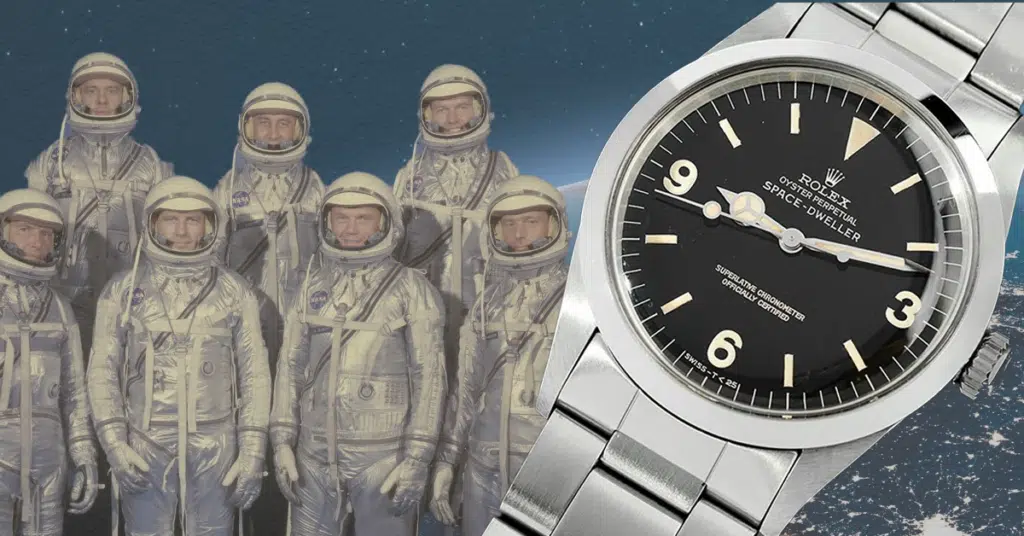
What’s interesting about this quirky timepiece is that it began as a stealth project for Rolex in the early 1960s. Given its history and space tie-in it makes the watch that much more desirable. Rolex modified their Explorer, model 10 16 and renamed it exclusively for the Japanese market after U.S astronaut John Glenn orbited the Earth when he visited Japan. While this watch has NASA credentials and a space age name it never was offered for sale worldwide. Only available from 1963 to 19 66. Limited production numbers and distribution strictly to Japan is why the Space-Dweller continues to be so rare, even amongst watch aficionados.
The Space-Dweller’s story connects two amazing human achievements—mountain climbing and space exploration. This unique timepiece started as part of Rolex’s mountaineering legacy before America’s first astronauts turned it into a space-inspired watch.
Rolex registered the “Explorer” trademark in Geneva on January 26, 1953. That same year, Sir Edmund Hillary and Sherpa Tenzing Norgay reached Mount Everest’s summit, with Norgay wearing a Rolex reference 6350. Rolex celebrated this achievement by naming the 6350 the “Explorer,” which started this iconic watch line.
The Explorer went through several versions including references 6150 and 6610 before Rolex launched the Explorer 1016 in 1959. This model became the Explorer’s defining version. It featured a 36mm stainless steel case matching the Datejust ref. 1603’s dimensions. The 1016 brought impressive upgrades—it doubled its water resistance to 100 meters and used the caliber 1560 movement before switching to caliber 1570 in the mid-1960s.
NASA launched Project Mercury in 1958 on the other side of the Atlantic. This was America’s first human spaceflight program with two goals: testing if humans could work in space and beating the Soviets to a manned mission. NASA picked seven military test pilots from 508 candidates on April 9, 1959, to become America’s first astronauts.
The selection was tough. Candidates had to be under 40, shorter than 5 feet 11 inches, have deep engineering knowledge, graduate from test pilot school, and log at least 1,500 flying hours. The final seven—Carpenter, Cooper, Glenn, Grissom, Schirra, Shepard, and Slayton—grew beyond their roles as test subjects and military officers.
NASA wanted these men to be specialists, but they became celebrities faster than expected. Life magazine’s exclusive $500,000 contract (worth about $4.30 million today) boosted their fame even more. These astronauts became symbols of American technology and hope during the Cold War’s peak.
John Glenn made history as the first American to orbit Earth. In May 1963, he was aboard the US Air Force communications ship Coastal Sentry near Kyūshū, Japan. His job was to track fellow astronaut Gordon Cooper during Mercury’s final mission. Cooper’s automatic re-entry system failed completely, but Glenn helped him manually fire his rockets to return safely.
Glenn met his family in Tokyo afterward. Japanese crowds loved him, the government rolled out the red carpet, and everyone treated him like a hero. He even visited Matsuda village to thank a 77-year-old retired sandal shop owner who had sent him a Shinto prayer tablet before his orbital flight.
Rolex saw an opportunity in Glenn’s popularity. They released the Explorer ref. 1016 just for Japan under a new name—”Space-Dweller”—trying to ride the astronaut wave. The Space-Dweller stayed a limited production model because sales didn’t meet expectations, despite all the excitement around Glenn and the Mercury Seven. This short-lived marketing experiment created one of the most mysterious watches in history.
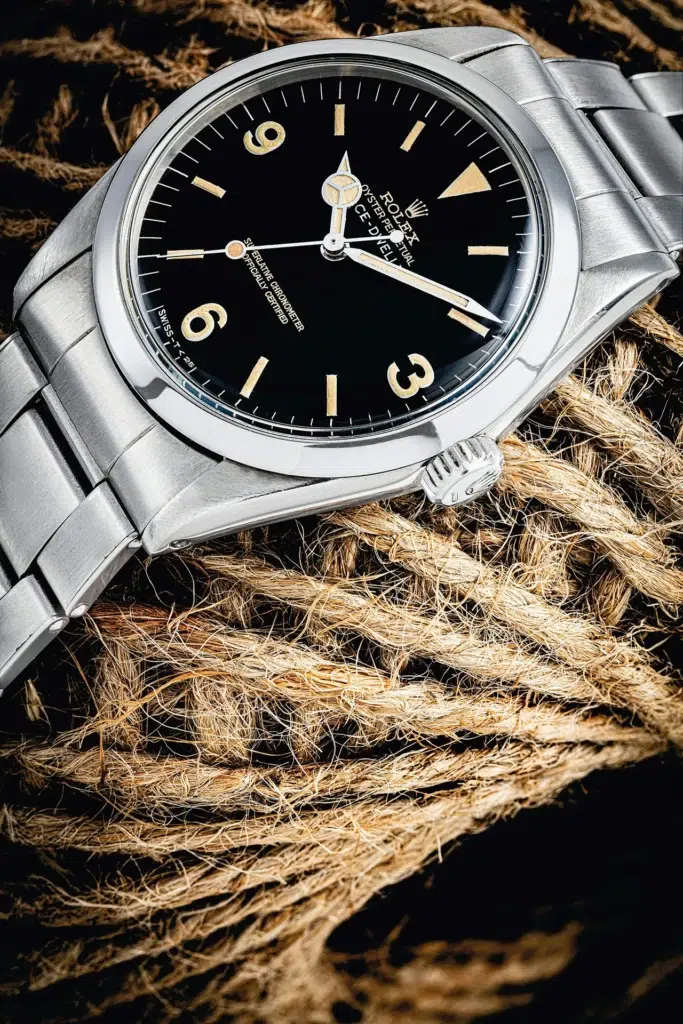
Image Source : British GQ
The Rolex Space-Dweller stands out as a precisely engineered timepiece with unique technical features that make it special in the Rolex lineup while keeping its core Explorer DNA.
The Space-Dweller comes with a perfectly sized 36mm stainless steel case that captures the classic Rolex sport watch look from the 1960s. The case is nowhere near as large as modern versions that go beyond 40mm. This size represents what Rolex sport models were all about in that era. The case has a domed steel bezel that frames the dial beautifully and gives it an understated look.
The 36mm case diameter was actually smaller than other Rolex sport models at the time. This made it really comfortable to wear daily. The Space-Dweller’s dial sits under a period-correct Plexiglass crystal instead of today’s sapphire. The combination of this protective element and stainless steel created a watch that was both refined and tough.
The biggest difference between the Space-Dweller and standard Explorer shows up in the dial text. The Explorer shows its name proudly on the dial, but the Space-Dweller replaces this with its own unique name. This small change creates a completely different identity and historical meaning.
Both watches share that iconic black glossy dial with the distinctive 3/6/9 Arabic numeral layout that makes an Explorer what it is. The Space-Dweller’s dial has gilt graphics and golden luminous material on its hands and indexes. This creates a warm vintage look that collectors love. The luminous material on these galvanic gilt dials was hand-applied, which makes each dial one of a kind.
What’s notable about the technical details: The Explorer’s name was applied through the same galvanic process as other dial text and looks slightly recessed. The “Space-Dweller” text was silver-printed on top of the finished dial, so it appears raised. This production difference gets collectors debating about authenticity and manufacturing methods.
The Space-Dweller runs on the highly respected Caliber 1560/1570 automatic movement. Rolex introduced the 1560 caliber in 1959 with:
The 1570 caliber came around 1965 and kept most key features while adding some improvements:
Both movements show Rolex’s steadfast dedication to precision, earning COSC certification through 15 days of rigorous testing.
The Space- Dweller was supplied with a stainless steel Oyster bracelet as standard. The durable bracelet is in keeping with the Explorer/Space- Dweller tool watch philosophy. Most examples of this era will have the riveted construction to the Oyster bracelet as was common place in the 60s, with exposed rivets on the side links.
The commercial experience of the Rolex Space-Dweller tells a fascinating story of careful market testing that ended up creating one of horology’s most elusive timepieces.
While Rolex held back before releasing the Space-Dweller en masse, they were more willing to take a risk releasing the rebranded Explorer 10 196 exclusive to Japan in 1963. This was timed to coincide with astronaut John Glenn’s high-profile visit to Japan that year. Japan’s obsession with astronauts was riding high as Glenn had recently been treated as a celebrity after helping astronaut Gordon Cooper safely return to Earth.Glen’s visit to Japan was the perfect opportunity for Rolex to promote the Space-Dweller watch.By sending astronauts into space, NASA had captured the world’s attention and Rolex wanted a piece of that market.The Space-Dweller was Rolex’s trial run. They produced a sample production run rather than ordering watches to be produced en masse.The obvious play on words referenced Glenn’s space endeavors. Rolex stamped Space-Dweller on the dial in place of Explorer. Rolex trademarked Space- Dweller with Sea-Dweller at around the same time which suggests they may have considered releasing a line of space themed watches.Eventually Rolex put import restrictions on the watch and kept it limited to Japan only sales.
The biggest problem behind the Space-Dweller’s limited release was simple – sales were poor. The tremendous enthusiasm for Mercury astronauts in Japan didn’t translate into people buying the watch. Sales remained “muted”.
The marketing experiment failed. Rolex had hoped the Japanese public’s fascination with astronauts would make them want a timepiece named in their honor. Sales figures proved disappointing, which forced Rolex to rethink its strategy.
Omega’s growing connection to NASA’s space program coincided with this period. Rolex might have been exploring different ways to link their brand with space exploration. The Space-Dweller represented one such attempt – a careful test to see if space-themed marketing would appeal to watch buyers.
Poor market response led Rolex to abandon the Space-Dweller concept after just a few years. The company stood ready to expand production globally if the model had captured public imagination as hoped. The Space-Dweller quietly disappeared from production by the mid-1960s.
Nobody knows the exact production numbers. Estimates suggest Rolex made only a few dozen Space-Dweller watches. Some experts say only 13 examples exist today, making it one of the rarest vintage Rolex models.
The Space-Dweller has reached near-mythical status among collectors. It shows up rarely at auction or for sale, with examples typically selling for around £85,000 ($110,000). Recent auction estimates place Space-Dweller models between $50,000 and $100,000.
Many watch enthusiasts learned about this unique timepiece only recently – it remains absent from Rolex’s official archives and website. The Space-Dweller stands as a fascinating historical artifact that represents a brief but important chapter in Rolex’s experimental marketing history.
The Rolex Space-Dweller’s journey through auction history tells an amazing story of its rise from an obscure variant to a legendary collector’s piece.
Sotheby’s Hong Kong hosted the Space-Dweller’s first auction appearance on May 6, 2002. The watch sold for $13,617, which seems modest today but exceeded its $6,400 high estimate significantly. The auction house described this piece as being from “circa 1961.” Experts later found this dating problematic because it came before the model’s actual introduction.
The prices kept climbing steadily upward. Christie’s New York sold a Space-Dweller for $28,000 in April 2006. The market showed more strength as another piece sold for $48,000 at Antiquorum New York in April 2008. This was a big deal as it means that it doubled its $20,000-$30,000 estimate.
The market reached new heights in July 2020 when a Space-Dweller brought in $136,000 at Christie’s Hong Kong—ten times the 2002 price. Phillips New York set another milestone in December 2023 with a record-breaking sale of $190,500.
Rolex produced just a few dozen Space-Dwellers, making them nearly impossible to find today. Most dedicated Rolex collectors have never seen one in person. Questions about authenticity remain a concern, particularly after several loose “Space-Dweller” dials showed up at auction in 2008. These loose dials raised fears about potential counterfeit watches entering the market.
The Rolex Space-Dweller’s mystique has grown stronger due to authentication challenges that make many claimed examples questionable.
The authenticity debate gained momentum after Sotheby’s 2008 auction of four loose “Space-Dweller” dials. The auction house sold two dials in May (Lots 59 & 61) and two more in November (Lots 107 & 108). Several notable Space-Dwellers sold after this date can be traced directly to these loose dials. Some watches came with elaborate stories – one claimed to be from “the son of a Japanese ambassador to Venezuela” – yet their dials matched those from Sotheby’s lots. These discoveries raised red flags about “Frankenwatches” – timepieces that combine various parts and deviate from original factory specifications.
Rolex’s official records show the company registered the “Space-Dweller” trademark in Switzerland on February 16, 1966 – just 16 days after the “Sea-Dweller” trademark. The company filed both marks in the United States on January 30, 1968, and received registration on November 19, 1968. This timeline conflicts with claims about 1963 production dates.
Authentic special Rolex batches typically show sequential case numbers, as demonstrated by early Sea-Dweller models (1602902-1602931). Space-Dweller examples show scattered case numbers across 1961-1967. No Space-Dweller appeared at auction before 2002 – a strange absence for what should be a legitimate 1960s Rolex variant.
Rolex Space-Dweller: The Watch Marked By Failure But Millions Today The Rolex Space- Dweller has one of the most interesting stories in watch history. Rolex briefly transformed the everyday Explorer 10:16 into something much more exotic. Externally, the Space- Dweller resembled its sibling quite a bit. However, two small words were printed on the dial that differentiated it from the mountaineering icon. When the Space-Dweller is offered for sale these days, it regularly sells for astronomical sums. Here’s why a marketing failure associated with astronautics is worth so much money today.
Rolex released the Space-Dweller to Japanese consumers in the 1960s, who didn’t seem to love it. Among collectors, however, the watch has taken on near legendary status. Here’s how astronomic its value has grown. In 2002, the average Rolex Space-Dweller resold for $13,617. As of 2023, that number skyrocketed to $190,500. That’s a 14x return that even most Wall Street investors can’t dream of. Clearly, part of this increase has to do with the watch’s scarcity.
The Space-Dweller is shrouded in mystery. Some have questionable dial placement and looser than normal dials appear at auction. Others have conflicting serial numbers and odd dates for trademark registration. Arguments about the legitimacy of many Space- Dwellers abound. So what does all this mystery do for the value? It increases it even more!
One fascinating thing about the Space-Dweller is what it symbolizes. For horology enthusiasts, it’s a reminder of the space race. For business people and marketers, it’s a lesson about finding your target audience. And for collectors, it’s a fantastic watch that few will ever get to experience in person. Either way you slice it, sometimes failing wildly can be worth more than grand success. Had enough Space-Dwellers launched in 1963, they would be common vintage Rolexes today. Instead, there are only a few hundred in existence.
The Rolex Space-Dweller is extremely rare, with only about 13 known examples existing today. It was produced in limited numbers exclusively for the Japanese market in the early 1960s and quickly discontinued, making it one of the most elusive vintage Rolex models. Its rarity and unique history have driven its value to astronomical levels, with recent auction prices exceeding $190,000.
The main difference lies in the dial text. While the Explorer proudly displays its name on the dial, the Space-Dweller replaces this text with its unique “Space-Dweller” moniker. Otherwise, both watches share the same 36mm stainless steel case, black glossy dial with 3/6/9 Arabic numeral configuration, and Caliber 1560/1570 automatic movement.
Rolex created the Space-Dweller as a marketing experiment in 1963, coinciding with American astronaut John Glenn’s visit to Japan. The company aimed to capitalize on the astronaut frenzy sweeping Japan by releasing a space-themed version of their Explorer watch. However, despite the excitement surrounding astronauts, the watch didn’t generate the expected sales.
Authenticity is a significant concern with Space-Dwellers due to their rarity and high value. Several factors have raised doubts, including the appearance of loose “Space-Dweller” dials at auctions, inconsistent serial numbers, and discrepancies in the trademark registration timeline. Collectors and experts scrutinize each example carefully to verify its authenticity.
The Space-Dweller’s value has increased dramatically since its first known auction appearance. In 2002, one sold for $13,617 at Sotheby’s Hong Kong. By 2020, the price had risen to $136,000 at Christie’s Hong Kong. The most recent record was set in December 2023 when a Space-Dweller fetched $190,500 at a Phillips New York auction, demonstrating its significant appreciation over time.
Paul Newman’s personal Rolex Daytona ref 6239 would make anyone’s jaw drop. The timepiece reached an astounding $17.8 million at the time it went under
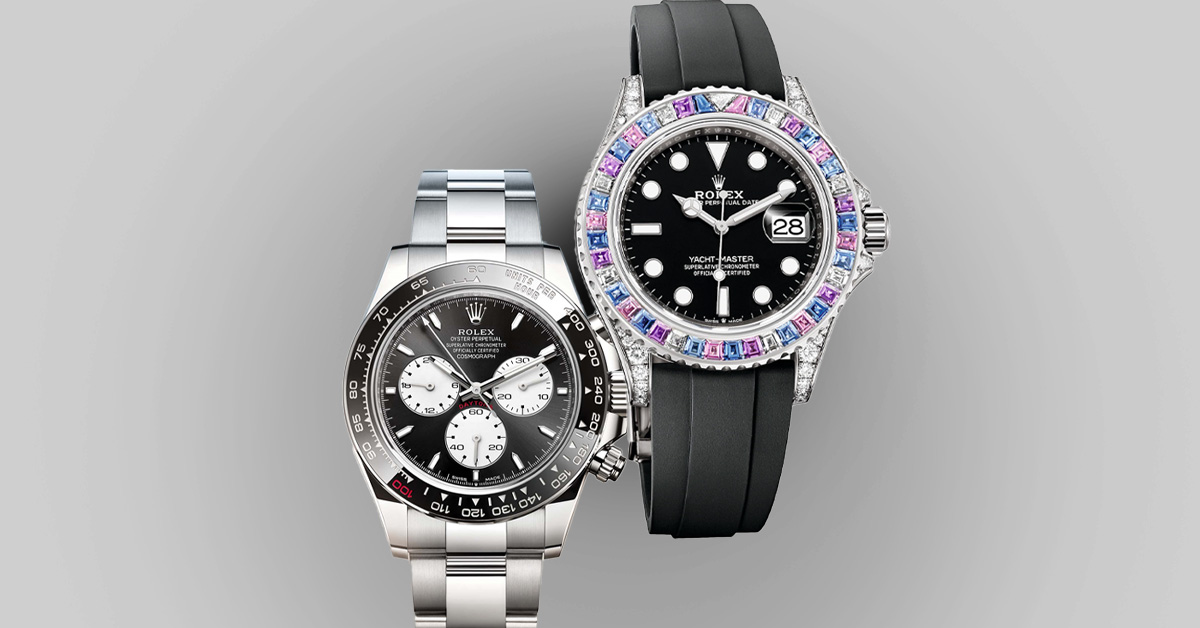
The Cotton Candy Rolex reframes what a modern luxury timepiece can be. From its 2022 launch, this unique Yacht-Master 40 stood apart from other watches.

The Rolex Glidelock stands out as one of the most important breakthroughs in watch bracelet technology since 2008. Your wrist swells up in hot weather