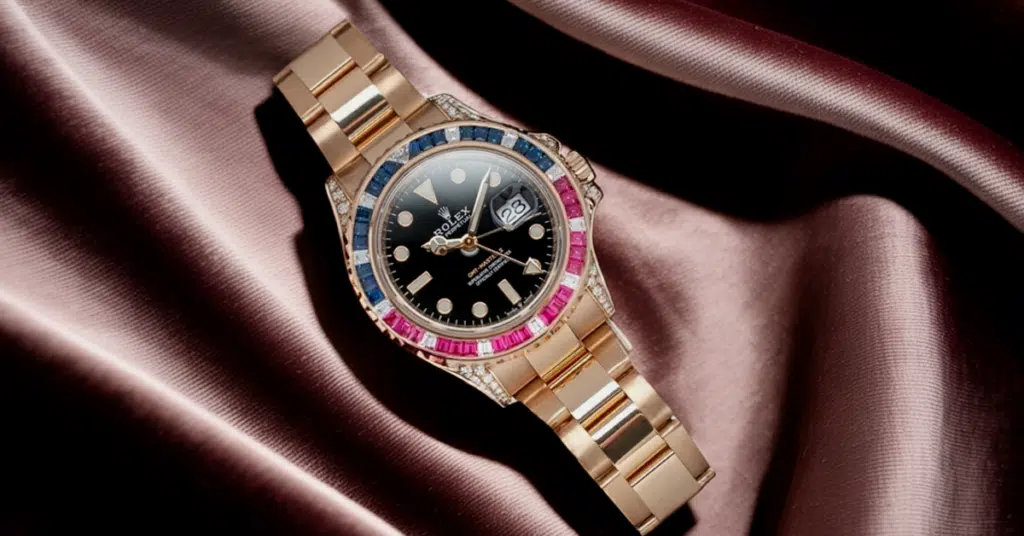
Rolex SARU watches stand among the most visually striking timepieces the legendary watchmaker has ever created. These rare gems combine brilliant sapphires and rubies (hence the name “SARU”) on a functional GMT bezel. This unique combination has changed how collectors see luxury sports watches forever.
The Rolex GMT Master II SARU has earned its place as one of horology’s most coveted pieces, though it appears exclusively on GMT-Master models. The original SARU GMT made its debut in the middle of 1980 and has evolved through several references while keeping its distinctive appeal. Of course, these watches are incredibly rare – only about three dozen exist, and the rarest models now fetch over $300,000. A notable piece sold at a Phillips auction brought an impressive CHF256,250 plus buyer’s premium.
You might wonder what makes the SARU GMT so special and why these watches command such extraordinary prices. Let’s find out everything about this fascinating blend of function and opulence.
Table of Contents
What Is the Rolex GMT SARU and Why It Stands Out
The Rolex GMT SARU is a stunning masterpiece in luxury watchmaking. It combines technical precision with artistic gem-setting and shows Rolex’s exceptional craftsmanship through its carefully designed bezel. The watch holds an exclusive status in the world of horology.
SARU Meaning: Sapphire and Ruby Bezel
“SARU” comes from the first syllables of “SApphire” and “RUby”. These precious gemstones create the iconic bi-color bezel that sets apart the GMT-Master collection. The traditional red and blue “Pepsi” color scheme of the GMT-Master takes on new life with real precious stones.
The SARU bezel’s upper half features blue sapphires, while trapeze-cut rubies adorn the lower half. The bezel also features baguette diamonds as hour markers. You’ll find 11 trapeze-cut diamonds for hours one through eleven and a triangle-cut diamond at 12 o’clock. This design lets the bezel work as a 24-hour scale for the GMT complication while using extraordinary materials.
The 126755SARU in Everose gold sparkles with 18 trapeze-cut sapphires and 18 trapeze-cut rubies. Diamonds mark the hours. This careful arrangement creates a stunning visual effect that grabs attention without compromising the watch’s function.
Rolex’s Use of Gem-Setting in Sports Watches
The original SARU GMT-Master’s debut in the mid-1980s changed luxury watchmaking forever. Before this, we used gem-setting mostly in elegant timepieces like the Day-Date. Putting precious stones on a sports watch changed how people viewed sports watches.
Rolex has managed to keep its unique approach to gem-setting over the years. Rolex states, “Whether for diamonds, sapphires, rubies, or emeralds, Rolex masters the art of gem-setting“. The brand’s in-house gemmologists and gem-setters pick, cut, and set each stone to show its best beauty, color, and sparkle.
Creating a SARU bezel takes incredible skill. Each stone goes through careful selection for matching colors and quality. The gems are then cut and set with precision. Modern SARU models like the 126755SARU feature diamond pavé-setting that extends to the lugs and crown guards, making the watch even more luxurious.
Why SARU Is Not in the Official Catalog
SARU versions of the GMT-Master II are “off-catalog” watches that don’t appear in Rolex’s regular offerings. These pieces are made only by request for premium and VIP customers.
This exclusive approach serves two purposes. It keeps these gem-set watches special in the market and lets Rolex control production numbers to maintain quality and rarity.
Rolex dealers usually get no more than one SARU watch each year. Rolex doesn’t approve every dealer request, even for their best clients. This careful management helps these watches keep their legendary status and investment value.
This selective distribution means SARU watches sell for very high prices in the secondary market. The rose gold 126755SARU now sells for between USD 130,000 and USD 200,000+.
The SARU watches come in yellow gold (116758SARU), white gold (116759SARU), and now rose gold (126755SARU). Their appeal comes from perfectly executing an unusual idea: a tough sports watch decorated with the finest jewels.

Design and Craftsmanship: A Closer Look at the SARU Bezel
Rolex’s master gem-setters spend countless hours creating the intricate artistry behind each SARU bezel. These specialized creations turn the functional GMT component into a showcase of horology’s finest jewelry work.
Bezel Composition: 18 Sapphires, 18 Rubies, 11 Diamonds
The SARU bezel’s signature design uses 36 trapeze-cut precious stones arranged with precision. It features 18 sapphires and 18 rubies that create the iconic blue and red color scheme GMT enthusiasts recognize instantly. The design becomes even more remarkable with 11 trapeze-cut diamonds as hour markers and a triangle-cut diamond at 12 o’clock.
Rolex introduced this gem configuration in 2006 with the 116758 SARU. This marked a significant change as Rolex created a dedicated reference number. The “5” in the reference specifically shows its gem-set nature. Rolex managed to keep this signature stone count and arrangement through later versions. These include the white gold 116759 SARU (2007) and the rose gold 126755 SARU (2020).
Modern versions take gem-setting beyond the bezel. Current models showcase brilliant-cut diamonds on the lugs and crown guards. These additions bring extra dimension to an extraordinary timepiece. Rolex offers even more luxurious versions with pavé dials that have 428 diamonds and bracelets with diamond-set center links.
Factory Gem-Setting vs Aftermarket Mods
Collectors need to separate factory SARU bezels from aftermarket modifications. Rolex’s factory gem-setting shows attention to detail that aftermarket options can’t match.
Authentic Rolex gem-setting shows these signs:
Perfect alignment – Each diamond’s table lines up with the dial’s center
Uniform direction – All gem tables point the same way
Meticulous matching – Stones match in size, cut, color, and clarity
Flawless quality – Only IF (internally flawless) diamonds between D and G color make the cut
Custom settings – Master jewelers hand-carve each setting to fit gemstones perfectly
Rolex’ master gemologists hand pick stones that fit their high quality standards. One look through a 10x loupe will tell you the difference between factory and aftermarket work. Rolex only uses trapeze and baguette diamonds for bezel work while aftermarket usually incorporate princess-cut stones.
Pre-owned SARU watch buyers should check if the reference number has “SARU” and later references contain the “5” digit that shows factory gem-setting. This alertness matters because aftermarket modifications, especially those that change the bracelet and case structure, reduce the watch’s value and authenticity.
Functional Use of the SARU Bezel in GMT Timekeeping
The SARU bezel works for GMT timekeeping despite its luxurious look. It strikes an interesting balance between form and function. Traditional GMT bezels show numbers to track a second time zone. The SARU uses gems instead of these numerals.
The SARU shows a rare case where Rolex puts esthetic appeal ahead of pure functionality. The gems still keep the bi-colored look that helps tell day from night on a GMT display. The blue (sapphire) top half and red (ruby) bottom half create a visual split. This helps wearers separate daytime from nighttime hours when tracking another time zone.
This watch offers an interesting study in horological compromise for practical collectors. It keeps its core GMT function through the distinctive red GMT hand and 24-hour display. Users can track two time zones at once. The extraordinary gem-setting raises the esthetic appeal to new heights.
The SARU bezel shows how Rolex expands both jewelry and watchmaking boundaries. They’ve created timepieces that work beautifully as precision instruments and wearable art.
Evolution of SARU Models: From 16758 to 126755
The legacy of Rolex’s gem-set GMT models spans four decades. Each version shows progress in watchmaking and jewelry design. A chronological look reveals how this unique concept grew from an experimental design to a 40-year old part of Rolex’s premium collection.
Rolex GMT-Master 16758 SARU (1980s)
The first SARU debuted back in the mid-80’s. He took the base/reference 16,758 yellow gold GMT- Master and elevated it to luxury. This pioneering timepiece was Rolex’s first gem-set sports watch. Mastering function and elegance like never before. Sapphire and rubies adorn the bezel, elaborately fitted in the iconic “Pepsi” color pattern.
The original had many luxurious features. Blue sapphire hour markers decorate the elegant paved dial. The yellow gold President bracelet features 12 brilliant-cut diamonds in each center link. This type of detail is what makes approximately only 36 pieces known to exist today.
116758 SARU (2006, Yellow Gold)
Rolex brought back the SARU concept in 2006 after twenty years. The new reference 116758 SARU marked a first. Rolex gave the SARU variant its own reference number, with “5” showing its gem-set nature.
The new bezel design featured 18 trapeze-cut rubies and sapphires. It also had 11 trapeze-cut diamonds as hour markers and one triangle-cut diamond at 12 o’clock. This release came after GMT-Master’s 50th anniversary. It offered three options: “Basic” (gem-set bezel and case), “Pave” (adding a diamond-paved dial with 428 diamonds), and “Full Monty” (with diamond-set center links).
116759 SARU (2007, White Gold)
Rolex expanded the collection in 2007 with the white gold reference 116759 SARU. This version kept the same gem pattern while showcasing white gold’s unique appeal. Clients could still choose from three levels of gem-setting.
126755 SARU (2020, Rose Gold)
The SARU concept evolved again in 2020 with reference 126755 SARU in 18k Everose gold. This latest version uses Rolex’s special rose gold alloy. It houses the Caliber 3285 movement that runs for 70 hours.
Unlike its predecessors that came with SA and SANR options, the 126755 comes only with the signature sapphire and ruby bezel design. This modern take delivers the GMT-Master II’s technical excellence while carrying forward its remarkable gem-setting heritage.
Exclusivity and Rarity: Why You Rarely See a SARU GMT
These jewel-adorned masterpieces catch everyone’s eye, but spotting a SARU GMT in real life happens rarely. The lack of these timepieces isn’t random—Rolex planned it this way.
On-Request Only: VIP Client Access
Rolex keeps tight control over SARU distribution through a special invitation process. You won’t find these gem-set timepieces in catalogs or on Rolex’s official website. The company saves them for clients who have spent big money and earned elite status with authorized dealers. Most sales happen at flagship boutiques in major cities like New York, Los Angeles, or Miami. Your retailer might say no to your request even if you’ve spent a lot. Rolex could also reject it—they do this to keep these watches’ legendary status intact.
Production Limits and Regional Availability
SARU GMT models are incredibly hard to find. Records show only three dozen examples exist. Some versions were made just for the Greater China market. Rolex keeps production low as part of their overall strategy. The company makes about 800,000 to 1 million watches yearly, but they keep gem-set special editions extremely limited. This makes them true horological unicorns.
Factory vs Custom SARU: How to Spot the Difference
Telling real factory SARU models from fakes needs a sharp eye. The reference number tells the story—genuine pieces always have “SARU” in their name, and newer ones use “5” instead of “1”. This difference matters a lot for value. Custom watches usually don’t keep their worth. Collectors don’t like aftermarket changes and prefer 100% original factory pieces. This choice affects both collectability and value over time.
Rolex SARU Price and Collector Value
The financial world of the SARU collection showcases prices that match its exceptional status. These timepieces command premium prices and have proven themselves as solid investments through time.
Current Market Prices by Reference
Secondary market prices for the current 126755SARU in Everose gold range between $118,533 and $245,863. Yellow gold 116758SARU and white gold 116759SARU variants trade between $90,000 and $110,000. The secondary market value of SARU models has risen by 13.3% in the last five years. Most authorized dealers mark these watches as “price on request” — a clear signal of their extraordinary exclusivity.
Full Pave vs Standard SARU Pricing
The price gap between standard SARU models and their fully paved counterparts tells an interesting story. Simple SARU models showcase gem-set bezels and cases, while full pave versions feature diamond-set dials (with 428 diamonds) and bracelets with diamond-set center links. The “Ice Master” reference 116769 TBR, with its complete diamond covering, stands as the GMT’s crown jewel at approximately $500,000.
Investment Potential and Auction History
Recent auction results confirm the SARU’s investment appeal. A reference 116758SARU reached 1,071,000 HKD in February 2022, this is a big deal as it means that its high estimate of 500,000 HKD. The market showed continued strength when another 116758SARU brought 126,000 CHF in May 2022. Market analysts note that Rolex watches hold their value better than other luxury timepieces.
Conclusion
Rolex’s SARU GMT-Master II might be the best example of high jewelry meets sports watch fabrication that you’ll ever find. Jewelry watchmakers carefully placed these watches in order to achieve the finest details possible while still keeping functionality a top priority. 18 sapphires, 18 rubies, and 12 diamonds are carefully placed around this timeless GMT bezel to create a true masterpiece.
Rolex has refined the SARU over 40 years from a simple wristwatch into a true horological work of art. From the original 16,758 reference back in the 1980s to today’s 126,755 iteration in Everose gold Rolex has tried to make this watch better every step of the way. From switching up the metal types from yellow gold to white gold and finally Rolex’s signature rose gold alloy.
Rolex SARUs are a rare gem and rarity plays a large factor in the appeal of these watches. Rolex produces these watches in very limited quantities and only sells them to their most prestigious clients. Chances are you will never see an actual SARU in person. This rarity and amazing attention to detail make these watches excellent investments.
You can clearly see the difference in factory set SARU watches versus post market set watches. The amount of time Rolex spends placing each individual gem makes counterfeiting very easy to spot among watch experts. SARU watches are one of those watches you may love because of their technical prowess, resale value, or simply because of how beautiful they look. The beauty of this watch is something every watch enthusiast can appreciate even if they know they’ll never own one.
FAQs
What makes the Rolex SARU GMT-Master II unique?
The SARU GMT-Master II features a bezel set with 18 sapphires, 18 rubies, and 12 diamonds, combining luxury gem-setting with the functionality of a GMT watch. This rare piece is not in Rolex’s official catalog and is only available to select VIP clients.
How much does a Rolex SARU GMT-Master II cost?
Prices for SARU models vary depending on the specific reference and market conditions. The current Everose gold 126755SARU typically ranges from about $120,000 to $250,000 on the secondary market. Older yellow and white gold versions generally trade between $90,000 and $110,000.
Is the Rolex SARU GMT-Master II a good investment?
SARU models have shown strong value retention and appreciation. Over the past five years, their secondary market value has increased by 13.3%. Auction results have been impressive, with some pieces significantly exceeding their estimates, demonstrating their potential as investments.
How can I distinguish between a factory SARU and an aftermarket modification?How can I distinguish between a factory SARU and an aftermarket modification?
Authentic factory SARU models have “SARU” in their reference number, with newer references containing a “5” instead of “1”. Rolex’s gem-setting quality is unparalleled, with perfect alignment, uniform direction, and flawless stones. Aftermarket modifications often use different cut stones and lack the precision of factory work.
How rare are Rolex SARU GMT-Master II watches?
SARU GMT models are extremely rare. Throughout their history, only about three dozen examples are known to exist. Rolex deliberately limits production and reserves these watches for their most valued clients, making them one of the most exclusive timepieces in the brand’s portfolio.
Enjoying our watch coverage? Get more of it in Google Search.