
The Blue Rolex Face-Off: Cookie Monster vs Smurf – Expert Comparison
The Rolex Cookie Monster and Smurf represent two iconic blue Submariner timepieces that engage luxury watch enthusiasts worldwide. Rolex launched the Submariner ‘Smurf’ back in

The Rolex Cookie Monster and Smurf represent two iconic blue Submariner timepieces that engage luxury watch enthusiasts worldwide. Rolex launched the Submariner ‘Smurf’ back in 2008, right as the company celebrated its 100th anniversary and the Submariner collection turned 55. The Cookie Monster joined the lineup in 2020 and still remains available today—though you’ll need patience or a great relationship with your authorized dealer to get one.
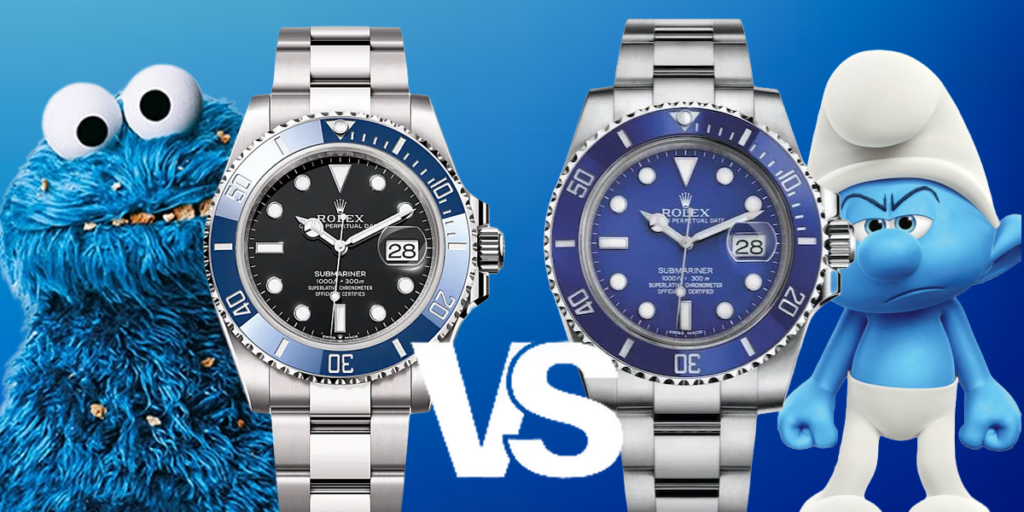
These watches share the prestigious Submariner DNA but stand apart in their design and specs. A black dial and 41mm case define the Cookie Monster’s character. The discontinued Smurf comes with a blue dial and a slightly smaller 40mm case. The Cookie Monster steps up the game with its upgraded Caliber 3235 movement that delivers a 70-hour power reserve. The Smurf’s Caliber 3135 offers a 48-hour reserve. Price tags tell their own story—the Cookie Monster retails at $46,600, while the Smurf originally cost $38,000. The Smurf’s discontinuation has pushed its market value up by a lot, making this comparison even more relevant to collectors and investors.
This piece dives deep into these blue-bezel Submariners’ design elements, technical specs, market value, and investment potential. You’ll discover what makes each watch unique, whether you plan to add one to your collection or just appreciate these horological masterpieces.
Rolex marked a pivotal moment in 2008 when it celebrated its 100th anniversary along with the Submariner collection’s 55th year. This milestone year saw Rolex show the reference 116619LB – their first Submariner made completely from 18k white gold. The groundbreaking timepiece paired a striking blue Cerachrom bezel with a matching blue dial.
Rolex brought out the reference 126619LB in 2020, twelve years later. The new model managed to keep its predecessor’s blue Cerachrom bezel but featured a glossy black dial that created a dramatic contrast from the all-blue Smurf.
Rolex never officially acknowledges these names, yet both watches naturally earned their playful nicknames from watch enthusiasts. The watch’s all-blue look and white gold case inspired the name “Smurf,” which reminded people of the beloved cartoon characters. The “Cookie Monster” name came from its blue and black combination that looked like the famous Sesame Street character.
These nicknames show how Rolex timepieces have become part of popular culture and grown beyond luxury items. They now represent cultural symbols with their own unique stories and personalities.
The Smurf ended its soaring win of a 12-year production run in 2020. This timing matched one of the Submariner’s biggest changes – its case grew from 40mm to 41mm. The Cookie Monster then stepped up as the successor in Rolex’s lineup and brought modern refinements while keeping the distinctive blue bezel that meant luxury.
Collectors want the Smurf even more now that it’s discontinued, as the limited supply faces growing interest.

These two Submariners share white gold heritage but take different paths with their dials. The Smurf has a rich blue lacquer dial that shows amazing depth and shine, matching its bezel perfectly. The Cookie Monster takes a different approach with its glossy black dial that stands out against the blue bezel. This combination makes the watch easier to read and gives it a bold look.
The blue Cerachrom ceramic bezels on both models come with platinum-coated numerals and graduations. This material resists scratches and will last for years. Both watches are made completely from 18k white gold, giving them the substantial weight that collectors love.
The development from Smurf to Cookie Monster brought a small but important change in size from 40mm to 41mm. The Cookie Monster’s updated case has thinner lugs and feels more comfortable on your wrist. Its lug width grew from 20mm to 21mm, which balances better with the bracelet.
Both watches use Rolex’s famous three-piece Oyster bracelet with the clever Glidelock extension system. You can make small adjustments without any tools – perfect when you need to fit it over a wetsuit or adjust for your wrist’s size changes during the day.
Your choice between these watches comes down to what looks best to you. The Smurf’s all-blue design creates a unified look, while the Cookie Monster plays with contrasting elements that catch the eye. This core design approach sets these exceptional Submariners apart from each other.

The Rolex Cookie Monster and its Smurf predecessor show remarkable mechanical differences at their core.
The Smurf features Rolex’s legendary Caliber 3135—a workhorse movement from 1988. The Cookie Monster takes things further with the next-generation Caliber 3235 from 2015. This newer caliber comes with over 90% new components and 14 patents. Both calibers run at 28,800 beats per hour. The 3235’s revolutionary Chronergy escapement makes it 15% more efficient than its predecessor.
The Cookie Monster’s power reserve stands out as one of the most important upgrades. While the Smurf’s Caliber 3135 runs for 48 hours when fully wound, the Cookie Monster’s Caliber 3235 delivers a 70-hour power reserve. This means you can leave it off your wrist longer without needing to adjust it.
The Cookie Monster makes use of Rolex’s advanced Paraflex shock absorbers that improve shock resistance by 50%. The Smurf uses the standard KIF shock system. Both movements include the paramagnetic blue Parachrom hairspring that resists magnetic fields and temperature changes exceptionally well.
Rolex’s stringent Superlative Chronometer certification ensures both movements maintain precision of -2/+2 seconds per day. This is a big deal as it means that it surpasses the traditional COSC standard of -4/+6 seconds.
The retail prices of these timepieces show significant differences based on their era and specifications. The Smurf had an original retail price of about $39,650, while the Cookie Monster costs $46,600. The Cookie Monster’s higher price reflects its upgraded movement and refined case dimensions.
The secondary market tells an interesting story. The Smurf trades at around $33,167 and has maintained stability after its early depreciation. The Cookie Monster’s secondary market price of $31,789 sits below both its retail price and the Smurf’s market value. Celebrity endorsements have sparked occasional price surges for the Cookie Monster, with some pieces reaching $45,000-$50,000 after high-profile exposure.
The Smurf’s discontinued status creates a perfect balance of limited supply and growing demand. The Cookie Monster remains in production despite significant backorders. This key difference attracts distinct collector groups – those who value rarity and others who prefer current models.
Both timepieces show promising investment potential. The Submariner collection has shown steady growth year after year, and white gold variants have proven particularly resilient in value. Collectors value these models for their exceptional liquidity and proven appreciation history.
|
Feature |
Rolex Cookie Monster |
Rolex Smurf |
Launch Year |
2020 |
2008 |
|
Case Size |
41mm |
40mm |
|
Case Material |
18k White Gold |
18k White Gold |
|
Dial Color |
Black (Glossy) |
Blue (Lacquer) |
|
Bezel |
Blue Cerachrom with platinum inlay |
Blue Cerachrom with platinum inlay |
|
Movement |
Caliber 3235 |
Caliber 3135 |
|
Power Reserve |
70 hours |
48 hours |
|
Shock System |
Paraflex |
KIF system |
Original Retail Price |
$46,600 |
$39,650 |
|
Secondary Market Price |
Around $31,789 |
Around $33,167 |
|
Production Status |
Currently in production |
Discontinued (2020) |
|
Bracelet |
Oyster with Glidelock |
Oyster with Glidelock |
|
Chronometer Certification |
Superlative (-2/+2 sec/day) |
Superlative (-2/+2 sec/day) |
|
Lug Width |
21mm |
20mm |
Personal preference and collecting goals drive the choice between the Rolex Cookie Monster and Smurf. These timepieces showcase the best in luxury diving watches, each with its distinct character.
The Cookie Monster has clear advantages. Its upgraded Caliber 3235 movement, extended 70-hour power reserve, and improved shock resistance make it worth the higher retail price for many enthusiasts. The black dial paired with a blue bezel creates a bold, modern look that makes it unique in Rolex’s collection.
Limited availability has given the discontinued Smurf a special place in the market. Many collectors find its all-blue appearance elegant and impossible to resist. The secondary market reflects this appeal, and the Smurf often sells for more than its technically advanced successor.
Both watches show strong investment potential. The Smurf will likely appreciate in value because of its limited supply. The Cookie Monster holds value as the current flagship blue Submariner. You’ll get a stunning timepiece and a solid asset with either choice.
The Smurf’s harmonious blue-on-blue design and the Cookie Monster’s dynamic contrast both represent exceptional watchmaking. These blue Submariners prove how Rolex can exceed their practical origins and become globally recognized icons.
Your choice should focus on which watch brings more joy to wear. Despite their investment value, these masterpieces belong on your wrist rather than in a safe.
The Rolex Cookie Monster and Smurf represent two iconic blue Submariner timepieces that engage luxury watch enthusiasts worldwide. Rolex launched the Submariner ‘Smurf’ back in

Matching Rolex watches mean way more than just coordinated timepieces for couples. A couple’s choice to wear coordinating Rolexes shows their shared taste and love

Is it cheaper to buy a Rolex in Switzerland? The question matters more than ever since American buyers will face a hefty 31% tariff on