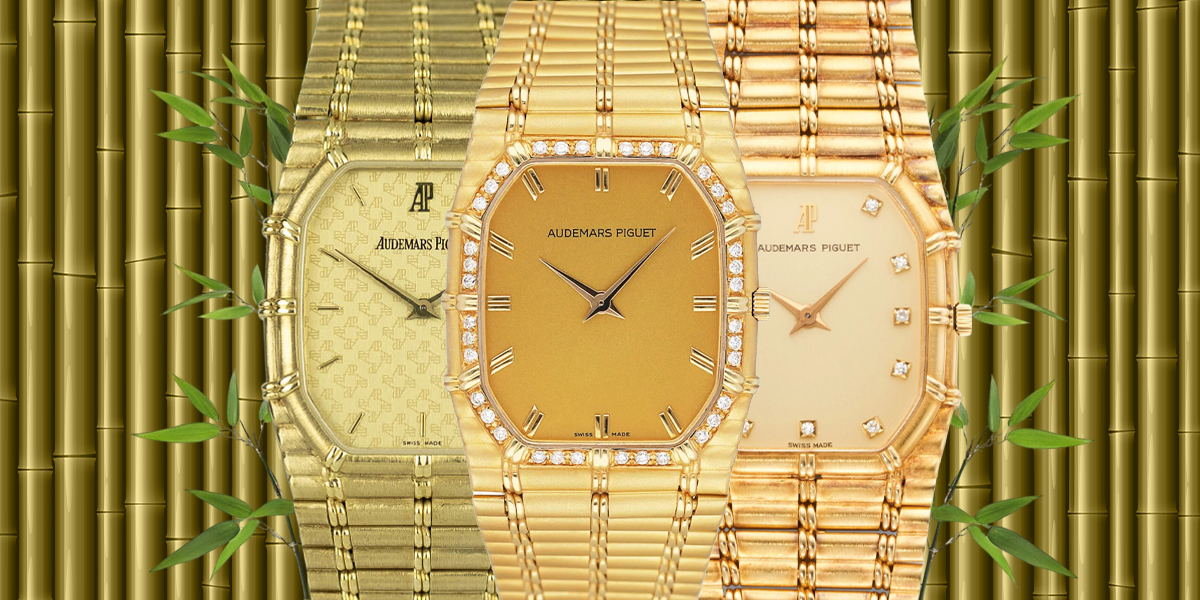
Audemars Piguet Bamboo Review: Why This Vintage Watch Became Every Collector’s Grail
The Audemars Piguet Bamboo has quietly transformed from an obscure 1980s rarity into the ultimate vintage grail. Once slept on compared to other AP models,

The choice between a quartz vs automatic watch comes down to two completely different ways of keeping time. Quartz watches run on battery power with a crystal that gives remarkable precision – you’ll only see a difference of about ±15 seconds each month. Automatic watches take a more traditional approach with mechanical movements that can vary between ±20 to ±40 seconds daily.
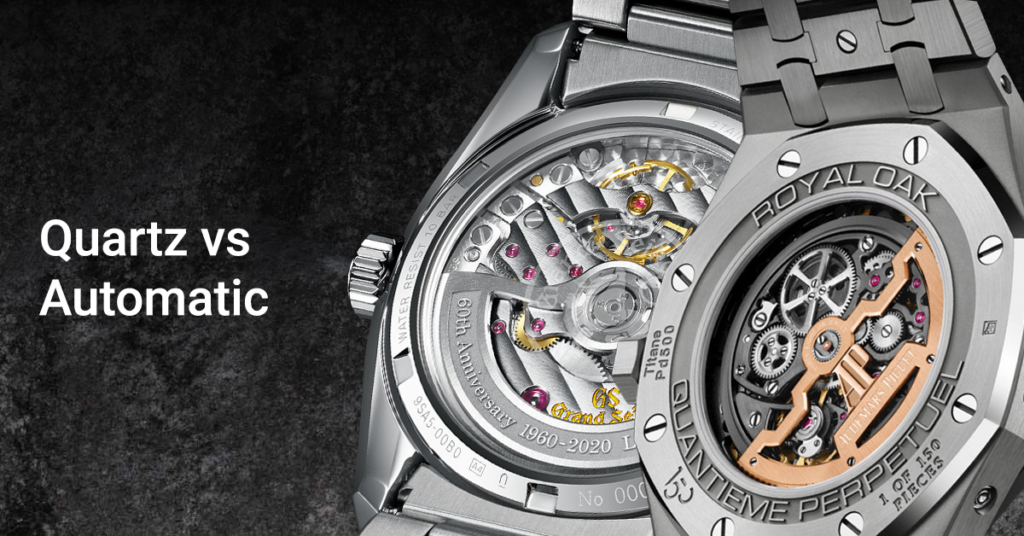
Quartz movements changed the game by bringing accuracy and affordability to everyone. But automatic watches hold a special place among collectors and traditionalists. These mechanical marvels can tick for more than 100 years with proper care. The differences between mechanical and quartz watches go beyond just how they work. Each type brings its own set of benefits for durability, performance, and long-term costs – from battery changes to service schedules.
This piece breaks down everything about quartz vs automatic watch movements. You’ll learn the pros and cons of each type and find the perfect timepiece that matches your lifestyle, priorities, and budget.
The main difference between timepieces can be found in their internal mechanisms. You’ll better appreciate what makes each type special by understanding how they work.
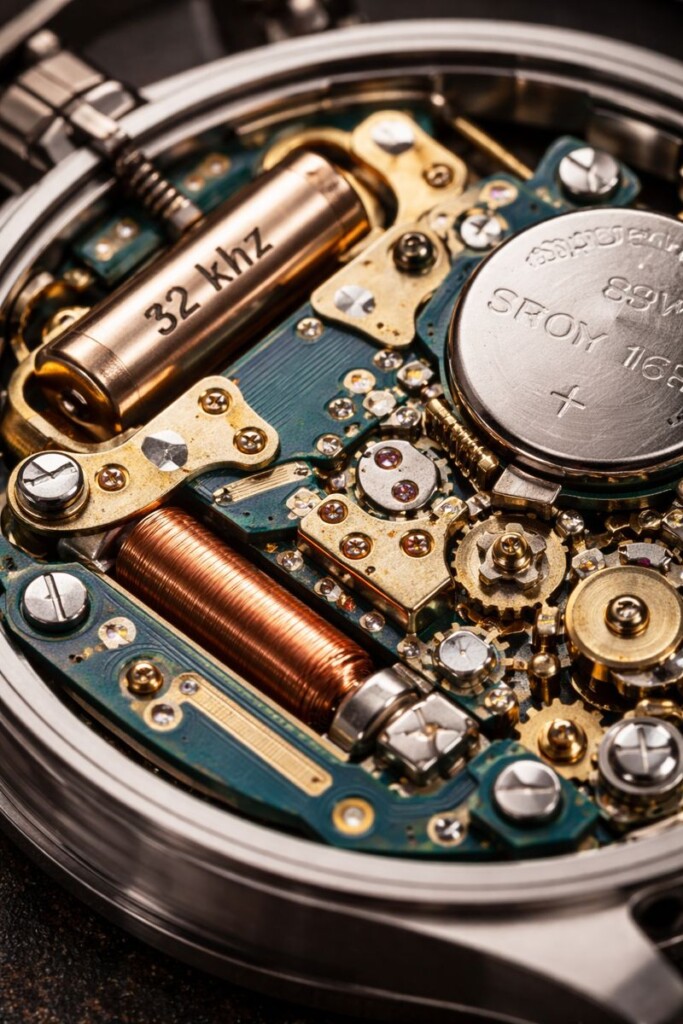
Quartz watches work through an amazing process called piezoelectricity. A battery sends an electrical current through a small quartz crystal shaped like a tuning fork. The electrical charge makes the crystal vibrate exactly 32,768 times per second. An integrated circuit detects these consistent vibrations and converts them into one-second electrical pulses. These pulses drive a stepping motor that moves the watch hands with their characteristic once-per-second “tick” motion.
Automatic watches use mechanical energy rather than electrical power. They have a mainspring at their core—a coiled spring-steel band that stores energy. The rotor sets automatic watches apart—it’s a metal weight that moves freely with your wrist’s natural motion. Your movement spins the rotor and transfers this kinetic energy to wind the mainspring. The mainspring releases its stored energy through a gear train that powers the watch.
Quartz watches need batteries that last 2-5 years before replacement. Automatic watches use a mainspring as their power source instead. A standard automatic watch’s fully wound mainspring stores enough energy to run for about two days without wear. Some premium models come with power reserves lasting 40-80 hours.
These movements work in completely different ways. Quartz movements achieve exceptional precision through electronic oscillation with fewer moving parts. Automatic watches feature an intricate mechanical dance of balance wheels, escapements, and jeweled bearings. This complexity explains the distinct movement patterns – quartz watches tick each second while automatic watches show a smooth, sweeping motion.
The difference in performance between timepieces shows up clearly as we explore their ground capabilities. These differences will help you pick a watch that fits your needs.
Quartz dominates decisively in precision. A standard quartz timepiece typically deviates by approximately ±15 seconds per month. Some high-quality models can achieve accuracy within a few seconds per year. Even well-tuned automatic watches may vary by ±20 seconds per day. This makes quartz roughly 40-60 times more accurate.
The physics explains this huge gap. Quartz crystals vibrate at a stable 32,768 Hz. Automatic watches depend on mechanical balance wheels that run at just 4-8 Hz. Automatic accuracy also changes with position, temperature, and activity level.
Impact poses a threat to both types of timepieces. Mechanical watches were highly vulnerable to shocks until the 1930s. In spite of that, modern automatics now use advanced protection systems like Incabloc (1932), Kif (1944), and Rolex’s Paraflex.
Quartz watches handle shocks better because they have a simpler design and fewer moving parts. So they hold up better during active sports and daily wear.
Quartz movements keep their accuracy until the battery dies. Automatic watches lose precision as lubricants break down. They need professional servicing every 3-5 years.
You can measure this performance gap. High-quality quartz watches maintain stability to within 2.5×10⁻⁸ at hourly intervals. This ensures reliable operation with just simple battery changes.
Quartz proves tougher in extreme environments. Military organizations pick quartz movements because they work better in demanding conditions. Automatic watches can also fail from magnetic fields and extreme temperatures that disrupt their delicate balance systems.
Both types must pass standardized ISO 1413 testing. This includes a one-meter drop onto hardwood to prove basic durability. Without doubt, manufacturers can make both types tough, but quartz stays ahead in challenging situations.
The true cost of owning a watch goes way beyond the original purchase price when you compare quartz and automatic timepieces.
Quartz watches need minimal upkeep—you just need to replace the battery every 1-3 years at a cost of $10-50. Automatic watches, however, need detailed servicing with complete disassembly, cleaning, lubrication, and regulation. The cost of this mechanical overhaul ranges from $150-300 for standard movements, and luxury brands can cost between $600-1,200.
Quartz watch maintenance centers around battery changes every 2-3 years. These watches might need a full service after 10-15 years when lubricants dry out. Automatic watches need professional care every 3-5 years. Some manufacturers like IWC suggest servicing only when you notice changes in performance.
A quartz watch’s maintenance costs add up to $200-400 over 20 years. This is nowhere near the cost of maintaining an automatic watch, which averages $600-1,200 during the same period. High-end mechanical watches often need more expensive servicing, and complicated models can cost between $1,000-2,500.
Mechanical watches can last for generations with proper care—often 50-100 years or more. These watches excel in serviceability because standardized parts remain available decades after production ends. This means even discontinued models can be repaired. Quartz watches work reliably for 20-30 years, but repairs become impossible once manufacturers stop supporting their electronic components.
You need to weigh several factors beyond mechanics and accuracy to choose the right watch movement.
Quartz Pros:
Superior accuracy (±15 seconds per month)
Minimal maintenance (battery replacement every 2-5 years)
More affordable purchase price
Excellent shock resistance
Quartz Cons:
Requires periodic battery changes
Less appreciated by collectors
Lacks mechanical craftsmanship appeal
Often unrepairable if electronic components become obsolete
Automatic Pros:
Smooth, continuous second hand movement
Impressive craftsmanship and engineering
No battery needed (powered by wrist motion)
Potentially repairable indefinitely
Automatic Cons:
Less accurate (±15-25 seconds per day)
Requires more expensive maintenance (starting at $150-250)
Stops if not worn regularly
More susceptible to environmental factors
The collector market loves automatic watches because of their intricate craftsmanship. High-end brands focus on complex mechanical movements that feature tourbillons and perpetual calendars. These watches can become valuable investments that appreciate over time with proper care.
Most quartz timepieces don’t attract collectors, except for some vintage models like first-generation Citizen Aqualands or Seiko Giugiaros. Watch enthusiasts prefer automatic watches because they showcase mechanical artistry – visible gears and mechanisms that represent centuries of watchmaking tradition.
Quartz watches shine in daily use with practical advantages. Busy professionals appreciate their accuracy that needs fewer adjustments. These watches also handle harsh conditions well, making them perfect for active lifestyles.
Automatic watches need more care but never require battery changes. Regular wrist movements keep them powered naturally when worn daily. Your choice depends on what matters more to you – convenience and precision (quartz) or tradition and craftsmanship (automatic).
Solar-powered quartz watches blend both technologies beautifully. They turn light into electrical power and deliver quartz precision without disposable batteries. Citizen’s models can run up to six months in complete darkness on a single charge.
These watches help the environment by eliminating battery waste while staying accurate within seconds per month. A traditional quartz watch owner might throw away more than 50 batteries over their lifetime. Solar quartz watches attract eco-conscious consumers because they combine sustainability, low maintenance, and reliability.
|
Feature |
Quartz Watches |
Automatic Watches |
|
Accuracy |
±15 seconds per month |
±20 to ±40 seconds per day |
|
Power Source |
Battery lasting 2-5 years |
Mainspring powered by wrist movement |
|
Power Reserve |
Lasts until battery depletion |
~2 days (40-80 hours for premium models) |
|
Movement Type |
Electronic oscillation with minimal parts |
Complex mechanical system with multiple components |
|
Second Hand Motion |
Distinct tick movement |
Smooth sweeping motion |
|
Maintenance Interval |
Battery replacement every 2-5 years |
Service every 3-5 years |
|
Maintenance Cost |
$10-50 to replace battery |
$150-300 standard, $600-1,200 luxury |
|
20-Year Maintenance Total |
$200-400 |
$600-1,200+ |
|
Typical Lifespan |
20-30 years |
50-100+ years with proper care |
|
Shock Resistance |
Better protection due to fewer moving parts |
Good, with modern protection systems |
|
Environmental Sensitivity |
Higher resistance |
Sensitive to magnetic fields and temperature |
|
Key Advantages |
– Better accuracy |
– No battery required |
|
Key Disadvantages |
– Needs battery changes |
– Lower accuracy |
Your choice between quartz and automatic watches comes down to what matters most to you – your lifestyle, budget, and priorities. Quartz watches are hard to beat when it comes to accuracy and easy care. They lose just seconds monthly, while automatic watches can be off by up to 40 seconds each day. Many professionals pick quartz watches when they need spot-on timing.
Automatic watches have their own special charm through their mechanical craftsmanship and rich history. These pieces showcase centuries of watchmaking tradition with complex movements that watch lovers find amazing. Take good care of your automatic watch and it could become a family treasure passed down through generations – something quartz watches rarely achieve despite being more accurate.
The upkeep costs between these two are nowhere near the same. A quartz watch needs minimal care, usually $200-400 over twenty years just to replace batteries. Automatic watches need more attention and money, with service costs running $600-1,200+ in the same timeframe.
Both types keep getting better. New solar-powered quartz watches offer green alternatives that don’t need battery changes while staying super accurate. Modern automatic watches now come with advanced shock protection that makes them tougher for daily use.
This isn’t just about telling time anymore. The watch you pick says something about what you value most: cutting-edge accuracy and ease of use, or mechanical craftsmanship and tradition. Whatever you choose, knowing these key differences will help you find a watch that fits your style and love for timepieces perfectly.
The Audemars Piguet Bamboo has quietly transformed from an obscure 1980s rarity into the ultimate vintage grail. Once slept on compared to other AP models,

Choosing among the types of leather watch straps can turn your timepiece from ordinary to extraordinary. Attaching watches to leather straps dates back to the
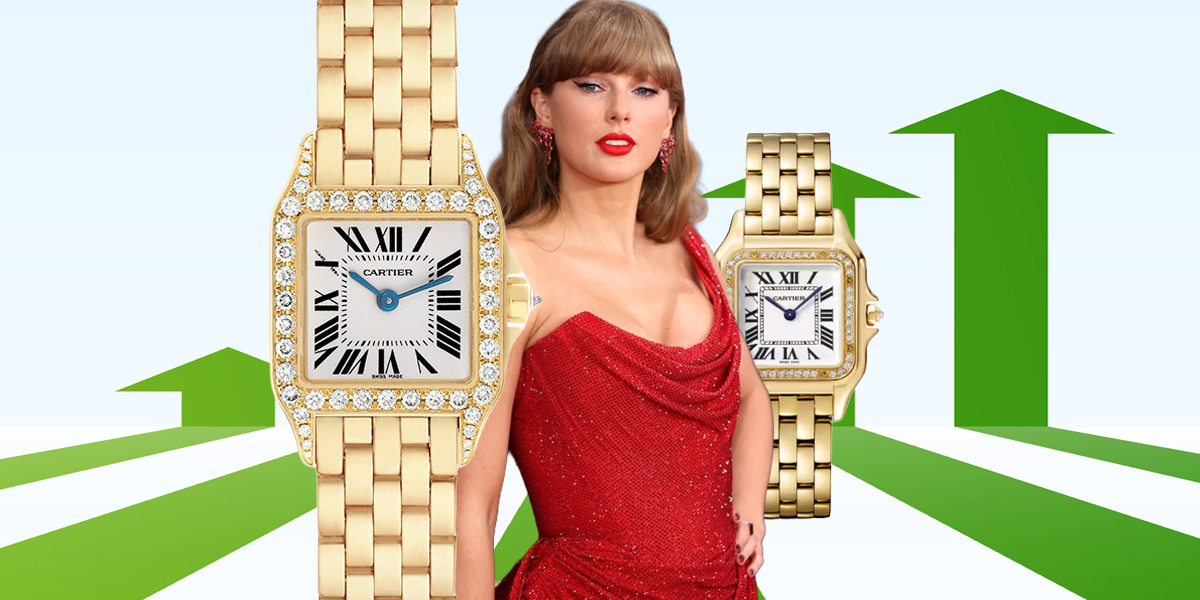
Taylor Swift’s Cartier watch in her viral engagement post turned a discontinued timepiece into the ninth most-liked Instagram post ever. The results were immediate and