
What Is a Flyback Chronograph? A Watch Expert’s Guide
What is a Flyback Chronograph? A flyback chronograph lets users reset and restart the chronograph function with just one button push, without stopping the timing

That $8,000 Rolex on your wrist? It costs about $500 to make. This huge gap between making and selling price has made Rolex one of the world’s most profitable luxury brands.
Each Rolex model comes with its own price tag. To cite an instance, making an Oyster Perpetual costs between $6,750 and $9,250, while a Daytona’s production runs from $30,000 to $43,250. But these prices make sense when you look closer. Rolex’s choice of 904L steel sets them apart – it’s tougher to work with but gives watches their unique shine. On top of that, it uses precious metals like gold, platinum, and silver. Rolex stands among the few watchmakers that build their movements completely in-house. The company spends a full year crafting each watch.

Let’s break down what goes into making a stainless steel Rolex and compare it with store prices. We’ll get into the materials, manufacturing steps, and labor that go into popular models like the Submariner. You’ll see why there’s such a big difference between what it costs to make these watches and what you pay at the dealer.
Premium materials used in Rolex watches are the life-blood of their production costs. Looking at these materials explains why manufacturing expenses for even the basic Rolex models cost hundreds of dollars before assembly starts.
Most watchmakers use standard 316L steel, but Rolex exclusively uses “Oystersteel”—their proprietary version of 904L stainless steel, which they first started using in 1985. This special alloy has higher amounts of chromium, nickel, and molybdenum that make it very resistant to corrosion from saltwater, sweat, and chemicals. The 904L steel also keeps its mirror-like polish longer than regular alloys, which gives Rolex watches their signature shine.
This superior material comes at a cost—904L is much harder to work with than regular steel and needs special tools and equipment. Rolex carefully checks the steel at microscopic levels and controls its microstructure throughout the preparation process. This detailed approach drives up manufacturing costs but creates watches that look great even in harsh conditions.
Rolex runs its own foundry to create special gold alloy formulas instead of buying precious metals from outside suppliers. They use both mined gold (9%) and recycled gold (91%), and they carefully pick their mined sources from seven countries including Canada, Peru, and Sweden.
Their special 18k Everose gold—a rose gold alloy they developed themselves—doesn’t fade over time. Rolex also keeps track of every bit of gold through systematic weighing at each manufacturing step, which helps them maintain almost zero loss during production.
Rolex introduced Cerachrom in 2005 as another innovative material. They make this ceramic bezel material from fine zirconium dioxide powder mixed with pigments, mold it, then heat it to 1,600°C. They finish by coating it with platinum or gold using Physical Vapor Deposition to color the numbers and markings. This creates a component that’s practically impossible to scratch and won’t be affected by UV rays or chemicals.
For the crystal elements, Rolex started switching from acrylic to sapphire crystal in 1970, beginning with their reference 5100 model. The Sea-Dweller became their first sports watch with sapphire crystal in 1978, and the Submariner Date followed in 1979. This very hard, scratch-resistant material adds another significant cost to Rolex manufacturing.
Rolex builds their movements from scratch. They design, develop, and assemble each caliber in their own facilities. This gives them full control over quality and costs.
The Caliber 3235 came out in 2015 after years of research. It was a huge investment with over 90% new parts and 14 patents. The Caliber 4130 chronograph movement that powers the Daytona took five years to develop. The 4130’s state-of-the-art design uses 201 parts—60% fewer than the previous version—yet stays exceptionally reliable. This simplified design creates space for a bigger mainspring barrel. The power reserve improves without making the movement larger. Rolex keeps the exact numbers private, but specialized equipment and extensive testing make up much of the production costs.
Modern Rolex movements feature the Parachrom hairspring at their core. It took five years to develop before its launch in 2000. This special component uses niobium (85%) and zirconium (15%), making it completely paramagnetic. The manufacturing starts by bonding metals at 2400°C in a vacuum. The material goes through several changes until it becomes a ribbon almost two kilometers long but just 150 microns wide. A blue oxide layer added in 2005 makes it more stable.
The Chronergy escapement matches these innovations. This patented version of the Swiss lever escapement works 15% more efficiently. Its unique features include:
A skeletonized, lighter escape wheel that reduces inertia
A modified pallet fork with smaller pallet stones
Parts made from paramagnetic nickel-phosphorus
Better geometry for improved leverage
Each Rolex movement must pass two certifications. The independent COSC testing comes first, followed by Rolex’s tougher Superlative Chronometer standards. Uncased movements need to stay accurate within -4/+6 seconds per day across five positions and three temperatures. After casing, Rolex applies an even stricter standard of -2/+2 seconds daily variation. This detailed regulation process and innovations like the self-winding Perpetual rotor add to manufacturing costs but deliver exceptional precision in every model.
A Rolex timepiece’s manufacturing costs and quality standards depend on its extensive production process.
The sort of thing I love is that a single Rolex watch takes about a full year to create. The company makes nearly a million timepieces each year, yet this timeline stays constant. Whatever the market demands, Rolex won’t speed up production if it risks quality—this explains those famous waiting lists for popular models. The year-long process ties up inventory and capital, and this ended up affecting the retail price.
In stark comparison to this common belief, machines don’t build Rolex watches. Advanced equipment helps with cataloging, filing, and sorting, but certified watchmakers do all assembly work by hand. They rivet each hour marker to the dial surface individually. This hands-on approach works because trained human eyes catch subtle flaws that machines might miss. Machines help with arrangement and pressure, but humans still operate them.
Each Rolex movement goes through two certification steps. The first COSC testing runs for 15 days and nights, checking seven elimination criteria in five positions and three temperatures. After casing the movement, which can change its precision, Rolex runs its own Superlative Chronometer testing. These standards (-2/+2 seconds daily) are a big deal as it means that they surpass COSC requirements (-4/+6 seconds). The complete evaluation has waterproofness tests, self-winding efficiency checks, power reserve measurements, and performance tests in temperatures of all ranges. This strict certification process drives up production costs but will give a remarkable level of reliability.
Rolex’s business genius and market strategy become clear when comparing manufacturing costs to retail prices.
A steel Rolex Submariner costs between $3,000-$5,500 to manufacture. These costs cover materials, assembly, and internal overhead. Gold Submariners need $12,000-$25,000 in manufacturing costs. Since 1953, Rolex has made almost 4 million Submariner and Sea-Dweller watches. Their combined market value now reaches close to $50 billion.
Making an entry-level Rolex Oyster Perpetual costs $2,500-$4,000, while customers pay at least $5,000. The prestigious Day-Date in 18k gold costs $12,000-$25,000 to make and sells for $30,000-$60,000. The Datejust line brings in $2.37 billion in revenue.
Rolex sells watches to authorized dealers at 40% below retail price. These dealers make between 30-37% profit on each sale. Rolex keeps production limited on purpose, which creates waiting lists and makes people want their watches even more. One industry executive said many brands want to make “exactly one less watch each year than there is need for”. This planned lack explains why some models sell above retail price in secondary markets. Some watches even sell for two or three times their original price.
The price gap between making and selling Rolex watches explains why they’re one of the most profitable luxury brands in the world. A Rolex that sells for $8,000 might only cost $500 to make, but this difference comes from real factors rather than simple markup.
Quality materials are at the heart of Rolex’s production philosophy. The company uses hard-to-machine 904L steel, precious metals from their own foundry, and breakthroughs like Cerachrom bezels that drive up manufacturing costs. On top of that, it designs, develops, and assembles all movements in-house, which gives a level of quality control that adds to production costs.
Each Rolex takes about a year to create. Instead of using automated processes, certified watchmakers handle the assembly work. This hands-on approach and their Superlative Chronometer certification that goes beyond industry standards justify the premium pricing.
Market positioning is a vital part of Rolex’s business model. By limiting production and creating a lack of supply, they’ve developed intense buyer interest that supports their big retail markups. Then, many models sell for prices in secondary markets that are nowhere near their original retail values.
The cost to make a Rolex is just a small part of its final price. In spite of that, this difference shows more than profit-seeking – it reflects a real investment in materials, craftsmanship, new ideas, and brand value that has made Rolex the ultimate luxury timepiece for generations. This complex relationship between production costs and retail pricing shows why Rolex watches remain both desired possessions and growing assets in the luxury market.
What is a Flyback Chronograph? A flyback chronograph lets users reset and restart the chronograph function with just one button push, without stopping the timing

Racing inspired watches blend precision engineering with automotive passion. Luxury watchmakers team up with prestigious car manufacturers to create timepieces that capture motorsport’s spirit and
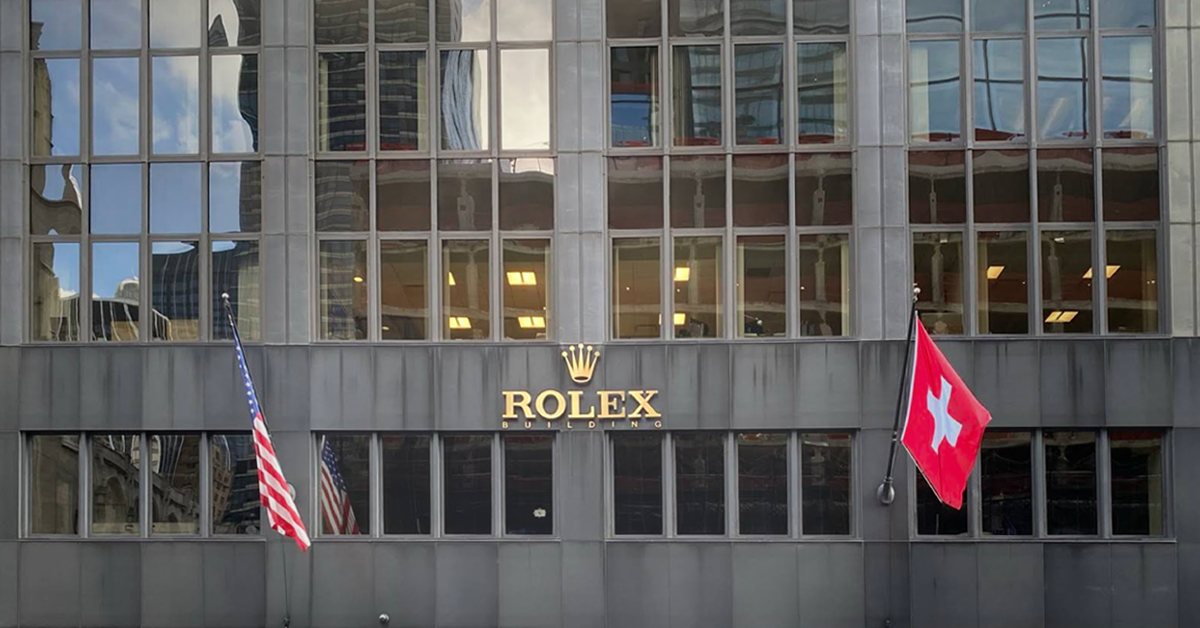
The iconic Rolex building rises above street level in Midtown Manhattan and will soon become one of New York’s most impressive architectural landmarks. This commanding