Cartier Santos Medium vs Large: Finding Your Perfect Fit
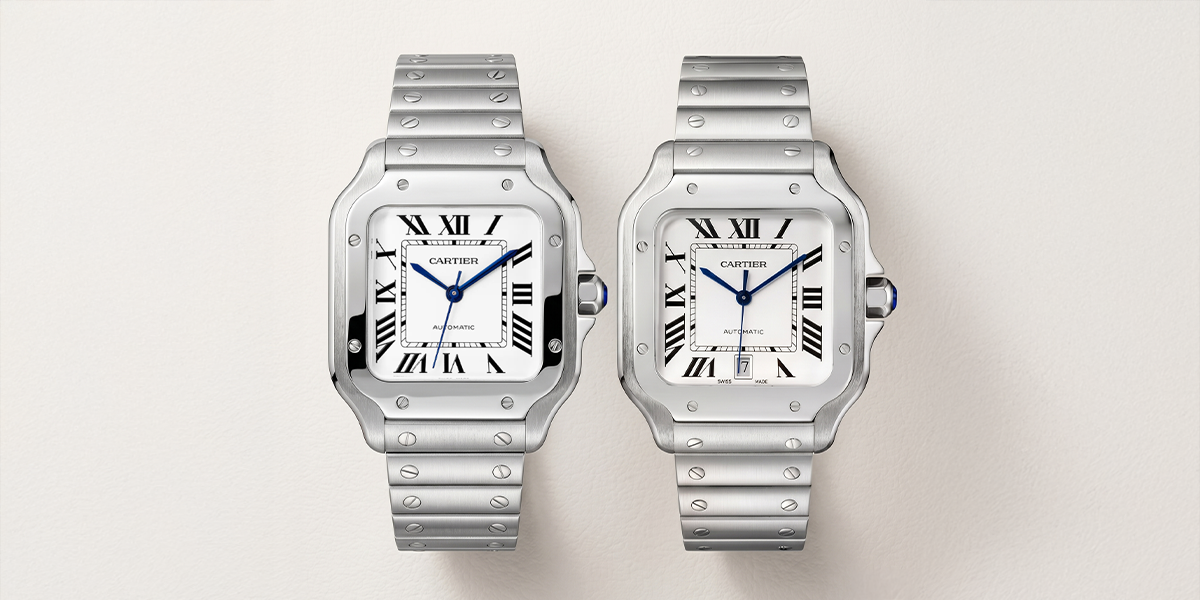
Choosing between Cartier Santos medium vs large isn’t just about numbers on paper. The Medium measures 35.1mm x 41.9mm, while the Cartier Santos Large comes

Since Rolex’s inception in 1905, the company has produced over 15 lines of timepieces, but choosing the right types of Rolex watches for your lifestyle can feel overwhelming. Each Rolex model serves a distinct purpose, from elegant dress watches to extreme dive watches engineered for depths exceeding 12,000 feet. This piece breaks down eight Rolex types spanning dress and sport categories. You’ll find which Rolex styles match your needs, whether you’re attending boardroom meetings or exploring underwater depths.
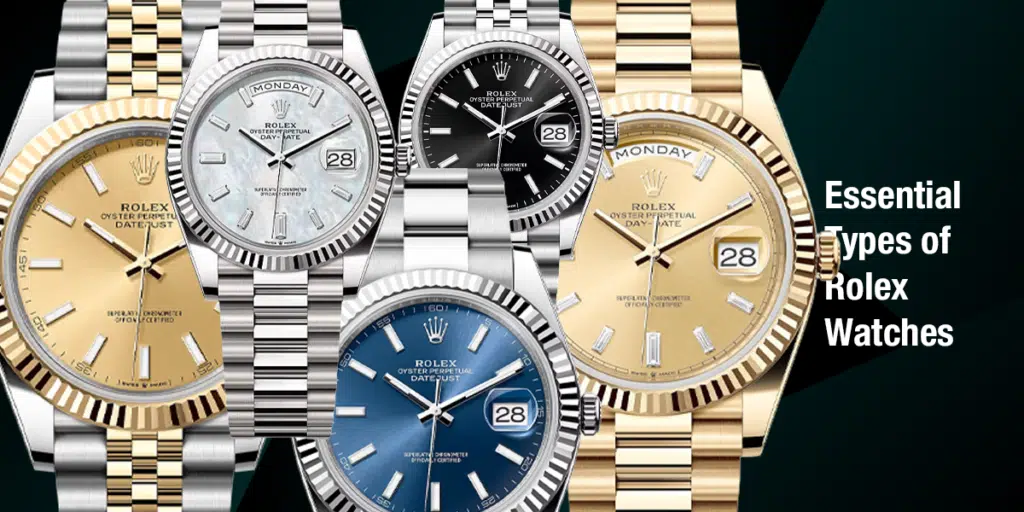
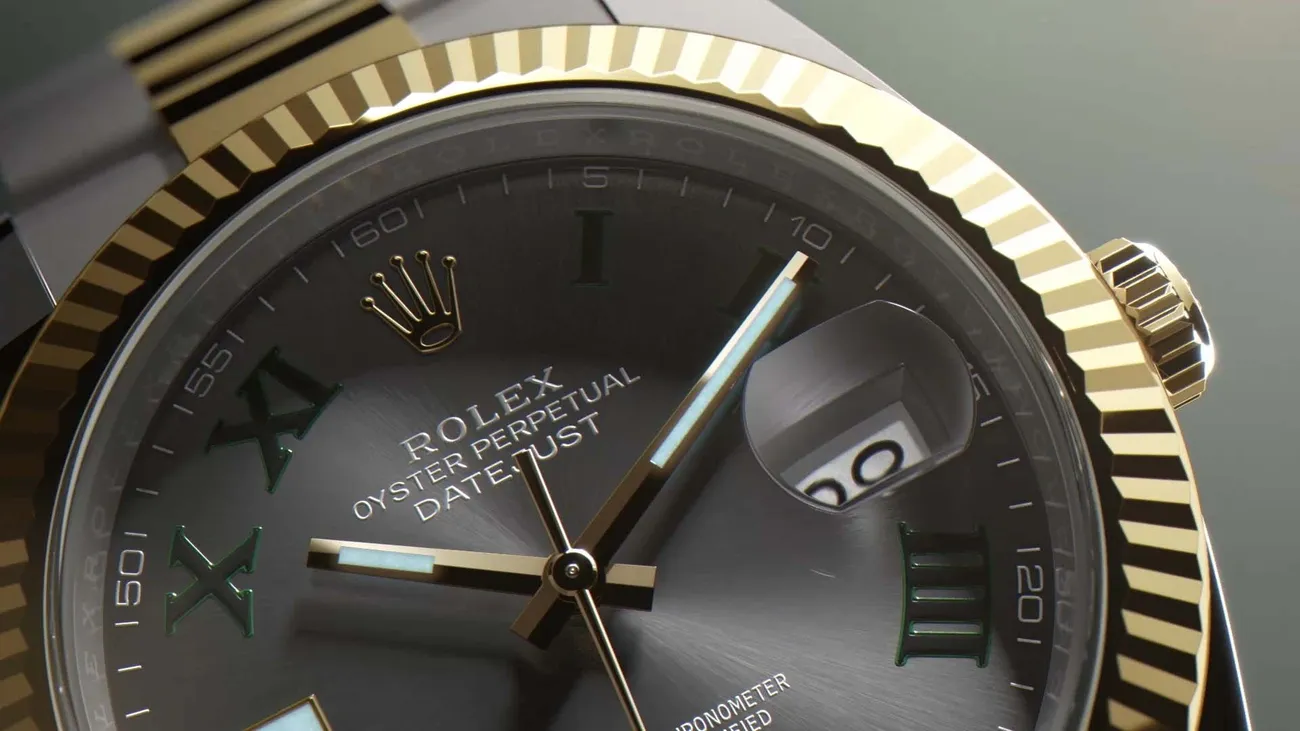
Image Source: Rolex
Rolex dress watches represent the brand’s dedication to refined elegance. The Datejust and Day-Date stand as the life-blood of this category, each with distinct characteristics that define formal watchmaking.
The Datejust launched in 1945 and represented everything Rolex founder Hans Wilsdorf believed a modern watch should be. The original Datejust was handsome, accurate and highly functional as the first self-winding waterproof chronometer wristwatch with a date window on the dial. The watch introduced hallmarks like the Jubilee bracelet, the fluted bezel and the Cyclops magnifier.
The Cyclops lens magnifies the date display at 3 o’clock. Rolex patented this feature in the early 1950s and first presented it in 1953. The sapphire crystal now features a double anti-reflective coating and is virtually impervious to scratches. Newer Datejusts have more resilient bracelets, larger bezels and blockier cases, which makes them more durable and solid-feeling.
The Datejust comes in Oystersteel, Rolesor (two-tone steel/gold) and solid gold variants, with case sizes in 31mm, 36mm and 41mm. Bezel options include smooth, fluted or diamond-set designs. Bracelet choices span the Oyster, Jubilee or President bracelets. The watch runs on Caliber 3235 in newer models and provides a 70-hour power reserve.
The Day-Date took functionality further when it launched in 1956. This was the first chronometer wristwatch that could display both the date and the day of the week, spelled out in full in a window at the 12 o’clock position. This unique feature, combined with its exclusive availability in precious metals, positioned the Day-Date as a symbol of prestige right away.
The Day-Date has never been made in stainless steel and comes only in 18k yellow gold, white gold, Everose gold or platinum. Case sizes include 36mm and 40mm options. The watch features the President bracelet exclusively, a three-piece link design created for the Day-Date. Caliber 3255 powers it and offers improved accuracy, a 70-hour power reserve and increased shock resistance. The day display comes in 26 languages.
The Datejust appeals to everyday wearers looking for classic style, first-time Rolex buyers, professionals and casual enthusiasts, and anyone wanting a versatile dress-to-casual watch. The Datejust’s genius lies in how it can be dressed up or dressed down, just as appropriate with a tuxedo as it is with a t-shirt.
The Datejust serves as an ideal choice if you want a single, high-quality timepiece that can transition naturally from a business meeting to a weekend getaway to a formal wedding. This makes it perfect for the “one-watch” collection.
The Day-Date targets executives, entrepreneurs and high-net-worth individuals, collectors seeking rare or limited editions, and those who value exclusivity and status-driven luxury. The Day-Date is for the person who has “arrived” and serves as an uncompromising statement of luxury and success.
Pricing varies substantially between these two Rolex models:
|
Model |
Approximate Price Range |
|
Datejust 36 (Oystersteel) | |
|
Datejust 36 (Rolesor) | |
|
Datejust 41 (Oystersteel) | |
|
Datejust 41 (Rolesor) | |
|
Day-Date (18k Yellow Gold) | |
|
Day-Date (18k White Gold) | |
|
Day-Date (Platinum) |
Pre-owned Rolex Datejust watches range between $3,500 and $14,000, depending on size, materials, age and condition. Vintage stainless steel models from the 1970s and 1980s often sell for $3,500 to $4,000. Modern steel or two-tone models command $6,000 to $10,000.
The Day-Date tends to appreciate more due to exclusivity and precious metal construction. The Datejust offers good resale potential, particularly popular models like the Datejust 41. Many Rolex watches maintain value extraordinarily well. The Datejust has potentially increased more than 600% since 2010.
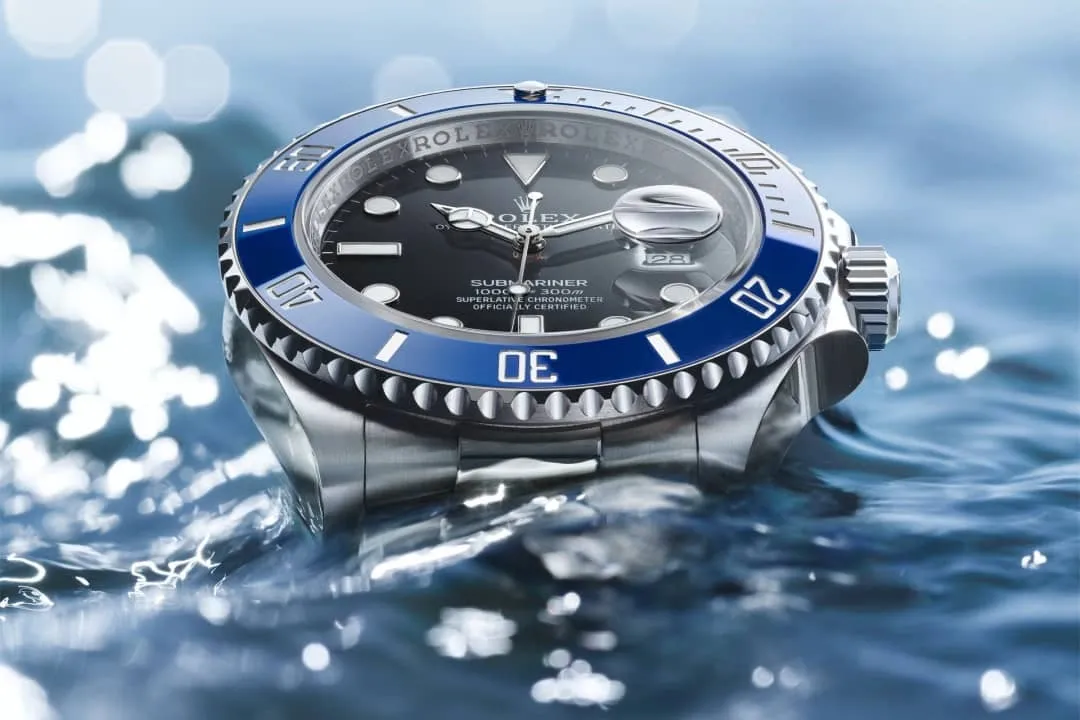
Image Source: Rolex
Launched in 1953, the Submariner became the first wristwatch waterproof to 100 meters and established Rolex’s dominance in sport watches. This professional diving instrument has evolved from a specialized tool into a cultural icon that bridges functional performance with luxury status.
The Submariner features a 41mm Oyster case constructed from Oystersteel, a proprietary 904L steel alloy used in aerospace and chemical industries to maximize corrosion resistance. Waterproof to 300 meters (1,000 feet), the watch incorporates a Triplock winding crown with three sealed zones that screw against the case.
The unidirectional rotatable bezel serves as the watch’s defining feature. Manufactured from Cerachrom ceramic, this scratchproof bezel resists UV rays and corrosion. Its 60-minute graduations allow divers to monitor immersion time, whereas the knurled edge provides excellent grip underwater, even when you wear gloves. A luminescent capsule marks the zero position to provide visibility in dark conditions.
Chromalight display technology fills the dial’s large geometric hour markers and hands. This innovative luminescent material emits a brilliant white glow in daylight and an intense blue glow in darkness. It provides vital legibility when you dive at night or in deep water where sunlight never reaches.
The Oyster bracelet integrates an Oysterlock safety clasp that prevents accidental opening and pairs with the Rolex Glidelock extension system. This sophisticated rack mechanism features 10 notches of approximately 2mm each. You can make fine bracelet adjustments without tools, and the watch fits comfortably over a diving suit.
Two movement options power different Submariner variants. The No-Date model (Ref. 124060) runs on Caliber 3230, whereas the Date model uses Caliber 3235. Both self-winding movements offer approximately 70-hour power reserves. These calibers incorporate the blue Parachrom hairspring to resist shocks and magnetic fields, plus the Chronergy escapement to ensure dependability.
Popular variants include the Submariner Date with black dial and bezel, the “Starbucks” (Ref. 126610LV) featuring a black dial with green bezel that references the 2003 anniversary model, and discontinued collectibles like the “Hulk” (Ref. 116610LV) with green dial and bezel.
The Submariner suits those with active lifestyles who want durability without sacrificing luxury. Originally designed for professional divers, this timepiece appeals to outdoor enthusiasts engaged in diving, hiking, or demanding daily activities. The watch’s rugged construction and water-resistant capabilities make it ideal if you need a timepiece that withstands harsh environments while you retain Rolex prestige.
Purists often gravitate toward the No-Date variant (Ref. 124060) for its symmetrical dial design and absence of the Cyclops lens. This stripped-down version appeals to those who value functional simplicity over additional complications.
Current retail pricing spans from $9,100 for the steel No-Date model to $42,000 for yellow gold variants. Secondary market prices range between $9,000 and $131,000, with an average around $14,000.
|
Variant |
Retail Price |
Secondary Market Range |
|
No Date (124060) | ||
|
Date Black (126610LN) |
$10,250 | $13,445 – $16,740 |
|
Starbucks (126610LV) |
$10,800 | $14,454 – $17,659 |
|
Two-Tone Blue (126613LB) |
$16,150 |
$22,900+ |
|
Yellow Gold (126618LB) |
$40,600 |
$50,440+ |
The Submariner ranks as the second-highest collection by total sales volume at Bob’s Watches over 15 years. Investment appeal stems from brand equity, material quality, collector demand, and limited supply. Neo-vintage references like the 116610LN (2010-2020) maintained stable pricing with consistent buyer interest and avoided the extreme volatility other models experienced. Pre-owned Submariners sell above original retail value when accompanied by papers and box.
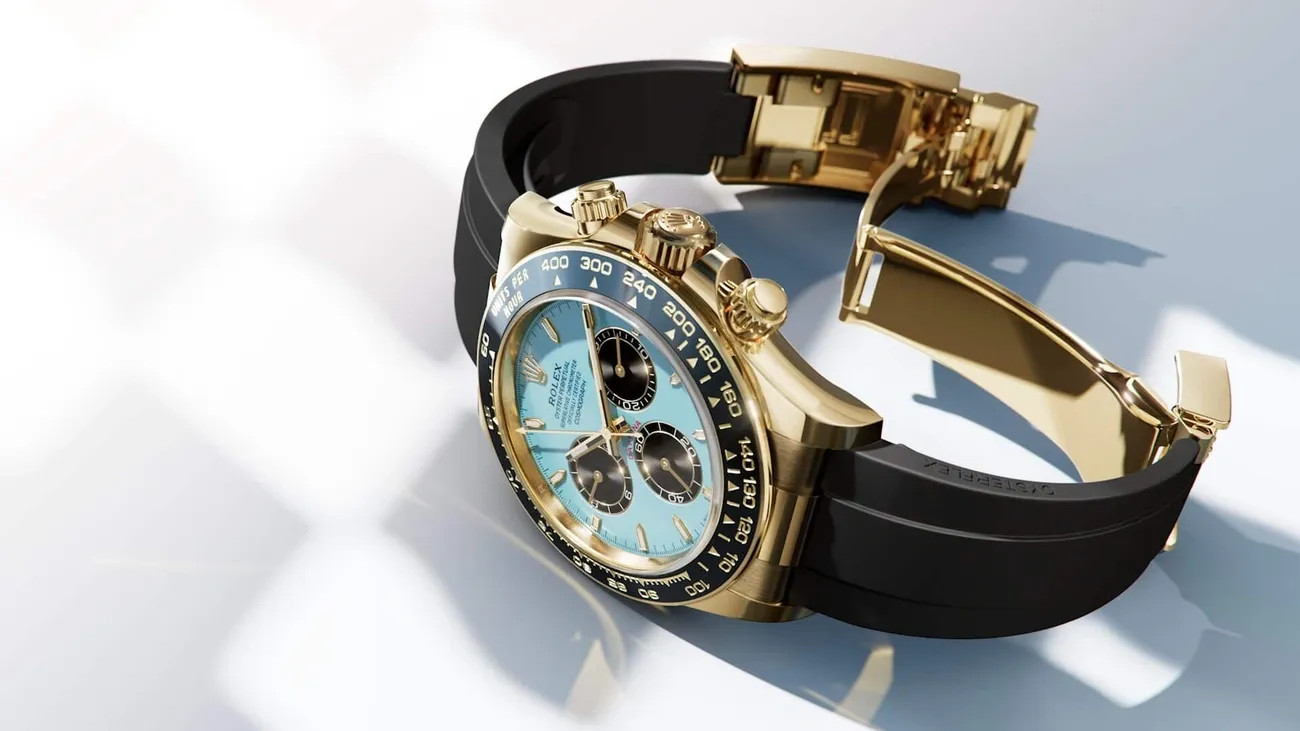
Image Source: Rolex
The Cosmograph Daytona stands alone among Rolex sport watches as the brand’s only chronograph. Rolex designed it for professional racing drivers to measure elapsed time and calculate average speeds. The watch debuted in 1963 as the Cosmograph and adopted the Daytona name after Rolex sponsored the 24 Hours of Daytona race held in Daytona Beach, Florida.
The modern Daytona features a 40mm Oyster case available in Oystersteel, Rolesor (steel and gold), 18k yellow gold, white gold, Everose gold, and platinum. The tachymeter scale on the bezel remains the defining characteristic and allows drivers to measure average speeds up to 400 miles or kilometers per hour. Rolex has equipped Daytonas with Cerachrom ceramic bezels since 2016 that resist scratches and UV damage, with platinum deposited into the numerals via PVD process for improved legibility.
The dial configuration displays three subdials at 3, 6, and 9 o’clock positions for chronograph functions. Early Daytona models featured white, black, silver, or champagne dials. Contemporary versions offer expanded color options including lapis lazuli and mother-of-pearl. The “Panda” dial configuration (white background with black subdial surrounds) has become sought-after for its high legibility.
Movement development defines the Daytona’s technical progression. Manual-winding Valjoux calibers powered the original models. Rolex introduced automatic winding with a modified Zenith El Primero Caliber 3019PHC in 1988. The 2000 introduction of in-house Caliber 4130 marked a milestone with only 201 components. The latest Caliber 4131, released in 2023, incorporates a vertical clutch mechanism for precise chronograph activation and delivers approximately 72 hours of power reserve.
Most Daytonas mount on Oyster bracelets matching the case material. Select 18k gold references feature alligator leather straps or Oysterflex bracelets.
The Daytona appeals to motorsports enthusiasts and racing professionals who value the chronograph’s timing capabilities. Collectors pursue this model for its exceptional investment performance and cultural significance tied to Paul Newman’s association with the watch. His personal Daytona Ref. 6239 sold for $17.75 million in 2017 and established it as the most expensive Rolex ever sold.
This chronograph suits those seeking status recognition, given waiting lists that can extend up to 5 years for steel models at retail. The Daytona’s lack and just need make ownership a statement of both horological appreciation and exclusivity.
Current retail pricing varies by material:
|
Reference |
Material |
Retail Price |
Pre-Owned Market |
|
126500LN |
Oystersteel |
$16,900 | |
|
126503 |
Steel & Gold |
$24,000 | |
|
126508 |
Yellow Gold |
$40,600-$52,600 | |
|
126519LN |
White Gold |
$42,700 | |
|
126506 |
Platinum |
$84,600-$91,200 |
Investment-grade vintage Daytonas command premium prices. The Ref. 6239 from 1963-1969 represents the original design. Manual-winding references from 1963-1988 remain highly collectible. Certain Daytona references have appreciated by double-digit percentages annually and outpaced conventional investment instruments.
Contemporary stainless steel models range from $20,000 to $35,000. Precious metal examples run from $30,000 to $50,000, and vintage references from $60,000 to well over $100,000 for exceptional pieces.
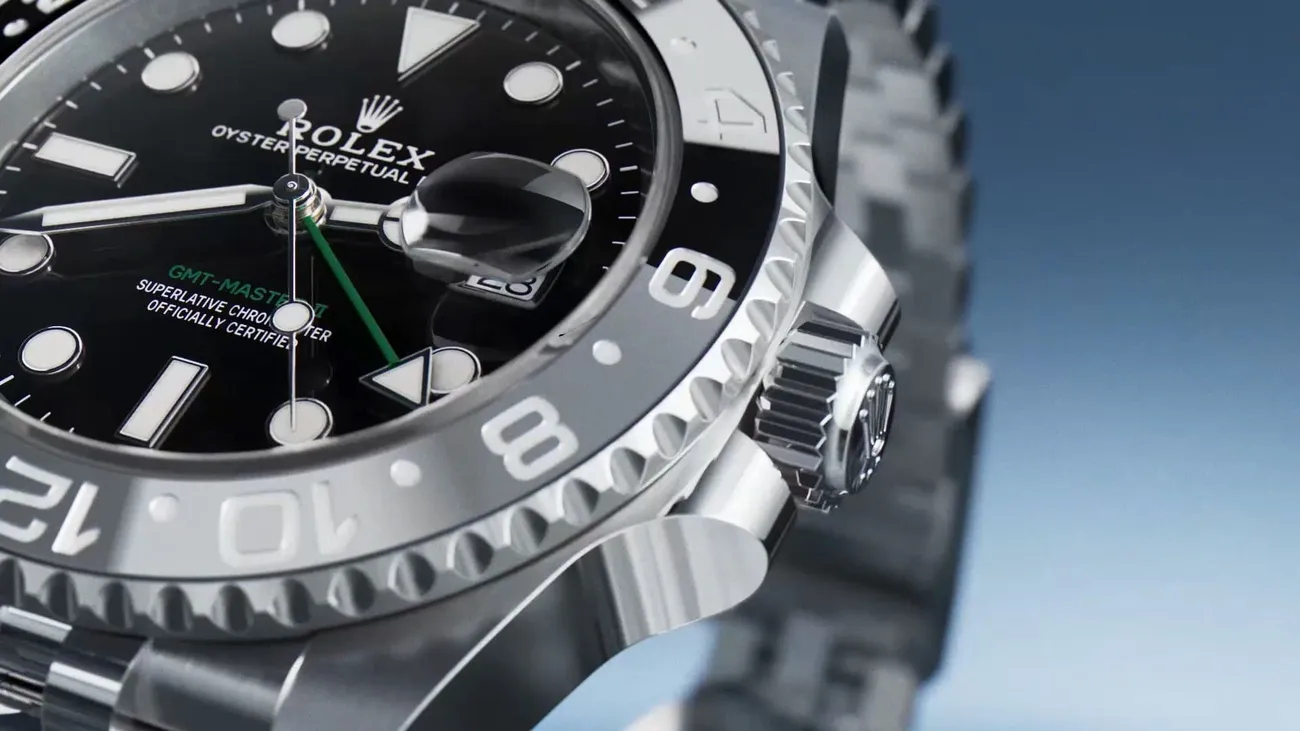
Image Source: Rolex
Pan American World Airways worked with Rolex in the early 1950s to develop the GMT-Master II. The watch addresses the specific needs of pilots who navigate multiple time zones. Rolex released the first GMT-Master in 1954 and allowed aviators to track Greenwich Mean Time along with local time. This helped them coordinate flight schedules and curb jet lag across continents. Rolex introduced the GMT-Master II in 1983 and improved this functionality by decoupling the hour hands for independent adjustment.
The 40mm Oyster case houses Caliber 3285. This is Rolex’s self-winding mechanical movement and offers approximately 70 hours of power reserve. The movement incorporates the Chronergy escapement for magnetic resistance and energy efficiency. It pairs with the blue Parachrom hairspring for shock resistance. The watch achieves waterproofness ratings of 100 meters through the Triplock winding crown and sealed case construction.
The bidirectional rotatable 24-hour graduated bezel defines the GMT-Master II’s appearance and function. Rolex has used Cerachrom ceramic for these bezels since 2007. The material resists scratching and UV fading. The triangle-tipped 24-hour hand completes a full rotation every 24 hours and displays reference time against the bezel graduations. The local hour hand jumps in one-hour increments without stopping the watch. Travelers can adjust quickly upon landing.
Bezel configurations have spawned famous nicknames among collectors. The Pepsi features red and blue ceramic sections inspired by Pan Am’s livery. The Batman combines black and blue tones, whereas the Coke pairs black and red. The Root Beer showcases brown and black. The newest Sprite presents green and black for left-handed wearers. Material options span Oystersteel, yellow gold, white gold, Everose gold and two-tone Rolesor combinations. Bracelet choices include the sporty three-link Oyster or the refined five-link Jubilee.
Frequent travelers benefit most from the GMT-Master II’s ability to track up to three time zones at once using the rotating bezel. Pilots and airline crew appreciate the straightforward dual-time functionality and clear, legible design. Business professionals who conduct international operations find the independent hour hand adjustment practical for quick timezone changes. The adjustment doesn’t affect timekeeping precision. Collectors pursue specific references like the Pepsi and Batman for their strong appreciation potential and iconic status within Rolex’s catalog.
Current retail pricing reflects material selection and complications:
|
Reference |
Material |
Retail Price |
|
126710BLRO |
Oystersteel |
$12,500 |
|
126710BLNR |
Oystersteel |
$12,000 |
|
126713GRNR |
Steel & Yellow Gold |
$19,950 |
|
126719BLRO |
White Gold |
$52,200 |
|
126715CHNR |
Everose Gold |
$55,100 |
Secondary market performance exceeds retail prices by a wide margin. Bob’s Watches data shows the GMT collection appreciated 506% since 2010. Specific models command premiums. The Pepsi on Oyster bracelet trades at 188% of MSRP and the Batman reaches 171% of MSRP. The Pepsi on Jubilee achieves 163% of MSRP. Vintage references like the 16710 maintain 121% of original retail. Pre-owned contemporary models range from $16,600 to $22,000 depending on reference and condition.
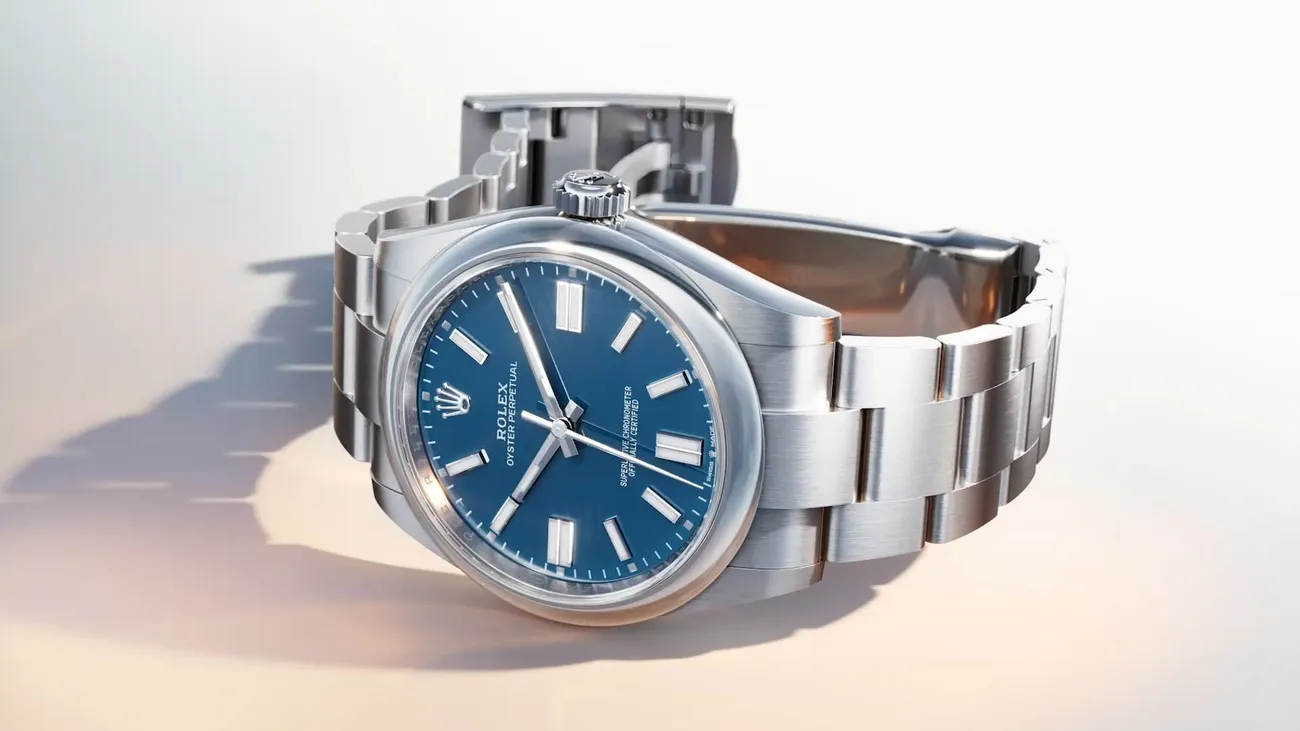
Image Source: Rolex
The Oyster Perpetual represents Rolex’s most fundamental philosophy distilled into wearable form. This collection is the direct descendant of the original Oyster and combines three founding accomplishments: the chronometric certification awarded to a wristwatch in 1910, the waterproof Oyster case from 1926, and the self-winding Perpetual rotor patented in 1931. What many dismiss as entry-level actually embodies the quintessence of Rolex excellence without specialized complications.
Five case sizes accommodate any wrist preference. The current lineup spans 28mm, 31mm, 34mm, 36mm, and 41mm. It replaces discontinued variants including the sought-after 39mm that exited production in 2020. Each size maintains the classic Oyster case construction in Oystersteel with smooth bezels and 100-meter water resistance.
Two distinct in-house movements power the range based on diameter. The 36mm and 41mm models run on Caliber 3230 and deliver 70-hour power reserves with Chronergy escapement and Parachrom hairspring for magnetic resistance. Smaller 28mm, 31mm, and 34mm references use Caliber 2232 with 55-hour reserves and Syloxi balance springs. Both movements achieve Superlative Chronometer certification within +/- 2 seconds per day.
The defining design success lies in the absence of a date window. The dial achieves complete symmetry without the Cyclops magnifying lens. Rolex refreshed the collection in 2020 with vibrant lacquered dials inspired by vintage Stella Day-Dates. The brand introduced turquoise blue, coral red, yellow, green, and candy pink options. The 31mm size offers nine color choices, whereas the 28mm provides four.
The Oyster bracelet features broad, curved three-piece links that combine comfort with strength. The Easylink rapid extension system allows wearers to adjust bracelet length by 5mm without tools.
This watch bridges dress and tool categories with brushed bracelets and sport credentials, yet refined proportions slide under any cuff. First-time Rolex buyers benefit from available pricing that delivers similar production quality, materials, and finishing as premium siblings. Collectors with extensive portfolios often find the Oyster Perpetual becomes their most-worn piece due to all-around practicality.
|
Size |
Retail Price |
Secondary Market Range |
|
28mm |
$6,200 |
$7,000 – $9,000 |
|
36mm (Standard) |
$6,750 | |
|
36mm (Stella) |
$6,750 [261] | |
|
41mm (Standard) |
$7,050 | |
|
41mm (Turquoise) |
$7,050 [261] |
Certain models trade well above MSRP even with available retail positioning. Stella dials command premiums exceeding 100%. The discontinued 39mm references appreciate 40-60% above original values due to ideal proportions.
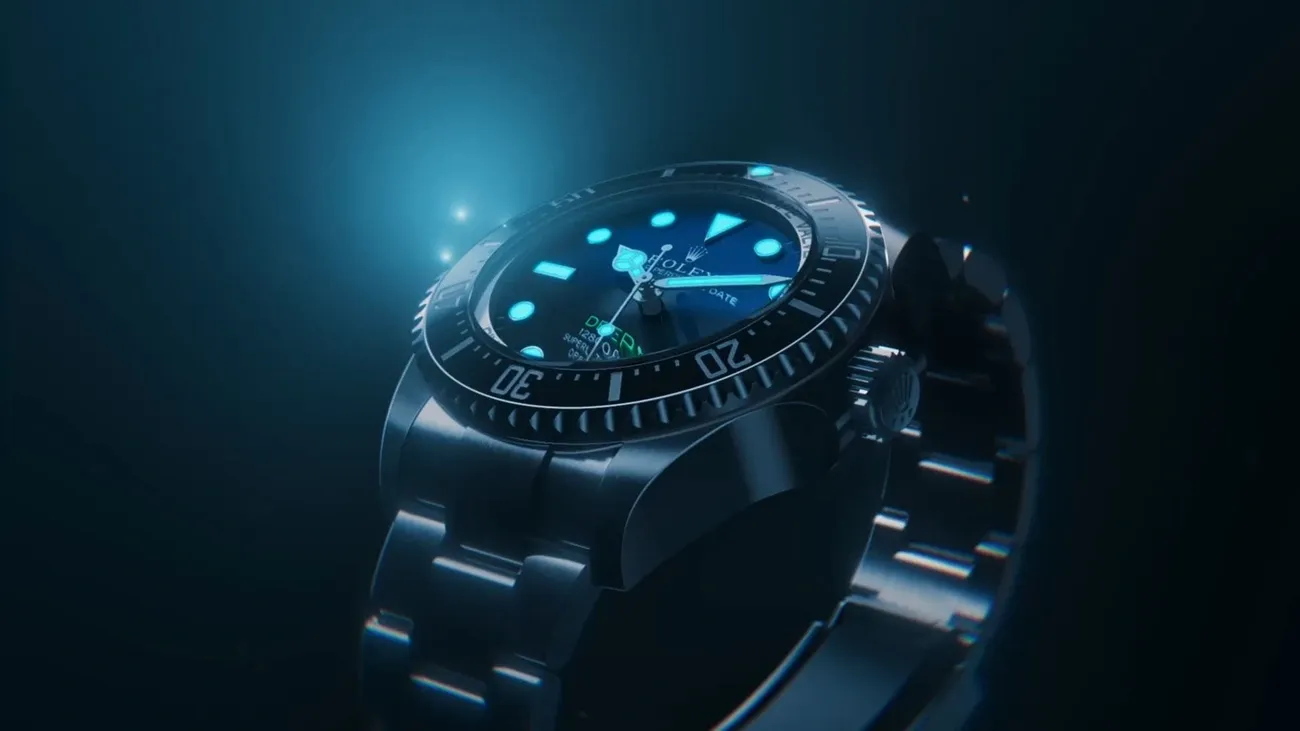
Image Source: Rolex
Born from what professional saturation diving just needs, the Sea-Dweller and Deepsea push Rolex’s engineering capabilities into territories where human survival becomes impossible. These extreme dive watches address challenges the Submariner was never designed to handle, the helium buildup that occurs during deep commercial diving operations.
The Sea-Dweller measures 43mm with water resistance to 1,220 meters (4,000 feet). The Deepsea expands to 44mm with an extraordinary 3,900-meter (12,800-foot) depth rating. This massive capability stems from the patented Ringlock System, which positions a nitrogen-alloyed steel compression ring between a 5.5mm-thick domed sapphire crystal and a grade 5 titanium caseback.
Both models feature the helium escape valve, a mechanism Rolex invented in 1967 to solve a critical problem: helium molecules penetrate watch cases during saturation diving and then expand violently during decompression. This blows crystals off. This unidirectional valve activates when internal pressure exceeds external pressure and releases trapped helium without compromising waterproofness.
The Deepsea offers two dial options. The standard black dial displays technical inscriptions around its edge. The D-Blue gradient dial transitions from bright blue to deep black and commemorates James Cameron’s 2012 solo dive to the Mariana Trench. The D-Blue features a bright green “DEEPSEA” label matching Cameron’s submersible.
Both watches run on Caliber 3235 and deliver 70-hour power reserves with accuracy within +2 to +3 seconds daily. The Chromalight display emits an intense blue glow lasting up to eight hours. Oyster bracelets incorporate the Glidelock extension system and allow 20mm adjustment in 2mm increments to wear over dive suits.
Professional saturation divers working in pressurized environments benefit from the helium escape valve’s functionality. Adventure enthusiasts seeking maximum capability appreciate the engineering prowess these models represent, even if they’ll never approach their depth limits. Collectors target the D-Blue variant for its James Cameron connection and limited availability.
|
Model |
Retail Price |
Secondary Market |
|
Sea-Dweller 126600 |
$12,950 |
$12,500 – $14,500 |
|
Deepsea Black 136660 |
$13,850 |
$13,350 – $15,960 |
|
Deepsea D-Blue 136660 |
$14,150 |
$15,000 – $17,500 |
Vintage Sea-Dweller references (16600) trade between $8,500 and $10,500. The discontinued SD4K maintains premium pricing from $13,500 to $17,000 due to its three-year production window.
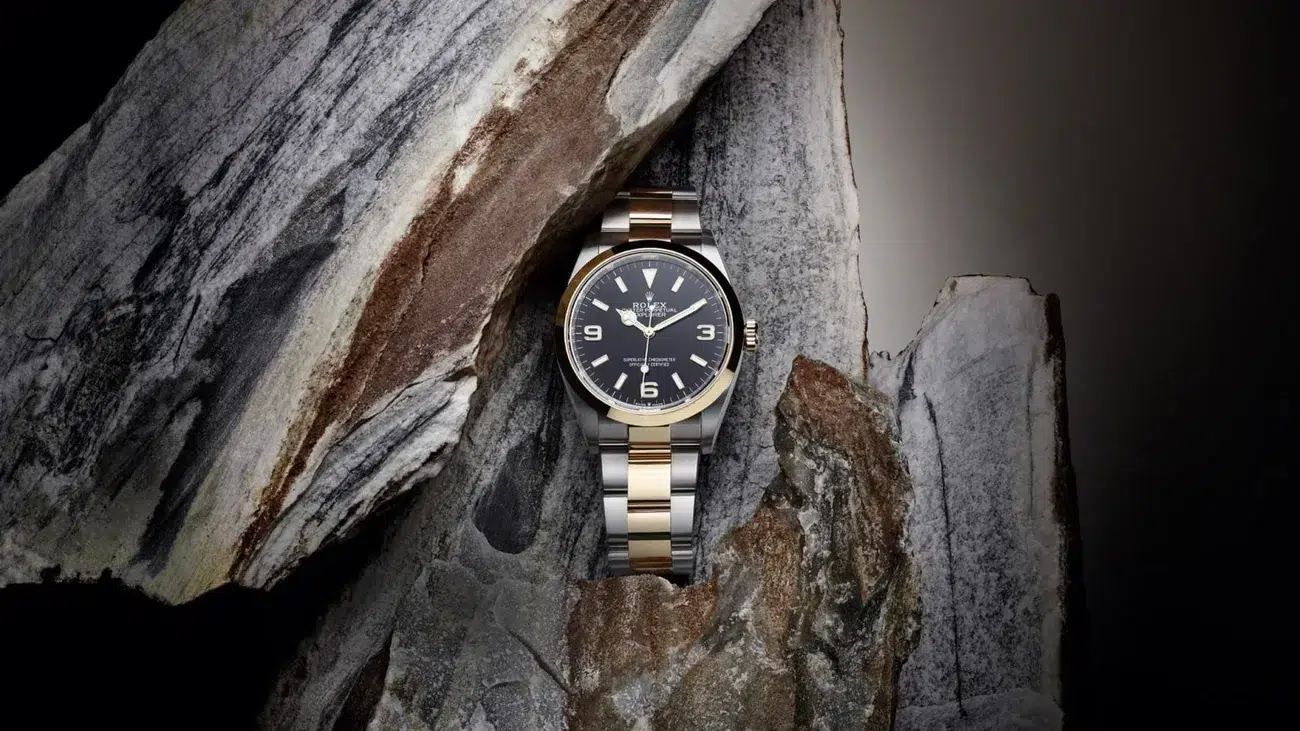
Image Source: Rolex
Rolex built its first sports watch not to dive or race, but to conquer mountains. The Explorer emerged in 1953 as the brand’s original adventure timepiece. Rolex designed it for mountaineering expeditions and extreme environments. This time-only watch embraced simplicity and rugged reliability if you have an active lifestyle facing unpredictable conditions. Specialized models aimed at single activities took a different approach.
The Explorer features a 36mm Oystersteel case with 100-meter water resistance. The distinctive black dial displays characteristic 3, 6, and 9 Arabic numerals filled with Chromalight luminescent material. This material emits a long-lasting blue glow among matching hour markers and hands. This high-contrast configuration guarantees legibility in severe conditions.
Caliber 3230 powers the movement. It delivers 70 hours of power reserve with -2/+2 seconds daily precision. The mechanism incorporates the paramagnetic blue Parachrom hairspring and high-performance Paraflex shock absorbers. These components offer ten times more precision during impacts while resisting extreme temperatures, magnetic fields and gravity. The Oyster bracelet has an Oysterlock folding clasp with Easylink 5mm comfort extension.
The Explorer II expands functionality with a 42mm case, fixed 24-hour graduated bezel and an additional orange 24-hour hand. This configuration helps distinguish day from night in environments where darkness reigns, such as caves or polar regions. Caliber 3285 runs the Explorer II with similar 70-hour reserves.
Mountain climbers and outdoor professionals benefit from the Explorer’s temperature-resistant lubricants. These lubricants function from -4° to +104° Fahrenheit. The watch’s versatility suits both casual and formal settings. It slides under dress shirt cuffs yet handles demanding activities. Collectors pursue vintage references like the 1016, which commanded nearly three decades of production from 1960-1989.
|
Model |
Retail Price |
Secondary Market |
|
Explorer I (36mm) |
$7,250 |
$5,000-$15,000 |
|
Explorer II (42mm) |
$9,650 |
$7,000-$24,000 |
The Explorer showed steady price increases over ten years. Vintage reference 1016 trades around €5,920, whereas rare 6350 models reach $46,500.
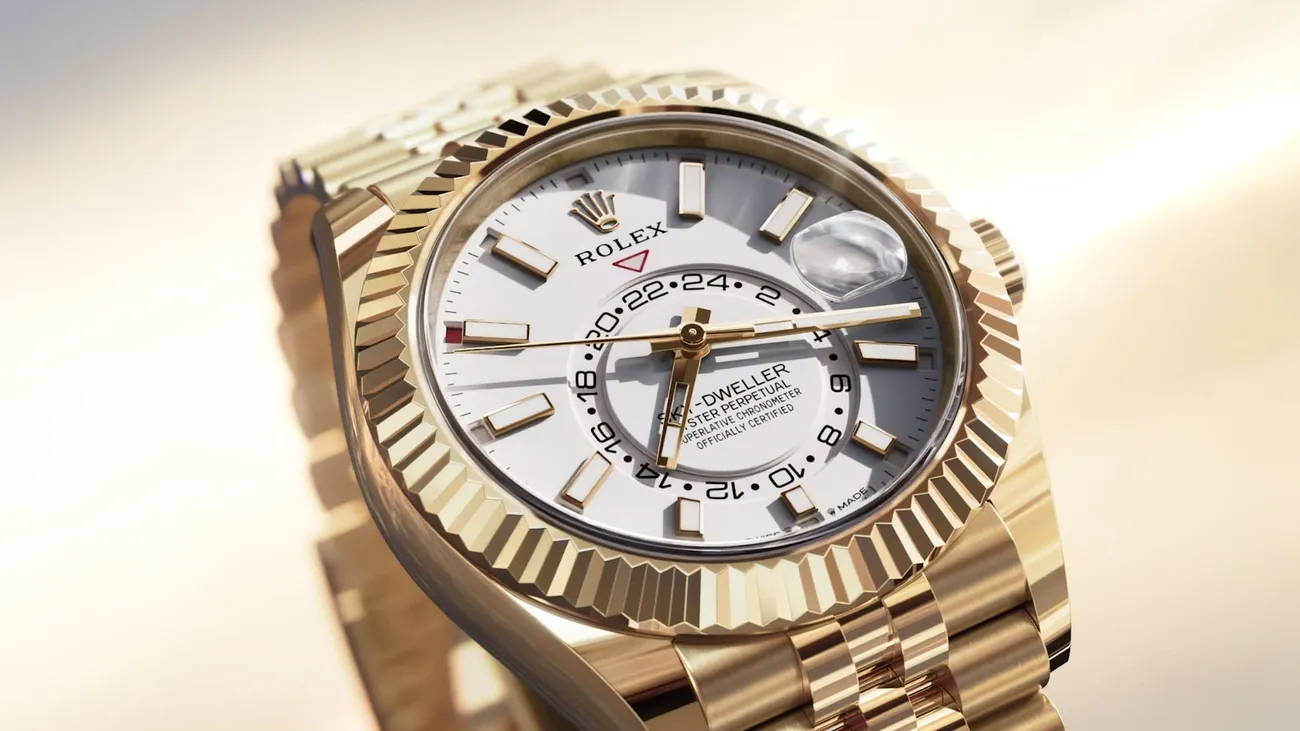
Image Source: Rolex
Two distinct luxury categories emerge at the time of looking at nautical and travel-oriented Rolex types: the Yacht-Master suits sailing enthusiasts and the Sky-Dweller serves globe-trotting professionals.
The Yacht-Master debuted in 1992 and emphasizes luxury materials over extreme dive capability. This nautical timepiece comes in 37mm, 40mm, and 42mm cases. It features 100-meter water resistance with a bidirectional rotatable bezel crafted from precious metals or Cerachrom ceramic. The Rolesium configuration pairs Oystersteel with a 950 platinum bezel and creates distinctive silvery luminosity. Time-and-date movements power the Yacht-Master and vary by case size.
The Sky-Dweller launched in 2012 and holds the difference as the most complex and technologically advanced Rolex model. The 42mm case houses Caliber 9002 that delivers 72-hour power reserves. Its innovative annual calendar (Saros system) separates 30 and 31-day months. You need to correct it only once yearly. The fluted Ring Command bezel uses solid 18k gold on every model, even White Rolesor versions with steel cases. A rotating 24-hour disk displays the second time zone, while small apertures above each hour marker indicate the current month.
The Yacht-Master suits yachting enthusiasts and those seeking luxury sport esthetics without extreme dive specifications. The Sky-Dweller targets frequent travelers, business professionals crossing time zones, and collectors who appreciate horological complexity.
|
Model |
Material |
Retail Price |
|
Yacht-Master 40 |
Rolesium |
$13,200 |
|
Sky-Dweller |
White Rolesor |
$17,750-$17,950[431] |
|
Sky-Dweller |
Yellow Rolesor |
$23,500-$24,150[431] |
|
Sky-Dweller |
Everose Gold |
$50,850-$61,900[431] |
Secondary markets show Sky-Dweller White Rolesor models trading around $21,000, while blue dial variants command $25,000.
|
Watch Model |
Category |
Case Size(s) |
Water Resistance |
Key Features |
Movement |
Power Reserve |
Materials Available |
Retail Price Range |
Ideal For |
|
Datejust |
Dress Watch |
31mm, 36mm, 41mm |
Not mentioned |
Date window, Cyclops lens, fluted/smooth/domed/diamond bezels, Jubilee/Oyster/President bracelets |
Caliber 3235 |
70 hours |
Oystersteel, Rolesor (two-tone), solid gold |
$8,500 – $16,500 |
Everyday wearers and first-time buyers, professionals who need versatile dress-to-casual options |
|
Day-Date |
Dress Watch |
36mm, 40mm |
Not mentioned |
Day and date display, day in 26 languages, President bracelet exclusive |
Caliber 3255 |
70 hours |
18k yellow/white/Everose gold, platinum (never in steel) |
$35,000 – $100,000+ |
Executives and entrepreneurs, high-net-worth individuals who want exclusivity |
|
Submariner |
Sport Watch (Dive) |
41mm |
300m (1,000 ft) |
Unidirectional Cerachrom bezel, Chromalight display, Triplock crown, Glidelock extension |
Caliber 3230 (No-Date), Caliber 3235 (Date) |
70 hours |
Oystersteel, two-tone, yellow gold |
$9,100 – $42,000 |
Active lifestyles and divers, outdoor enthusiasts, purists (No-Date variant) |
|
Cosmograph Daytona |
Sport Watch (Chronograph) |
40mm |
Not mentioned |
Tachymeter bezel, chronograph with 3 subdials, Cerachrom ceramic bezel |
Caliber 4131 |
72 hours |
Oystersteel, Rolesor, 18k yellow/white/Everose gold, platinum |
$16,900 – $91,200 |
Motorsports enthusiasts and racing professionals, collectors who want status |
|
GMT-Master II |
Sport Watch (Travel) |
40mm |
100m |
Bidirectional 24-hour Cerachrom bezel, independent hour hand, tracks 3 time zones |
Caliber 3285 |
70 hours |
Oystersteel, yellow/white/Everose gold, Rolesor |
$12,000 – $55,100 |
Frequent travelers and pilots, business professionals with international operations |
|
Oyster Perpetual |
Sport Watch (Entry-Level) |
28mm, 31mm, 34mm, 36mm, 41mm |
100m |
No date window, symmetrical dial, vibrant Stella dial colors available |
Caliber 3230 (36mm/41mm), Caliber 2232 (28mm/31mm/34mm) |
70 hours (larger), 55 hours (smaller) |
Oystersteel |
$6,200 – $7,050 |
First-time Rolex buyers and collectors who want versatility, all-around practicality |
|
Sea-Dweller |
Sport Watch (Extreme Dive) |
43mm |
1,220m (4,000 ft) |
Helium escape valve, Glidelock extension |
Caliber 3235 |
70 hours |
Oystersteel |
$12,950 |
Professional saturation divers and adventure enthusiasts |
|
Deepsea |
Sport Watch (Extreme Dive) |
44mm |
3,900m (12,800 ft) |
Ringlock System, helium escape valve, D-Blue gradient dial option, Glidelock extension |
Caliber 3235 |
70 hours |
Oystersteel |
$13,850 – $14,150 |
Professional saturation divers and adventure enthusiasts, collectors (D-Blue variant) |
|
Explorer |
Sport Watch (Adventure) |
36mm |
100m |
High-contrast black dial with 3-6-9 numerals, Chromalight, temperature-resistant |
Caliber 3230 |
70 hours |
Oystersteel |
$7,250 |
Mountain climbers and outdoor professionals, versatile casual-to-formal wear |
|
Explorer II |
Sport Watch (Adventure) |
42mm |
100m |
Fixed 24-hour bezel, orange 24-hour hand, day/night difference |
Caliber 3285 |
70 hours |
Oystersteel |
$9,650 |
Cave explorers and polar region workers, outdoor professionals |
|
Yacht-Master |
Sport Watch (Luxury Nautical) |
37mm, 40mm, 42mm |
100m |
Bidirectional rotatable bezel, Rolesium option (steel with platinum bezel) |
Varies by size |
Not mentioned |
Oystersteel, Rolesium, precious metals, Cerachrom ceramic |
$13,200+ |
Yachting enthusiasts who want luxury sport esthetics |
|
Sky-Dweller |
Sport Watch (Luxury Travel) |
42mm |
Not mentioned |
Annual calendar (Saros system), dual time zone, fluted Ring Command bezel, month indicators |
Caliber 9002 |
72 hours |
White/Yellow Rolesor, Everose gold, 18k gold |
$17,750 – $61,900 |
Frequent travelers and business professionals who cross time zones, collectors who appreciate complexity |
Your choice among these eight essential Rolex types depends on your lifestyle needs and esthetic priorities. Dress watches like the Datejust and Day-Date suit formal environments. Sport models from the Submariner to the Deepsea address what you just need technically. Price points range from available Oyster Perpetuals around $6,200 to exclusive platinum Day-Dates exceeding $100,000. Secondary market values often surpass retail prices. Your ideal Rolex balances functional requirements for your daily activities with budget constraints and long-term investment objectives. Start by identifying which category lines up with your needs. Then explore specific references within that family to find your perfect match.
Choosing between Cartier Santos medium vs large isn’t just about numbers on paper. The Medium measures 35.1mm x 41.9mm, while the Cartier Santos Large comes
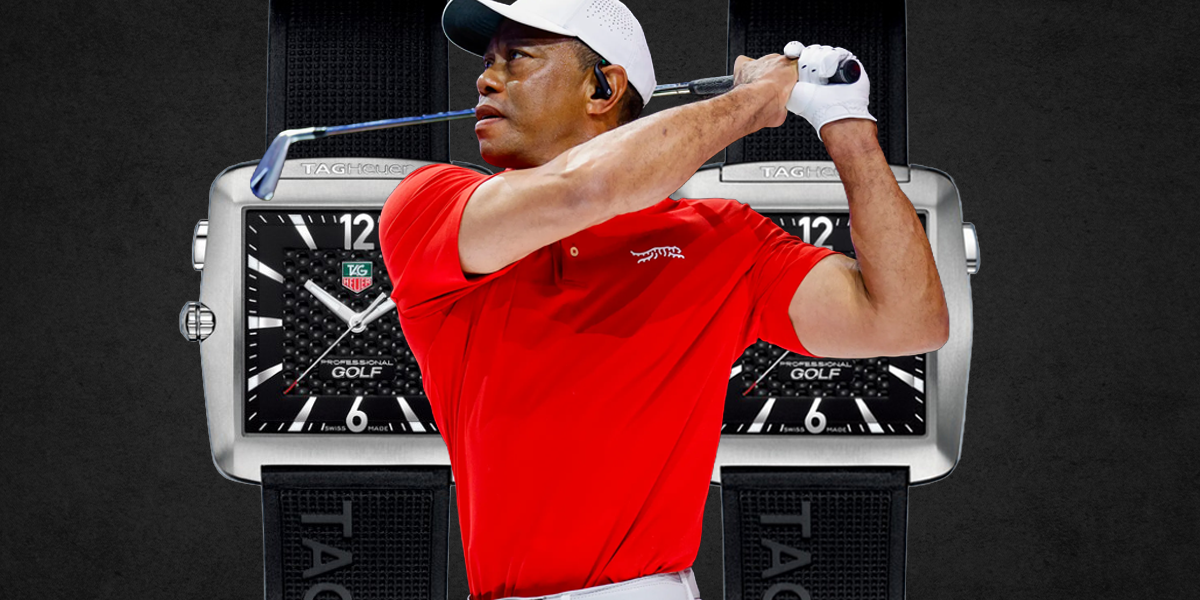
Have you been eyeing the Tag Heuer Tiger Woods watch as your next golf companion? This specialized timepiece definitely stands out with its ultra-light titanium
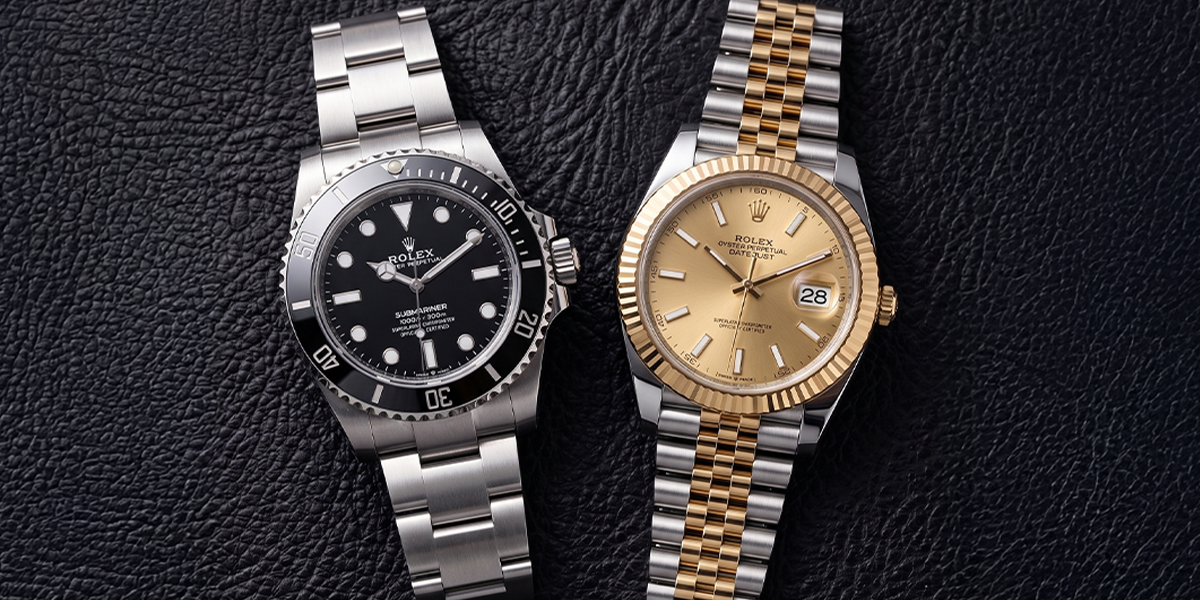
The Datejust vs Submariner comparison is one of Rolex’s most debated topics among watch enthusiasts. The Submariner was built for diving with 300 meters of