Is it cheaper to buy a Rolex in Switzerland? The question matters more than ever since American buyers will face a hefty 31% tariff on Swiss-made watches starting in 2025. Many watch lovers believe Switzerland offers the best deals because these prestigious timepieces call it home.
The final cost of buying a Rolex in Switzerland depends on several key factors. A Rolex Submariner Date costs CHF 9,150 in Switzerland, $10,250 in the USA, and £8,050 in the UK. The real savings come from Switzerland’s VAT refund system. Tourists who spend more than CHF 300 can claim up to 7.7% back on luxury goods. The savings look good on paper, but other costs need careful thought. Switzerland’s reputation as the best place to buy a Rolex doesn’t tell the whole story.
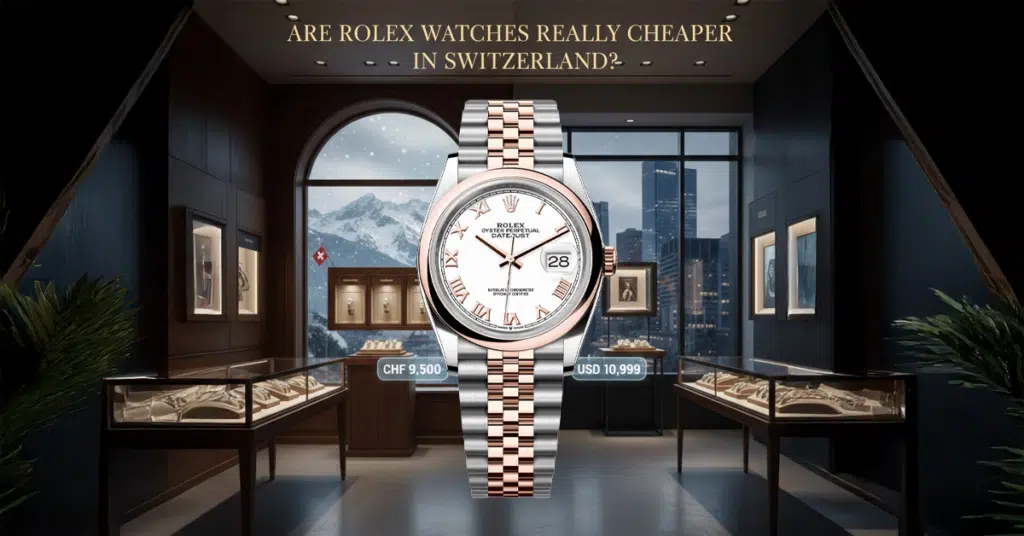
Let’s explore if buying a Rolex in Switzerland saves you money compared to the US and other countries, especially with 2026’s changing tariff scene. A detailed look at costs and benefits will help you decide where to buy your luxury watch.
Table of Contents
Is it really cheaper to buy a Rolex in Switzerland?
Luxury timepieces from Switzerland top many travelers’ wish lists. People believe Rolex watches cost less in Switzerland, and with good reason too.
Why people assume Switzerland is cheaper
Switzerland’s status as the birthplace of these prestigious timepieces fuels the belief about better Rolex deals. Swiss retailers enjoy a slight pricing advantage without the import fees that burden other countries. Tourists can claim back up to 7.7% VAT on purchases over CHF 300. The actual refund amounts to 6-7% after processing fees.
How Rolex pricing works globally
The reality of Rolex pricing tells a different story. The brand maintains tight control over its global pricing through a worldwide recommended retail price (RRP) and strict inventory management at authorized dealers. Base prices stay similar whether you shop in Tokyo, New York, or Geneva, after accounting for local taxes.
Rolex rolled out a new pricing strategy in 2025. The brand kept increases minimal at 1-1.5% for stainless steel models. Gold watches saw bigger jumps of about 11% across collections. These changes reflected the dramatic 40% rise in gold prices during 2024.
The role of import duties and local taxes
Import duties make the biggest difference in final costs. American buyers now face a 31% tariff on Swiss watches as of 2025. A $10,000 Swiss timepiece could end up costing more than $14,000 with the proposed 25% tariff on mechanical timepieces.
Major brands like Rolex responded to the original tariffs with price increases of 3-5%. The Rolex GMT-Master II “Pepsi” price jumped from $18,000 to roughly $24,000 before extra costs when bought overseas.
Buying a Rolex in Switzerland might seem cheaper at first glance. The math tells a different story once you add customs duties, currency exchange fees (2-3%), and potential import taxes. The lower Swiss price tag looks appealing, but buying from your local market often saves money in the end.
Breaking down the real costs of buying in Switzerland
The real story about buying luxury watches abroad goes beyond the price tag. Let’s get into what really determines whether you can save money by buying a Rolex in Switzerland.
Swiss retail price vs. other countries
The original Swiss prices look better because Rolex watches made locally skip import duties that other countries must pay. Swiss base prices start a bit lower than other locations. From a practical viewpoint, a Rolex Datejust costs around 10,000 USD. The prices range from 3,000 USD to 52,000 USD based on materials and features.
VAT refund process and limitations
Non-resident tourists can claim Switzerland’s 7.7% Value Added Tax back on purchases over CHF 300. The process needs:
A Tax Free Form from the retailer at purchase
Customs stamp before leaving Switzerland
Submission to a Refund Office
The actual refund shrinks to about 6-7% after processing fees. On top of that, tourists must take their purchase out of the country within 30 days to qualify.
Currency exchange and payment fees
Hidden costs pop up with currency conversion. Foreign cards usually cost you 2-3% in fees. Credit card companies and banks often add 3-5% on exchange rates. This is a big deal as it means that high-value purchases become much more expensive.
Travel and accommodation costs
A trip to Switzerland just to buy a Rolex means paying for flights, hotels, and food. These costs can wipe out any watch savings quickly.
American buyers in 2026 usually won’t save money buying a Rolex in Switzerland compared to the US. The math doesn’t work out after the 31% US tariff on Swiss watches and state sales tax (about 8% in many states). A watch priced at USD 10,000 in Switzerland ends up costing around USD 14,000 after all fees and taxes for American buyers.
Switzerland vs. USA: Which is actually cheaper?
The price gap between buying a Rolex in Switzerland versus the United States has changed dramatically in 2026. Recent tariff changes and global price adjustments have reshaped the market completely.
Example price comparison: Submariner and Datejust
The numbers tell an interesting story. A Rolex Submariner Date costs USD 11,350 in the US now – that’s over USD 1,000 more than in 2025. Swiss buyers pay CHF 9,150 (around USD 10,250 before VAT refund) for the same watch. US market prices for the Submariner jumped 6.2%, while European prices went up by 3.5%.
The Datejust collection’s prices range from USD 3,000 to USD 52,000 and show matching adjustments.
Impact of 2026 US tariffs on Swiss watches
Some good news came in November 2025 – US tariffs on Swiss watches dropped from a hefty 39% to just 15%. All the same, Rolex rolled out its yearly price increase on January 1, 2026. Stainless steel models cost 5-6% more, while gold and precious metal pieces saw bigger jumps of 8-9%.
US prices climbed higher than European ones because of these tariffs. Steel models cost about 9% more while gold watches jumped up to 15%.
When buying in the US makes more sense
American buyers usually save money by purchasing locally once everything adds up. Living in tax-free states like New Hampshire makes the deal even better. The pre-owned market is a great way to get deals too. You can find lightly worn pieces thousands below current retail prices without worrying about tariffs.
What makes buying a Rolex in Switzerland still worth it
The birthplace of Rolex watches, Switzerland gives you more than just good prices to buy your timepiece.
Better availability of rare models
Swiss stores, especially those in Geneva and Zurich, stock more of the hard-to-find Rolex models. You’ll have a better chance of finding popular watches like the Daytona and Submariner here than anywhere else. Some models are sold only in specific regions, making Switzerland a rich source for dedicated collectors.
Exclusive boutique experience
Swiss Rolex boutiques stand out with their carefully crafted environments that showcase the brand’s heritage. These spaces shine with stunning interior designs created at Rolex in Geneva. Authorized dealers in Zurich, Geneva, and Lucerne guide you through their showrooms that celebrate watchmaking traditions.
International warranty and authenticity
Every new Rolex from authorized dealers comes with a five-year international warranty that works worldwide. This warranty stays similar whatever country you buy from, so you can feel secure about your purchase.
Collector value and emotional appeal
The sentimental value goes beyond numbers. The combined market value of all Rolex Submariner watches ever made is close to $50 billion. Yet buying your timepiece where it all began adds a personal story that exceeds pure financial worth. Many collectors find this reason enough to start a journey to Switzerland.
Final Thoughts
Exploring Rolex Pricing Overseas
Digging into Rolex pricing overseas can lead us to an interesting discovery for those looking to purchase in Switzerland. While retail pricing in Switzerland may be lower and you may be eligible for VAT refunds, these benefits are negated for US Buyers when you factor in everything.
The US tariff began at 31% in 2025 but was reduced to 15% later in the year. Even at 15%, this is still a significant expense that impacts Swiss purchases when imported back to the US.
Consider how currency exchange rates, travel expenses, and customs forms really start to even out the scales in favor of domestic purchasing for US customers. This fact becomes even more realized when living in tax-free states such as New Hampshire.
There are non-monetary benefits that Swiss retailers provide that offer delightful value to collectors. Rare models such as the Daytona and Sub are easier to find in Switzerland, and there is something to be said about purchasing your timepiece in the birthplace of Rolex from an independently owned boutique.
At the end of the day it comes down to what matters most to you. If price is your main concern then authorized dealers back home will likely provide you better value due to the current tariffs. If you want your timepiece to have a story and be purchased from the origin take home a piece of Switzerland.
Rolex’s five-year international warranty remains relatively consistent regardless of where you purchase your timepiece from. You’ll still receive that same world-class product no matter if you’re at a boutique in Zurich or New York.
Conclusion
Luxury watch shopping shouldn’t be boiled down to math, but for now Switzerland isn’t cheap to purchase from in 2026. For some watch enthusiasts there is nothing more priceless than picking up their chronometer in the birthplace of watchmaking.
Enjoying our watch coverage? Get more of it in Google Search.