Most Rolex watches don’t have batteries. A look at Rolex’s impressive collection shows that mechanical and automatic movements power these timepieces instead of batteries. The Oysterquartz stands alone as the only Rolex model that needed a battery.
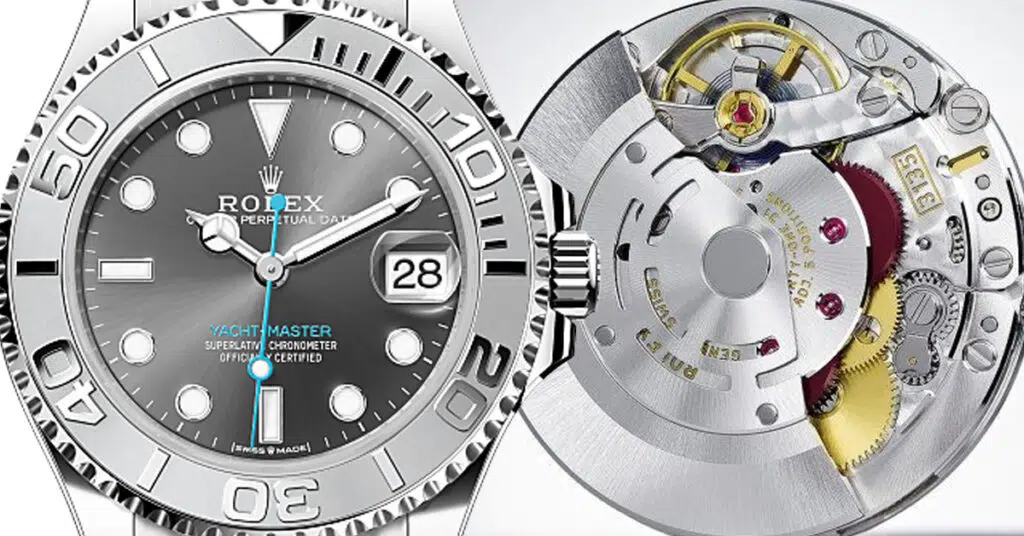
Table of Contents
When Rolex released their first quartz movement watch they created the Oysterquartz. They made around 24,000 of these watches before discontinuing them in 2001. Even though the Oysterquartz were some of the cheapest Rolex watches to own they have become very collectible. All other Rolex watches contain their innovative Perpetual rotor movement. This innovation came to life in 1931 as the world’s first self-winding mechanism that uses energy from your wrist’s natural movement. The green design helps mechanical Rolex watches run for decades with proper maintenance, unlike battery-powered watches that need new batteries every 2-5 years.
Do Any Rolex Watches Have Batteries?
Most Rolex watches don’t have batteries. The brand’s rich history shows that almost all their timepieces have worked without conventional batteries. This reflects the brand’s lasting commitment to traditional watchmaking craftsmanship and state-of-the-art engineering.
Rolex’s General Power System Philosophy
Rolex has established themselves with there ability to produce fine mechanical movements. They have decided to go with self winding mechanisms as opposed to using a battery. They think that if you are going to spend money on a luxury watch you should be able to tell that it’s powered by mechanical force.
What gives roleex its life is it’s perpetual rotor. After Rolex introduced this innovation in 1931 they began making their watches self wind. Most of Rolexes watches use mechanical movements and use the movement of your arm to power them.
Rolex stands out in the luxury watch industry for its steadfast dedication to mechanical movements. Famous models like the Datejust, Submariner, GMT-Master II, and Oyster Perpetual all run on sophisticated mechanical systems. On top of that, this commitment to battery-free operation has become one of the brand’s defining features.
The Role of the Oysterquartz in Rolex History
Rolex made one notable exception to their mechanical focus: the Rolex Oysterquartz. This model stands as the brand’s only venture into battery-powered timepieces.
The Oysterquartz emerged as a response to the “Quartz Crisis” of the 1970s. Japanese watchmakers flooded the market with affordable yet accurate quartz watches during this period. This technological shift threatened the Swiss watchmaking industry and forced prestigious brands like Rolex to adapt.
Rolex released its first quartz timepiece in 1970 – the limited-series Date 5100 with the Beta 21 movement. The company spent five years developing their own in-house quartz movements. They introduced two proprietary quartz calibers by 1977:
- Caliber 5035 for the Oysterquartz Datejust models
- Caliber 5055 for the Oysterquartz Day-Date models
The Oysterquartz featured distinct characteristics that made it different from traditional Rolex designs. Its angular case and integrated bracelet reflected the 1970s esthetic trends. The watch managed to keep Rolex’s high standards for quality and precision, though it needed a battery replacement every three to five years.
Rolex stopped making the Oysterquartz in 2001. The company made fewer than 25,000 Oysterquartz watches during its 25-year production run. These rare pieces represent a fascinating chapter in Rolex’s history as the only battery-powered model that ever spread from their workshops.

Image Source: Rolex.com
How Are Rolex Watches Powered Without Batteries?
Rolex watches work with an amazing mechanism that stands as one of horology’s most important breakthroughs. These timepieces don’t need batteries – they run on a sophisticated mechanical system that turns your natural movement into power.
Self-Winding Mechanism Using the Perpetual Rotor
Every modern Rolex watch has a Perpetual rotor at its core. This groundbreaking invention, which Rolex patented in 1931, changed watchmaking forever. The half-moon-shaped component spins freely both ways, powered by Earth’s gravity as you move your wrist. Your wrist’s slightest movement makes this oscillating weight rotate and creates kinetic energy to power the watch.
The Perpetual rotor brings three big advantages over traditional watches. You don’t need to wind it daily. The mainspring stays at perfect tension for better accuracy. The watch’s water resistance improves because the crown stays screwed down most of the time.
Rolex’s engineers make the oscillating weight as heavy as possible to work efficiently. They use tungsten alloy to get excellent dynamic properties from such a small part. The design places the weight’s center of gravity perfectly to capture maximum motion, whatever you’re doing – from jogging to sitting at your desk all day.
Mainspring and Gear Train Functionality
The mainspring acts as the main power storage in a Rolex’s mechanical heart. This tightly wound special metal strip stores energy inside a cylindrical part called the mainspring barrel. The Perpetual rotor keeps winding this spring while you wear your watch, maintaining steady tension.
The stored energy releases gradually through a precisely engineered system. The mainspring unwinds slowly and releases power through the barrel’s teeth to drive the wheel train. This controlled energy transfer powers the balance wheel oscillations that divide time into equal segments for accurate timekeeping.
The mainspring barrel has several crucial parts:
- Teeth that drive the wheel train
- The coiled mainspring ribbon that stores energy
- An arbor (axle) around which the mainspring coils
- A barrel cover that securely seals the assembly
A clutch system kicks in automatically when the mainspring hits maximum tension to prevent overwinding damage. This smart safety feature keeps your Rolex reliable even during high activity periods.
Manual Winding in Automatic Rolex Watches
Most Rolex watches let you wind them manually when needed. This comes in handy when your watch stops after sitting unused longer than its power reserve – usually 48-70 hours depending on the model.
Here’s how to manually wind your Rolex:
- Unscrew the crown by turning it counterclockwise until it releases from the case
- Rotate the crown clockwise approximately 30-40 times
- Securely screw the crown back down to maintain water resistance
A completely unwound watch needs about 20 full turns before it starts ticking again. A slip gear mechanism protects your fully wound Rolex from over-winding damage.
Daily wear with enough movement makes manual winding unnecessary. Many Rolex owners never need to wind their watches by hand. Your movement will last longer if you avoid daily hand-winding when your watch is already fully wound.
Rolex Oysterquartz: The Only Battery-Powered Model
Rolex’s extensive catalog spans decades of production, yet the Oysterquartz remains their only model that ever needed a battery. This remarkable timepiece shows the turbulent era in watchmaking history when traditional mechanical watches faced a serious threat from emerging technology.
Quartz Crisis and Rolex’s Response

Image From: Rolex.com
The “Quartz Crisis” (or “Quartz Revolution,” depending on your point of view) hit the watchmaking industry in the 1970s and early 1980s. Seiko sparked this massive change in December 1969 by introducing the Astron, the world’s first quartz watch. These quartz timepieces delivered better accuracy than mechanical watches and cost much less.
The Swiss watch industry suffered devastating losses as Japanese and American manufacturers flooded markets with affordable quartz watches. Swiss watchmakers dropped from 1,600 to 600 between 1970 and 1983. Swiss watch industry jobs plummeted from 90,000 to 28,000 between 1970 and 1988.
Many people don’t know that Rolex pioneered quartz technology among Swiss manufacturers. The company’s first patent for an electro-mechanical watch came as early as 1952, and they earned 21 quartz-related patents between 1960 and 1990.
Rolex’s original approach involved joining other Swiss brands in the Center Electronique Horloger (CEH) to develop quartz technology. They released their first quartz watch – the limited-series Date 5100 with the Beta 21 movement. The company left CEH in 1972 to create their own quartz movements.
Oysterquartz Caliber 5035 and 5055
Rolex launched their in-house quartz movements in 1977 after five years of development. They created two distinct calibers:
- Caliber 5035: Powered the Oysterquartz Datejust models
- Caliber 5055: Designed for the Oysterquartz Day-Date models
These movements showcased several impressive technical features:
- 11 jewels (whereas typical quartz movements had only one or two)
- A 32khz oscillator (four times faster than those in the Beta-21)
- Thermo-compensation via a built-in thermistor that regulated frequency based on temperature
- A tuning fork-shaped quartz crystal (implemented around 1979)
These calibers achieved remarkable accuracy. COSC certification required quartz movements to maintain precision within ±0.2 seconds per day. The Oysterquartz movements performed even better, with variation of less than one second per week.
The early Caliber 5035 movements (Mark I) didn’t receive COSC certification. This explains why Oysterquartz models from 1977-1978 don’t have “Superlative Chronometer” on their dials. Mark II movements earned certification after the tuning fork crystal modification, and later models displayed the chronometer designation.
Battery Replacement Cycle and Best Practices
An Oysterquartz battery typically lasts two to three years, though some owners report up to five years of life. The replacement process requires careful attention to detail.
Rolex USA used to offer free battery replacement service, which included new gaskets and pressure testing. Today’s professionals recommend having a qualified watchmaker handle this service instead of attempting it yourself. The delicate quartz movement can suffer damage easily.
Rolex suggests servicing every five years for all their watches. The Oysterquartz proves more resilient, needing full service only every ten to twelve years. These collector pieces deserve special care, given their scarcity – Rolex made fewer than 25,000 Oysterquartz watches during the 25-year production run that ended in 2001.
Mechanical vs Quartz: Which Rolex Movement Suits You?
Buyers choosing between mechanical and quartz Rolex watches should learn about their key differences. These differences help match the right movement to your lifestyle and what matters most to you. The choice goes beyond just how they’re powered – it affects accuracy, upkeep, craftsmanship, and future value.
Timekeeping Accuracy and Maintenance Needs
Most Rolex watches with mechanical movements have an accuracy of -4 seconds to +6 seconds per day. With the Rolex oyster quartz you can expect them to be accurate to seconds per week. That is the major difference between the two.
Mechanical Rolex watches need service every 3-7 years. Each service involves taking apart the watch, cleaning it, adding lubricant, and adjusting it—usually costing $500-$2000. Quartz watches are simpler to maintain. They just need new batteries every 2-5 years and occasional checks of their seals and moisture resistance.
A mechanical Rolex’s maintenance might cost between $4,500-$8,800 over 30 years. Quartz watches cost much less to maintain since they mainly need battery changes and basic checks.
Craftsmanship vs Convenience
Mechanical Rolex movements showcase watchmaking at its finest with hundreds of perfectly fitted parts. These complex systems create that smooth “sweeping” second hand movement that mechanical watches are known for, unlike quartz models’ once-per-second tick.
Mechanical watches create a special bond with their owners. They respond to your movements and need regular attention. Watch experts often call them “machines with a heartbeat”. This personal connection makes many enthusiasts love their watches even more.
Quartz watches excel at convenience. They stay accurate even when you don’t wear them and need minimal care.
Collector Value and Long-Term Investment
Its due to there being a mechanical watch. Rolex’s will always have value over their quartz counterparts. Many people enjoy collecting these time pieces due to them being around for many years.
Many people would look past these watches and only focus on the mechanical ones. There weren’t many that were ever produced. Less than 25,000 spread throughout the world. They have been increasing in price since people are realizing that they had value during the quartz crisis.
If you are someone who appreciates mechanical watches then they are your best bet. If you want something more accurate then the oysterquartz is your option.
Do Old Rolex Watches Have Batteries or Need Servicing?
Vintage Rolex watches, just like their modern versions, rarely need batteries. Rolex has kept its dedication to mechanical excellence throughout its history.
Vintage Rolex Models and Power Systems
Rolex produced timepieces with different movement types over the years, including traditional hand-wound movements. The vintage Cellini line featured classic hand-wound mechanisms, while many other historical models used self-winding technology. To cite an instance, the Rolex Caliber 1600—a flagship mechanical movement from the late 1960s and early 1970s—powered vintage Datejust and Day-Date models. These mechanical marvels stay accurate without batteries, showing Rolex’s commitment to battery-free watchmaking through time.
Servicing Intervals for Mechanical Rolex Watches
Proper maintenance remains vital for vintage Rolex timepieces. Service recommendations have changed over decades of production:
- Vintage Models: Older Rolex watches need servicing every 5-7 years, mainly because of differences in materials and lubricants used in earlier eras
- Modern Recommendation: Rolex now suggests a complete service about every 10 years for contemporary models
Mechanical watches need regular servicing because lubricants break down eventually. When these specialized oils deteriorate, increased friction stresses the components and performance suffers. Proper servicing is vital to protect both function and value under these conditions.
Signs Your Rolex Needs Manual Winding or Service
Several indicators signal maintenance needs for vintage Rolex owners. You should wind older Rolex models manually at least once or twice monthly, even with daily wear, since aging lubricating oils may diminish. Watch for these warning signs before service:
- Inconsistent timekeeping or loss of accuracy
- Unusual noises while winding
- Grinding sounds (suggesting inadequate lubrication)
- Weak amplitude (below optimal 270-310 degrees range)
- Visible damage or changes in appearance
Professional servicing combines complete disassembly, ultrasonic cleaning, precision lubrication, and critical part replacement when needed. Regular winding and proper servicing together help your vintage Rolex maintain its value and performance.
Conclusion
What’s amazing about Rolex is their commitment to creating watches that don’t require batteries. With the exception of the Rolex Oysterquartz they all run on there perpetual rotor mechanism. Your hands movement will power this watch for many years. Rolex made the Oysterquartz because of the quartz craze that happened in the 1970’s.
There are many reasons you should choose a mechanical Rolex over a quartz. You get superior craftmanship, value and the iconic sweep second hand. Mechanical watches do require more maintenance. Rolex only has one quartz watch so if you enjoy quartz timepieces you may want to consider a used Oysterquartz. It will continue to gain value due to there being only one model.
Your Rolex needs proper care, whatever type you wear. Mechanical models work best with regular wear and occasional manual winding. All watches need service at the right intervals – modern ones typically every 10 years, while vintage pieces might need more frequent attention. These practices help your Rolex keep its accuracy and value for decades.
The way Rolex’s power systems work helps us appreciate these horological masterpieces even more. The brand’s focus on perfecting self-winding mechanisms instead of following the trend toward battery power shows their steadfast dedication to traditional watchmaking excellence. This philosophy is without doubt at the heart of what makes a Rolex truly special – a sophisticated mechanical marvel that marks time with you for generations.
FAQs
Do Rolex watches require batteries?
Most Rolex watches do not use batteries. They are powered by mechanical movements that utilize a self-winding mechanism or manual winding. The only exception was the Oysterquartz model, produced from 1977 to 2001, which used a battery-powered quartz movement.
How do Rolex watches work without batteries?
Rolex watches typically use a self-winding mechanism called the Perpetual rotor. This system harnesses the natural motion of the wearer’s wrist to wind the mainspring, which stores energy to power the watch. The energy is then released slowly through a series of gears to keep accurate time.
How long can a Rolex watch run without being worn?
A fully wound Rolex watch can typically run for 48 to 70 hours without being worn, depending on the specific model. This is known as the power reserve. If the watch stops, it can be manually wound or gently shaken to restart the self-winding mechanism.
Enjoying our watch coverage? Get more of it in Google Search.