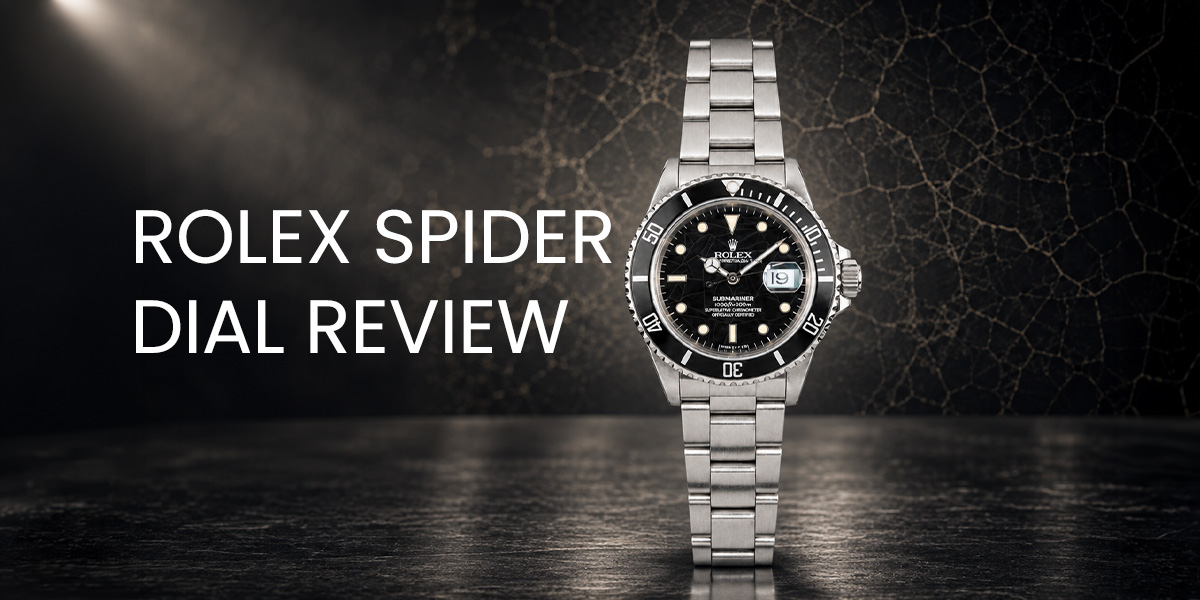
A Rolex spider dial might sound like a defect you’d want to avoid, but these cracked vintage dials have become surprising among collectors. What started as an unintended lacquer issue has revolutionized certain 1980s Rolex models into sought-after rarities.
The term refers to fissures and crazing that create spider web-like patterns across the dial surface. We found them in transitional references from the late 1970s and 1980s. The vintage Rolex spider dial appears in the GMT-Master ref. 16750 most notably. Rolex produced it for just eight years and began in 1979. Certain Submariner references also show this pattern. Rolex discontinued the problematic lacquer once the cracking became apparent and created a limited supply of these distinctive watches.
This piece will help you understand what a Rolex spider dial is, how to authenticate genuine patterns, and whether these unique timepieces deserve a place in your collection.

Table of Contents
What Is a Rolex Spider Dial and How Does It Form?
The Lacquer Defect Behind Spider Web Patterns
Spider web patterns emerge when the glossy lacquer finish breaks down. Rolex transitioned from matte to glossy dials on many sports models in the mid-1980s. The new lacquer mixture proved vulnerable to environmental stress. Extended UV exposure and temperature fluctuations caused the coating to develop micro-cracks that expanded.
The defect affects only the black lacquer layer. White text and printing remain undisturbed. You’ll spot the crazing most when tilting the dial under bright light, where the hairline fractures become visible on the glossy surface. One dial manufacturer supplying Rolex had paint that was too rigid once dry and unable to expand and contract with the metal dial plate. Rolex recognized this flaw and replaced the original lacquer formula, but not before a limited number of watches left the factory with the problematic coating.
Which Rolex Models Feature Spider Dials
The vintage Rolex spider dial appears in several transitional references from the late 1970s through the 1980s. The GMT-Master 16750, Submariner 16800, and Day-Date 18038 rank among the most affected models. You might encounter spider dials on the Day-Date ref. 18078, released in 1978 as the first Day-Date with quickset date function and sapphire crystal. The Submariner 5512, 5513, and occasionally the Daytona and Explorer II can exhibit spider patterns.
Rolex GMT Spider Dial: The 16750 Reference
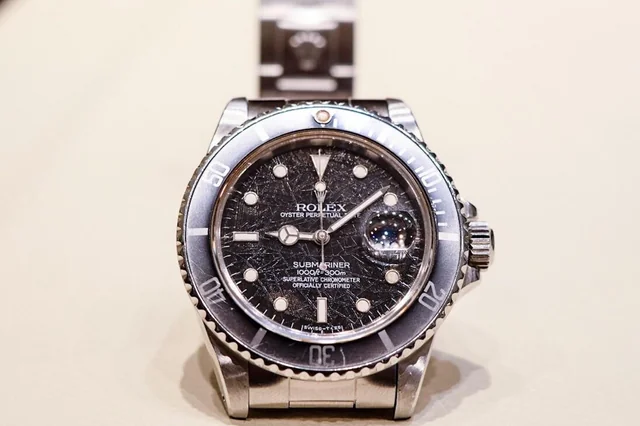
Image Source : Reddit
The GMT-Master ref. 16750 spent eight years in production starting in 1979. Earlier examples featured matte dials with painted hour markers, while later versions received glossy dials with applied white gold indices. The glossy variants developed spider patterns on their lacquer finish. The 16750 pairs a transitional character with an acrylic crystal. The cracks appear somewhat subtle depending on viewing angle.
Rolex Submariner Spider Dial: The 16800 and 168000
Both Submariner references 16800 and 168000 display spider dials stemming from the same manufacturing flaw. These transitional Submariner models combine vintage esthetics with modern upgrades like sapphire crystals and trip-lock crowns. The spider effect on these references varies from subtle to dramatic based on storage conditions and wear patterns.
Spider Dial vs Normal Dial: Identifying Authentic Patterns
Characteristics of Genuine Spider Web Cracking
Authentic spider patterns need dissecting the dial under proper lighting conditions. Genuine spider web cracking displays a network of fine cracks across the lacquer surface. The effect resembles cracked earth or an intricate web and appears most commonly on glossy and gilt-era dials. Tilt the watch and the hairline fractures catch light differently than the surrounding glossy finish. No two spider dials are exactly alike. The individuality stems from how and where each watch was worn or stored. Unique aging effects develop based on specific exposure to humidity and temperature swings [UV light also plays a role].
Fine Fissures vs Heavy Crazing Patterns
The spectrum of spider dial patterns ranges from subtle to dramatic. Some examples feature very fine fissures with consistent density but minimal visual pattern. These delicate cracks maintain an understated appearance that collectors appreciate. Heavy crazing shows thick fissures with separation unlike these fine examples. The deeper cracks expose the lighter matte surface underneath the glossy lacquer. Density, consistency and thickness determine collector appeal. Fine, consistent cracking fetches a premium among vintage watch buyers. Conversely, uneven or obscured spidering patterns hold less appeal in the marketplace.
Common Locations Where Spider Dials Appear
Spider patterns develop across the whole dial surface rather than concentrating in specific zones. Spider cracking that’s sharp on an otherwise clean dial increases desirability by a lot. The patterns vary in prominence between watches. Some show only faint lines while others display intricate networks that are well-formed. You’ll find the most dramatic examples where glossy black lacquer meets the metal base. This creates maximum visual contrast between cracked and intact areas.
Rolex Spider Dial Value: What Affects the Price?

Image Source : Instagram
Pattern Quality and Consistency
Collector priorities determine spider dial values in ways that differ between buyers. The appeal rests on pattern density, visibility, and how the cracks distribute across the dial surface. Fine, consistent cracking fetches a premium, while watches with uneven or obscured spidering hold less market appeal. Density, consistency, and thickness of dial cracks are the main reasons collectors cite for value increases or decreases.
Symmetry matters especially when you have certain references. The Day-Date 18078 demonstrates how well-defined examples with consistent crack patterns can command premiums in the vintage market. Watches displaying thick fissures with separation expose the matte surface underneath. This creates a less desirable esthetic for many buyers.
Market Demand Among Vintage Collectors
The point of view on spider dials has moved over time. Collectors once viewed them as flawed but now rank them as a prized characteristic. Some enthusiasts see the cracks as a natural aging effect as with tropical dials or faded bezels, while others prefer pristine, unblemished dials. This divide creates a market where spider dials can either increase or decrease a watch’s value depending on the buyer you encounter.
Price Comparison: Spider Dial vs Non-Spider Examples
Prices range from above market rate to a premium when the spider pattern shows well-formed and even distribution. The premiums attached to spider dials aren’t nowhere near as high as those accompanying tropical dials. You can sometimes find a spider dial watch at roughly the same price as one lacking this feature.
Research auction results and completed listings of similar models before purchasing. Compare prices to non-spidered examples of the same reference and dial variation for accurate market positioning.
When Spider Dials Command a Premium
Dense and consistent cracking brings premium pricing in front of the right collector. Well-formed patterns with even crack distribution across an otherwise clean dial command the highest prices. The watch’s overall condition plays a role with the spider pattern’s prominence and attractiveness.
Should You Buy a Vintage Rolex Spider Dial?
Pros of Owning a Spider Dial Rolex
Each spider dial possesses a unique fingerprint of cracks that adds character and story to your timepiece. The rarity stems from Rolex’s quick discontinuation of the problematic lacquer. This created limited supply among specific references. Collectors drawn to vintage esthetics and natural patina will find these watches offer a visual representation of time captured on the dial surface. The individual patterns mean no two examples look similar and give your watch a distinctive character absent from standard production models.
Cons and Considerations for Buyers
Spider dials divide the collecting community. Some buyers view the cracks as damage rather than desirable patina. Service replacement dials with spider patterns add no value and diminish the watch’s worth. The appeal remains subjective and is tied to pattern quality and your personal taste. While fine cracking may command premiums, many buyers avoid these watches.
Authentication Tips When Shopping
Artificial aging has become a common problem as spider dial popularity grows. Work with reputable sellers and request detailed provenance before purchasing. Professional verification through certified watchmakers prevents mistakes with refinished or fake spider patterns that get pricey. Compare your prospective purchase against known auction results and documented examples.
Long-Term Investment Potential
Spider dials can increase or decrease value depending on form and buyer priorities. Research completed listings that compare spider examples to standard dials of the same reference. Price premiums remain modest compared to tropical dials and occasionally match non-spider versions.
Conclusion
Spider dials offer a polarizing entry point into vintage Rolex collecting. The unique patterns add character and rarity to specific references, but their appeal remains subjective. You’ll find modest premiums compared to tropical dials, and prices occasionally match standard examples. The decision depends on your personal taste in the end and whether you view the cracking as natural patina or damage. Authentication through reputable dealers is crucial before committing.
Show facts
Enjoying our watch coverage? Get more of it in Google Search.