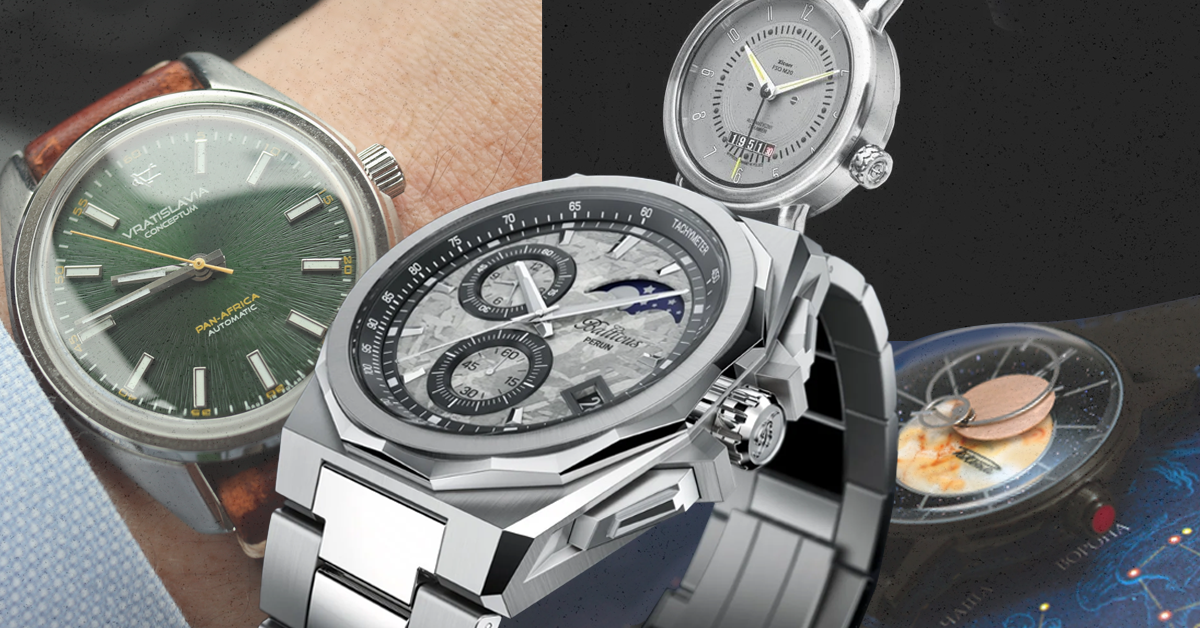
Rolex unveiled 58 brand-new references at its 2026 Watches and Wonders, celebrating the 100th year anniversary of Rolex’s iconic Oyster case first patented in 1926. Rolex 2026 releases range from entry level watches starting at $6,750 all the way up to high-jewelry masterpieces topping out at $98,100. The Swiss brand continues to maintain its market leadership, grossing $11.43 billion USD in sales in 2024. Find everything you need to know about the Rolex 2026 new releases here:
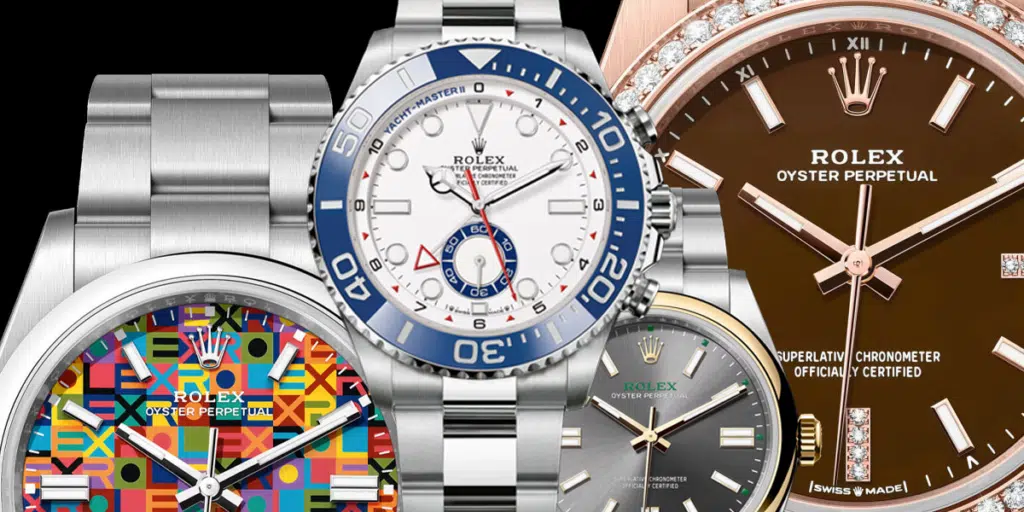
Table of Contents
Rolex Unveils Seven Flagship Models at Watches and Wonders 2026
Rolex positioned seven models as the centerpieces of its centennial celebration at Watches and Wonders 2026. The lineup ranged from entry-level steel configurations to exceptional pieces priced above $60,000 that don’t appear in the regular catalog.
Rolesium Daytona Introduces Grand Feu Enamel Dial
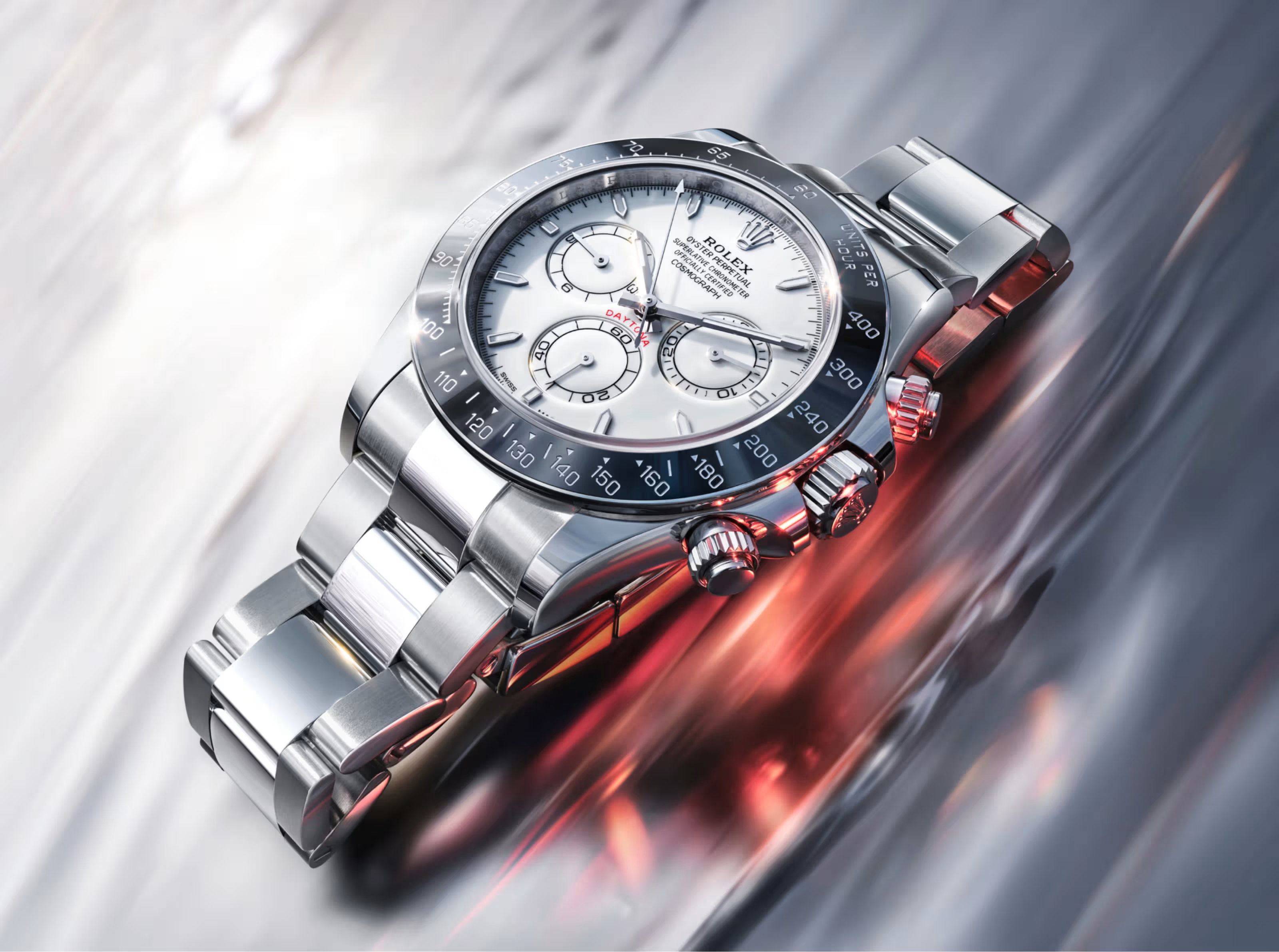
The Cosmograph Daytona reference 126502 combines Oystersteel with platinum components in what Rolex designates as Rolesium construction. The white enamel dial departs from traditional Grand Feu technique. Enamel fires onto four ceramic plates rather than metal, then mounts to a brass base after vitrification. This ceramic substrate approach reduces failure rates while preserving the luminous depth characteristic of enamel surfaces. The anthracite Cerachrom bezel features tungsten carbide enrichment. Tachymeter numerals orient horizontally as a callback to 1960s Daytona references. A sapphire caseback reveals the caliber 4131 movement and makes this the third Daytona with exhibition case architecture. The watch carries off-catalog status at $57,800.
Yacht-Master II Returns with Redesigned Movement
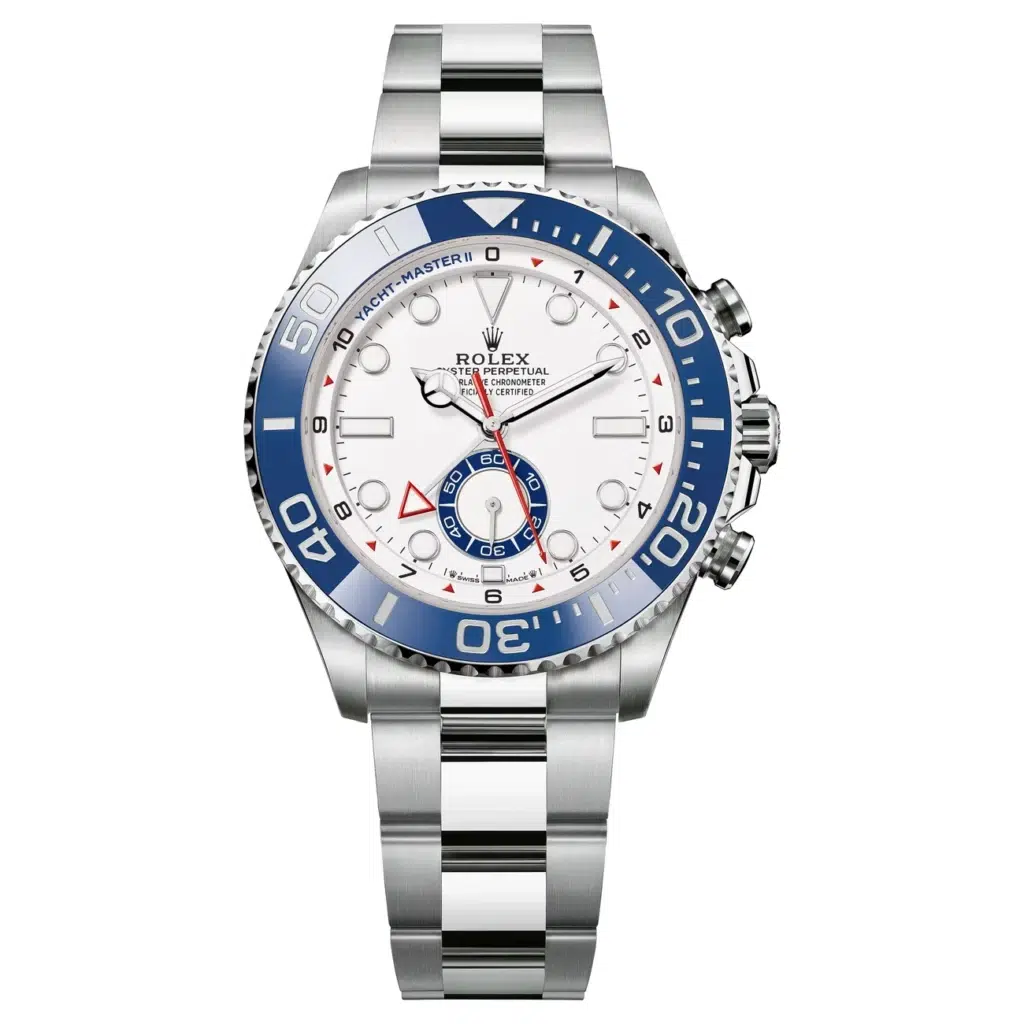
The Yacht-Master II reappears with caliber 4162 after a two-year absence. It replaces the Ring Command bezel system with pusher-based countdown programming. The countdown minute and seconds hands rotate counterclockwise, a mechanical configuration Rolex has not implemented previously. Programming occurs via the lower pusher and advances the countdown in one-minute increments with mechanical memory retention. The regatta scale relocated from the dial to a flange graduated from 10 to 0 minutes. Half-minute intervals mark as triangles. The 44mm case measures 13.90mm thick across both Oystersteel and 18k yellow gold versions. Water resistance remains at 100 meters despite the elimination of screw-down chronograph pushers. Pricing starts at $20,300 for reference 126680 in steel and reaches $57,800 for reference 126688 in gold.
Multicolor Jubilee Oyster Perpetual Celebrates 100 Years
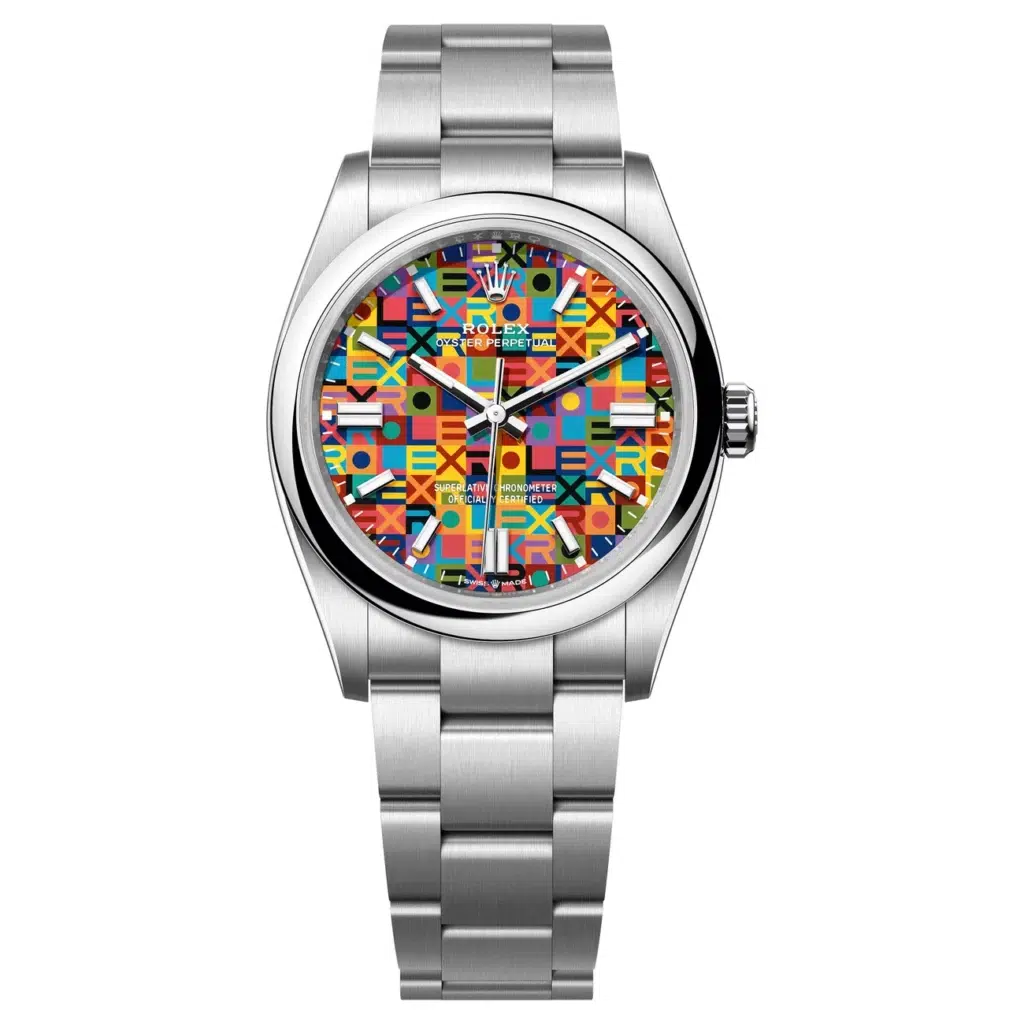
The Oyster Perpetual 36 introduces a multicolored dial featuring the Jubilee motif. The letters R-O-L-E-X form a repeating pattern across ten distinct colors. Each color requires individual application via pad printing in sequential layers. Precise registration between stages is essential. This dial execution appears across 31mm, 36mm, and 41mm case sizes, though the 28mm and 34mm variants receive different treatments. The caliber 3230 movement provides 70 hours of power reserve with Chronergy escapement integration. Reference 126000 in 36mm carries a retail price of $6,750.
Yellow Rolesor OP Features Anniversary Inscription
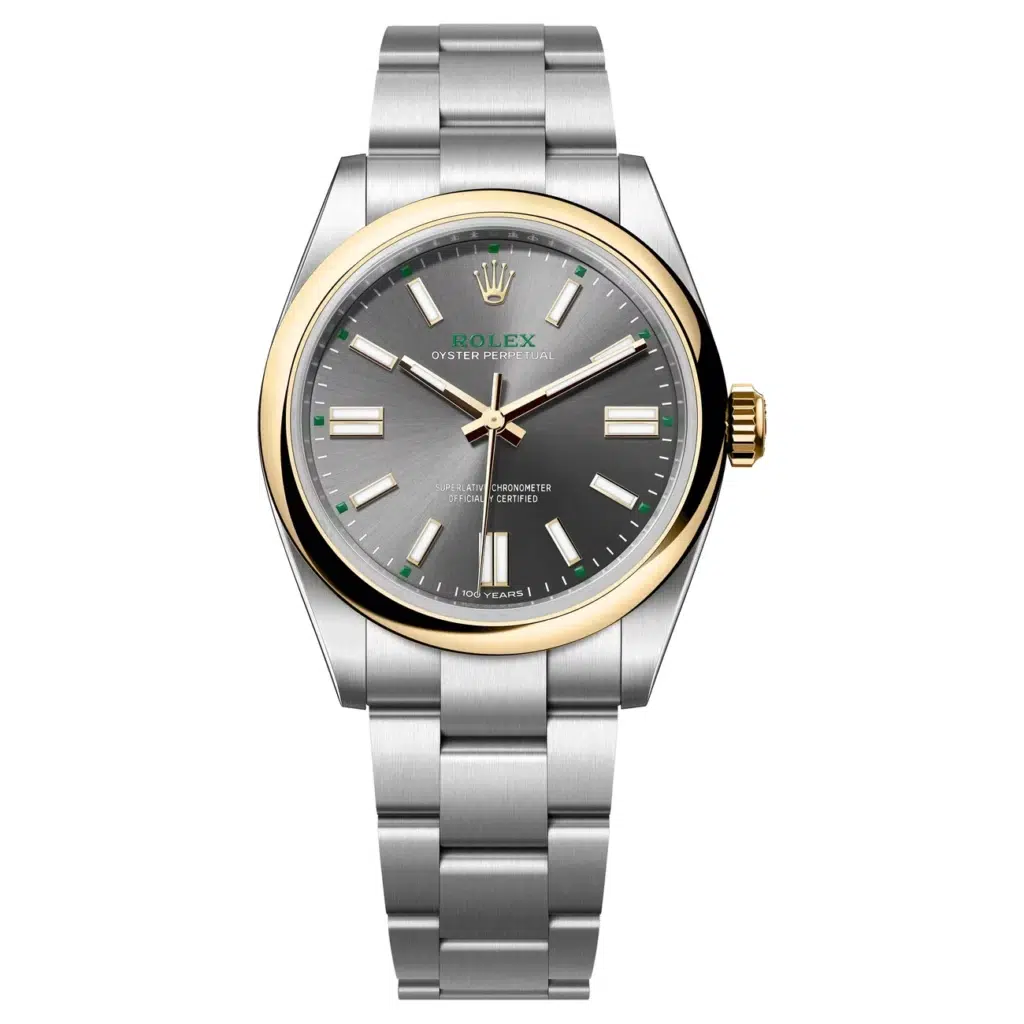
The 134303 line features an Oystersteel case and bracelet, with 18k yellow gold bezel and crown. This Rolesor combination was unavailable in modern sizes until now. The slate sunray dial features “100 years” at 6 o’clock instead of Swiss Made as usual. Minute markings along the minute track are highlighted in green. A small “100” is engraved in relief on the crown. This 41mm version is a departure from standard Rolesor design by leaving out gold center links for the bracelet. It retails for $9,650.
Jubilee Gold Day-Date Debuts New Proprietary Alloy
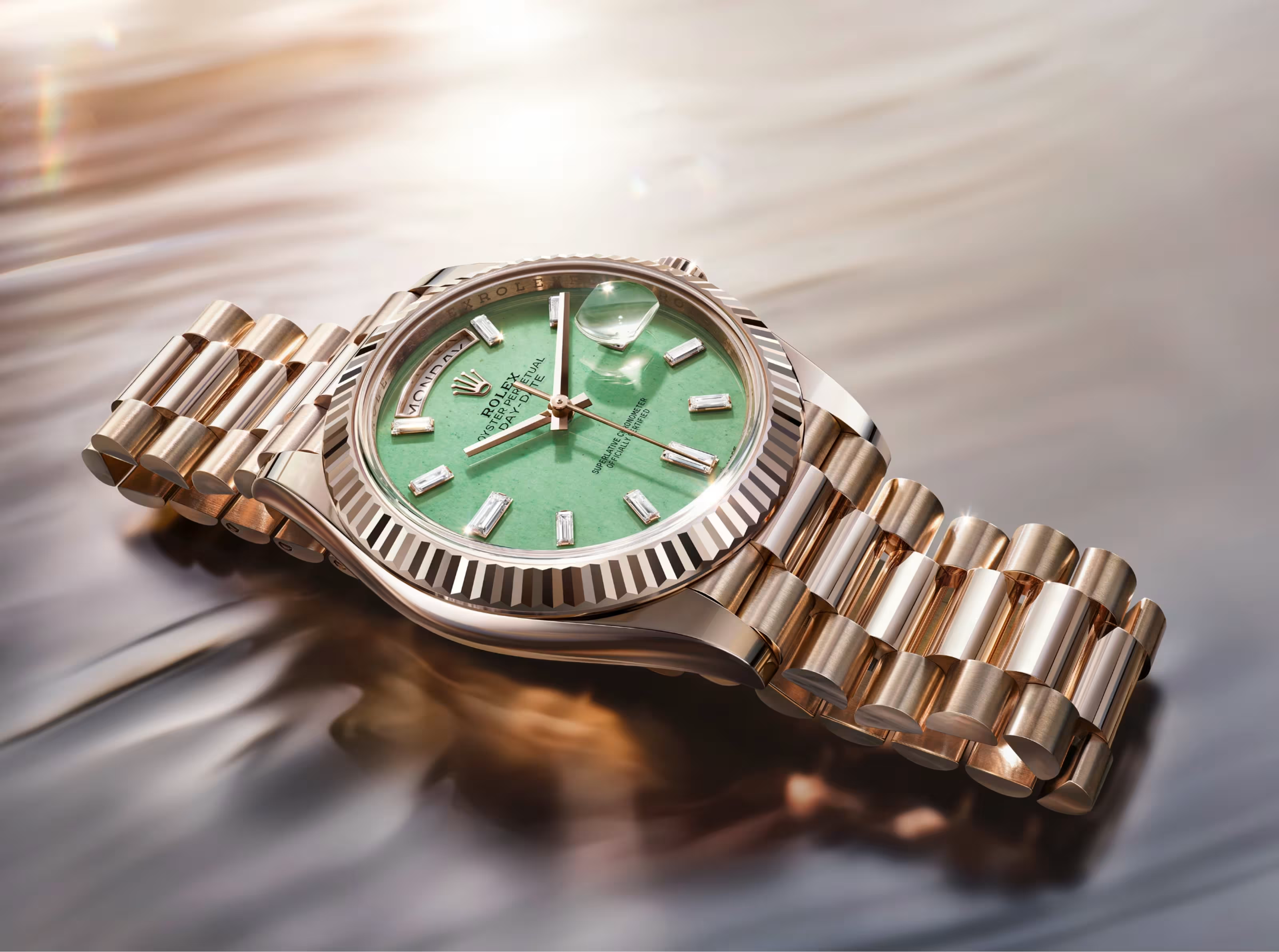
Rolex debuts Jubilee Gold, an 18k gold alloy. The yellow-grey-pink alloy was created by Rolex’s own metallurgists. Rolex hasn’t released a new gold alloy since Everose was launched back in 2005. The Day-Date 40 reference 228235 showcases the new Jubilee Gold along with a light green aventurine dial and ten baguette-cut diamond hour indicators. Rolex crafts the alloy at their Plan-les- Ouates foundry by Rolex mixing 24k gold with copper, palladium, silver, and indium. The watch is offered at an off-catalog price of $62,700.
Green Ombré Datejust Expands Color Palette
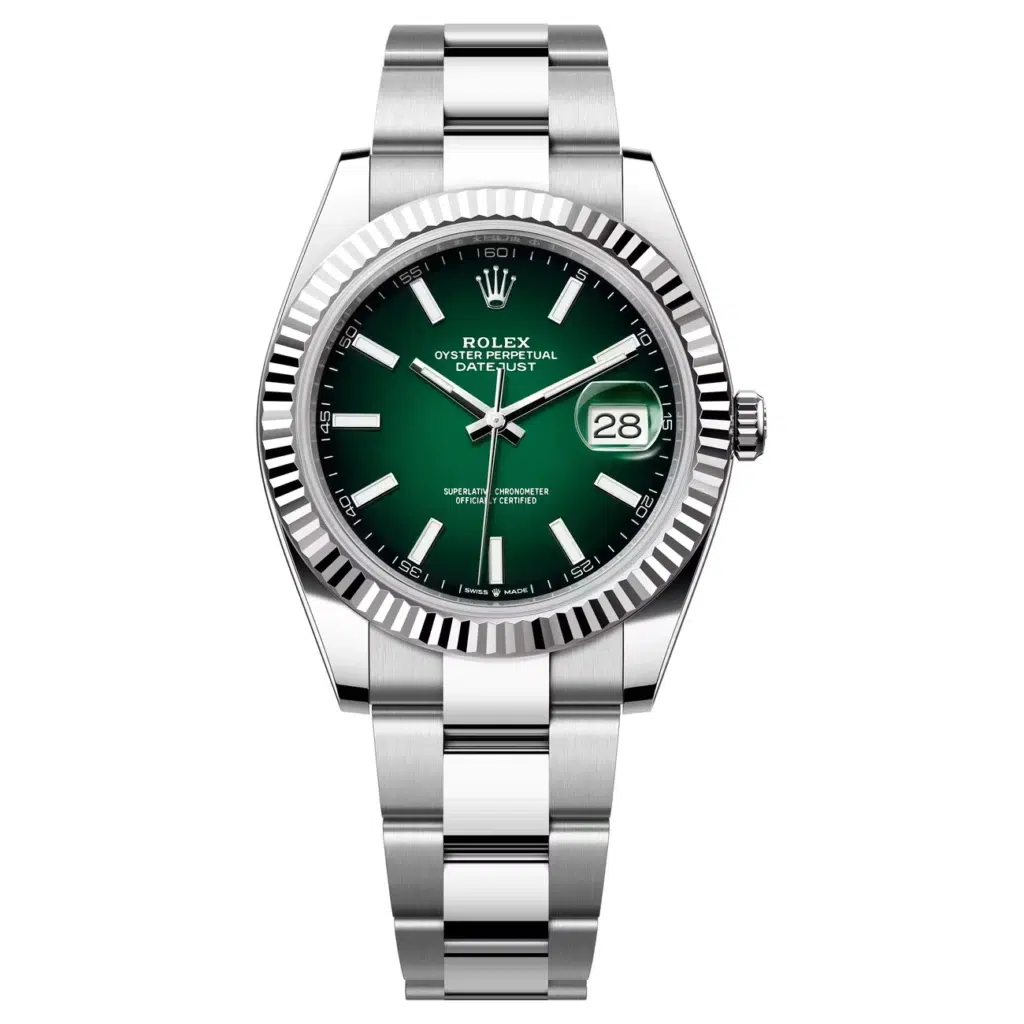
Rolex equips the Datejust 41 and 36mm models with green lacquer ombré dials made using a two-step process. Green lacquer is applied to the dial base plate before black lacquer is sprayed on the dial from the center outwards in overlapping circles. This is the first example of lacquered ombré dialing since Rolex began offering ombre dials once again in 2019. Available in white Rolesor, each model mated an Oystersteel case with white gold fluted bezel. The Datejust 41, reference 126334, retails for $11,650. The Datejust 36mm, reference 126200, retails for $10,100.
How Rolex Organized the 2026 New Releases Across Collections
Rolex structured the 2026 new releases around three distinct allocation tiers. Distribution concentrated in the Oyster Perpetual and Datejust lines while reserving exceptional pieces for boutique-level relationships.
Oyster Perpetual Line Receives Widest Refresh
The Oyster Perpetual received eleven new references spanning four case sizes and became the most thoroughly updated collection. One new reference appears at 31mm, 36mm, and 41mm respectively. Both 28mm and 34mm formats received four new models each. The smaller sizes showcase yellow gold and Everose gold configurations, marking the first precious metal Oyster Perpetual releases since 2001. Both 28mm and 34mm versions feature natural stone hour markers at 3, 6, and 9 o’clock positions, a material application never used before in Rolex watchmaking. The Oyster Perpetual 28 arrives in 18k yellow gold with green stone lacquer dials that incorporate heliotrope markers. The 34mm version employs 18k Everose gold with blue stone lacquer dials featuring dumortierite accents. The case and bracelet surfaces employ satin finishing rather than polished surfaces. This represents the first application of this texture to precious metal timepieces.
Datejust 36 Dominates with 32 New Variations
The Datejust 36 contributes 32 models in total among steel (Oystersteel), yellow Rolesor, white Rolesor, Everose Rolesor, and diamond-set. It makes up the biggest share of releases of the Rolex 2026. These models feature the green ombré dial, palm and fluted dial designs among options for domed bezel, fluted bezel, and brilliant diamond-set bezel. The white Rolesor model features an Oystersteel case with a white gold fluted bezel. The yellow Rolesor features steel and 18k yellow gold. All groups feature multiple dial and bracelet pairings. Each can come with either an Oyster bracelet or Jubilee bracelet.
Day-Date and Exceptional Watches Tier
Both new Day-Date 36 references published in the standard catalog appear as high-jewelry pieces crafted in white gold with full diamond dials. The pavé dial variant carries a retail price of $98,100 and establishes itself as the most expensive reference in the whole 2026 standard catalog. Rolex designated two models as “Exceptional Watches” for 2026: the Gold Day-Date 40 with light green aventurine dial and the Rolesium Daytona featuring Grand Feu enamel. These exceptional designations sit above standard catalog releases but below full off-catalog status. They represent an intermediate tier for limited production pieces with public visibility.
Off-Catalogue Boutique-Only Allocations
At least eleven additional pieces surfaced alongside Rolex’s published New Watches 2026 page. Distribution occurred through select Rolex boutiques rather than the authorized dealer network. These gem-set and stone-dial variants build on existing GMT-Master II, Yacht-Master, and Day-Date platforms. Seven off-catalog Day-Date 36 models feature natural stone dials across yellow gold, Everose gold, and white gold cases, with retail prices ranging from $62,705 to $76,600 depending on configuration. Stone dial variations include thulite, amazonite, Wyoming jade, lepidolite, and turquoise. Each dial remains unique due to natural mineral variations. Two off-catalog GMT-Master II models appeared in Everose gold with chrysocolla stone dial and white gold with blue quartz dial. The carnelian Yacht-Master 40 features a multi-colored sapphire bezel designated as “Indian corn” pattern with brown Oysterflex strap.
What the Rolex 2026 Watches Cost: Complete Pricing Breakdown
The 2026 standard catalog spans $91,350 from lowest to highest retail pricing and establishes clear financial tiers in material categories of all types and complications.
Entry-Level Pricing Starts at $6,750
The Oystersteel Oyster Perpetual 36 with multicolored Jubilee motif dial opens the 2026 catalog at $6,750. The standard Oyster Perpetual 36 without anniversary elements maintains similar pricing. The 31mm Lady-Datejust in Oystersteel begins at $7,800. The Datejust 31 in full Oystersteel retails at $7,900 and positions itself as the most available date-equipped model. Steel sports watches start much higher. The Air-King sits at $8,150 and Explorer 40 at $8,350.
Mid-Range Datejust and Sports Models
Datejust 41 pricing opens at $8,950 in Oystersteel with smooth bezel. It climbs to $11,650 for Oystersteel and white gold configurations. The Datejust 36 mirrors this structure. Oystersteel and yellow gold Rolesor versions reach $14,750. Diamond-set Datejust 36 models span $18,250 to $26,750 depending on metal combination and stone count. Professional sports models occupy the $10,600 to $21,950 range. Explorer II sits at $10,600, GMT-Master II in Oystersteel at $11,800, and Submariner Date in steel and yellow gold at $18,900. The redesigned Yacht-Master II debuts at $20,300 in Oystersteel.
High-Jewelry and Precious Metal Offerings
Precious metal Day-Date 40 models begin at $48,000 in yellow gold and rise to $68,800 in platinum. The Sky-Dweller in Everose gold commands $61,900, while two-tone Rolesor versions start at $17,750. Platinum Cosmograph Daytona retail reaches $84,600. The Land-Dweller 36 in platinum with diamonds tops the standard catalog at $102,150, yet the Day-Date 36 with diamond pavé dial establishes the highest published price at $98,100.
Off-Catalogue Pieces Command Premium Pricing
Boutique-exclusive pieces operate in a separate financial tier from $58,000 to $355,000. Seven off-catalog Day-Date models with natural stone dials range from $62,705 to $76,600. The GMT-Master II with blue quartz dial retails at $253,000, while the chrysocolla variant reaches $355,000. Secondary market dynamics show that off-catalog Rainbow Daytonas originally priced around $97,000 now command up to $500,000.
Rolex Discontinues GMT-Master II Pepsi: Market Impact Analysis
Rolex confirmed discontinuation of both GMT-Master II Pepsi variants during Watches and Wonders 2026, removing the steel reference 126710BLRO and white gold reference 126719BLRO from active production. The models disappeared from Rolex’s website on April 14 following months of dealer reports suggesting ceased deliveries. Retail pricing stood at $11,800 for steel on Oyster bracelet, $12,000 for steel on Jubilee, $50,700 for white gold with blue dial, and $53,100 for white gold with meteorite dial at discontinuation.
Why the Pepsi Discontinuation Matters
The red- and-blue bezel pays homage to the original visual identity of the GMT-Master lineup, created in 1955 for Pan Am pilots operating in different time zones. Demand for the dual-toned ceramic bezel influenced Rolex’s decision, as ceramic pieces in red and blue had historically been particularly difficult to produce at scale. The steel edition released at Baselworld 2018 is among the most backlog’d references in recent Rolex history, with allocations on hold since February 2026. It is the first Rolex line-up without a red bezel option since the introduction of ceramic bezels.
Secondary Market Prices Surge 12% in Q1 2026
The Bloomberg Subdial Watch Index registered a $3,000 price increase from early January through late March and climbed from above $20,000 to over $23,000. Active listings dropped 25% during the same period as sellers held inventory and anticipated further appreciation. Purchase requests surged more than 500% above 2025 averages in the first week of March according to Chrono24 data. Unworn steel examples reached $30,000 after official confirmation, with select listings exceeding $40,000. Steel models commanded at least twice retail on secondary markets, whereas white gold versions traded near retail.
Which GMT Models Absorb Displaced Demand
Speculation about the Pepsi discontinuation boosted demand for the Coke GMT-Master II, which Rolex stopped producing in 2007 with its red-and-black bezel. Purchase requests for the Coke doubled in early March versus 2025 averages as collectors sought alternative red bezel options. The remaining steel GMT lineup consists of three bezel configurations: blue-and-black Batman, gray-and-black Bruce Wayne, and green-and-black Sprite.
Investment Outlook for Discontinued References
The Submariner Hulk reference 116610LV provides historical precedent and doubled in value from around $14,000 to nearly $30,000 within two years of its 2020 discontinuation. Industry analysts project Pepsi prices reaching $35,000 to $40,000 by year-end, with 2026-dated examples potentially commanding higher premiums. The model appreciated 300% over 15 years with 8% to 12% annual returns.
Where Rolex 2026 New Releases Fit in the Market
Authorized dealers manage rolex 2026 releases through relationship-based allocation rather than waitlist queues, with purchase history determining access to high-demand references.
Allocation Predictions for High-Demand Models
Lead times on new purchases of Steel Daytona are three or more years. Dealers typically hold allocation for longstanding customers. GMT-Master II waits are one or two years. Submariner wait times range from six months to one year. Datejust models arrive within a few months due to higher volume production. Anniversary Edition Oyster Perpetual models featuring the “100 years” engraving will be highly competitive. Existing client lists and dealer profits take priority over a first-come, first-serve basis. Only the VIP level client who spends millions through their dealership will have the knowledge and connections to purchase off catalog items.
How 100th Anniversary Affects Resale Values
The watches made to commemorate an anniversary are time capsules of the brand. This helps to further grow their long-term collectability. Due to the obvious “100 years” dial and crown engraving, there will be instantaneous hype from collectors and speculators. Limited production will make these watches some of the hottest Oyster Perpetual references to own for appreciation. Watches like the Day-Date with unique dials have historically held up well. This is due to the manufacturers limiting production to target markets.
Comparing 2026 Release Strategy to Previous Years
Rolex reinforces its luxury positioning rather than competing with tool watch manufacturers. Price increases averaged 7% in the U.S. and 5% in the U.K. for 2025. The secondary market is valued at $25 billion annually. This is a big deal as it means that it could exceed the $50 billion primary market.
Final Thoughts
Rolex offers models in both the entry level steel watches and high end boutique watches with their 20’s lined up to release for 20 26. Expect to pay a markup for any vintage or no longer available Oyster Perpetual models being released to commemorate an anniversary, they will be priced higher than retail (over 100% markup). Also upgrades to the GMT- Master II Pepsi have some exciting upgrades that are performance based rather than cosmetic ( ceramic enamel dial on the Daytona and new countdown tracker on the Yacht- Master II). Stainless steel versions of the Jubilee in Gold and multi-color dials are good examples of watches that will be coveted years from now. If you’re looking to buy from a dealer pre-owned watches that are not listed in their catalog such as stone dials watches will most likely not be sold to you but to a repeat customer.
Enjoying our watch coverage? Get more of it in Google Search.