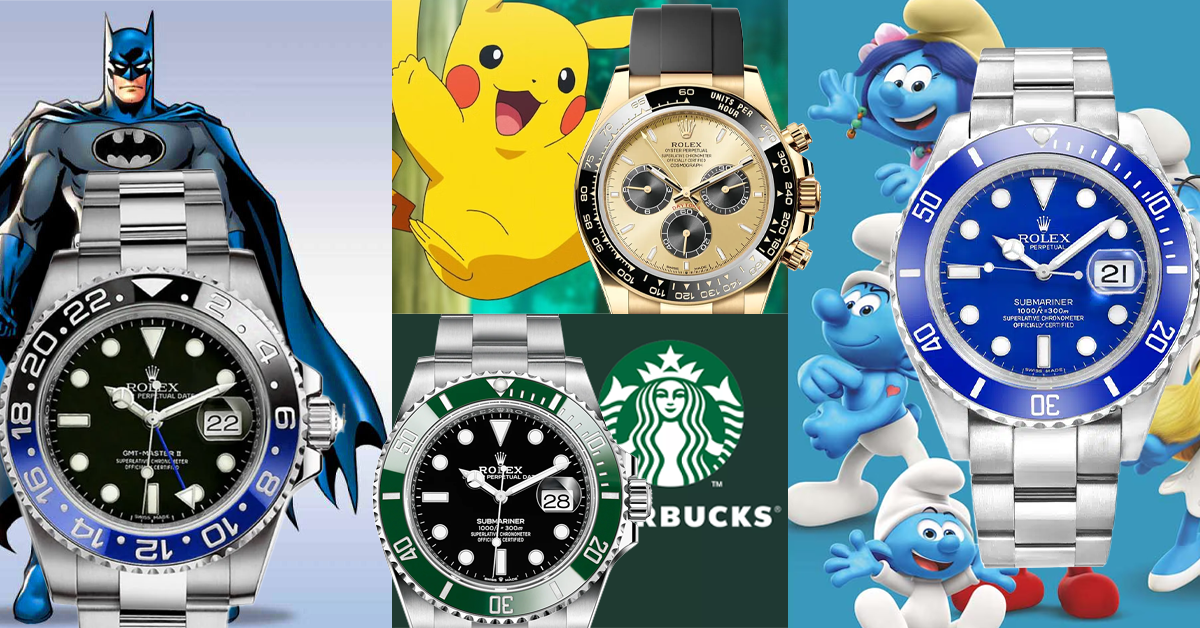
Rolex vs Cartier. Two iconic brands going head to head. On one side you have Rolex who are the worlds most recognizable luxury watch brand. On the other side you have Cartier who invented the modern wristwatch back in 19̂04 way before Rolex even existed. Famliarity and heritage are great but they dont really tell you which brand is right for you.
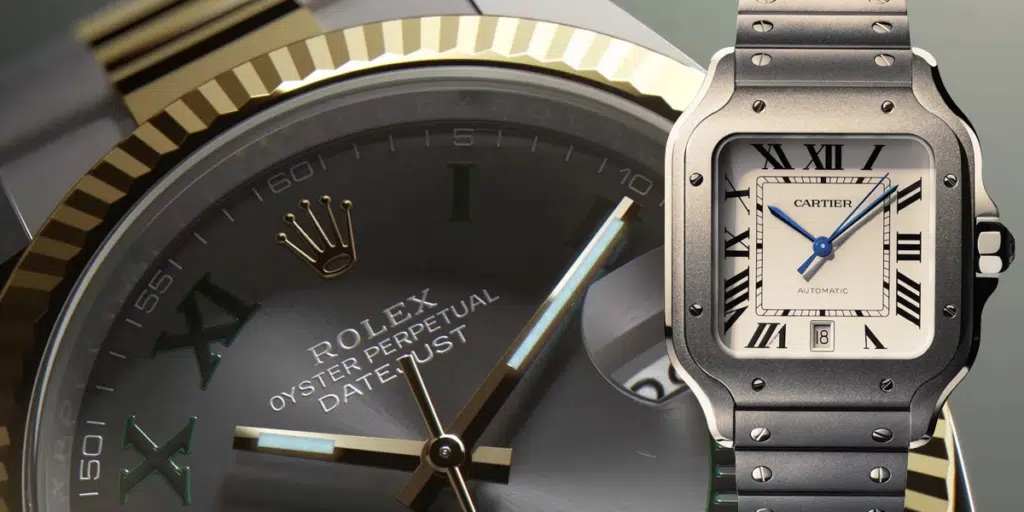
Choosing between Rolex or Cartier means weighing different priorities. Rolex excels in value retention and technical precision. Cartier watches offer immediate availability and more available pricing. This piece breaks down everything from design philosophy to pricing and resale value. You can determine whether a Cartier watch vs Rolex makes more sense for your wrist and wallet.
Brand Heritage and Watchmaking Identity
Rolex: The Crown’s Experience from 1905 to Luxury Dominance
Rolex was established by Hans Wilsdorf in London in 1905 when he was 24 years old. Originally, the company specialised in the distribution of accurate watches. In 1919, after taxes from the war became too high in Britain, Rolex relocated to Geneva, Switzerland which has been its headquarters ever since. This gave Rolex its everlasting Swiss reputation. Rolex prides itself on technical innovation instead of design innovation. Rolex introduced the Oyster case in 1926 making it the worlds first waterproof wristwatch. Mercedes Gleitze wore an Oyster while swimming across the English Channel in 1927 to authenticate the watch. Rolex introduced the Perpetual rotor in 1931 and developed what is now known as the automatic winding movement that is used widely today.
Rolex has a brand value of CHF 15.9 billion with a Brand Strength Index score of 89.9 making it the strongest brand in Switzerland. Rolex’s crown logo is recognizable worldwide. The brand embodies a functional design aesthetic and has watchmaking heritage rooted in tool watches.
Cartier: From Jeweler of Kings to Watchmaking Pioneer
The House of Cartier was established in Paris by Louis-François Cartier in 1847. Cartier had long been favored by royalty before his foray into watchmaking. King Edward VII called Cartier “the jeweler of kings and the king of jewelers”, when he commissioned 27 tiaras for his coronation in 1902.
Alberto Santos-Dumont asked Cartier for a watch that was easy to read at waist level while flying airplanes in 1904. Louis Cartier’s solution was the Santos, considered among the earliest modern men’s wristwatches. The Tank was introduced in 1917 after Cartier saw French Renault FT17 tanks through an airplane window. Cartier design treats watches like jewelry creations and focuses more on artistic merit than instrument precision.
Key Historical Milestones and Breakthroughs
Though both brands went on to play important roles in watch history, they each took very different routes to get there. Rolex patented the first hermetically sealed Oyster case, as well as the world’s first automatic chronometer with date aperture in 1945. Cartier was one of the early adopters of the wristwatch and first offered the Santos to the public in 19ll. Among other shapes, Cartier watches came in shapes such as Tonneau in 1906 and Tortue in 19l2, as well as the avant-garde Crash in 1967.
Brand Recognition and Global Prestige
Rolex dominates as the most recognized luxury watch brand worldwide. The name is synonymous with achievement and technical mastery. Cartier maintains prestige across luxury categories and is known for jewelry and watches, with a Forbes brand value of USD 12.20 billion.
Design Philosophy: Sporty Tool Watches vs Elegant Shapes
Rolex Oyster Case and Functional Design DNA
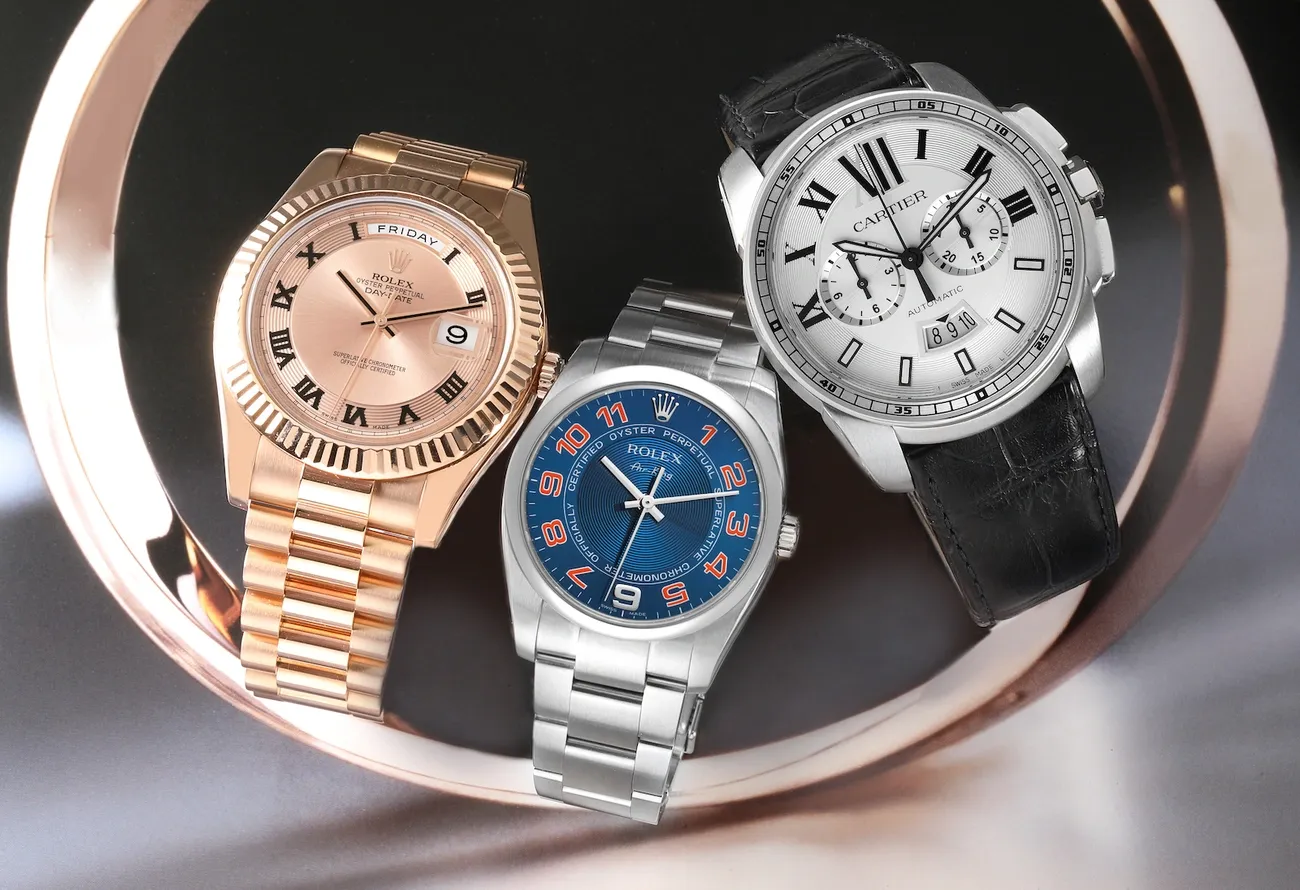
Rolex employs a function-first philosophy centered around tool watch DNA. The Oyster case was created in 1926 and features a hermetically sealed case construction complete with threaded caseback and screw-down winding crown. Functionality is this brand’s strongest suit as this provides a bacteria tight seal keeping the movement safe from water, dust, and pressure. You’ll find this architecture on every Rolex watch from the Submariner to the GMT- Master II. The modern Oyster case is crafted from Rolex’s proprietary corrosion-resistant 904L Oystersteel which can only be machined with specialized equipment. Design-wise, legibility is important with Chromalight markers and round-case styling is consistent amongst its collections.
Cartier‘s Mastery of Case Shapes and Artistic Vision
Cartier is a designer-centric brand that entered watchmaking with a background in high jewelry. Popularizing the male wristwatch with the Santos in 1904, Cartier has been bucking round case trends for well over a century. Whether it’s rectangular Tank cases, square Santos models, Curved Tonneau styles or round Ballon Bleu watches, Cartier provides designers options. This is likely due to the brand’s jewelry roots where case shape is just as vital as functionality.
Signature Design Elements and Visual Identity
Cartier will almost always place a signature cabochon-cut sapphire atop the crown. It is completely cosmetic, as sapphires provide no functional strength benefit, but it allows the house to exercise some jewelry-inspired panache. Cartier trusts textured guilloché dials that throw light with their radiant patterns across blued-steel hands flame-heated to specific temperatures finished with sword-shaped profiles. Instantly recognizable Roman numerals and train-track-style minute markers round out the look. Eight exposed screws adorn the square bezel of the Santos, paying homage to industrial cues from the Eiffel Tower itself.
Wearability and Versatility Comparison
Dual QuickSwitch and SmartLink systems are offered on contemporary Santos models. QuickSwitch allows tool-less strap changing in seconds, while SmartLink provides tool-less, micro-adjustment on bracelets. Crown guards help give the Santos 100 meters of water resistance through its heptagonal crown with decorative sapphire cabochon. Rolex has continued to sport larger lugs and case sizes for a more dominating wrist presence. Cartier prefers chic and stylish wearability.
Movement Technology and Engineering Standards
Rolex In-House Movements and Superlative Chronometer Certification
Rolex designs, manufactures, assembles, and tests 100% of its movements in-house at facilities in Bienne, Switzerland. Each movement undergoes COSC certification that requires 15 days of testing in five positions at three temperatures and maintains accuracy within -4/+6 seconds per day. Only about 3% of Swiss watch production achieves this certification. After COSC approval, Rolex applies its Superlative Chronometer standard and tests fully cased watches to -2/+2 seconds per day accuracy. Proprietary technologies include the Parachrom hairspring made from niobium and zirconium alloy that offers superior magnetism resistance and the Chronergy escapement that boosts efficiency by 15%. Paraflex shock absorbers increase shock resistance by up to 50% compared to traditional systems.
Cartier’s Mix of In-House and Modified Calibers
Cartier makes a variety of calibers internally; most prominently their 18 47 MC movement, which is used in most of their Santos watches. Cartier also modifies ETA top-of-the-line movements, as well as ValFleurier movements and finishes them to their standards. Features unique to the Cartier 18 47 MC include nickel phosphorus components that are antimagnetic with paramagnetic shielding. The caliber is 25.6mm wide and has 23 jewels. It has a frequency of 28,800 beats per hour. Rolex chases chronometric bragging rights, but Cartier is more concerned with elegant aesthetics and reliable timekeeping.
Accuracy Standards: +2/-2 vs Standard Tolerances
Rolex movement accuracy is kept within -2/+2 seconds/day, which is twice the accuracy of what is required of a standard chronometer. The movements by Cartier run within standard specs and are not chronometer certified by COSC; however, they are factory regulated to ensure accuracy. This distinction shows where each brand focuses their priorities. Rolex prides themselves on precision mechanics, while Cartier focuses on balance with mechanical prowess and aesthetics.
Power Reserve and Technical Specifications
Rolex’s newer in-house movements, such as caliber 3235, offer up to 70 hours of power reserve. This is achieved by maximizing barrel shape and utilizing the Chronergy escapement. Compared to Rolex’s new movements, Cartier’s 18XX offers 42 hours of power reserve in a thinner movement. Rolex also boasts a longer international warranty of 5 years, denoted by a green seal.
Iconic Models and Collections Showdown
Rolex Submariner: The Dive Watch Measure
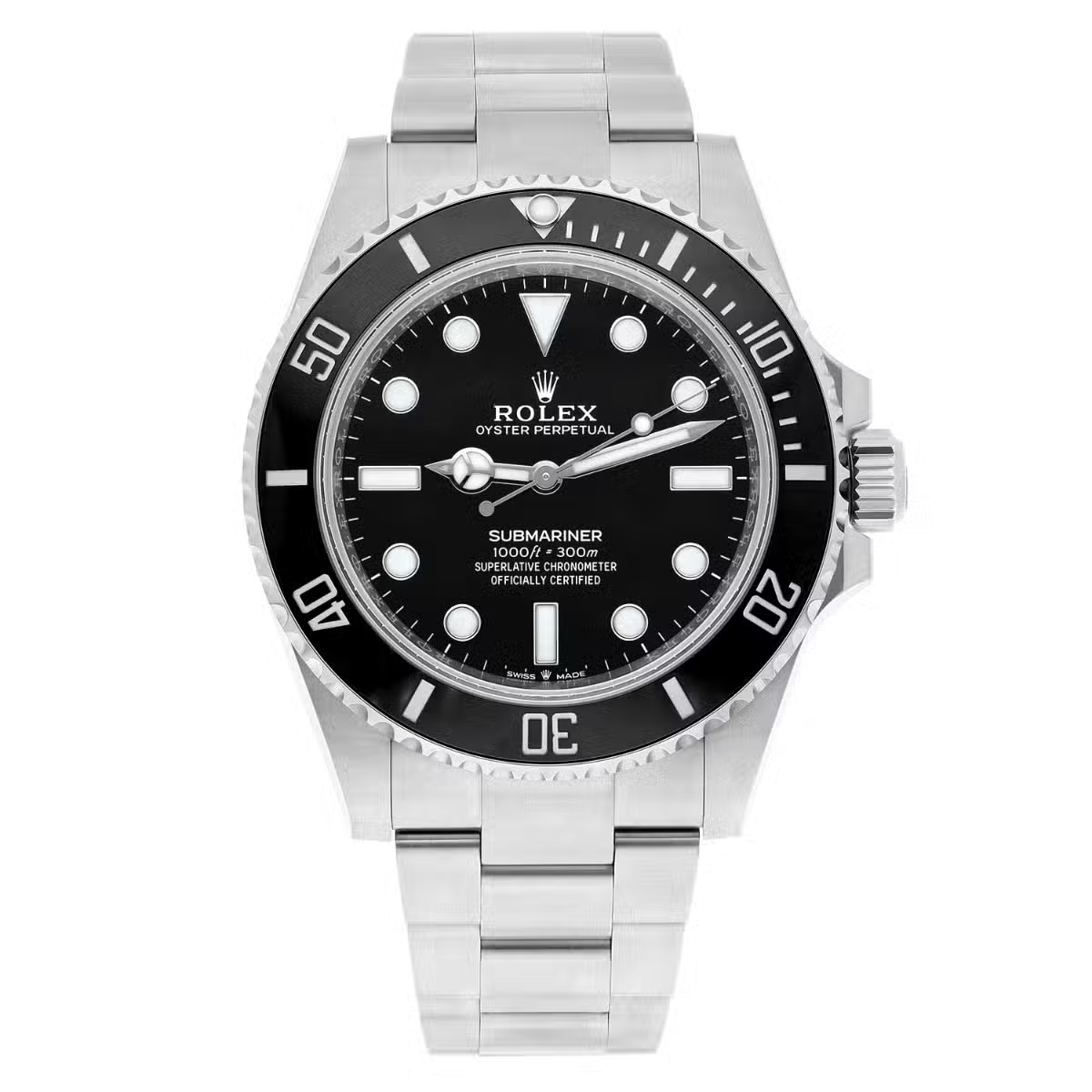
First introduced in 1953, The Submariner set the standard for professional dive watches with its 300-meter water resistance and unidirectional rotating bezel to time your immersion. Sized at 41mm, The Oyster case is made of steel and houses Caliber 3230 or 3235 movements with 70-hour power reserves. The bracelet incorporates the Glidelock extension system allowing you to adjust the bracelet up or down in 2mm increments without tools. It can be worn comfortably over diving gloves. Newer models of Submariner use Cerachrom ceramic bezels and Chromalight luminescence. Due to high secondary market demand many references sell for well over retail price.
Cartier Santos: The Original Pilot’s Wristwatch

Louis Cartier created the Santos in 1904 for aviator Alberto Santos-Dumont, who needed a watch readable during flight. This innovative design became the first purpose-built men’s wristwatch and was commercially available from 1911. The square case has exposed screws that reference the Eiffel Tower. Modern versions have the QuickSwitch system to change straps without tools and measure 9.38mm thick. The Santos-Dumont variant offers dressier proportions. Santos de Cartier provides sportier robustness.
Rolex Daytona vs Cartier Tank: Contrasting Icons
1963: The Daytona chronograph . Paying homage to Daytona International Speedway, this watch features a tachymeter bezel graduated to 400 kilometers per hour (250 mph). In 2017, Paul Newman’s exotic dial version of the Daytona fetched USD 17.80 million. Designed in 1917, its name comes from sketches of WWI Renault FT-17 tanks viewed from above. The rectangular case is meant to exude artistic sophistication. Princess Diana and Andy Warhol have both worn the Tank.
Other Popular Models Worth Thinking About
Rolex’s GMT-Master II was made for pilots who travel through multiple time zones. Functions include a 24-hour hand and a bi-color rotating bezel. First introduced in 1945, the Datejust was the first watch to feature a date window with Cyclops-like magnification. Named for its round case and protective crown bridge, the Cartier Ballon Bleu is easily recognizable. Popular variations of the Tank collection include the Cintrée and Américaine. Compare Specifications
Buyability: Rolex Submariner vs Rolex Santos Feature
Rolex designs the Submariner with an emphasis on water. With 300-meters of water resistance and an official professional diver’s certification, this watch can be taken deeper than the Santos. At only 9.38mm thick and with 100-meters of water resistance, the Rolex Santos is designed to be more versatile. Rolex created the Submariners Glidelock clasp system allowing for better micro-adjustment. New Santos Watches are almost always readily available at retail. Collectors often sell Submariners for higher than retail, while the opposite is common with Santos production models.
Pricing, Value Retention, and Availability
Entry-Level Price Points Comparison
Cartier watches are more accessible to buy. The Tank Solely retails for about USD 3,300-USD 3,600. The Rolex Oyster Perpetual 36 starts at USD 6,650. Rolex watches are twice as inaccessible as Cartier watches for the newcomer to luxury watches. Cartier consistently has several models under USD 3,500. The entry level Rolex has a USD 5,700 price tag.
Resale Value and Secondary Market Performance
Rolex watches resale far above retail. The Submariner Date retails at USD 10,650 but resells for USD 15,000 to USD 17,000. Cartier watches consistently resell below retail value. The Santos Large retails for USD 8,650 but can be found pre-owned from USD 5,500 to USD 6,500. Most entry level to mid-tier Cartier watches retain 65-85% of retail value. Many Rolex sports models double their original value.
Retail Availability and Waitlist
Rolex watches typically require a waitlist of several months up to years. Submariner wait times can be anywhere from 4 months to 3 years. Daytona’s have a waitlist of 2 to 5 years. Cartier can be purchased right off the rack at their retail stores.
Investment Potential: Which Holds Value Better
Rolex average resale prices have increased 550% from 2010 to 2026. Rolex comprises 34.2% of worldwide transaction volume while Cartier sits at 5.2%. Rolex has better investment potential.
Cartier vs Rolex: Complete Comparison Table
|
Attribute |
Rolex |
Cartier |
|
Founded |
1905 (London), relocated to Geneva in 1919 |
1847 (Paris) |
|
Founder |
Hans Wilsdorf |
Louis-François Cartier |
|
Brand Value |
CHF 15.9 billion (Brand Strength Index: 89.9) |
USD 12.20 billion |
|
Heritage Focus |
Technical innovations and tool watches |
Jewelry design and artistic expression |
|
Key Innovation |
Oyster case (1926) – first waterproof wristwatch |
Santos (1904) – first modern men’s wristwatch |
|
Design Philosophy |
Function-driven, sporty tool watches |
Elegant shapes, artistic vision, jewelry-inspired |
|
Case Shapes |
Predominantly round Oyster cases |
Diverse: rectangular (Tank), square (Santos), round (Ballon Bleu), curved (Tonneau) |
|
Signature Design Elements |
Oyster case, Chromalight markers, crown logo |
Sapphire cabochon crown, guilloché dials, blued-steel hands, Roman numerals |
|
Case Material |
904L Oystersteel (proprietary) |
Standard materials |
|
Movement Production |
100% in-house at Bienne, Switzerland |
Mix of in-house (1847 MC) and modified ETA/ValFleurier |
|
Accuracy Standard |
-2/+2 seconds per day (Superlative Chronometer) |
Standard tolerances (no COSC certification) |
|
COSC Certification |
Yes (all models) |
No |
|
Power Reserve |
~70 hours (Caliber 3235) |
~42 hours (1847 MC) |
|
Warranty |
5 years (green seal) |
Not mentioned |
|
Iconic Model #1 |
Submariner (1953) – 300m water resistance |
Santos (1904) – first pilot’s wristwatch |
|
Iconic Model #2 |
Daytona (1963) – chronograph |
Tank (1917) – rectangular dress watch |
|
Entry-Level Price |
USD 5,700 – USD 6,650 (Oyster Perpetual 36) |
USD 3,300 – USD 3,600 (Tank Must) |
|
Models Under USD 3,500 |
None |
Multiple options available |
|
Resale Value Performance |
Often trades above retail (e.g., Submariner: USD 15,000-17,000 vs USD 10,650 retail) |
Sells below retail (e.g., Santos Large: USD 5,500-6,500 vs USD 8,650 retail) |
|
Value Retention |
Exceptional (many models appreciate) |
65-85% of retail value |
|
Price Increase (2010-2025) |
550% average resale price increase |
Not mentioned |
|
Secondary Market Share |
34.2% of global transaction volume |
5.2% of global transaction volume |
|
Retail Availability |
Waitlists of months to years (Submariner: 4 months-3 years; Daytona: 2-5 years) |
Available right away, walk-in purchases |
|
Investment Potential |
Superior – appreciation driven by limited supply |
Lower – depreciates from retail |
|
Water Resistance (Typical) |
300m (Submariner) |
100m (Santos) |
|
Case Thickness (Example) |
Not specified |
9.38mm (Santos) |
|
Best For |
Value retention, technical precision, investment |
Available right away, lower prices, design variety |
Final Thoughts
Whichever brand is better, Cartier or Rolex, is entirely up to what you’re looking for in a watch. Rolex has better resale value and watches that are worth more money, but you may often see them sell for over retail prices while waiting over a year for your order to come in. Cartier has greater availability with lower price ranges and awesome designs.
If you’re looking for a watch as an investment, go Rolex. If you’re looking for beautifully designed watches that you can walk into a store and buy today, go Cartier. In the end it’s up to you.
Enjoying our watch coverage? Get more of it in Google Search.