Many people notice something unusual about Rolex watches – they use “IIII” instead of “IV” for the number four on their Roman numeral dials. Watch enthusiasts often ask why a company known for precision would make this seemingly odd choice.
The answer lies in centuries of tradition, not in any error. The Rolex IIII vs IV discussion reveals some fascinating aspects of watchmaking history. Most people might be surprised to learn that IV is actually the newer convention – “IIII” appeared commonly on timepieces and sundials throughout history. Several compelling theories explain this practice. The “IIII” creates better visual balance against the “VIII” on the opposite side. King Louis XIV’s preference for IIII’s symmetry might have played a role. Some theories suggest religious considerations, as “IV” resembled Jupiter’s Latin spelling (IVPPITER).

This piece explores Roman numerals’ role in timekeeping history and examines the theories behind this watchmaking tradition. Modern collectors and watch enthusiasts continue to find this small detail significant in their appreciation of timepiece design.
Table of Contents
The History of Roman Numerals in Timekeeping
Roman numerals and timekeeping have a rich, intertwined history that spans thousands of years. Their rise has substantially changed how certain numbers were represented, which shapes how we see numerals on modern timepieces.

Early use of additive forms like IIII and VIIII
The original Roman numeral system employed almost entirely additive notation. The number 4 in ancient Rome would often be written as IIII instead of IV. Likewise, the Romans would write the number 9 as VIIII instead of IX. Additive notation was simpler and more intuitive since it involved merely tallying symbols. During the European Middle Ages, IIII was the typical way of writing the number four until approximately the 17th century AD. Using IIII was not technically incorrect—in sharp contrast to what you may have been taught—it was simply the standard before subtractive notation became widespread.
Transition to subtractive forms like IV and IX
Subtractive notation was gradually introduced throughout the years. If there were smaller numbers in front of larger ones, they would signify subtraction. For hundreds of years, the two systems would be used interchangeably. Typographers favored subtractive forms like IV and IX when the printing press arrived. These numerals took up less space which was ideal for typesetting and printing. Now that we have established some foundation we can continue to climb. The rules were still not consistently followed until the Late Middle Ages. Education has brought us subtractive notation as the proper way to write roman numerals. However, that does not mean the Romans even adhered to these rules themselves.
Roman numerals on early clocks and sundials
Sundials were the first man-made device used to tell time. It is no surprise roman numerals found their way on clock faces. Mechanical clockmaking had begun in Europe by the 13th century. Latin was the Catholic church’s language at the time and many of the first public clocks were located on church walls. It only made sense to use Roman numerals on clocks during that time period. The clock face of the Wells Cathedral clock, dating back to the late 1300s, featured IIII instead of IV at the four o’clock mark. Fast forward to today and many clockmakers still use this knowledge we obtained from this clock.
Why Rolex Uses IIII Instead of IV
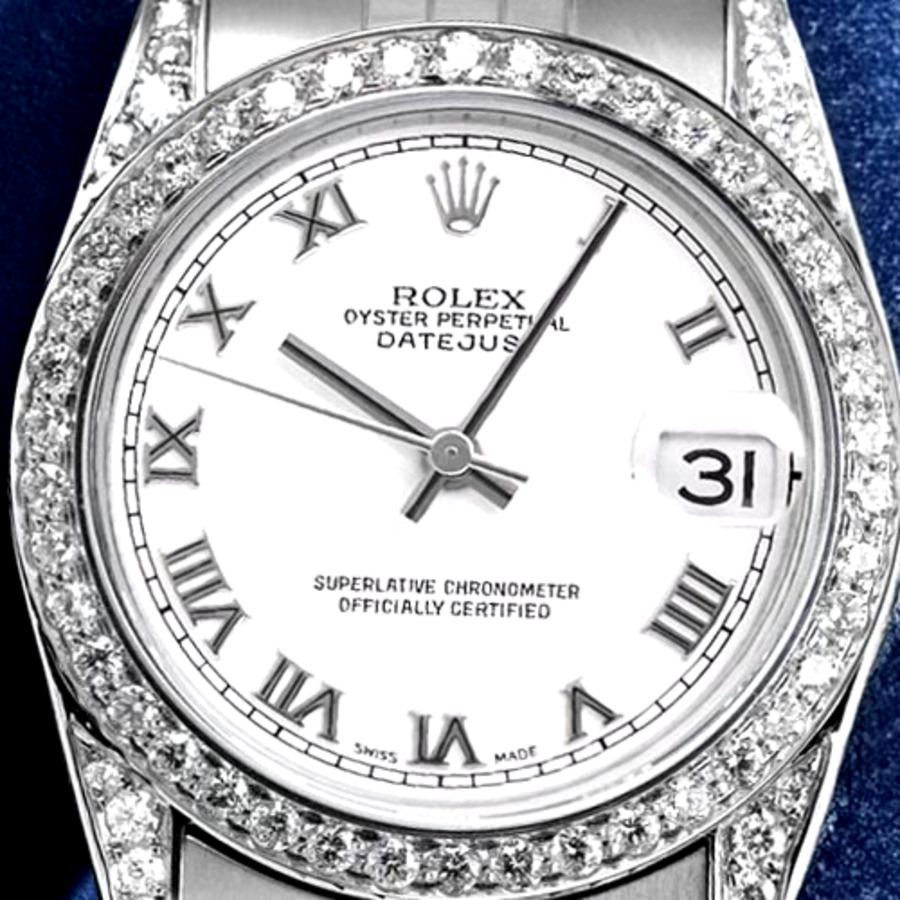
Rolex’s choice to use “IIII” instead of “IV” at the four o’clock position isn’t an oversight. This represents a well thought-out design decision rooted in horological tradition. The practice, known as the “clockmaker’s four,” shows Rolex’s steadfast dedication to esthetic principles and watchmaking heritage.
Esthetic balance on the dial
The reason Rolex uses IIII instead of IV comes down to visual harmony. Watch dials need perfect balance, both visually and mechanically. “IIII” creates a more substantial visual element at the four o’clock position. “IV” would look too thin and less substantial compared to other hour markers. Such a visual imbalance would disrupt Rolex timepieces’ carefully crafted esthetic.
Symmetry with VIII on the opposite side
The symmetrical relationship between “IIII” and “VIII” plays a vital role. The four individual strokes of “IIII” provide better visual counterweight to the robust “VIII” at the eight o’clock marker. Yes, it is true that placing the slimmer “IV” opposite the weightier “VIII” would make the dial look noticeably lopsided. This attention to symmetrical balance adds to the elegant, harmonious appearance of Rolex watches.
Grouping of numerals into I, V, and X categories
Using “IIII” instead of “IV” creates an interesting visual organization across the dial. This arrangement splits the watch face into three balanced sections:
I, II, III, IIII: Four numerals composed entirely of “I”s
V, VI, VII, VIII: Four numerals that all incorporate a “V”
IX, X, XI, XII: Four numerals that all incorporate an “X”
This tripartite division creates a subtle yet powerful sense of order. The elegant progression helps create a more harmonious dial that “IV” would disrupt. Of course, this attention to detail shows why collectors and enthusiasts value the thoughtful design elements that set Rolex timepieces apart in the luxury watch market.
Theories Behind the Use of IIII
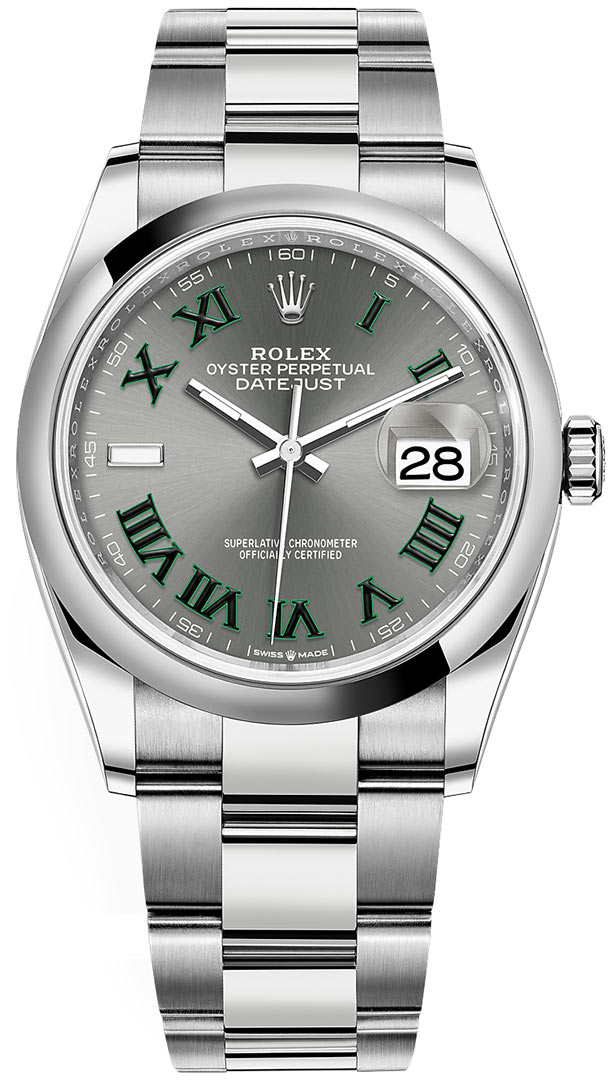
Rolex and other watchmakers’ use of IIII instead of IV on their timepieces goes beyond mere esthetics. Several intriguing historical theories help explain this unique choice.
Religious concerns with IV resembling Jupiter’s name
The Roman mythology offers a fascinating explanation. Jupiter, the supreme deity, was spelled “IVPPITER” in Latin. Ancient Romans avoided using “IV” on sundials and timepieces since it matched the first two letters of their most powerful god’s name. They believed using these sacred letters for a number might offend the gods. So “IIII” became their safe alternative.
Royal influence: King Louis XIV and Charles V
Royal priorities shaped this tradition significantly. King Charles V of France’s superstition led him to see “IV” as unlucky in the 14th century. The number seemed to subtract from his title (V), so he ordered watchmakers to use “IIII.” The Sun King, Louis XIV, also preferred “IIII” on his timepieces, though history still knows him as Louis XIV rather than Louis XIIII.
Simplified reading for the illiterate
Medieval Europe’s high illiteracy rates made “IIII” the more practical choice. People found additive notation easier to understand than the subtractive “IV,” which needed simple mathematical knowledge. The risk of confusing “IV” with “VI” from different angles also supported this choice.
Manufacturing efficiency with fewer molds
Early watchmakers discovered a production advantage with “IIII.” The additive notation required fewer molds to cast all twelve numerals, which optimized their manufacturing process.
Impact on Collectors and Watch Enthusiasts
Serious watch collectors value the ‘IIII’ on Rolex dials beyond its historical quirks. This feature plays a crucial role in their authenticity checks and investment choices.
Rarity of vintage Rolex models with IIII
Rolex watches featuring Roman numerals from the 1950s and earlier show off the traditional “IIII” marking. These timepieces are special because of their age and historical importance. You’ll find the “clockmaker’s four” most often on classic models like the Datejust and Daytona. Many enthusiasts don’t notice this detail right away. Once they spot it though, it becomes impossible to miss.
How collectors view the ‘mistake’
What some people see as an error has become a treasured part of watchmaking tradition. These “IIII” dials belong to a special category that adds to their appeal rather than taking away from it. They showcase centuries-old design traditions in watchmaking. The distinctive feature highlights Rolex’s steadfast dedication to esthetic balance and heritage. Serious enthusiasts actively look for these supposed “mistakes” that have become defining features.
Authentication tips for IIII dials
You need expertise to authenticate Rolex watches with “IIII” dials because counterfeiters often target these unique timepieces. Expert verification should happen before any purchase. Here’s a key tip: work with a trusted dealer who can check the history and compare it with known references. The overall condition needs careful attention too, as fake aging often shows up on supposedly rare dials.
Investment potential of IIII dial watches
Investment outlook stays positive for Rolex watches with the “IIII” dial. These watches tend to gain value faster than regular models. Their worth comes from both rarity and historical significance. Market prices may go up and down, but well-kept pieces with original documentation always fetch top dollar. Note that condition affects value a lot – watches with proper papers and minimal wear bring the highest prices.
Conclusion
Odd traditions have been a part of watchmaking since day dot. Using “IIII” instead of “IV” has been carried through for hundreds of years. Rolex continues that tradition because they’re committed to the symmetry and beauty that it provides to their watches.
Take a second to really examine your Rolex.
Notice how “IIII” balances out “VIII”. Also note that by using IIII there are now 3 groups of numbers on the dial. Symmetrical and classy – just like your Rolex.
The History Behind Using IIII Instead of IV
While there are many theories as to why watchmakers use IIII instead of IV, here are some of the most interesting:
Religious beliefs relating to the name of Jupiter (IVPPITER). Kings such as Louis XVI placing more importance on the “VIII” numeral. Easier for the illiterate to read. Manufacturing shortcuts.
These are all very valid reasons that helped make IIII the standard for watchmakers.
These unique watches are sought after by collectors and watch enthusiasts around the world. If the dial has the classic Roman numerals with the IIII many times you can command higher prices from your vintage Rolex. This is especially true if they’re in nice condition with all paperwork.
You may not even notice it when looking at your watch. However, once you know it’s there you’ll see it every time you look at your Rolex. IIII is such a cool way to differentiate yourself from the rest of the watches out there.
Enjoying our watch coverage? Get more of it in Google Search.