
Steve McQueen’s Watch Collection: What Makes These Timepieces Worth $100,000+ Today
Steve McQueen watches command astronomical prices that might make you look at your own timepiece differently. The “King of Cool’s” personal watches have sold for

Most people assume a wealthy family or large corporation owns Rolex. The truth might surprise you. This prestigious watchmaker operates under the control of a charitable foundation. The Hans Wilsdorf Foundation maintains the controlling interest in Rolex and makes decisions based on long-term objectives rather than short-term profits.
Rolex thrives with this unique ownership structure. The company crafts approximately 2,000 watches per day and delivered 1.24 million timepieces in 2023. When learning about Rolex’s history, you’ll find that the brand’s revenues this is a big deal as it means that $5 billion annually with no shareholders to answer to. The company’s distinctive model stems from the Hans Wilsdorf Foundation’s complete ownership of the Rolex watch company. This creates an autonomous business entity focused on lasting success rather than quarterly profits.
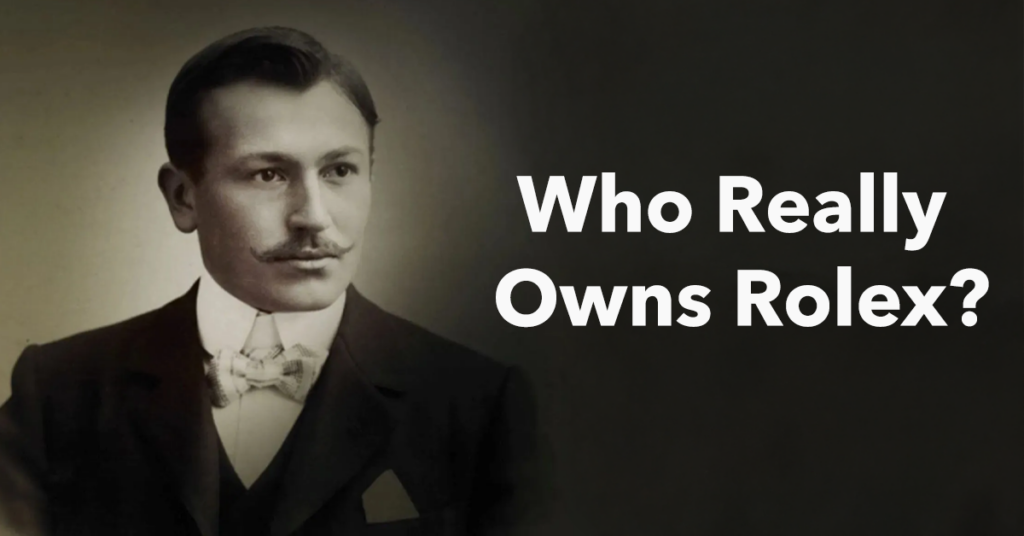
Rolex’s remarkable story started because one man believed wristwatches would succeed when pocket watches ruled the market. The story of who owns Rolex today begins with understanding how this iconic brand emerged through its founder’s remarkable vision.
Hans Wilsdorf was born in Bavaria, Germany in 1881. Life threw him an early challenge when he became an orphan at age 12. His boarding school education and natural talent for languages—English, French, and German—shaped his future career path.
The year 1900 marked the beginning of Wilsdorf’s professional life. He worked for Cuno Korten in La Chaux-de-Fonds, Switzerland. His role as a multilingual correspondent for a Swiss watch exporter sparked his love for precision timepieces and taught him about international watch sales.
Wilsdorf stood out because of his groundbreaking ideas about wristwatches. His own words from “The Story of Rolex” (1948) tell the story: “In those days, a wrist-watch was considered a joke. The few who wore them were laughed at”. People doubted these small timepieces could work properly or stay accurate with arm movements. Notwithstanding that, Wilsdorf knew “the wrist-watch had a brilliant future before it”.
Wilsdorf moved to London in 1903 and later joined forces with his brother-in-law, Alfred James Davis (Ana Wilsdorf’s husband). The duo created Wilsdorf & Davis in 1905, when Wilsdorf was just 24 years old.
The company started by distributing timepieces throughout Great Britain and the British Empire. Though not a watchmaker himself, Wilsdorf ran the company by importing precise Swiss movements from Hermann Aegler in Bienne, Switzerland. These movements went into high-quality cases made by manufacturers like Dennison.
The company’s earliest watches had “W&D” stamped inside their casebacks. Following the custom back then, jewelers who bought these timepieces added their names to the dials.
Wilsdorf & Davis became a major force in British watch commerce by 1908, just three years after starting. The partners knew they needed a unique brand name for their products—a bold move that went against industry traditions.
The name “Rolex” received its Swiss trademark on July 2, 1908, followed by international registration in 1913. The story behind this name is fascinating.
During a 1958 speech celebrating the name’s 50th anniversary, Wilsdorf shared: “One morning, while riding on the upper deck of a horse-drawn omnibus along Cheapside in the City of London, a genie whispered ‘Rolex’ in my ear”.
Beyond this captivating story lay practical reasons. Wilsdorf wanted a name that would fit on watch dials, sound good in any language, be easy to spell, and stick in people’s minds across the world.
Some people hypothesize the name comes from “horlogerie exquise” (French for “exquisite watchmaking”), but Wilsdorf stuck to his story about the whispered inspiration. Whatever its origins, the name helped create one of the world’s most recognized luxury brands.
Personal tragedy often changes life in unexpected ways. Hans Wilsdorf lost his wife Florence in 1944. This loss sparked a revolutionary business decision that changed Rolex’s future ownership and operations forever.
Wilsdorf created the Hans Wilsdorf Foundation in 1945, just one year after his wife passed away. His reasons were deeply personal. He had become an orphan at age 12 and was now a 63-year-old widower without children or direct heirs. These circumstances made him think hard about the future of his prestigious watchmaking empire.
He wanted to make sure Rolex would thrive after he was gone. As the company’s only owner, Wilsdorf needed a structure that would protect Rolex’s stability and excellence. He also wanted to give the company a charitable purpose that matched his modest nature.
The foundation meant more than just business—it stood as a tribute to his wife, Florence Frances May Wilsdorf-Crotty. This structure would help create a lasting legacy to benefit the world while protecting the Rolex brand he had built since 1905.
The ownership changed hands step by step. Wilsdorf started the foundation in 1945 but kept control during his lifetime. His will transferred 100% of his shares to the foundation after his death in 1960.
This created a unique trust structure that the luxury watch industry had never seen before. The foundation became Montres Rolex SA’s only owner, which meant the company would live on past its founder and stay true to his vision. Eight trustees now manage Rolex’s business affairs, up from the original five.
The foundation serves as the parent company and holds all Rolex SA shares. This means Rolex belongs to a Swiss charitable organization, not a family, person, or corporation.
Wilsdorf designed an ownership structure unlike anything else in luxury goods. Rolex SA makes and sells luxury watches for profit, but its parent—the Hans Wilsdorf Foundation—operates as a Swiss non-profit organization.
This unusual setup offers big advantages. Wilsdorf protected Rolex from takeovers, short-term profit pressures, and the ups and downs that often affect public luxury brands.
The foundation has no shareholders asking for dividends. Rolex’s profits go to two main areas: making the company better and supporting good causes[122]. Reports show the foundation donates between 100-150 million Swiss francs annually to various charitable projects.
Swiss law adds more benefits. The Hans Wilsdorf Foundation doesn’t have to share financial details, including profits or charitable gifts. This privacy matches Wilsdorf’s wish for a foundation that works quietly but gets results.
The setup has lasted remarkably well. Over 60 years later, this foundation-based ownership remains unchanged. Rolex can work without outside shareholders or quarterly profit pressure. This lets the company focus on long-term excellence instead of quick gains—exactly what Hans Wilsdorf wanted when he created this innovative model.
The world’s most prestigious watch brand has a mysterious ownership structure that puzzles many luxury enthusiasts. The Hans Wilsdorf Foundation owns 100% of Rolex SA, making its business model different from almost every other major luxury brand.
Eight trustees sit on the foundation’s board and guide Rolex’s strategic direction. These trustees share decades-long connections with the company to maintain its vision and values. The board serves in an advisory capacity while letting Rolex executives independently manage daily operations. This setup lets the company prioritize long-term quality and brand building instead of meeting short-term financial goals.
Rolex ownership follows a simple structure: the Hans Wilsdorf Foundation holds 100% of Rolex shares. No external shareholders expect dividends or just need quarterly profit growth. The foundation itself has no owners or shareholders. This creates a unique system where profits go directly to the foundation, which then decides how to split funds between company reinvestment and charitable work.
Rolex does not belong to any family. Ownership moved completely to the foundation after Wilsdorf died in 1960. Some sources suggest the Rolex Watch Group operates under Wilsdorf family descendants’ guidance, but this contradicts more reliable sources. Trusted sources confirm that no individual owns the company’s equity—a charitable trust that cannot distribute profits owns the whole business.
Rolex’s private ownership brings specific benefits that help maintain its legendary status:
Long-term view: Without pressure from external shareholders, Rolex plans far into the future.
Quality focus: Money flows into innovation, better craftsmanship, and advanced technology rather than shareholder payments.
Financial independence: Reinvested revenue creates a very strong financial position.
Creative autonomy: Watchmakers and designers work with complete creative freedom.
This ownership model helps Rolex stay focused on prestige and relevance rather than short-term profits. The company maintains its steadfast dedication to excellence while supporting meaningful charitable initiatives worldwide.

Rolex stands out from almost every luxury market competitor with its extraordinary business model. The company’s unique ownership structure gives it unprecedented independence in today’s corporate world.
Jean-Frédéric Dufour has led Rolex as CEO since 2015, bringing more than 20 years of watchmaking expertise to the position. An Executive Board of Directors manages various functional departments like finance, manufacturing, and design at the operational level. The Hans Wilsdorf Foundation’s board gives Rolex executives complete autonomy to direct day-to-day operations. This independence covers everything from product development choices to marketing strategies without shareholder interference.
Rolex channels its substantial revenue into two main areas instead of distributing dividends like traditional corporations. The company puts significant resources into advancing research in horology and materials science. It also maintains strict quality control standards, supports in-house manufacturing facilities, and invests heavily in employee development and long-term careers. This self-funding approach helps Rolex stay financially independent while pursuing excellence without compromise.
Patrick Heiniger’s leadership in the 1990s saw Rolex begin an aggressive integration strategy by acquiring suppliers to control all production aspects. The company later consolidated twenty-seven sites into four main facilities. Rolex now creates everything from proprietary gold and steel alloys to mechanical movements in-house. Despite producing 800,000 to a million watches yearly, skilled craftsmen still make most Rolex watches by hand.
Freedom from external shareholders gives Rolex unmatched strategic flexibility. The company focuses on long-term quality and brand building without quarterly earnings pressure. The lack of public disclosure requirements helps Rolex maintain financial privacy and protect competitive information and strategic planning. This independence allows the company to stay true to its founder’s vision of creating timepieces that represent precision, reliability, and timeless elegance.
The Hans Wilsdorf Foundation, which owns Rolex, does much more than make luxury watches – it’s a major force in global giving. This charitable organization pours resources into expanding human knowledge and helping solve society’s challenges.
The Foundation quietly gives grants to Swiss universities and funds scientific research through many educational programs. This matches perfectly with Hans Wilsdorf’s belief that education opens doors to new chances.
The 47-year-old Rolex Awards for Enterprise, created to mark the Oyster watch’s 50th anniversary, celebrates innovative individuals who tackle global challenges. Winners get funding and worldwide recognition every two years for their work in areas from new technology to wildlife protection.
The foundation has grown into a dedicated supporter of cultural institutions over the decades. Their contributions help save historic buildings, bring musical performances to life, and push artistic excellence forward across the globe.
Money flows from the foundation to green initiatives that focus on saving oceans, studying climate, and developing sustainable solutions. On top of that, it backs community programs that boost education, healthcare, and poverty reduction, particularly in Switzerland.
The way Rolex is owned creates something special – a perfect blend of business success and giving back to society. The Hans Wilsdorf Foundation’s ownership explains why this luxury brand continues to thrive commercially while making real changes in people’s lives.
Rolex remains a unique player in the luxury market. Unlike its competitors under wealthy families or corporate giants, this prestigious watchmaker operates entirely under a charitable foundation’s control. This distinctive ownership structure has definitely shaped the brand’s identity and success.
The Hans Wilsdorf Foundation lets Rolex prioritize excellence over quarterly profits. The company channels resources into research, quality control, and vertical integration since there are no shareholders asking for dividends. Many wonder why other luxury brands don’t follow this model, but few founders showed Wilsdorf’s foresight in creating this perpetual trust structure.
The foundation’s ownership explains Rolex’s steadfast dedication to quality. Manufacturing standards stay strict, and the company invests heavily in state-of-the-art technology without pressure to cut corners for quick profits. This independence has without doubt made Rolex watches synonymous with precision and reliability.
This ownership model’s philanthropic side deserves attention too. The foundation extends Wilsdorf’s vision beyond watchmaking through the Rolex Awards for Enterprise and support for educational, scientific, and cultural programs. Anyone buying a Rolex becomes part of a business model that balances commercial success with meaningful social disruption.
The answer to “Who owns Rolex?” turns out to be way beyond what most people expect. The lack of traditional ownership has created a luxury brand that runs on autonomy, maintains exceptional standards, and contributes to global philanthropy. Hans Wilsdorf would be proud of this lasting legacy.
Steve McQueen watches command astronomical prices that might make you look at your own timepiece differently. The “King of Cool’s” personal watches have sold for

Most people assume a wealthy family or large corporation owns Rolex. The truth might surprise you. This prestigious watchmaker operates under the control of a

Rolex watches mean much more than luxury status symbols to elite warriors in special forces. These prestigious timepieces can save lives in the intelligence and