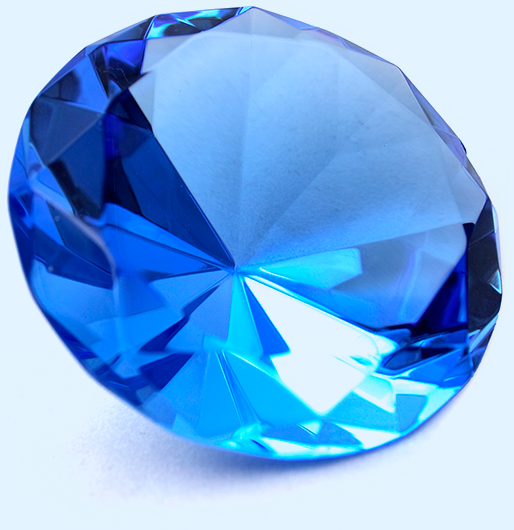
Sapphire Crystal is a gorgeous choice for use in engagement rings as they are lustrously beautiful and feature an incomparable blue color. Use the following sapphire guide to make your way through the world of this gemstone and know about its ins and outs.
Choosing a Sapphire
What are the Characteristics of Color in Sapphires?
Uniformity is one of the most important features of a sapphire with respect to its color. We perform a thorough analysis of each and every gemstone, making sure the color is even and there’s no zoning. Splitting it up, color is evaluated on 3 different parameters:
Hue
Tone
Saturation
Hue
A sapphire’s hue is its actual body color. Hue is made up of two parts, one is the color that is most noticeable and has the strongest presence and second is made up of a multitude of minor colors that are minutely observable. For instance, violet-blue, greenish-blue and violet-pink are some examples of hues. Our blue sapphires are of the highest quality and fall within a range of greenish-blue and violet-blue. There are also specifically colored sapphires including orange, yellow, peach, pink, purple, white and green.
Tone
In a general sense, tone is the depth of a color. Comparing it in terms of sapphires, a sky blue sapphire will have a different “tone” than a midnight blue sapphire. The color/hue would be the same but another property would be different, which is its tone. A sky blue sapphire has a lighter tone compared to a midnight blue sapphire.
Saturation
The purity of a sapphire’s color is called its saturation. Saturation can tell whether a gem has brown or gray hues in it. Sapphires that have the greatest levels of saturation are the rarest and appear extremely clean. A strong saturation is also called a “vivid” saturation.
Carat Weight & Size | How are Sapphires Measured?
Gems have varying densities, which means that a diamond and a sapphire of the same size won’t have the same carat weight. Sapphires are heavier than diamonds so 1 carat sapphire is smaller in size than 1 carat diamond. Size in mm provides a much easier way for setting and selection. Usually, a round sapphire of 1 carat is 6 mm in measurement.
Sapphire Cut | What makes a well-cut Sapphire?
In order to bring out the true personality of a sapphire, a personalized cut is essential. Unlike diamonds, sapphires don’t have “ideal” or “super ideal” cuts, which means, each and every sapphire crystal must be cut in custom dimensions to get out the best color and brilliance. Sapphires come in a great many variety of colors and have specific properties attributed to them. As there is no standardization, sapphire cuts tend to be ungraded. Jewelers have come up with their own set of specifications to define a sapphire’s cut grade that ultimately determines its price.
A sapphire that has been well-cut will show its natural color while at the same time have enhanced brilliance. Gemstones that have lighter tone are usually cut deeper so that intensity can be added to the existing color. Very dark sapphires are usually cut shallower so that more light can be reflected within the gemstone. This leads to a brighter color.
The edges of a sapphire should not be unsymmetrical at any point, irrespective of its shape. On the gem’s crown, there are facets which should also be even in shape and size. The largest of these facets, known as the table should especially be symmetrical and centered, otherwise the sapphire’s beauty will be degraded. Also, tilting the sapphire should cause brighter flashes and absolutely no dull spots.
Sapphire Clarity | How is Clarity Described in Sapphires?
Compared to diamonds, clarity in sapphires is a much different subject. Sapphires develop in underground environments that are surrounded by trace minerals. These minerals essentially get trapped within the gemstone and reveal themselves in the form of small crystals, which are also called inclusions. A sapphire may have a high “depth” of color that may mask these inclusions. If inclusions aren’t visible from the naked eye, then the sapphire is termed as “eye clean” and holds a high value.
About Sapphires
Standard Heat Treatment | What is Heat Treatment in Sapphires?
Heat treatment is an accepted industry practice to improve sapphires’ clarity, color and appearance. Many sapphires get this treatment naturally as they are found close to the earth’s thermal vents that gives them a very unique color. However, sapphires that are found in “cold” spots are given synthetic heating. Note that no harmful radiations or chemicals are involved and the practice is common with majority of the sapphires unearthed today.
Treatments to Avoid | How to determine if a Sapphire has been Abused during Heat Treatment?
There are several treatments that are not yet accepted by the gemstone industry and actually diminish the value of a gemstone. The easiest and most used way to determine the originality of a sapphire is by tracking its origin. We provide a detailed document linking our sapphires’ to their origin.
Irradiation
Irradiations can lead to permanent changes in color at the most basic molecular level. Reputed jewelers will usually state this if they have carried out the treatment as the resultant color is far from the one nature has to offer.
Fracture Fills
This treatment reduces the noticeability of the cracks on a gemstone and improves its clarity. The treatment is not a permanent one and can be withdrawn from the sapphire. This can uncover any irregularities in the diamond that have been encapsulated.
Surface Dyes
This is also not a permanent treatment and is used to add color to the sapphire. The treatment is used to hide the true properties of a sapphire and sell it at a higher price.
Beryllium
A chemical element that can be added to sapphires to improve their appearance. Unfortunately, this practice is already very common and hard to detect, requiring destructive procedures.
Caring for Your Sapphire
Sapphires do require maintenance but they don’t require trips to the jeweler. They can be easily cleaned at home with warm water and a dash of dish washing detergent, or any chemical that has ability to degrease it. Moisturizers, anti-static agents and abrasives however should be avoided at all costs. Use a toothbrush to scrub the sapphire and finally dry it with a cloth. Soak the gemstone for 20 minutes for advanced cleaning and then follow the same steps as above. This soaking method should only be used for sapphires that have been set in platinum or gold.
The audemars piguet arnold schwarzenegger collaboration stands as one of the most successful partnerships in luxury watchmaking, with 11 different timepieces created together. Arnold holds
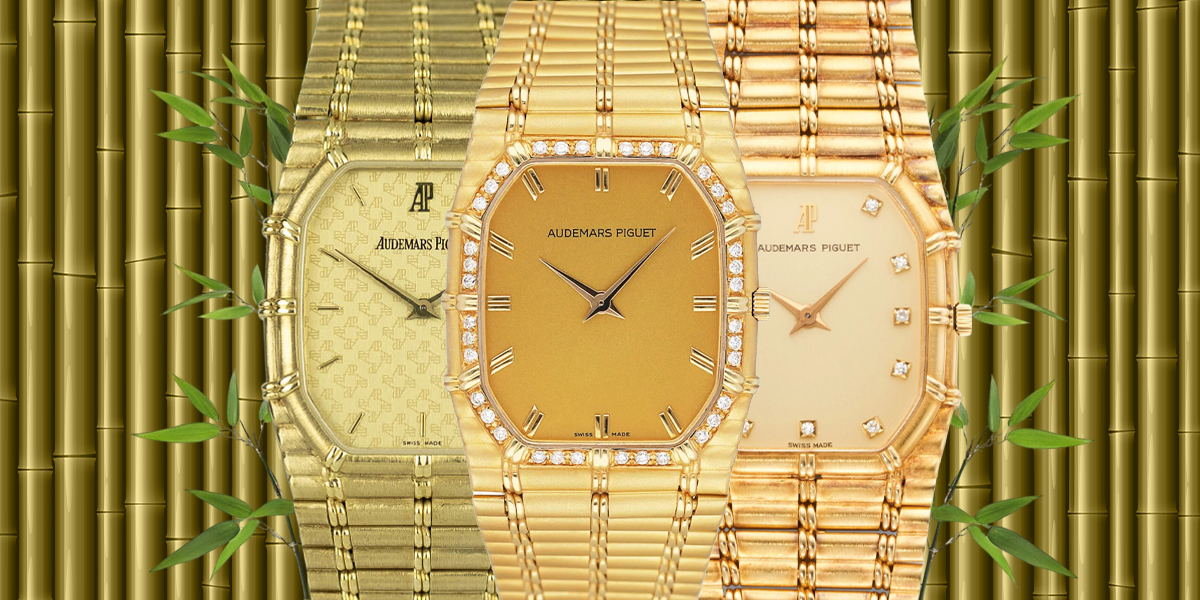
The Audemars Piguet Bamboo has quietly transformed from an obscure 1980s rarity into the ultimate vintage grail. Once slept on compared to other AP models,