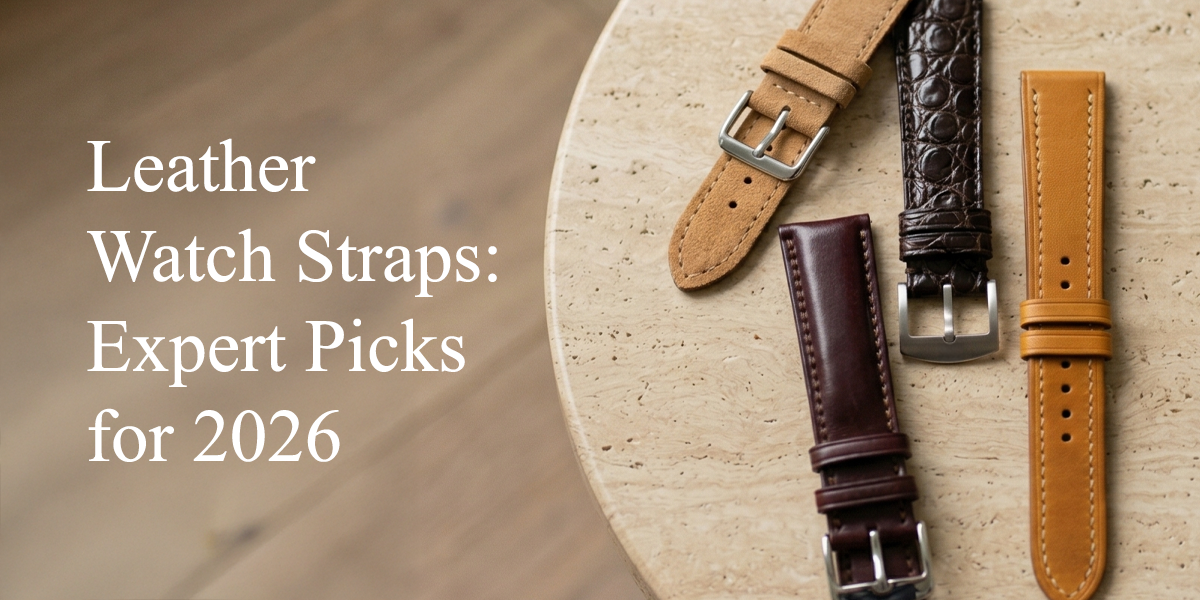
11 Types of Leather Watch Straps: Expert Picks for 2026
Choosing among the types of leather watch straps can turn your timepiece from ordinary to extraordinary. Attaching watches to leather straps dates back to the

Choosing among the types of leather watch straps can turn your timepiece from ordinary to extraordinary. Attaching watches to leather straps dates back to the Boer Wars of the late 19th Century, and the tradition has evolved into a sophisticated craft. Leather remains the most versatile material for watch bands. It offers endless color options and ages beautifully. Understanding different types of leather watch straps helps you select the best types of leather for watch straps that match your style and budget. This piece explores 11 leather watch strap types with expert recommendations for 2026.
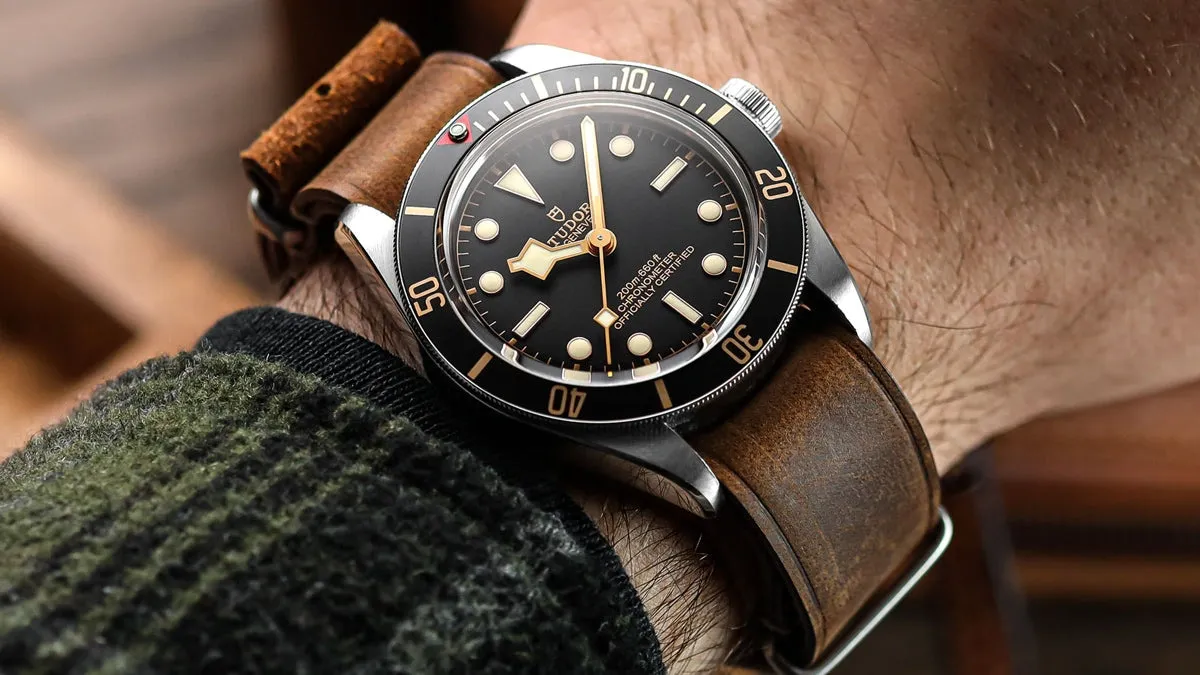
Image Source: zuludiver
Calfskin stands as the most popular choice among different types of leather watch straps. People prize it for its fine grain and smooth texture. The silky surface delivers supreme comfort on your wrist. The material’s natural suppleness allows it to conform to your wrist shape over time for an individual-specific fit. This leather possesses a flexibility that surpasses deer or elk skin and creates a softer look and feel.
The aging process sets calfskin apart from synthetic alternatives. Your strap develops a natural patina over time. This enhances its attractiveness and usability rather than diminishing it. Grained calfskin versions offer particular robustness and make them a top material choice for premium watch straps. You can select from an extensive range of finishes. Waxed, brushed, matte and glossy options each bring their own character to your timepiece.
Calfskin excels in versatility and transitions from weekend wear to professional settings with ease. The material needs minimal maintenance compared to exotic leathers. You can clean your strap with just a damp cloth and dish detergent. More, calfskin costs by a lot less than exotic options while still delivering elegance and refinement.
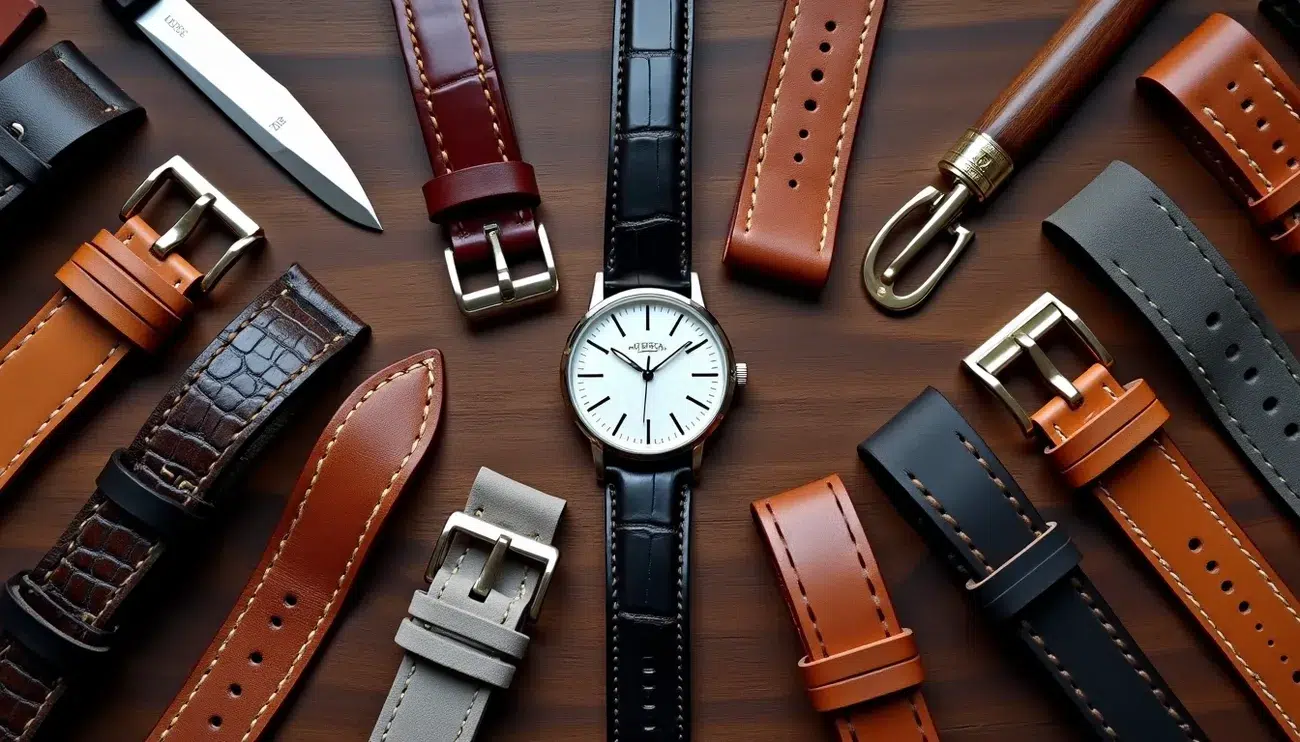
The comfort factor extends to daily wear situations. Your strap feels soft from the first time you wear it. This eliminates break-in periods common with other leather types. Calfskin suits both vintage timepieces and modern watches.
Durability presents the biggest problem. Calfskin offers less resilience than thicker hides. You may just need to refurbish or replace your strap over time. The material performs poorly in water resistance and wears out with exposure to moisture. Certain calfskin straps can feel sticky against your skin in severe heat and humidity. These straps demand regular care to maintain their suppleness and prevent cracking.
Calfskin adapts to multiple occasions and watch styles. The smooth texture and matte finishes make it ideal for dress watches at formal events. Exotic leathers might seem excessive for everyday situations, but calfskin strikes the perfect balance between sophistication and practicality.
Your calfskin strap pairs with chronograph watches and adds refinement without appearing overly formal. Collectors and casual watch enthusiasts appreciate how calfskin complements various timepiece esthetics. It works with understated classics and bold statement pieces.
Calfskin watch straps range from £7.95 to £28.95. The price depends on construction and finish. Rally padded versions start at £7.95. Classic calf leather straps cost £15.95. Premium options like Tejus calf leather reach £28.95, and saddle calf leather sits at £26.95. This pricing positions calfskin as an available entry point into quality leather watch strap types. You won’t need the investment required for exotic materials.
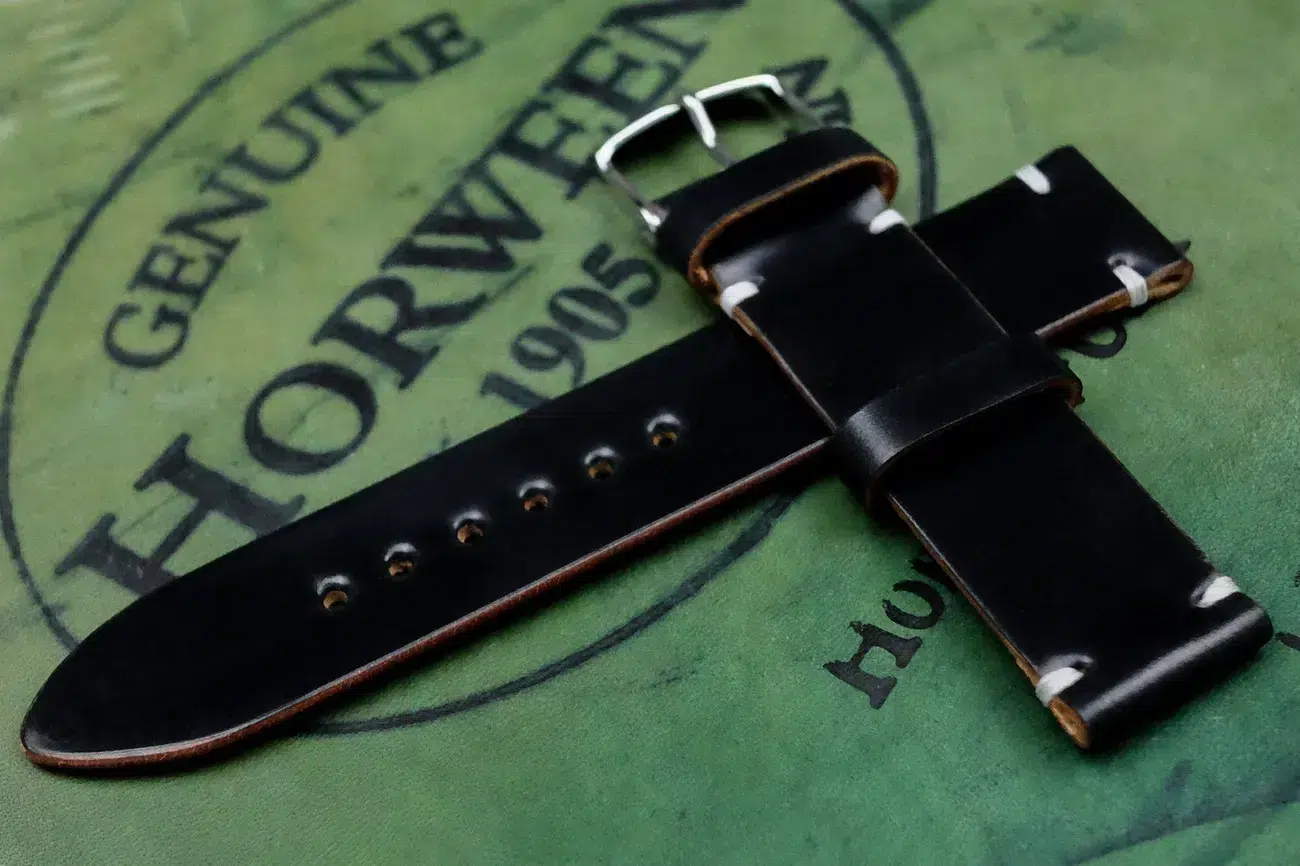
Image Source: The House Of Straps
Shell cordovan originates from a fibrous flat muscle beneath the rump of a horse. It’s a membrane positioned between two epidermis layers at the back of the horse’s hindquarters. This material comes from connective tissue composed of collagen fibers, not from hide like conventional leather. The result is a dense, completely pore-free surface. The tanning process alone requires six months of skilled artisan work. It includes tanning, stuffing, shaving and polishing stages. Horween Leather Company in Chicago stands as the world’s preeminent producer and maintains the exact formula developed in 1905.
The resulting material exhibits a smooth surface with a glossy finish that resembles high-quality lacquer coating. Shell cordovan maintains its shape better than other leathers and resists stretching over time for a longer-lasting fit. The non-creasing ability sets it apart. Other leather types develop permanent folds and wrinkles. The material develops a beautiful patina as it contacts your skin, sweat and natural oils. This creates a unique character that reflects your lifestyle.
Durability ranks as shell cordovan’s biggest advantage. The material resists breaking, cracking, or losing its shine over time. The dense, pore-free surface provides natural water resistance, though you should still avoid prolonged moisture exposure. The comfort factor is just as impressive. The smooth connective tissue lacks the pebbled texture of skin-derived leather.
The material’s esthetics deliver a luxurious appearance with rich colors. These include classic black, deep green and rich reddish-brown. Your strap gains substance without visual extras, thanks to the dense feel and smooth surface.
But shell cordovan costs far more than calfskin. The color variety remains limited due to the specialized production process. Thick shell cordovan applications lose some tactile appeal. This makes it less suitable for sporty watch straps. The material requires careful maintenance. You should avoid leather creams, conditioners and cleaning products.
Shell cordovan excels in thin, dressy applications paired with dress watches and chronographs. The material looks especially good on smaller, under-the-radar timepieces. The pleasant sheen enhances rather than overwhelms. You’ll find it ideal when seeking comfort and refined esthetics to attend formal occasions.
Shell cordovan straps range from $75.00 to $200.00. Budget options start at $75.00 and represent significant value compared to the usual $100.00 minimum. Premium versions can reach $200.00. This reflects the labor-intensive production and limited supply.
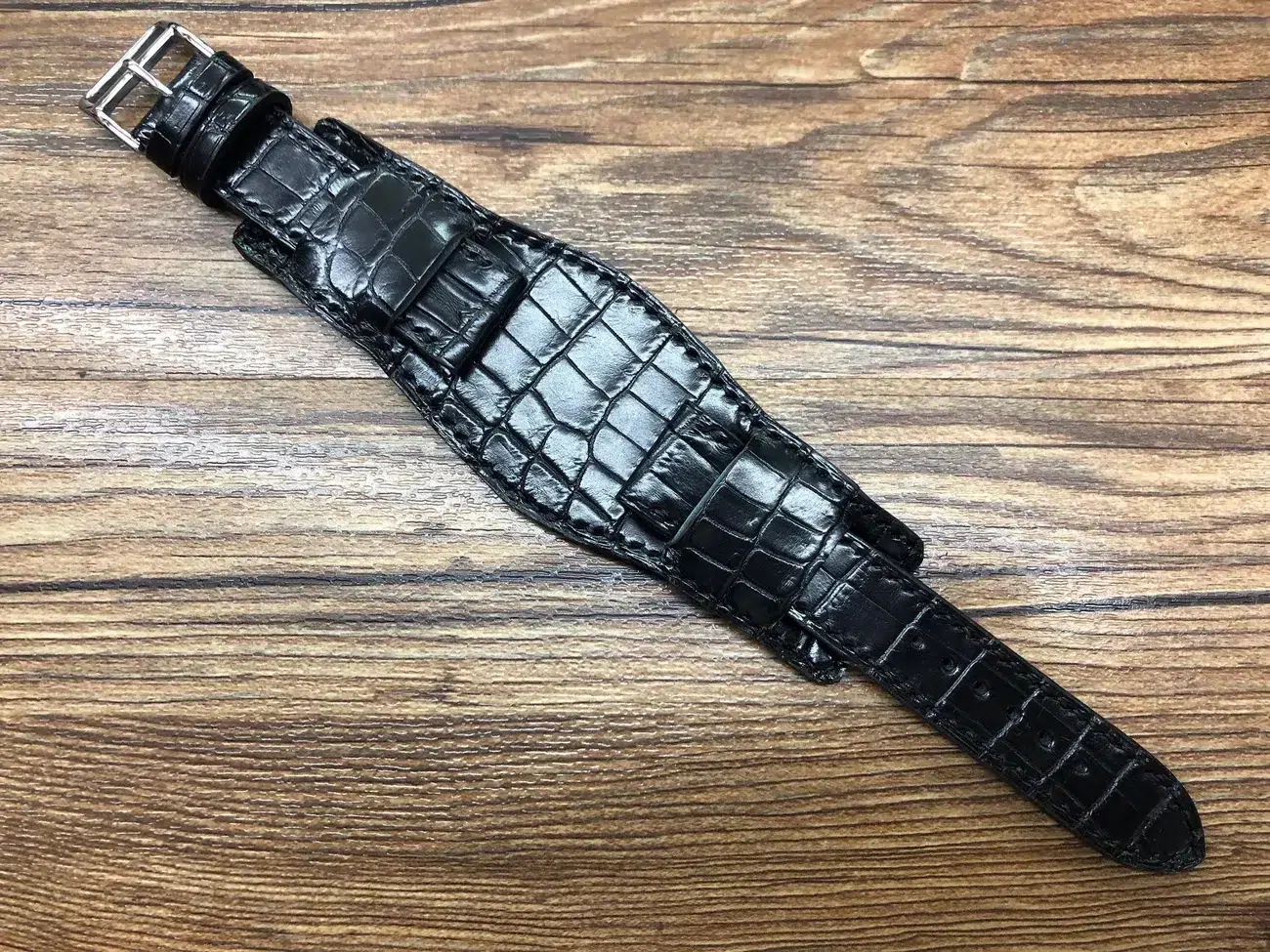
Image Source: Etsy
Alligators and crocodiles both belong to the Crocodilian family, yet their differences create distinct strap characteristics. Alligators feature flat, wider snouts adapted for crushing turtle and snail shells. Crocodiles possess pointed, V-shaped snouts suited for catching fish. The scale patterns tell different stories: alligator leather displays more uniform, symmetrical square belly scales with recognizable umbilical scars that resemble webs between tiles. Crocodile leather shows irregularity in pattern with visible pores (hair follicle holes from sensory organs) that add visual texture and depth.
American alligator skin ranks as the most luxurious of all Crocodilians due to its durability, aging properties and flexibility. The belly skin represents the softest, most vulnerable part and creates flat, strong leather suitable for premium goods. Side skin gets used most often since it costs less than belly and back cuts while maintaining superior attributes compared to crocodile or caiman skins. Back cuts feature bony bumps called ridges that deliver a wilder appearance.
These exotic straps offer exceptional durability. The supple, silky texture provides flexible wear with a short break-in period. Your strap feels great on the wrist from day one and combines elegant sophistication with practical comfort. The material resists water and stains, making it suitable for active lifestyles. Similarly beneficial, alligator leather proves hypoallergenic for sensitive skin. A quality alligator strap lasts two to three years with proper care and outlasts other leather types by a lot.
On the other hand, premium exotic materials command higher prices. Genuine alligator leather watch straps cost more than mid-priced options like cowhide or ostrich. Maintenance requires attention: avoid oil and water exposure, skip maintenance ointments and wipe with a damp cloth when needed.
Alligator straps excel when you want to dress up your watch and project elegance. The unique patterns and pliability make them ideal for formal occasions and dress watches. Collectors appreciate how these straps add sophistication while delivering exceptional wrist comfort. The refined appearance suits luxury timepieces and status-conscious applications.
Prices for genuine alligator straps start from $150.00, with average ranges between $190.00 and $250.00. The premium reflects the material’s luxurious status among different types of leather watch straps and the skilled craftsmanship required for proper construction.

Image Source: CNS Watch Bands
Suede delivers a velvety texture unlike any other material in the watch strap types category. The creation process involves sanding and brushing the underskin (flesh side) of a split hide after tanning. This technique produces leather from the underside of animal hide, which is cowhide or calfskin in most cases, though manufacturers also use sheep and goats. Full-grain leather employs the tougher outer layer. Suede comes from the inner split and results in a soft, napped finish with a matte appearance.
The material possesses exceptional pliability and suppleness, though it sacrifices durability compared to full grain and top grain leathers. The tightly packed fibers create surprising resilience despite the soft texture. Your strap develops character through a unique patina as the nap flattens or darkens with age and use. This creates a lived-in esthetic many collectors seek.
Suede excels in comfort right away. You feel almost nothing on your wrist due to the soft texture against skin. The material requires minimal break-in time and conforms to your wrist within hours. Visual warmth radiates from the matte texture and adds depth to your watch’s appearance. The material takes color well and offers rich, nuanced hues in earthy tones from deep olive and navy to sand and tan.
In spite of that, water represents the biggest problem. Suede lacks inherent water resistance, and moisture exposure causes damage that cannot be reversed, along with discoloration and texture alteration. Light-colored straps attract dirt quickly and require extra care. The napped finish collects dust and dirt particles more than smooth leather. Sweat exposure creates unpleasant effects on the material. So you must keep suede away from rain, accidental spills and humid conditions.
Suede pairs well with vintage chronographs, dress watches, minimalist Bauhaus designs and heritage-inspired timepieces. The material shines during autumn and winter months due to its cozy tactile appeal, though lighter tones work well in spring. Your suede strap transitions from business settings to evening occasions with ease.
Use a suede brush to restore the nap and remove light dirt for maintenance. Apply suede protector spray for stain barriers and avoid direct sunlight to prevent fading. Premium suede straps maintain their character for 2-3 years with proper care and regular rotation.
Suede watch straps start at $40.00 and reach $120.00 or more. The ideal range for excellent value and quality sits between $60.00 and $80.00. This positions suede among available leather watch strap types for those seeking distinctive texture without exotic material investment.
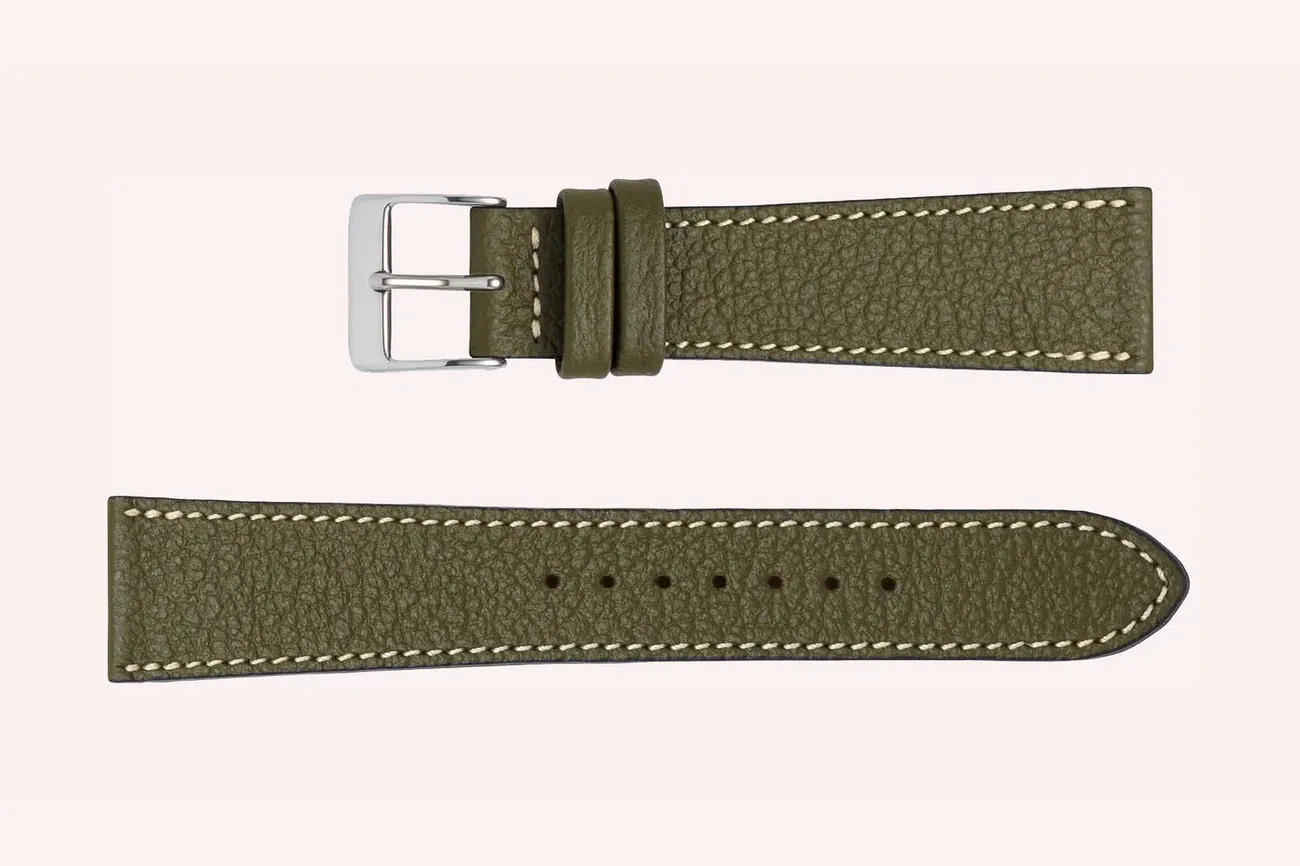
Image Source: LumeVille
Goat leather emerged as a notable player among different types of leather watch straps around 2018. Many enthusiasts hadn’t encountered goat leather straps before that time, but the material gained traction in the watch industry fast due to its distinct properties. Also known as chévre, goat leather combines hardwearing characteristics with exceptional softness.
The material stands out for its lightness and suppleness. This creates ideal conditions for comfortable daily wear. A grained texture provides distinctive visual appeal while maintaining flexibility. Goat leather exhibits less flexibility than calfskin’s pliability, though it compensates with other attributes.
One remarkable property sets goat leather apart during warm weather: the material feels cool to the touch. This cooling sensation makes it pleasant for summer wear when other leather types might feel uncomfortable. The leather’s structure contributes to this effect. Goat hides measure thinner than cow leather by a lot, reaching only 2 oz thickness compared to cow hides exceeding 20 oz.
Brands like Kurono now offer certain models on goat leather from the factory. This signals growing acceptance among premium watchmakers. The grain pattern appears larger and more visible compared to cow leather’s fine texture, creating character without excessive formality.
Durability ranks among goat leather’s biggest strengths. The material delivers exceptional tear strength and surpasses other small animal leathers in resistance to abrasion and tearing. When kept whole at low thickness, goat leather maintains greater strength than split cow leather of equivalent thickness.
Pricing makes goat leather attractive for budget-conscious enthusiasts. High-quality examples cost under $120.00, positioning the material between calfskin and exotic options. This represents value when you think about the durability and unique properties.
In spite of that, goat leather feels stiffer than calfskin. The reduced pliability requires a brief adjustment period, though the material remains softer than many alternatives.
Goat leather excels for everyday watch straps where comfort and durability intersect. The cooling property makes it ideal for warm climates and summer months. You’ll appreciate the material when seeking a balance between casual wearability and refined appearance without the formality of exotic leathers.
Goat leather straps range from $45.00 to under $120.00. Quality examples fall within this spectrum, making goat leather an option available among various leather watch strap types for those prioritizing durability and comfort.
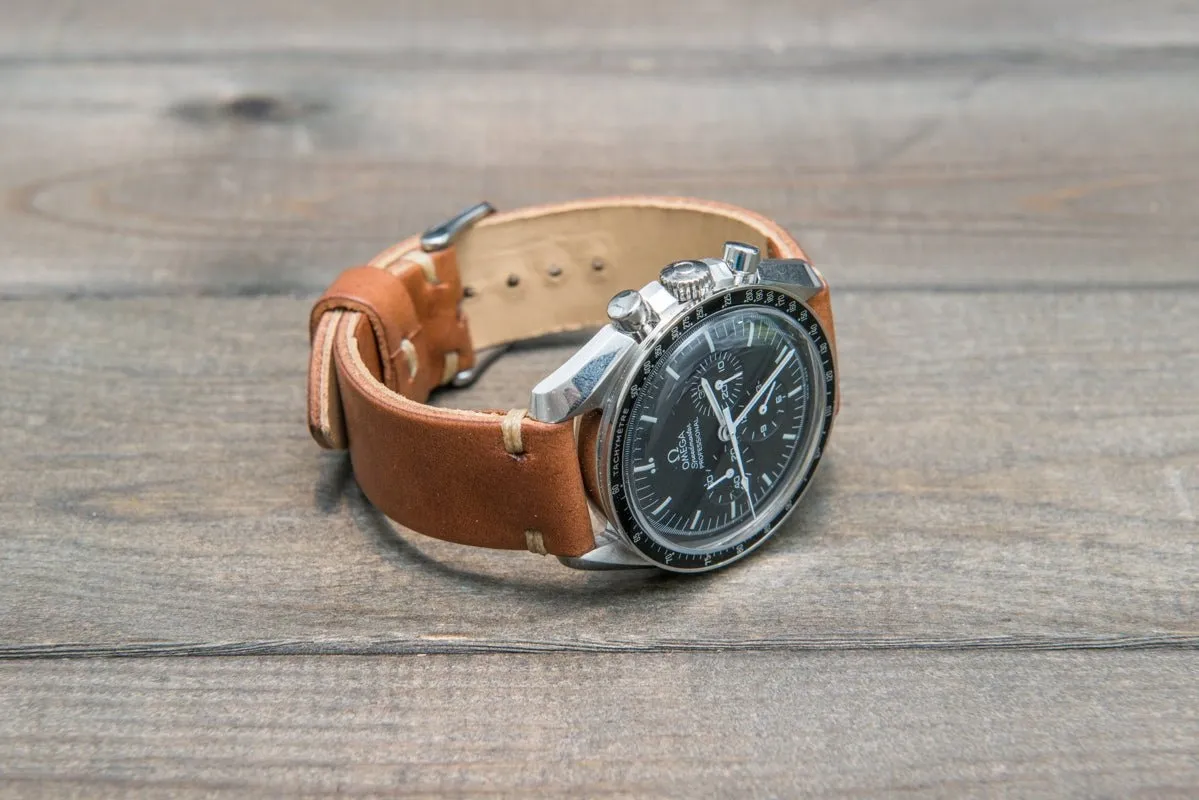
Image Source: finwatchstraps
Vegetable tanning is the oldest tanning method humans have used. It relies on natural tannins extracted from plant materials rather than harsh chemicals. This traditional process uses tree bark, leaves, roots and even olive tree bark to transform raw hides into leather. The method stands in stark contrast to standard production. Roughly 95% of all leathers worldwide undergo chromium tanning while only 5% receive vegetable treatment.
The production timeline extends way beyond conventional methods. Your strap begins with cleaned hides submerged in large vats filled with plant-derived tanning solutions. This step alone can require weeks or even months. Some processes last 15 months as tannins penetrate and stabilize the leather fibers over time. The extended timeline contributes to superior quality. Tanneries select only the best hides because the process is expensive and time-intensive.
The resulting leather possesses distinctive characteristics. A natural woody, earthy and sweet aroma replaces the chemical odor of chrome-tanned alternatives. The material emerges in natural beige or brownish tones before any dyeing occurs. Vegetable-tanned leather starts out stiff but softens and becomes more supple through wear. It develops a rich patina that adds character over time.
Breathability sets vegetable-tanned leather apart. It feels more comfortable against your skin compared to chrome-tanned options. The absence of toxic chemicals creates hypoallergenic properties. This reduces the likelihood of skin irritation when you wear it on your wrist. Durability proves exceptional. The slow tanning process produces sturdy leather that can serve you for years with proper care.
In spite of that, the material exhibits sensitivity to environmental factors. Direct sunlight and heat cause detrimental effects on appearance. Water exposure presents particular concern. The leather lacks inherent moisture resistance and can suffer permanent damage from rain or spills. The material also proves more prone to scratching than chrome-tanned alternatives. Coupled with higher production costs, vegetable-tanned straps command premium prices compared to conventional leather.
Vegetable-tanned straps suit high-end timepieces where sustainable luxury matters. The natural aging process makes them ideal for collectors who appreciate leather that improves with time. The hypoallergenic nature benefits those with sensitive skin who require direct contact comfort.
Vegetable-tanned leather straps start around $56.00 for quality options. Premium examples cost more. This reflects the artisanal production and extended tanning timeline among leather watch strap types of all kinds.
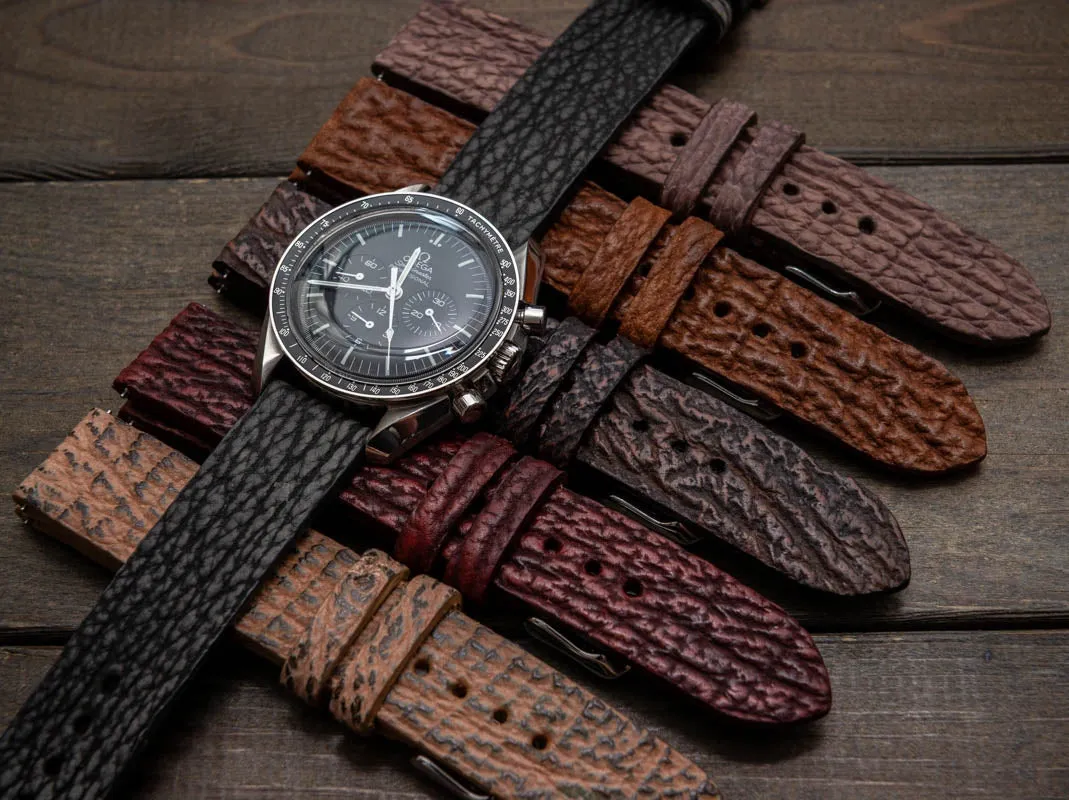
Image Source: Blog Finwatchstraps
A dense, grainy texture with wave-like patterns distinguishes sharkskin from conventional leather watch strap types. Processing removes the scales and the surface reveals naturally unrepeatable grainy or subtly raised patterns that resemble ocean waves. Each piece possesses its own tone and sheen, meaning no two straps can ever be similar. Dermal denticles create a striking pattern on the leather’s surface.
The dense, armored fiber structure requires special tools and skills to work with. This contributes to limited availability. Sharkskin remains rare even among premium accessories because it’s sourced only from certain non-endangered species in quantities that are regulated strictly. The resilient fiber structure holds its shape without additional reinforcement and remains elastic on your wrist. Strength combines with flexibility to create a material 8-10 times stronger than cowhide.
Exceptional wear resistance stands as sharkskin’s defining attribute. The fiber structure delivers extreme resistance to abrasion and withstands daily wear nowhere near as long as most materials. Water resistance surpasses traditional leather because sharkskin repels moisture naturally. You can use it for swimming or rain exposure without damage concerns. More than that, the material remains less susceptible to scratches compared to other options and maintains its appearance over time.
Notwithstanding that, thickness presents a drawback. Sharkskin measures thicker than cow leather and lacks the same flexibility. This reduced pliability may require adjustment during the original wear. The limited availability and difficult processing result in small production batches that make genuine sharkskin straps harder to find.
Sharkskin excels for everyday wear when you value strength. The rugged character pairs beautifully with sporty or diving-inspired watches. Exotic luxury blends with functional durability for collectors seeking distinctive straps.
Sharkskin straps cost around KSh4,400.00 for standard options. Premium versions with deployment clasps reach KSh6,200.00. This positions sharkskin among mid-range exotic leather watch strap types.
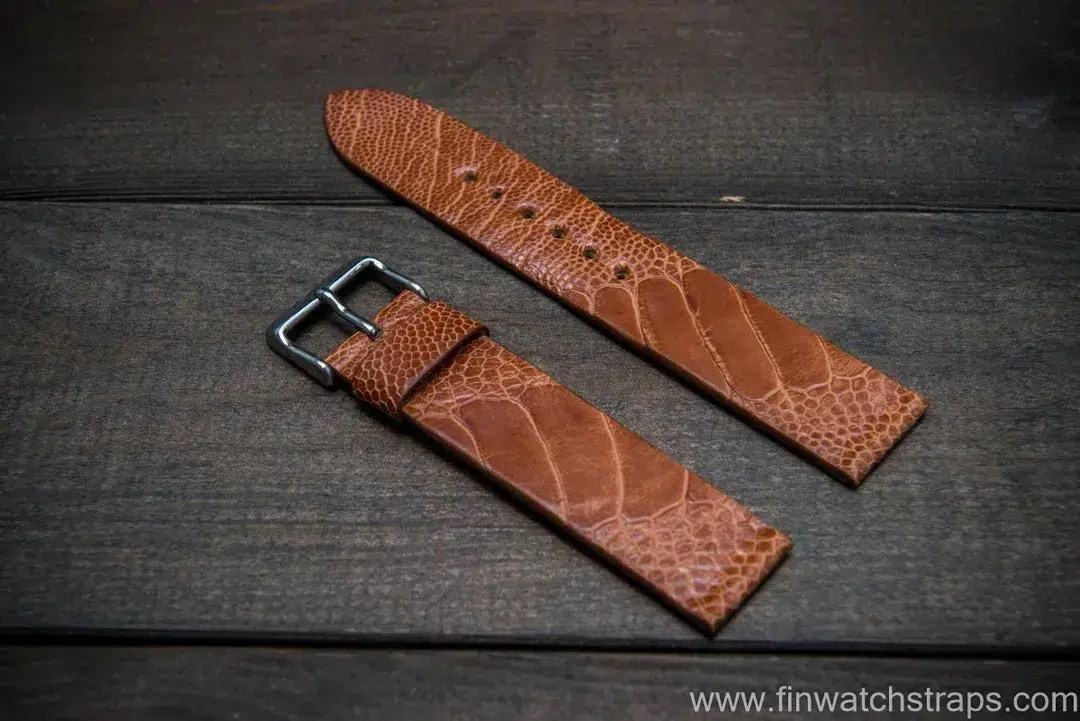
Image Source: finwatchstraps
A cross-weave fiber structure distinguishes ostrich among different types of leather watch straps and creates three-dimensional internal reinforcement within the hide. Calfskin has parallel fiber layers, but this natural micro-armature produces material that outlasts standard calfskin by 3-5 times. Large pores from feather follicles deliver exceptional breathability and actively adapt to body temperature without effort. Only one-third of each hide contains the iconic quill pattern, which makes balanced strap construction inherently scarce. The natural oil content prevents drying and cracking even under extreme heat and direct sunlight.
High natural oil content combined with cross-weave fibers creates remarkable durability. The material feels cooler in warm conditions and warmer in cooler climates, something you’ll notice during 10-14 hour daily wear. Your strap develops personal character as quill follicles darken faster than background areas and create three-dimensional depth effects. All the same, the porous structure absorbs liquids quickly and requires water-resistant sealer treatment.
Ostrich suits collectors who prioritize comfort and long-term ownership over visual flash. The breathable structure makes it ideal to wear daily for extended periods in varying climates.
Pricing reflects the rarity of the material and production complexity, positioning ostrich among premium leather watch strap types that require specialized sourcing and craftsmanship.
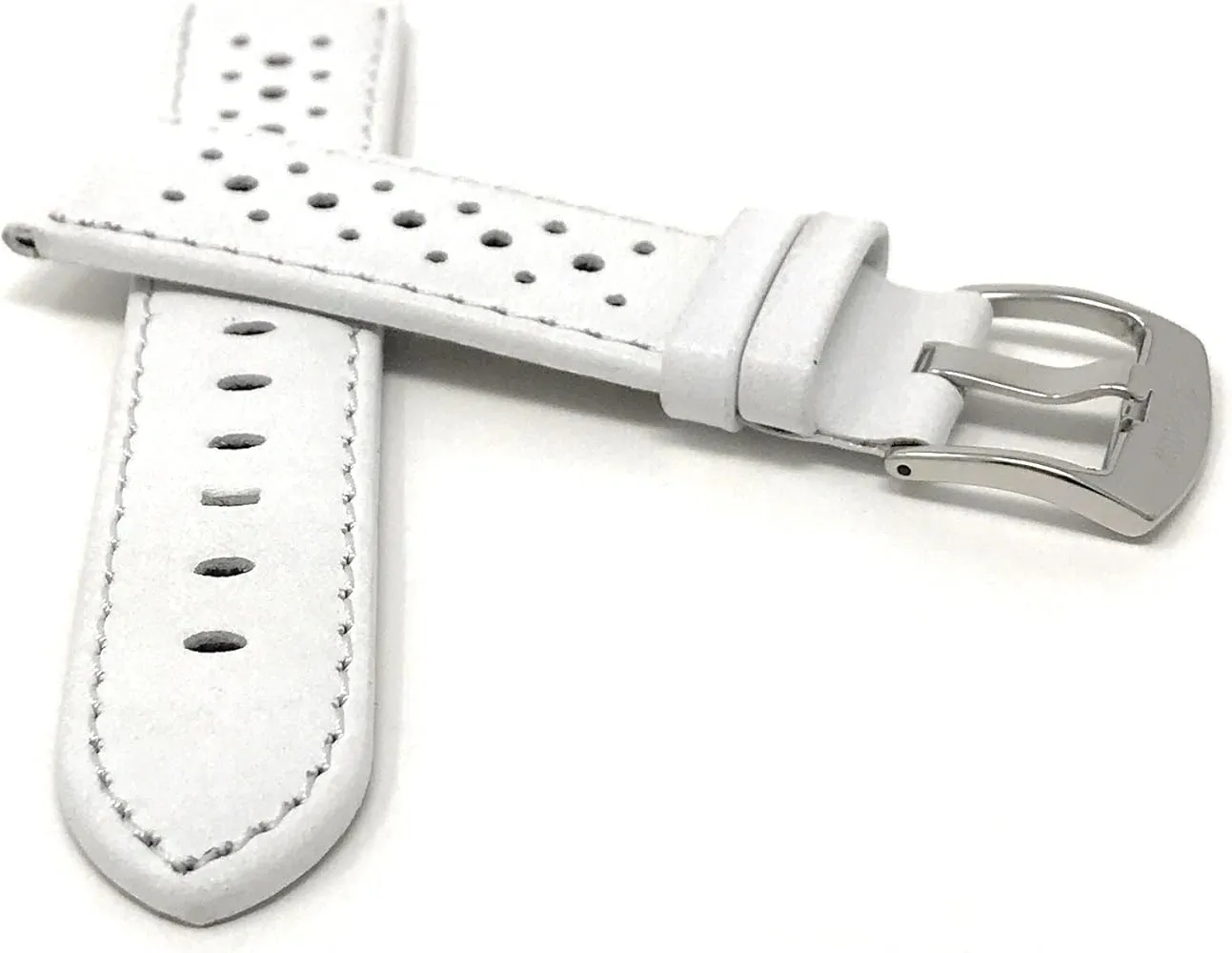
Image Source: Amazon.com
Perforated racing straps go back to the 1960s. Race car drivers wore perforated gloves during high-intensity motorsport events. Rally straps represent a design style rather than a specific leather type. They feature distinctive holes that serve functional purposes beyond esthetics. The perforations allow your strap to breathe and reduce sweat buildup during extended wear. This makes rally straps especially comfortable when you have warmer climates or active situations.
Rally straps come crafted in various materials. You’ll find waxed vegetable-tanned leather, swift calfskin, epsom, suede, and shell cordovan. Each material brings its own aging characteristics while maintaining the signature perforated design.
Better breathability is the main functional benefit, with perforations going all the way through the strap. The sporty esthetic pairs well with chronograph watches and echoes classic racing instruments. Rally straps balance utility with refinement. You get both durability and ventilation.
Rally straps excel with chronograph watches and vintage timepieces inspired by motorsport heritage. The design adapts for both casual and formal wear, depending on material choice.
Rally straps range from $19.99 to $74.00. Quality Italian leather versions start around $19.99, while handmade custom options reach $74.00.
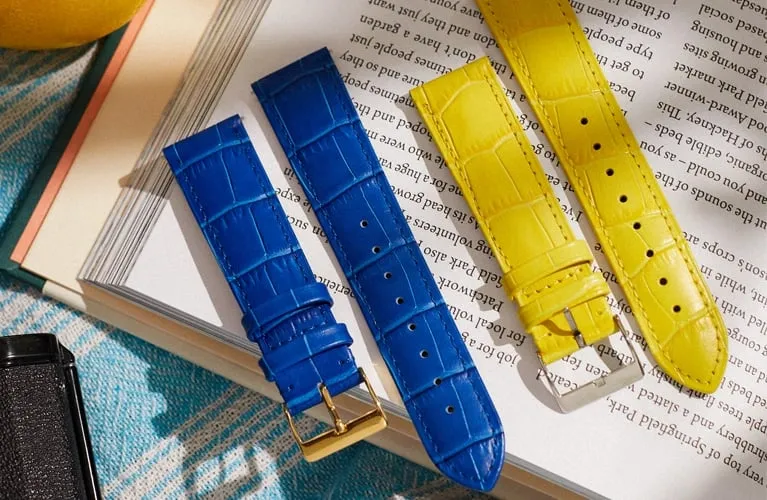
Image Source: condorstraps.com
High-quality hides receive treatment with soluble dyes that penetrate deep into the leather structure during aniline processing. Pigmented grain leathers have polymer coatings, but aniline versions maintain open pores throughout the material. The dyeing bath allows color to soak through the leather, like in textile dyeing, while the outer layer remains unchanged. Natural vegetable oils and waxes provide finishing and impregnation without surface coating. The grain structure displays with all its natural characteristics, and this creates what the industry calls the most exclusive material. The absence of protective layers results in soft, delicate texture that feels warm to the touch.
Aniline straps showcase natural grain and texture in their purest form. The luxurious appearance comes with soft, supple feel against your wrist. The material develops unique patina as colors change through normal use and adds character rather than defects. All the same, vulnerability to scratches and stains requires careful maintenance to preserve original appearance. Water soaks into the open-pore surface. You must use special fat and wax paste designed for aniline leather to maintain protective layers.
Aniline straps suit casual and semi-formal occasions. The natural esthetic complements small leather goods and dress watches where material quality speaks for itself.
Aniline straps range from $52.50 to $75.00 and reflect the premium hides required and specialized finishing processes among different types of leather watch straps.
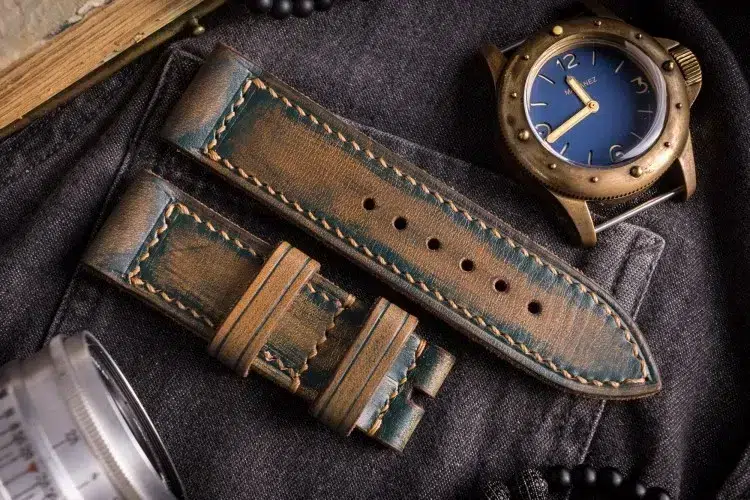
Image Source: Handcrafted Watch Straps And Bracelets
Distressed leather represents either authentic aged bands from decades past or newly manufactured straps designed to replicate that worn appearance through intentional techniques. True vintage straps develop patina from age, sun exposure and continuous use. This creates one-of-a-kind character. Vintage-style straps achieve the look through hand distressing, artistic scratching and retro-inspired stitching.
Construction quality separates genuine full-leather vintage straps from decorative alternatives. High-quality versions use the same leather hide on both sides. The underside shows natural fibers and suede texture. Single-piece construction distributes force through the entire strap thickness, whereas layered straps rely on thin top leather with backing material carrying stress. Premium vintage straps feature thick thread and deep stitching near lugs and buckles. Burnished edges remain sealed without treatment.
Common materials include Horween and calfskin for balanced style and comfort. Shell cordovan appears in high-end custom straps for its sheen and durability.
Comfort defines the main advantage. Vintage leather softens with use and molds to your wrist shape for customized fit from day one. Each mark and color variation tells a unique story. This creates individualized character no synthetic can replicate. The weathered texture adds depth without overwhelming your watch.
Authenticity verification requires attention to construction details, stitching quality and natural aging signs versus artificial distressing.
Distressed straps complement vintage-inspired timepieces, field watches and heritage designs. The rugged sophistication suits both casual daily wear and semi-formal occasions. Brown tones offer versatility, while burgundy or olive provide bold statements.
Quality distressed straps start around $19.99 for handcrafted options. Premium versions reach higher ranges depending on base leather type and construction quality.
|
Leather Type |
Key Characteristics |
Durability |
Water Resistance |
Comfort |
Best Use Cases |
Price Range |
Main Advantages |
Main Disadvantages |
|
Calfskin Leather |
Fine grain, smooth texture, silky surface with natural suppleness |
Less resilient than thicker hides; requires refurbishment over time |
Poor; wears out with moisture exposure |
Supreme comfort; soft from first wear, minimal break-in |
Dress watches, formal events, everyday wear |
£7.95 – £28.95 |
Versatile, minimal maintenance, affordable, extensive finish options |
Less durable, poor water resistance, can feel sticky in heat and humidity |
|
Shell Cordovan |
Horse rump muscle creates dense pore-free surface, glossy finish, non-creasing |
Very durable; resists breaking, cracking, losing shine |
Natural water resistance (avoid prolonged exposure) |
Very comfortable; smooth connective tissue without pebbled texture |
Dress watches, thin dressy applications, smaller timepieces |
$75.00 – $200.00 |
Exceptional durability, natural water resistance, luxurious appearance, develops beautiful patina |
Substantially more expensive than calfskin, limited color variety, less suitable for thick and sporty applications |
|
Alligator and Crocodile |
Distinctive scale patterns; alligator has uniform squares, crocodile has irregular patterns with visible pores |
Exceptional durability; lasts 2-3 years with proper care |
Resists water and stains |
Supple, silky texture; very flexible with short break-in period |
Formal occasions, dress watches, luxury timepieces |
$150.00 – $250.00 |
Exceptional durability, hypoallergenic, elegant sophistication, great wrist comfort |
Premium pricing, requires careful maintenance (avoid oil and water, no ointments) |
|
Suede Leather |
Velvety texture from sanded and brushed underskin; matte appearance with napped finish |
Less durable than full grain; tightly packed fibers provide some resilience |
Very poor; moisture causes irreversible damage and discoloration |
Very comfortable; feels almost weightless, minimal break-in |
Vintage chronographs, dress watches, field watches; autumn and winter months |
$40.00 – $120.00 (ideal: $60-$80) |
Immediate comfort, visual warmth, takes color well, rich hues |
Poor water resistance, attracts dirt, affected by sweat, requires regular care |
|
Goat Leather |
Grained texture, lightweight and supple, feels cool to touch |
Exceptional tear strength; surpasses other small animal leathers |
Not mentioned |
Comfortable but somewhat stiffer than calfskin; brief adjustment period |
Everyday wear, warm climates, summer months |
$45.00 – $120.00 |
Exceptional durability, cooling property, affordable pricing, tear-resistant |
Less flexible than calfskin, requires adjustment period |
|
Vegetable-Tanned |
Natural tannins from plants, woody and earthy aroma, develops rich patina over time |
Exceptional; sturdy and long-lasting with proper care |
Poor; lacks inherent moisture resistance |
Highly breathable; more comfortable than chrome-tanned, hypoallergenic |
High-end timepieces, collectors who appreciate aging leather, sensitive skin |
Starting around $56.00 |
Breathable, hypoallergenic, exceptional durability, improves with time |
Sensitive to sunlight and heat, poor water resistance, prone to scratching, higher cost |
|
Sharkskin |
Dense grainy texture with wave-like patterns, each piece unique |
8-10 times stronger than cowhide; extreme wear resistance |
Excellent; repels moisture, suitable for swimming |
Resilient yet elastic and comfortable; thicker than cow leather |
Everyday wear, sporty and diving watches, rugged applications |
KSh4,400.00 – KSh6,200.00 |
Exceptional wear resistance, excellent water resistance, less susceptible to scratches |
Thicker and less flexible than cow leather, limited availability |
|
Ostrich Leather |
Cross-weave fiber structure, large pores from feather follicles, iconic quill pattern |
Outlasts calfskin by 3-5 times; high natural oil content prevents cracking |
Porous structure absorbs liquids quickly; requires water-resistant sealer |
Adapts to temperature; cooler in warm conditions, warmer in cool climates |
Extended daily wear (10-14 hours), varying climates, collectors prioritizing comfort |
Not mentioned |
Exceptional durability, temperature-adaptive, develops personal character, breathable |
Absorbs liquids quickly, requires sealer treatment, only one-third of hide has quill pattern |
|
Rally Perforated |
Distinctive perforations for breathability; design style rather than specific leather type |
Varies by base material (can be calfskin, suede, shell cordovan, alligator, etc.) |
Varies by base material |
Improved breathability reduces sweat buildup; comfortable in warm climates |
Chronograph watches, vintage motorsport-inspired timepieces, casual and formal wear |
$19.99 – $74.00 |
Improved breathability, sporty esthetic, balances utility with refinement |
Not mentioned |
|
Aniline Leather |
Soluble dyes penetrate deep, open pores, natural grain visible, warm to touch |
Not mentioned |
Poor; water soaks into open-pore surface readily |
Soft and delicate; luxurious feel |
Casual and semi-formal occasions, dress watches, small leather goods |
$52.50 – $75.00 |
Showcases natural grain, luxurious appearance, develops unique patina |
Vulnerable to scratches and stains, requires special maintenance products |
|
Distressed and Vintage |
Authentic aged or intentionally distressed appearance, hand-distressed techniques |
Softens with use; premium versions use full-leather construction |
Not mentioned |
Excellent; softens and molds to wrist shape for customized fit |
Vintage-inspired timepieces, field watches, heritage designs, casual and semi-formal wear |
Starting around $19.99 |
Immediate comfort, unique character, customized fit, adds depth |
Authenticity verification requires attention to construction details |
Now that you’ve explored the different types of leather watch straps, from affordable calfskin to exotic sharkskin, you can make informed decisions based on your specific needs. Each leather type has distinct characteristics, like shell cordovan’s durability or suede’s velvety comfort. Your choice ends up depending on your budget, lifestyle, and watch style. Sharkskin makes sense when you prioritize water resistance. Alligator or shell cordovan delivers sophistication to dress formally. Match your strap selection with your wearing habits and watch collection. Your perfect leather strap awaits among these eleven options.
Choosing among the types of leather watch straps can turn your timepiece from ordinary to extraordinary. Attaching watches to leather straps dates back to the
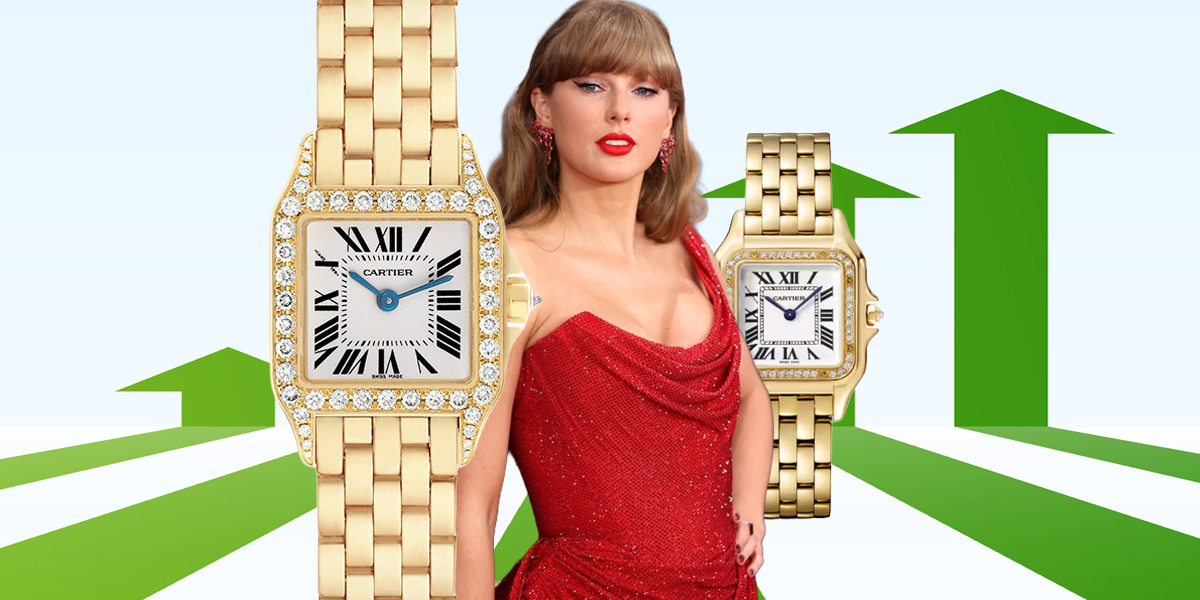
Taylor Swift’s Cartier watch in her viral engagement post turned a discontinued timepiece into the ninth most-liked Instagram post ever. The results were immediate and
If you’ve ever wondered who is the owner of Cartier, you might be surprised to learn that this iconic Parisian jeweler operates more than 200