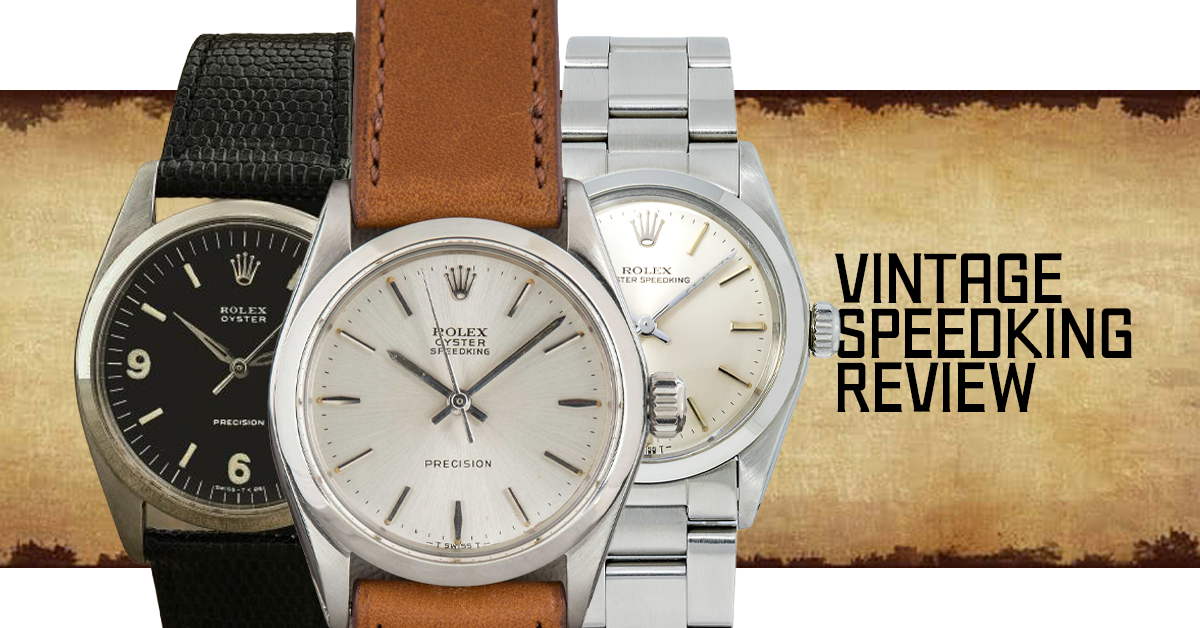
Rolex Speedking Review: Why This Vintage Watch Still Turns Heads in 2026
The Rolex Speedking has a story that few luxury watches can match. This remarkable timepiece got its name from Sir Malcolm Campbell, the legendary “King

The Rolex Speedking has a story that few luxury watches can match. This remarkable timepiece got its name from Sir Malcolm Campbell, the legendary “King of Speed” who broke the 300 mph land speed record in 1935 while wearing his Rolex watch.
This watch stood as the simplest men’s model in the Rolex catalog for nearly three decades. The vintage Rolex Speedking, despite being an “entry-level” piece, carries an extraordinary story. Rolex showed remarkable compassion during World War II by letting British prisoners of war buy these watches on credit, with payment due after the war ended. The affordable Speedking became the top choice among POWs naturally.
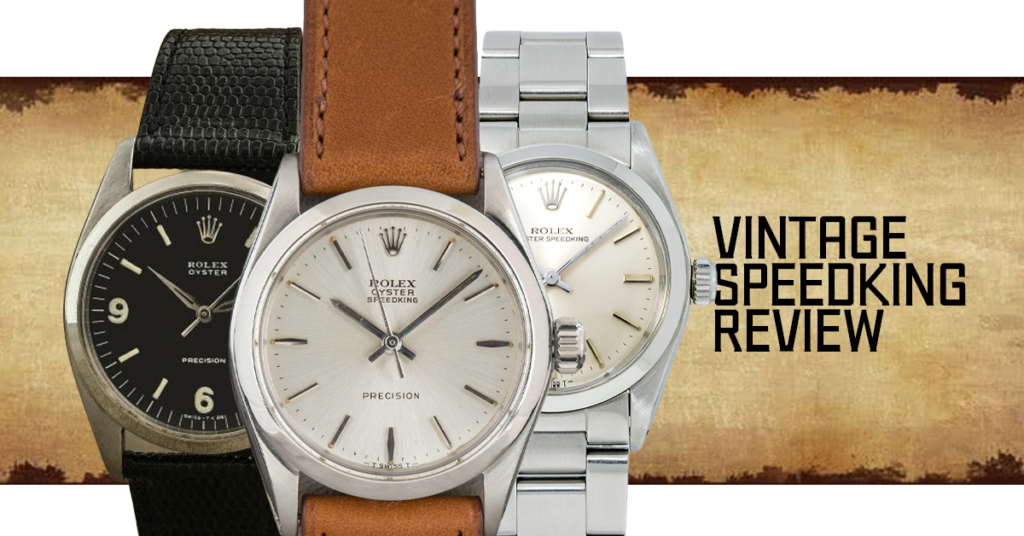
The Rolex Oyster Speedking featured a waterproof stainless steel case with a screwdown crown, showing the brand’s commitment to durability and function rather than flash. Prices typically range from $1,300-$2,500, making it one of the most available ways to own an authentic piece of Rolex heritage.
A Speedking today represents more than just a watch – it’s a timepiece that has journeyed through history, from wartime prisoners’ wrists to modern watch enthusiasts’ collections. What keeps this understated classic catching eyes in 2025?
The Rolex Speedking made its debut in the early 1940s and became one of Rolex’s earliest groundbreaking timepieces. This compact watch would leave its mark on both war and racing history.
Hans Wilsdorf, Rolex’s founder, started an amazing program during World War II that connected the Speedking to military history forever. He gave Allied prisoners of war a chance to order Rolex watches and pay for them after the war ended—showing his confidence in Allied victory. British POW officers ordered about 3,000 Rolex watches through this program. The Speedking was the most affordable Rolex at the time, making it the top choice among imprisoned officers. These watches reached the camps through the International Red Cross, and many came with personal notes from Wilsdorf that read, “You must not even think of settlement during the war”. The watch’s story became even more fascinating as several members of the famous “Great Escape” from Stalag Luft III wore these timepieces. RAF Corporal Clive James Nutting’s Speedking arrived at the camp on August 4th, 1943.
The watch’s name pays tribute to Sir Malcolm Campbell, a British racing legend who set nine world land speed records between 1924 and 1936. He made history at the Bonneville Salt Flats on September 3, 1935, by reaching 301.13 MPH—becoming the first person to break the 300 mph barrier. Campbell wore Rolex watches throughout his record-breaking career. After one attempt, he sent Rolex a telegram that read: “Rolex watch worn yesterday during record attempt and still going splendidly notwithstanding rough usage received”. Campbell’s integrity showed as he insisted on buying his Rolexes with his own money, turning down any financial compensation from the brand.
The Speedking emerged around 1941 as Rolex’s entry-level model. Its 30mm case remained the smallest in Rolex’s men’s collection for decades. The watch’s design became known for its “California Dial” (half-Roman numeral dial) and Mercedes hands. Rolex added the Oyster bracelet to the collection in 1948. The watch’s design stayed mostly unchanged during its thirty-year production run. The Speedking was the life-blood of the Rolex catalog, yet it never appeared in any print advertisements. Instead, it built its reputation through collectors and history enthusiasts.
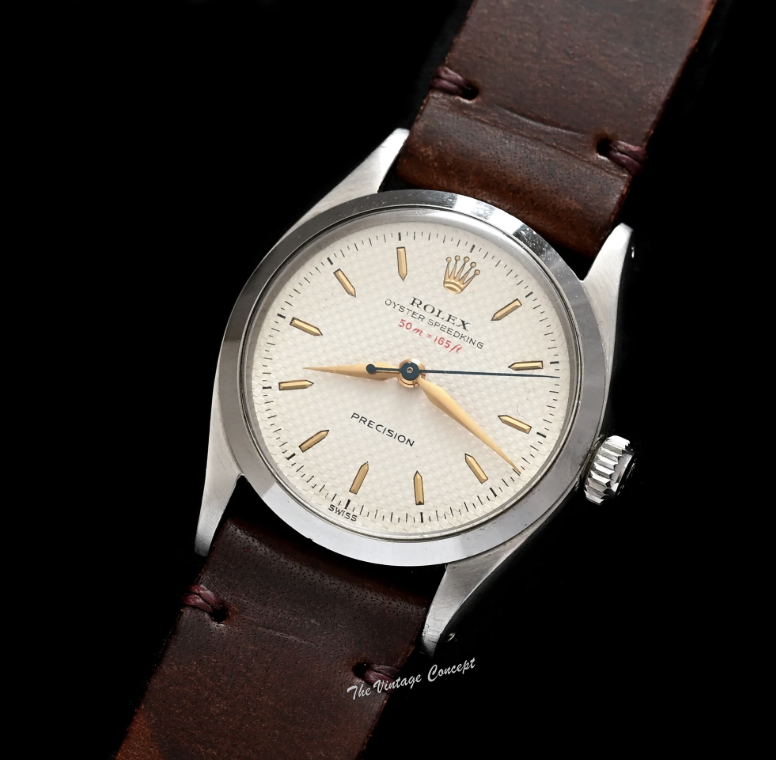
The Rolex Speedking’s production run saw subtle yet most important design changes that matched both style trends and practical improvements. The watch’s dial configurations, hand styles and luminous materials each tell a part of its story.
Collectors now call the early Speedking models’ dials “California Dials”—Rolex’s half-Roman, half-Arabic numeral configuration got its patent in 1941 as the “Error-Proof Dial”. These unique dials worked almost exclusively with blued Mercedes hands, which first showed up in Rolex watches in 1937 but became standard by 1941. The minute hands had a distinctive tapered design with bright luminous triangular tips. These early 1940s models were known for their well-lit hour numerals that made the watch easy to read even in dark conditions.
Rolex moved away from the California dial design by 1950 and made alpha-shaped hands the standard for the Speedking. Post-war design tastes changed, and the bright luminous hour numerals gave way to simpler stick markers. Rolex’s design team added more refinements in the mid-1950s with an optional engine-turned bezel on references 6421 and later 6431. The alpha hands stayed until the mid-1960s when simpler stick/baton hand styles took their place and remained until the end of production.
The watch’s most vital change involved its luminous material. Early Speedkings used radium-based lume which glowed brilliantly but posed radiation risks. Rolex switched to tritium-based luminous material in 1962 to address growing health concerns. This change brought new dial markings – radium dials typically showed “SWISS” alone, while tritium dials displayed “T SWISS T” or “SWISS – T<25”.
Speedking’s dial text came in two main styles—the earlier “three-liner” showed “Rolex,” “Oyster,” and “Speedking” on separate lines, while the “two-liner” placed “Oyster Speedking” together under the Rolex name. Both styles appeared through the 1950s and overlapped, though research points to the two-liner coming after the three-liner.
Each Rolex Speedking reference reveals a unique technical story through specific engineering improvements. The subtle differences between models create an array of features that vintage collectors value today.
The ref 6020 (1950-1953) and ref 6420 (1955-1962) look similar at first glance but have significant differences in their inner case dimensions. These variations, measured in fractions of millimeters, make parts incompatible between the two models. The ref 6420’s upgraded Caliber 1210 movement showed Rolex’s progress toward stronger timekeeping.
The ref 6430 “Precision” Speedking marked the final development of the line from 1962-1970. This 30mm stainless steel case featured the distinctive “underline” dial on early 1963 models that indicated Rolex’s shift from radium to tritium lume. Customers could get the ref 6430 with either the Caliber 1210 or 1220 movement.
The Speedking’s internal mechanics saw remarkable changes throughout production. Early references employed the manual-wind Caliber 710 (center seconds) or 700 (small seconds). The superior Caliber 1210 emerged by the mid-1950s and featured 5 vibrations per second (18,000 vph). The Caliber 1220 appeared in the 1960s with better performance at 5.5 vibrations per second (19,800 vph).
In stark comparison to this common belief, Rolex made gold Speedkings. Most models came in stainless steel, but both solid 14k and 18k gold models exist. The ref 6418 featured gold plating, which disproves the myth that Rolex never made gold-plated watches.
The Rolex Speedking represents the most available entry point to authentic Rolex ownership in today’s vintage watch market. This small timepiece we viewed as a collector’s piece rather than a daily wearer and provides remarkable value.
Standard Rolex Speedking models sell within the $1,300-$2,500 range as of December 2025. The pricing stays stable, and market data over five years shows a modest 3.6% appreciation. Some models are worth much more, especially when you have California dials, gold cases, or Kew A-certified movements.
A Speedking’s value depends on several key elements:
Dial type (California dials fetch premium prices)
Case material (gold variants are rarer and more valuable)
Movement condition (Kew A-certification adds substantial value)
Original paperwork and box (complete sets are worth 30-40% more)
Overall condition (unpolished cases attract more buyers)
The Speedking gives you something rare – genuine Rolex quality and history at a reasonable price. These watches sell faster than 61% of all tracked timepieces, with median selling times of 53 days. This shows their steady appeal. The fixed supply, since production stopped decades ago, should keep pushing values up. This trend looks even more promising as collectors show growing interest in smaller vintage cases with historical significance.
The Rolex Speedking is proof of watchmaking heritage that surpasses its modest 30mm case size. This understated timepiece carries exceptional historical weight, even though its flashier siblings often steal the spotlight. Few timepieces can match the watch’s storytelling power, given its connection to WWII prisoners of war and its namesake’s record-breaking speed achievements.
The Speedking has aged beautifully. Collectors now value these watches’ genuine character, historical importance, and accessibility, though production stopped decades ago. The POW program watches mean something more than just telling time—they represent hope and resilience during humanity’s darkest hours.
The sort of thing I love about the Speedking is that it serves as the most affordable way to own an authentic Rolex. The various references—from California dials to gold variants—reward collectors who do their homework.
Today’s market might favor larger watches, but the Speedking’s classic proportions feel honest and true. This watch tells a compelling story about Rolex’s dedication to durability and its role in pivotal historical moments. These once-overlooked models are getting the recognition they deserve as vintage watch enthusiasm grows.
Without doubt, the Speedking gives you something special: a chance to wear a piece of horological history without breaking the bank. Limited supply will likely push values higher, but they still offer great value compared to most Rolex models.
A Speedking on your wrist is more than just a watch—it’s a direct link to wartime courage and record-breaking human achievement. That connection explains why this vintage Rolex continues to turn heads in 2025.
The Rolex Speedking has a story that few luxury watches can match. This remarkable timepiece got its name from Sir Malcolm Campbell, the legendary “King
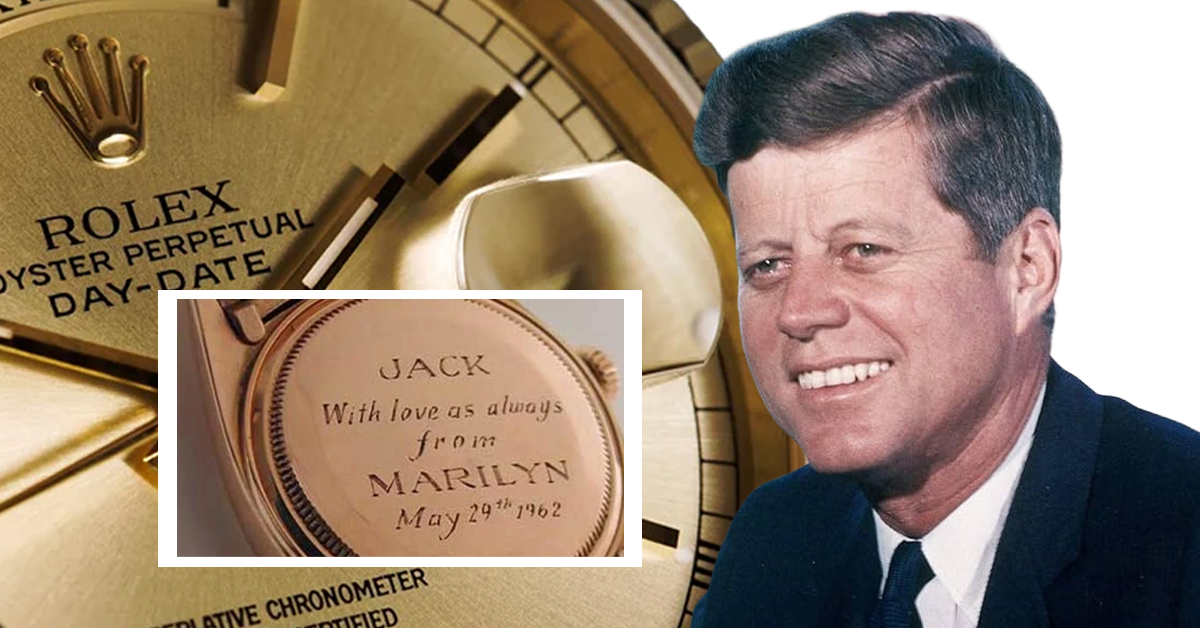
Did you know that the JFK’s Rolex watch, a gold gift from Marilyn Monroe, sold for a modest $120,000 at auction in 2005? This presidential
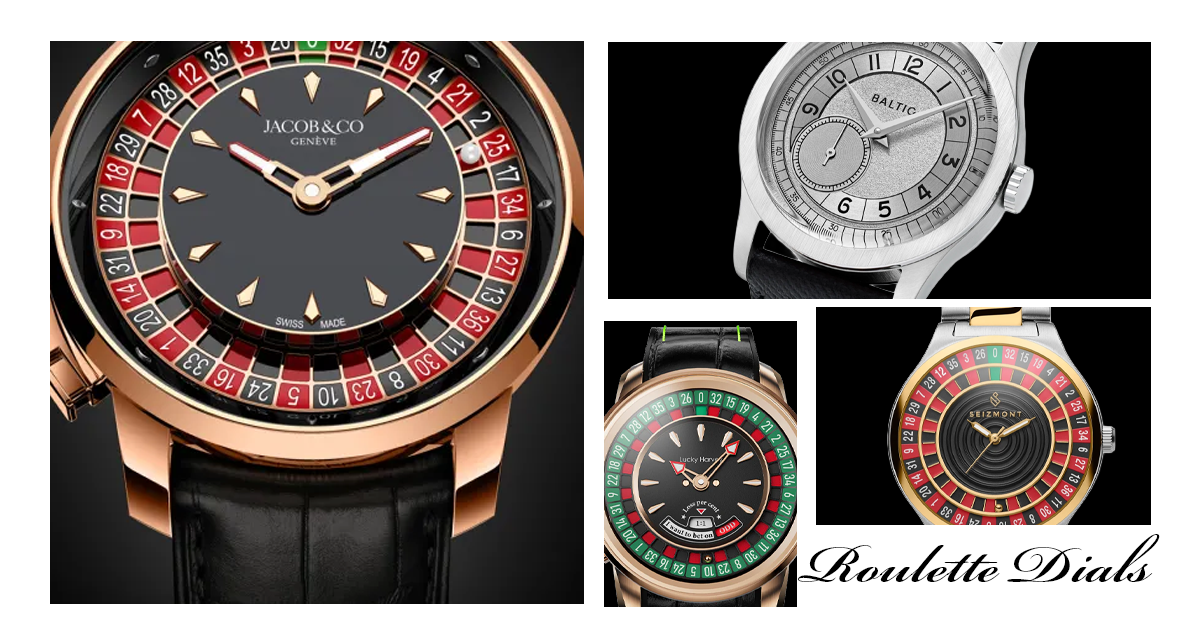
Roulette dial watches blend precision timekeeping with casino gaming excitement in a unique way. These timepieces captivate collectors and casual wearers with their sophisticated craftsmanship