What Is the Rolex Laser Etched Crown
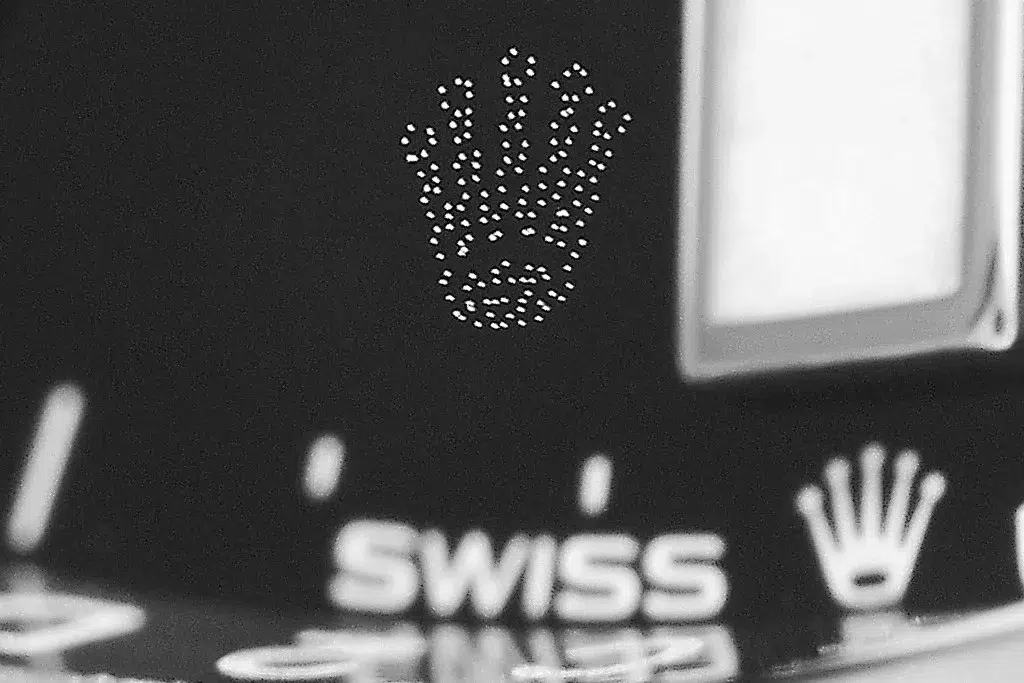
The rolex laser etched crown sits at the 6 o’clock position on your watch’s sapphire crystal. You’ll struggle to see this minuscule Rolex coronet logo without proper lighting or magnification. Collectors refer to this feature as the “LEC” (laser-etched coronet).
What sets this security feature apart is its construction. The crown isn’t etched or engraved on the crystal’s surface. Instead, it’s laser-etched into the crystal itself. This technique makes replication difficult for counterfeiters.
Rolex phased in the rolex etched crown between 2001 and 2002. Original models receiving this feature included the Air-King and Explorer, along with the Submariner. The laser-etched crown appeared across the Rolex lineup by 2003 to early 2004 and included Cellini models.
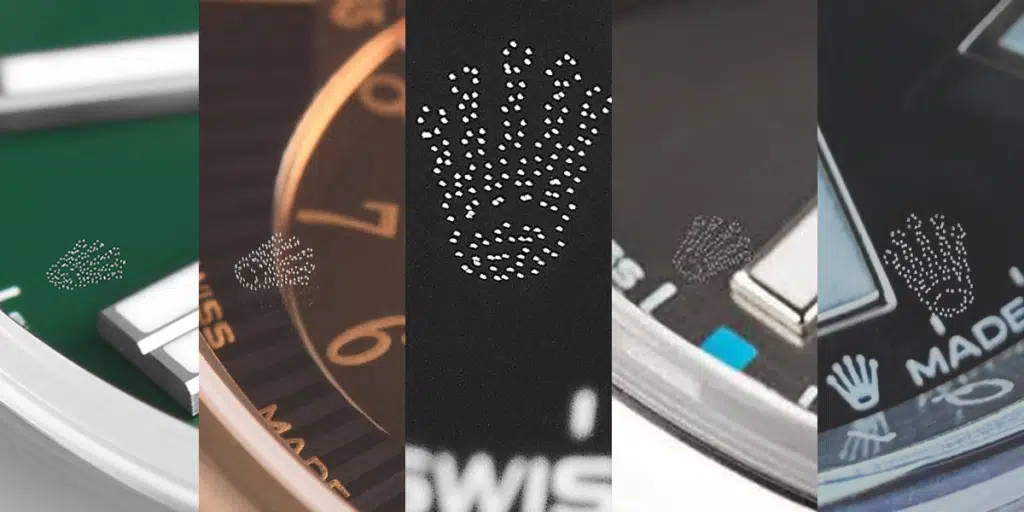
One modern watch stands as the exception: the Milgauss 116400GV with its green-tinted sapphire crystal remains unetched. Early prototypes showed the crown too prominently on the green crystal. Rolex decided to skip the etching on this specific model.
Service replacement crystals feature a unique identifier. Rolex placed a sideways “S” inside the coronet’s base opening before 2012. This marked it as an official service replacement part. Watches manufactured before 2001 won’t have any laser-etched crown, as this Rolex laser etched crown year marks the time the feature first appeared.
Table of Contents
How to See the Rolex Laser Etched Crown
You need patience and proper technique to find the Rolex laser etched crown. The feature sits so small on the crystal that many owners spend considerable time locating it at first.
A bright flashlight pointed downward from the 12 o’clock position toward the 6 o’clock marker gives you the best viewing method. The light reflection off the dial makes the etching visible. Position yourself at an oblique angle rather than viewing head-on, as the 6 o’clock hour marker can obscure your view.
Magnification helps substantially. A jeweler’s loupe between 5x and 10x power reveals the crown’s crisp outline. Your phone’s macro lens function works in the same fashion, especially when you zoom and adjust the angle. Some owners achieve success by placing their phone in video mode with the light on and zooming to 5x magnification.
 You might own a Rolex and never spot its rolex laser etched crown, a tiny security feature that’s nearly invisible to the naked eye. Rolex introduced this anti-counterfeiting measure in 2001. They implemented it across their entire collection by 2003 or early 2004. The Rolex etched crown serves as a critical authenticity marker, yet many owners remain unaware of its existence. You can verify your timepiece’s legitimacy by learning about the rolex laser etched crown year of introduction and how to see rolex laser etched crown details. This piece covers what the laser-etched crown is and how to locate it on your watch. We’ll also explore the main differences between rolex laser etched crown real vs fake versions to protect your investment.
Dial color affects visibility. White or light-colored dials present greater difficulty than black dials. You’ll find the contrast against darker backgrounds makes detection easier.
Counterfeiting concerns make this interesting: struggling to see your Rolex etched crown actually indicates authenticity. Genuine etchings produce a subtle “sparkle” when illuminated the right way. If you spot the crown with your bare eyes without special lighting or angles, you’re likely looking at a counterfeit.
Tilt your watch about 20 degrees away from your face while positioning it over a dark background. This improves visibility without delay.
Rolex Laser Etched Crown Real vs Fake
Counterfeiters replicate the Rolex laser etched crown, but their versions show flaws. The most obvious red flag? You can spot the crown with your bare eyes. Genuine etchings need magnification to detect. Fake versions show up too prominently.
Look at the etching’s composition under magnification. Authentic crowns consist of very fine bubbles. These nearly invisible dots form the coronet shape. Counterfeit versions display larger bubbles that you can detect with ease and create a blurrier appearance. The pointillation difference separates real from fake. Genuine etchings show precise dot patterns. Counterfeits look foggy or smudged.
Lighting reveals another difference. Real laser-etched crowns produce a subtle sparkle under correct illumination. Fake etchings appear duller and lack this reflective quality. Some sophisticated counterfeits photograph well but fail the in-person inspection.
Precision matters a lot. Authentic etchings feature crisp lines with sharp definition and refinement. Counterfeit markings often look sloppy. Dots scatter unevenly rather than forming straight lines that stay consistent. Counterfeiters find the clarity and detail difficult to match.
Beyond the crown itself, check complementary authentication features. Mid-2000s models include ‘ROLEX’ repeated around the inner ring, which matters if you’re asking about the rehaut engraving timeline. Professional verification through authorized dealers remains your most reliable option for Rolex laser etched crown real vs fake authentication.
Conclusion
The rolex laser etched crown serves as your first line of defense against counterfeit timepieces. In fact, this subtle security feature separates authentic Rolex watches from replicas, though you’ll need patience and proper lighting to locate it. If you can spot the crown easily without magnification, that’s a red flag. Note that difficulty seeing the etching indicates genuineness when authenticating your watch. Professional verification through authorized dealers remains your best option to gain complete peace of mind.
Enjoying our watch coverage? Get more of it in Google Search.