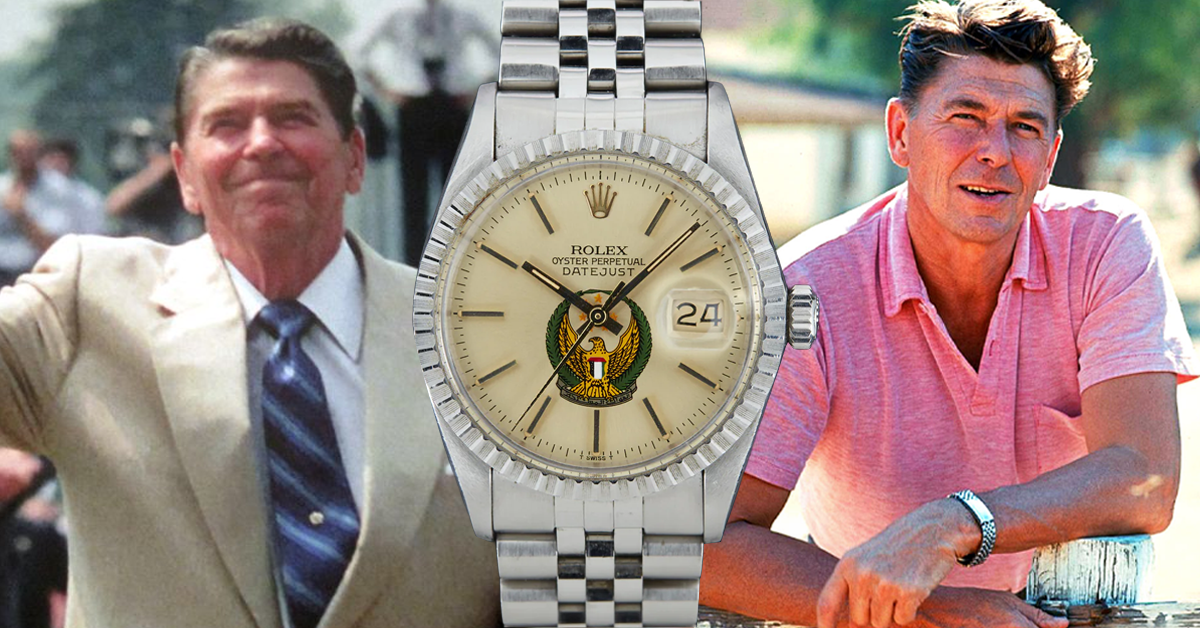
Ronald Reagan’s Watch: The Hidden Story Behind His Presidential Timepiece (2025 Review)
Ronald Reagan’s watch choice reveals a fascinating story about presidential style and tradition. During his time as the 40th President, Reagan wore a steel

The clasp on a Rolex watch might not get much fanfare, but it’s arguably the most hands-on part of the entire timepiece. Every time you put it on or take it off, that small mechanism sees more use than the dial, bezel, or case combined. While collectors obsess over complications and finishing, the clasp quietly plays its role—reliable, intricate, and surprisingly clever.
Take a closer look, though, and you’ll find it holds a few secrets of its own.
Back in 1976, Rolex began encoding dates directly onto the clasp—an understated move that added another layer of authenticity and traceability. Over the years, innovations like the Glidelock system followed, allowing divers to adjust the bracelet length by 2mm increments, up to 20mm total. It’s the sort of thing you may never notice until you need it—and once you do, it’s hard to imagine how you managed without it.
Different Rolex models feature different clasps, each tailored not only to function but to feel. The Crownclasp blends into the bracelet so smoothly it nearly disappears, while the more rugged Oysterlock, found on professional models, adds layers of safety and strength built for underwater pressure and daily wear alike.
And yes—there’s a right way to adjust and maintain them. It’s not just about fit. It’s about understanding a detail Rolex has spent decades perfecting.
Rolex has never been one to settle. Even the clasps, often overlooked, are crafted with specific intentions for performance, style, and durability.
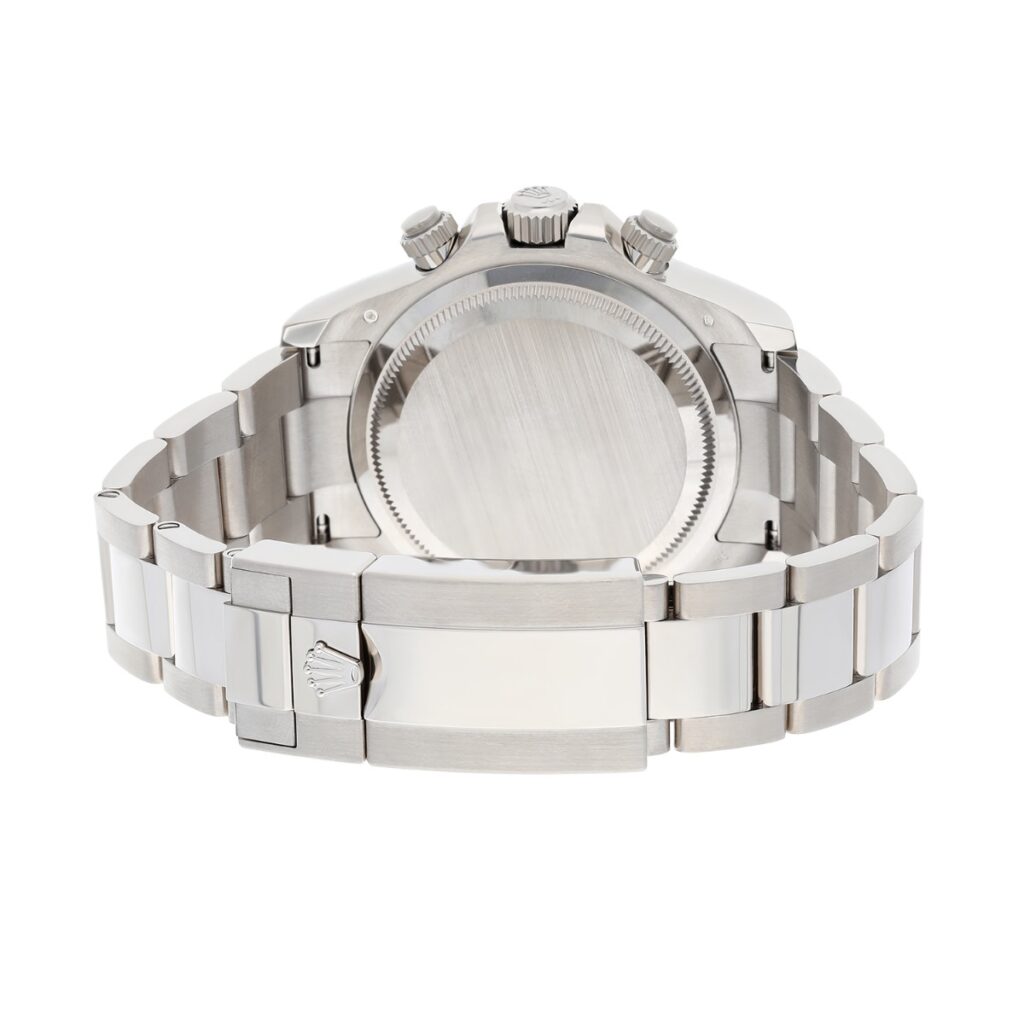

At first glance, these two might seem interchangeable. They’re not.
The Oysterlock clasp features a fold-over safety lock and a snap-fit lever mechanism comprised of 15 intricate components. It’s tough, secure, and typically used on models designed for harsher environments—Submariners, GMTs, Sea-Dwellers. Made from 904L steel (now Oystersteel), it resists corrosion, especially from saltwater.
The Oysterclasp, meanwhile, is found on dressier models—think Datejust, Oyster Perpetual. It lacks the extra safety latch, offering a sleeker, simpler closure. One quick visual trick to tell them apart? The Rolex crown on the Oysterclasp sits front and center, while on the Oysterlock, it’s part of the security catch.
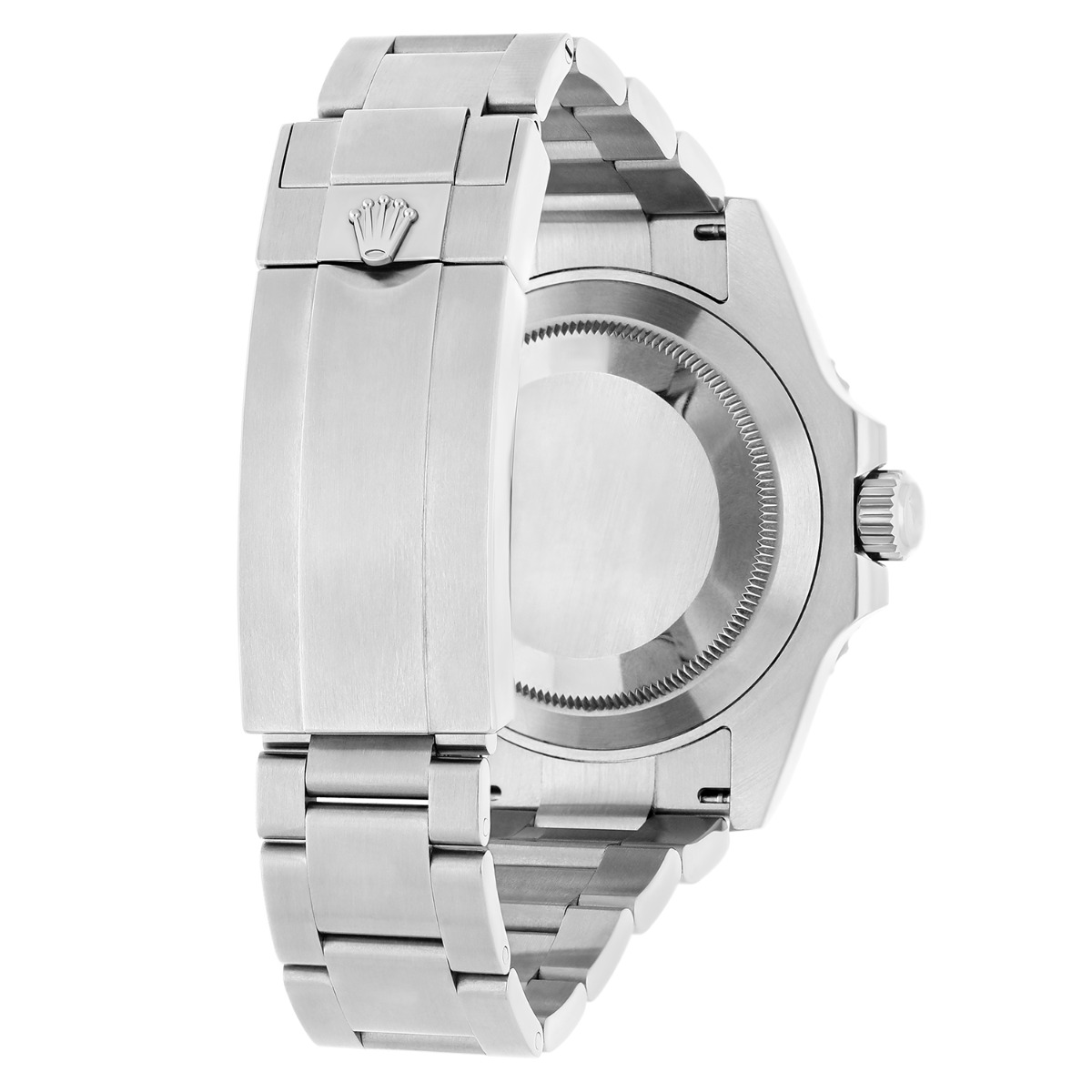
Longer than the Oysterlock and far more specialized, the Glidelock clasp lets divers expand their bracelet up to 20mm, no tools needed. Each click equals a precise 2mm adjustment—perfect for fitting over a wetsuit.
Deep-sea models like the Sea-Dweller and Deepsea go a step further, adding Fliplock extension links. These hidden segments unlock an additional 26mm, enough to wrap securely over 7mm-thick diving suits.
It’s pure functional engineering—and classic Rolex.

If the Glidelock is all muscle, the Crownclasp is grace.
It disappears into the bracelet when closed, leaving only the iconic coronet logo visible. Underneath, a hidden folding blade holds it all together, seamlessly integrated with the bracelet links.
It’s featured mostly on President and Pearlmaster bracelets, though some older Jubilee models wore it well too. Recent updates, however, have seen even the Datejust moving toward sportier clasp options.
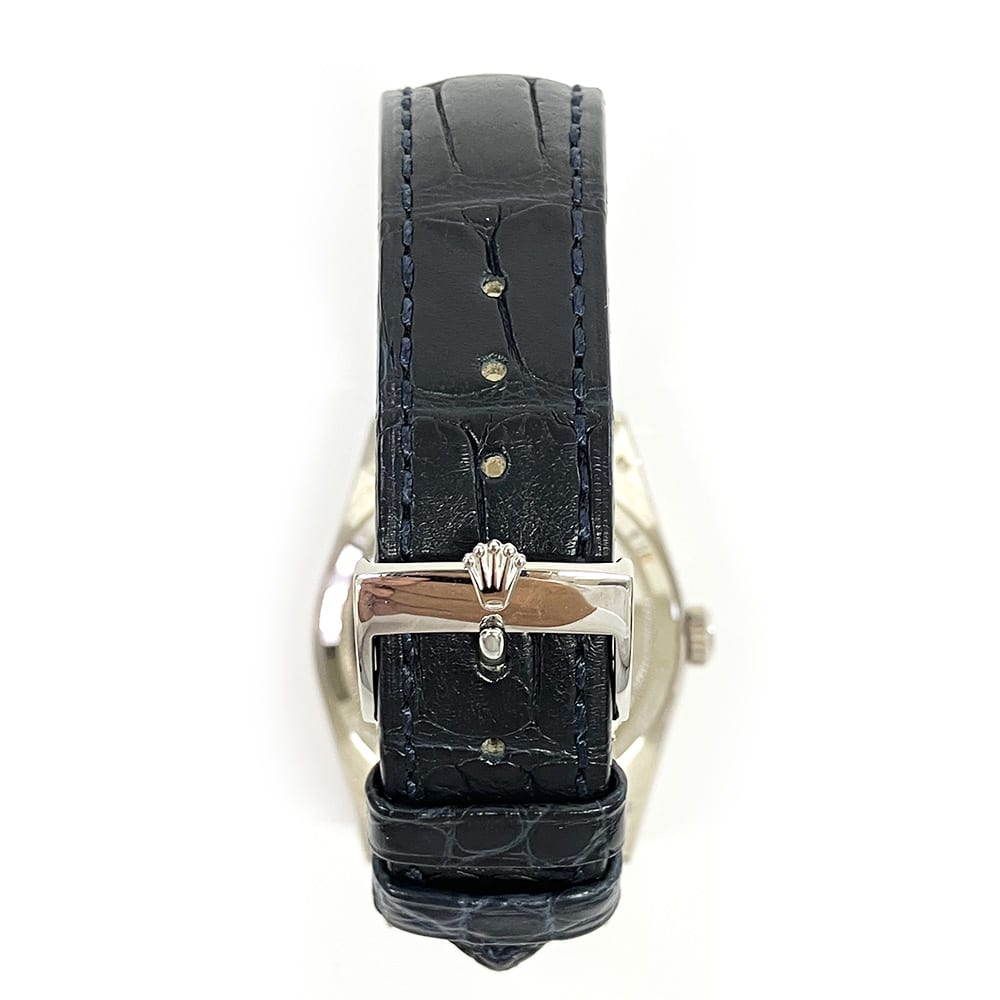
Rolex doesn’t often do buckle-style clasps anymore, but when it does, it’s usually for the Cellini line. These use a traditional pin and tang buckle—no folding parts, just a simple, elegant strap fastener made from solid 18k gold.
Minimalist and understated, they suit thinner, dressier watches that tuck neatly under a cuff.
Behind the polished metal exterior, all Rolex clasp types are packed with subtle engineering features.
Most Rolex clasps include internal spring bar holes for fine-tuning the bracelet fit. Shifting the spring bar just one position changes the length by about 2mm. That may not sound like much—but on a humid day, when your wrist expands ever so slightly, it makes all the difference.
Only seen on Rolex dive watches, these triple-folding extensions hide under the clasp and can add 26mm of length. Used together with Glidelock, they ensure a snug, comfortable fit over even the bulkiest wetsuit.
First released in 1996, the Easylink system adds or removes 5mm of bracelet length in seconds. It’s perfect for adjusting throughout the day as your wrist naturally changes size.
You’ll find it on most modern Oyster and Jubilee bracelets—especially on models like the Datejust 41, Sky-Dweller, and Oyster Perpetual.
Found only on watches with the Crownclasp, this mechanism opens with a press of the tiny Rolex coronet. It’s subtle and keeps the closure point invisible when worn—a smart blend of form and function.
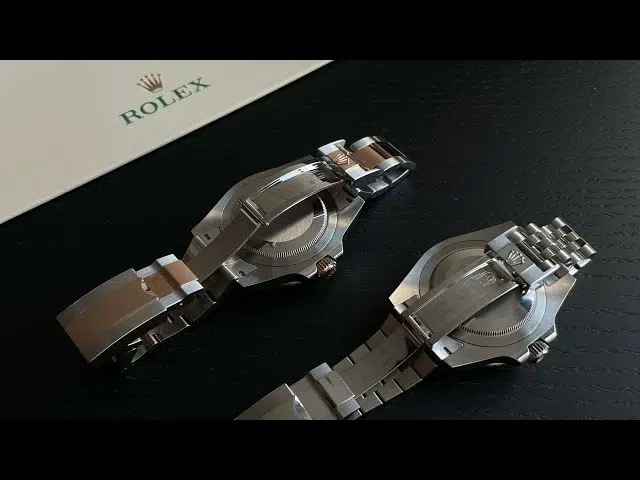
The inside of your clasp isn’t just polished steel—it’s a record of history.
Before 2011, Rolex used a code that combined letters and numbers to mark the month and year of production. For example, “OP9” = September 2006. The first one or two letters stood for the year, the number for the month.
You’ll usually find these on the underside of the clasp or the inner hinge, depending on the model.
After 2011, Rolex stopped using traceable date codes. The new system assigns random three-character alphanumerics. It’s part of Rolex’s shift to conceal production data—making counterfeiting harder and protecting their famously secretive production volumes.
Gold bracelets often follow their own set of rules, sometimes using four-digit numeric codes or extra letter suffixes.
For collectors, matching clasp codes with case serials helps verify authenticity and trace originality. While slight mismatches aren’t unusual—especially after servicing—major discrepancies can raise red flags.
Professional models also include reference numbers that hint at bracelet compatibility and material (e.g., a Submariner’s 93250 code reveals it’s built for the 16610 model).
Here is the added section “Rolex Clasp Types by Model” based on the article content and additional trusted references, written in clear American English and integrated naturally:
The Rolex Submariner uses the robust Oysterlock folding safety clasp combined with the Glidelock extension system. This combination ensures secure closure plus micro-adjustments (in 2 mm increments up to ~20 mm) that are ideal for diving or everyday wear in active environments.
For the Datejust, Rolex typically fits the Oysterclasp (a simpler fold-over deployant with no extra safety latch) often paired with the Easylink 5 mm extension for comfort changes. This is consistent with its dress-sport profile.
The GMT models (such as the GMT-Master II) use the Oysterlock clasp—offering the safety lock—and often include the Easylink adjustment system rather than the full dive-style Glidelock. The extra security suits the traveler/sports watch character.
On the Explorer line, Rolex also uses the Oysterlock clasp with the Easylink extension. While it may appear simpler than a diver’s clasp, the extra safety catch suits the professional/sport mindset of the model.
The chronograph Daytona features the Oysterlock clasp with Easylink micro-adjustment. Given its high-performance sport appeal, the added locking mechanism supports reliability under active use.
In the more classic, everyday Oyster Perpetual models, Rolex fits the Oysterclasp — the straightforward folding clasp without fold-over safety — aligning with its less extreme performance role.
The Day-Date typically uses the Hidden Crownclasp (also known as Crownclasp) when mounted on the President bracelet: a concealed folding mechanism where only the Rolex coronet is visible when closed. This offers elegance suited for the high-end, dress-watch character of the Day-Date.
A Rolex clasp is designed to last—but like any moving part, it needs care.
Locate the small holes inside the clasp to adjust the spring bar. Each one shifts the length by 2mm. If your watch has the Easylink, just flip it in or out—no tools required. It’s quick, intuitive, and avoids the hassle of removing links.
Don’t pry or yank.
For the Oysterlock, lift gently from the Rolex crown. On Crownclasps, apply soft pressure to the coronet logo—it releases like magic. If your clasp ever feels stuck, stop and seek a pro. Forcing it can lead to misalignment or wear.
Cosmetic scratches are normal and easy to buff out. But if your clasp doesn’t hold securely or doesn’t “click” properly when closed, it’s time to replace it.
Rolex dealers follow a strict policy here: if you swap your clasp, the old one goes back to Geneva. Expect a hefty bill—it’s Rolex, after all—but the precision is worth it.
A few ways to spot a fake clasp:
Genuine Rolex clasps snap closed with purpose. Counterfeits often feel spongy or misaligned.
A Rolex clasp isn’t just a closing mechanism. It’s a small, dense masterpiece—engineered for daily use, tested under real-world conditions, and quietly refined over decades. And while the average owner might never think twice about it, those who do will find layers of precision and purpose built into every hinge and blade.
Next time you snap your Rolex on, give the clasp a second thought. It’s not just a piece of metal—it’s a design story you interact with every single day.
Rolex offers several clasp types, including the Oysterlock, Oysterclasp, Glidelock, Crownclasp, and traditional buckle. Each serves specific purposes and appears on different watch models, with features ranging from enhanced security to elegant concealment.
Most Rolex watches allow for micro-adjustments within the clasp. You can reposition the spring bar in small holes inside the clasp, each adjustment changing the bracelet length by about 2mm. Some models also feature the Easylink system, allowing a quick 5mm extension or contraction.
The Glidelock clasp is Rolex’s most advanced extension system, allowing divers to expand their bracelet by approximately 20mm in 2mm increments without tools. It’s exclusively featured on professional dive watches like the Submariner and Sea-Dweller models.
Rolex clasp codes, found inside the clasp, indicate manufacturing dates. Pre-2011 codes use letters for years and numbers for months, while post-2011 codes are random. These codes help verify authenticity, confirm original bracelets, and are valued by collectors for matching watch and bracelet dates.
Authentic Rolex clasps have precise, deep engravings, symmetrical crown logos, high-quality materials, and solid construction. They open and close with a satisfying click and feature unique serial numbers or clasp codes. The overall quality and attention to detail are significantly higher than counterfeits.
Ronald Reagan’s watch choice reveals a fascinating story about presidential style and tradition. During his time as the 40th President, Reagan wore a steel

Elon Musk’s watch collection mirrors state-of-the-art technology and understated luxury, just like the man himself. The world’s richest person, worth $146 billion, doesn’t always choose
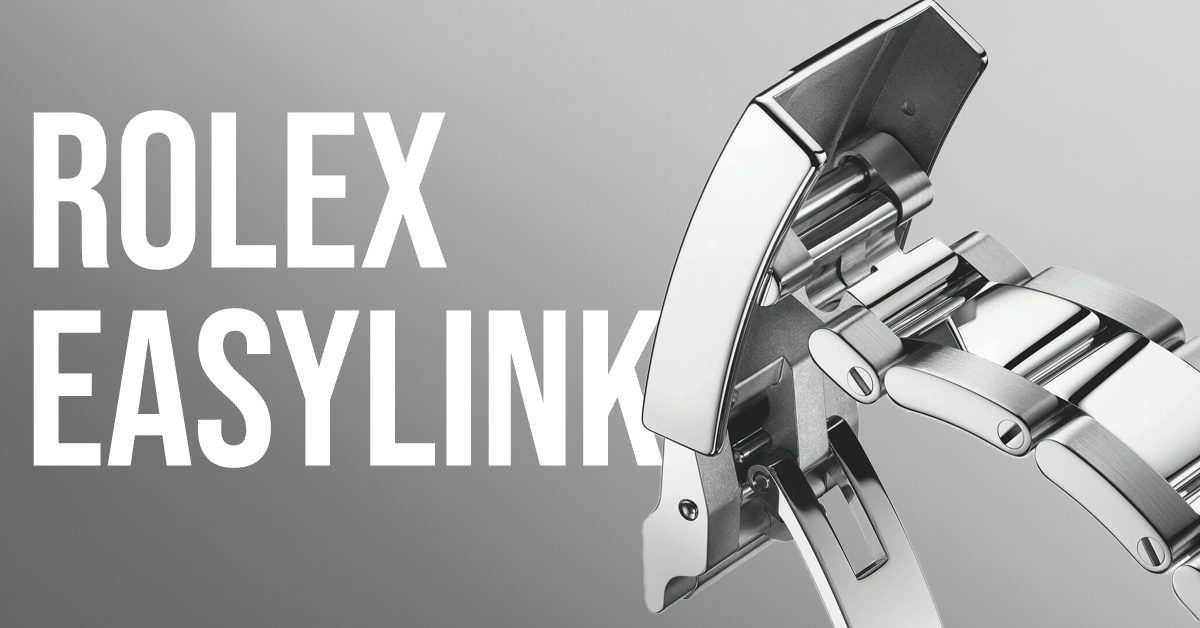
What is Rolex Easylink? Rolex Easylink is a patented micro-adjustment system that lets you fine-tune your bracelet length by exactly 5mm without any tools. This