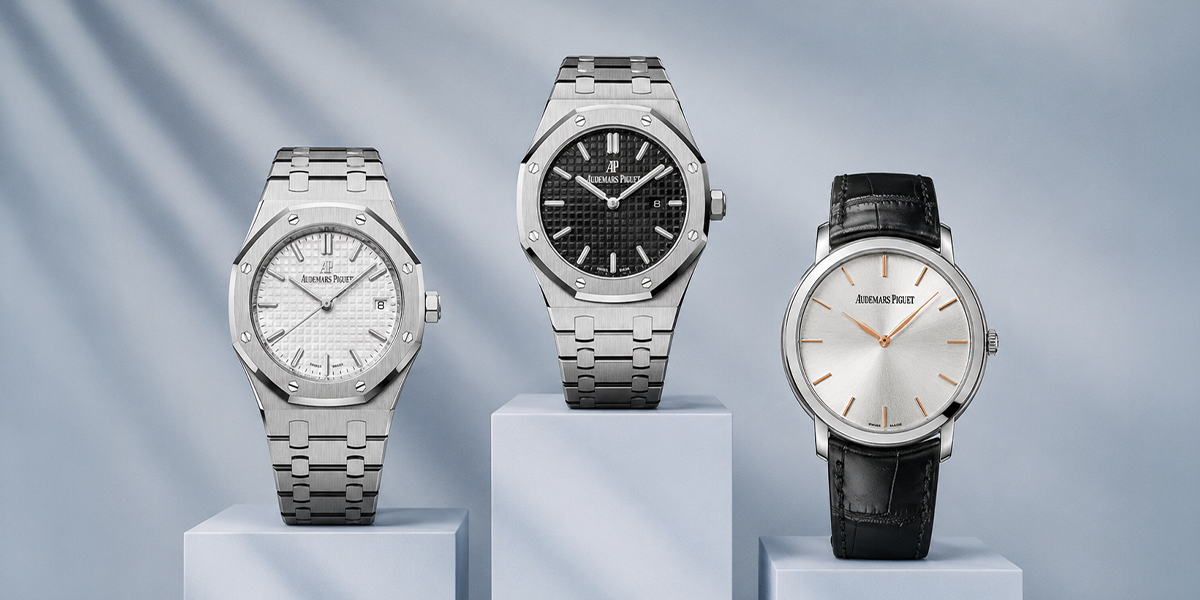
9 Cheapest AP Watch Options: Affordable Audemars Piguet Watches
You do not have to spend six figures to purchase an Audemars Piguet watch. However, even the most inexpensive AP watch is a serious investment.

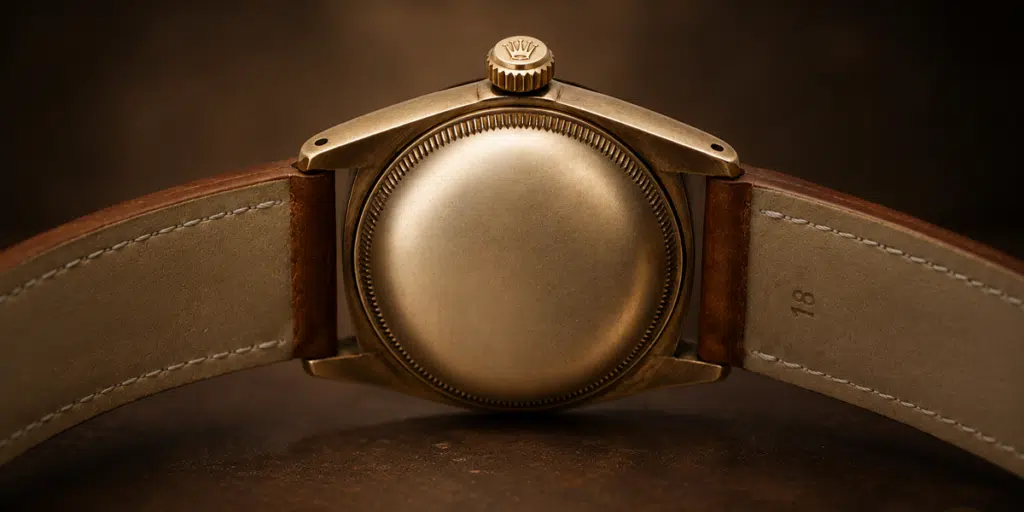
Rolex Bubbleback is a term used to describe an early vintage automatic wristwatch made by Rolex from 1933 through the mid-1950s. It’s easily identified by its bulged caseback which makes room for the depth of the first automatic rotor movements. It was called the Bubbleback by watch collectors, it was never an official nickname by Rolex. Bubbleback nickname is derived from the large bubble appearance of the caseback when looking at the watch laterally.
This watch marks Rolex’s first production of two separate breakthroughs. One being the original waterproof Oyster case. The other the automatic Perpetual movement. Together they created the Rolex Oyster Perpetual watch line. It was also technically the first waterproof wristwatch with a self-winding movement to be mass-produced and reach commercial success. Bubblebacks solve a problem that plagued every watchmaker up until 1933. Wind your watch every day and you run the risk of dirt and dust entering the case through the mechanism.
Function, not fashion, dictated the introduction of the bubble-shaped caseback. Rolex’s new automatic movements utilized a 360-degree winding rotor, considerably thicker than traditional manual- wind movements. To accommodate this extra height while maintaining normal case thickness from the dial side, Rolex engineers bulged the caseback outward like the back of a balloon. Paired with convex acrylic crystals, these early Oyster Perpetual watches possessed a very distinctive profile unlike any other watches of the time.
The Bubbleback family covers a remarkably diverse collection of references spanning about two decades of production. Reference numbers range from the 1,000-series through the 8,000-series. Collectors have documented at least 172 distinct Bubblebacks when accounting for variations in metals and case configurations. This extensive variety reflects the long production run and has cases in stainless steel, solid 18k yellow gold, pink gold and two-tone combinations known as Rolesor. Case sizes ranged from 30mm to 34mm, with a 24mm ladies’ version that Rolex introduced in 1941 using the caliber 420 movement.
Dial configurations span an exceptional breadth of design styles, from Art Deco to Bauhaus esthetics. They incorporate applied or luminous Arabic and Roman numerals, California dials mixing both numeral styles, sector dials and subsidiary seconds configurations. This diversity makes detailed cataloging nearly impossible, as collectors keep finding new dial and case combinations. Collectors particularly seek after early references like 2940 and 3131 for their historical significance and comparative rarity, while later examples such as references 3372 and 5015 feature more refined dials and cleaner case proportions.
The Bubbleback achieved major collector status during the 1980s and early 1990s. It became the most popular vintage Rolex model at that time, before the later enthusiasm for vintage Daytonas, Submariners and GMT-Masters took hold. Collectible two-tone pink gold examples with original dials could command USD 9,000 to USD 12,000 during this peak period, while most stainless steel versions sold for USD 3,000 to USD 5,000. Models featuring hooded lugs were especially desirable as they provided larger wrist presence, along with those paired with matching Gay Freres beads-of-rice bracelets.

Image Source: Instagram
The development timeline of the Rolex Bubbleback spans from the early 1930s through the mid-1950s. This period saw wristwatches still establishing dominance over pocket watches, and manual winding remained the standard for most timepieces.
Hans Wilsdorf understood that any waterproof watch forced to be manipulated everyday to wind the crown would defeat the sealed case principle. Working with movement supplier Aegler, he pioneered a fully rotating 360-degree rotor that winds the mainspring automatically with motion of the wearer’s wrist. Rolex patented its Perpetual rotor in 1931 and it became the basis for every automatic movement Rolex would use since.
Rolex decided not to build a completely new caliber but modified calibers that were already hand winding movements by placing the automatic winding unit on top of a base caliber. This way allowed owners the option to manually wind their watch should they choose to and would help them transition to this new technology with fewer moans and complaints about the movement “breaking”. This unit required more top and bottom clearance than a flat movement. This design change resulted in a raised caseback which all Bubblebacks are known for.
Reference 1858, the first Bubbleback produced in 1933, came with caliber 520 movement in a 32mm case manufactured in three pieces. This watch was the first production watch to sport the name Oyster Perpetual on its dial. Oyster represented the waterproof case introduced all the way back in 1926 and Perpetual represented the new movement. Rolex switched to a two-piece case in 1936 with references 3131 and 3132.
Bubblebacks reached their peak in production during the 1940s. The largest assortment of dial styles and case variations were produced during the 1940s. The medium 32mm reference models became the iconic look with references 3372 and 3131 being the two most well known. The ladies 24mm size was added to the lineup in 1941, also featuring caliber 420. This movement added to both men’s and ladies collections.
Cases included stainless steel, solid 18k yellow gold, pink gold, and two tone Rolesor in several references. Dial styles consisted of Art Deco, Bauhaus, subsidiary seconds, hooded lugs and even different bezel styles.
Early Perpetual movements featured single-direction winding that operated only during clockwise rotor rotation. Rotor weight distribution became critical for winding efficiency. This limitation required thick, heavy rotors that needed caseback protrusion, with earlier models exhibiting more pronounced bulges than later versions.
The introduction of caliber 1030 around 1950 altered movement architecture through the implementation of bidirectional winding technology. This advancement used red anodized aluminum wheels in the self-winding module for the first time in a Rolex caliber and improved winding efficiency. The bidirectional system reduced rotor thickness requirements and made slimmer case profiles possible. These profiles eliminated the need for domed casebacks.
Rollomatic caliber developments in the early 1950s, including the improved caliber 645 allowed for a much flatter case. Flatter case profiles made the bubble design unnecessary. By the mid 1950s Rolex had stopped production of the Bubbleback and replaced it with the more contemporary reference 6000 series. Models with simplistic dial designs continued to sell well into the early 1960s. Rolex debuted the prototype Explorer in 1952 which officially ended the Bubbleback production run of just over 18 years.
The bubble-backed case was born out of necessity when Rolex began to offer automatic winding movements in waterproof Oyster cases. The early automatic movements used rotors that were significantly thicker than manual-wind movements. A rotating weight must have room to travel upward 180 degrees and down again in order to power the mainspring. Due to this bulkiness there was no way that a flat caseback could fit on the watches.
Rolex’s solution was to pop the caseback outward but keep the normal case thickness on the dial side of the watch. In effect, this kept the profile of the watch flat from the front view. Since the automatic winding rotor was placed on top of a manual- wind base movement (the rotor was never incorporated into a complete caliber), the thickness of both movements put together was too thick for a traditional case.
The automatic winding rotor could not fit under a flat caseback because the first Perpetual movement was too thick. Remember that these early rotor movements used relatively large parts by today’s standards. Rolex improved upon these early designs as they introduced new calibers over the years. They needed room for the rotor yet keep the thickness of the watch equal to that of its manual-wind predecessors when looking at the watch from the dial side. Viewed from the side, some aficionados describe the watch as having an egg shape.
Rolex wanted a flat caseback, but the technology of the day would not allow it. Technology, however, would change and so did the caseback design. As Rolex designed thinner calibers during the 1940s and 1950s, the problem became a non-issue and Rolex was able to introduce flatter Oyster Perpetual references such as the 60.10 and 60.84/85. Once they were able to accommodate the automatic winding movement without popping the caseback, the bubble was history.
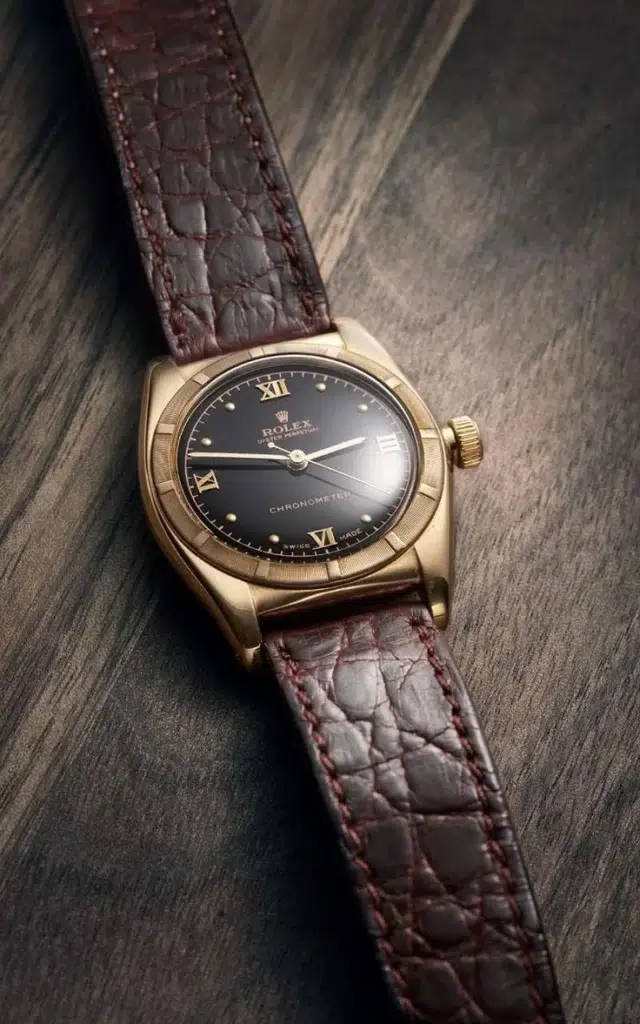
image Source: Reddit
Rolex experimented with dial esthetics throughout Bubbleback production. The company created many numeral styles, finishes and textures during the two-decade manufacturing period. This variety reflects both evolving design priorities and the company’s efforts to offer customers diverse esthetic options within the same technical platform.
The California dial configuration combines Roman numerals in the upper half with Arabic numerals in the lower half. This distinctive mixed-numeral layout became highly desirable among collectors. Reference 3595 introduced this dial style to the Bubbleback family and followed Rolex’s 1942 patent for what the company designated as the “Error Proof” dial. The patent documentation specified that this arrangement provided clear hour indication, aided easy creation with luminous materials and boosted time reading on relatively small wristwatch dials.
The “California” nickname emerged decades after production ceased. Japanese buyers sought these specific dial configurations from Los Angeles-based vintage watch dealers in the 1980s. A local dial refinisher named Kirk Rich produced many reproductions with the Roman-Arabic layout when original supply diminished. These became associated with California due to their West Coast origin. Original California dials feature solid-color backgrounds with radium luminous numerals, whereas refinished versions often display varied color combinations without luminescent material.
Black gilt dials are extremely uncommon lacquer dials. They have gold printing which patinas in unique ways. Black lacquer versus gilt text opens up the dial in an elegant fashion. The gilt ages to a gold color once the radium in the lume oxidizes. They are often hard to authenticate due to the premium price tag they hold.
Honeycomb dials have textured surfaces with a recessed pattern of hexagonal cells. They give the dial more depth and complexity. Texture allows the dial to catch light in different ways creating interesting surface properties not seen on smooth dial finishes. This style is indicative of a certain period of Rolex history. Early professional grade Datejusts, Submariners and some early Explorers featured honeycomb dials.
Bubblebacks also had applied or luminescent Arabic numerals, Roman numerals or combinations of geometric markers in place of the California style. Some bubblebacks featured Art Deco styling with an upside down triangle at 12 o’clock and box shaped indices on the cardinal directions. The numbers 1, 2, 10 and 11 would be in Roman numerals while the numbers 4, 5, 7 and 8 were Arabic numerals. There were also Explorer style black gilt dials with simple Arabic numerals and gold printing made before the launch of the Explorer watch.

Image Source: Instagram
Several reference numbers achieved particular prominence within the Bubbleback family. Each represented distinct stages in case construction, movement technology and material offerings across the production era.
Reference 1858 marked the inaugural Bubbleback model when Rolex released it in 1933. This established the foundation for what would become the Oyster Perpetual collection. The reference housed the caliber 520 automatic movement within a three-piece waterproof case. The case consisted of bezel, middle case, back cover and movement holder. The three-piece construction used a threaded inner sleeve that distinguished early models from later iterations. Satin finishing was applied horizontally on early versions before transitioning to vertical orientation.
Case dimensions measured between 30.5mm and 32mm in diameter. Production spanned both stainless steel and gold variants in a variety of dial configurations. The 1858 carried exceptional historical significance as Rolex’s first automatic caliber implementation. This made it the brand’s inaugural Oyster Perpetual despite bearing little visual resemblance to modern iterations. Examples equipped with the cal. 520 movement featured engraved handling instructions on early calibers. This added documentary value for collectors.
Rolex introduced references 3131 and 3132 in 1936. These implemented a refined two-piece case construction that replaced the earlier three-piece architecture. Reference 3131 measured 32mm in diameter and was produced only in yellow or rose gold with either smooth or engine-turned bezels. The model used the caliber 620 automatic movement and appeared in many dial configurations. These spanned luminous pencil handsets, solid feuille hands and rarer spade-type hands.
Reference 3372 emerged in the early 1930s. It featured a distinctive chased and engraved bezel with baton and dot hour markers at each position. This 32mm reference achieved recognition for its striking esthetic presence and remained in production through the 1940s. Examples appeared in gold cases paired with matching Gay Freres bracelets. Both the 3131 and 3372 represented peak-era production models that became highly recognizable among collectors.
Bubbleback case materials covered stainless steel, two-tone steel and gold combinations, and solid gold in yellow, rose and occasionally white gold variants. Solid gold examples commanded premium pricing relative to their scarcity. Pink gold Bubblebacks achieved strong collector demand especially. Collectible two-tone pink gold cases with original dials and matching Gay Freres beads-of-rice bracelets sold for USD 9,000 to USD 12,000 at market peak. Stainless steel Bubblebacks sold on straps for USD 3,000 to USD 5,000 in contrast.
The material composition influenced both original retail positioning and subsequent collector valuation directly. Solid gold references targeted premium market segments as opposed to steel models marketed as durable everyday watches.
The serial number located between the lugs at 12 can be used to authenticate an original Bubbleback. Dial refinishing and replacement parts became epidemic throughout the Bubbleback’s run. Movement calibers can also prove helpful to verify with the reference number located between the lugs at 6. Watches were frequently serviced with incorrect movements installed.
Serial numbers will date your watch, but cross check with verified Rolex production records. Dial refinishing was (and still is) common. Spot a redial by inspecting font quality, print quality and patina that is consistent with watch’s age. Look for overly defined details on an originally worn dial as refinishers often “age” a new dial. Case condition can be pretty obvious if the case has been over polished. Over polishing will remove definition from the original case lines and proportions. Bubbleback cases were brushed in a unique pattern which adds value to the watch. Restorers can’t reproduce the original brush pattern. If you are having someone authenticate your watch, make sure they know vintage watches or are a dealer who stands behind the authenticity of their watches.
Expect to pay between USD 5k and USD 8.5k for a common steel Bubbleback in good condition. Rare dial configurations in solid gold will start around USD 30k. The California dial will double the value of a common reference. I’ve noticed prices varying 10- to 20- times depending on dial rarity, case material and condition. The reference number does not typically affect value as it use to. A solid steel watch all-original with a perfect dial will hold its value better than a solid gold watch with replacer parts or a refinished dial. Reference 29.40 has experienced volatility of 31.1% which is higher than 92% of all watches.
To keep your vintage Bubbleback running smoothly, have the watch serviced every three to five years. Parts can be difficult to come by with the auto axle being the part that wears out most frequently. The auto axle is the thin post that the heavy rotor spins on. Find a watchmaker that is familiar with vintage Rolex movements. As most movements age, they become harder to work on. Bubblebacks aren’t water proof and shouldn’t be exposed to heavy magnets.
You do not have to spend six figures to purchase an Audemars Piguet watch. However, even the most inexpensive AP watch is a serious investment.
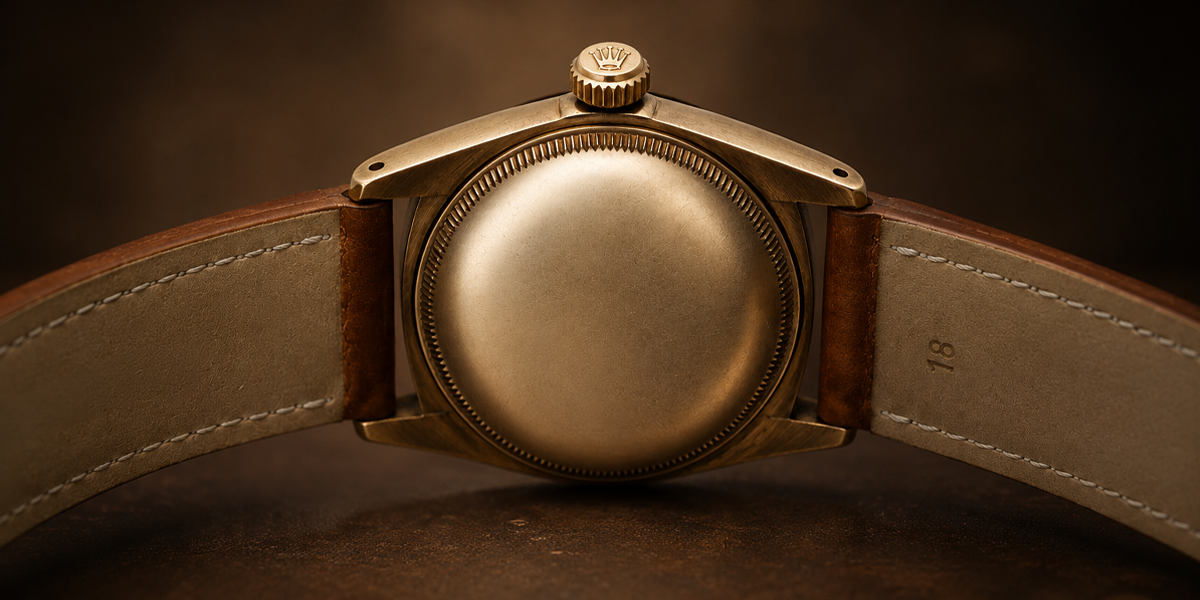
What is a Rolex Bubbleback? Rolex Bubbleback is a term used to describe an early vintage automatic wristwatch made by Rolex from 1933 through the
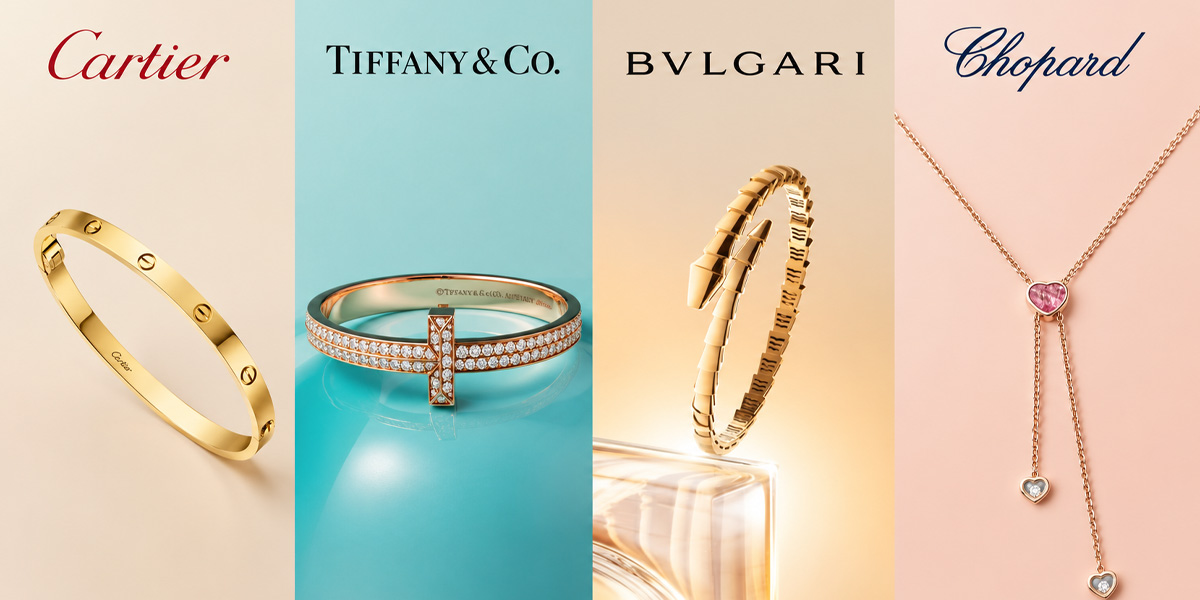
Yearly trends keep changing the fashion world, and jewelry is no exception. There are new trends and classics popping up every year. Jewelry is a luxury to