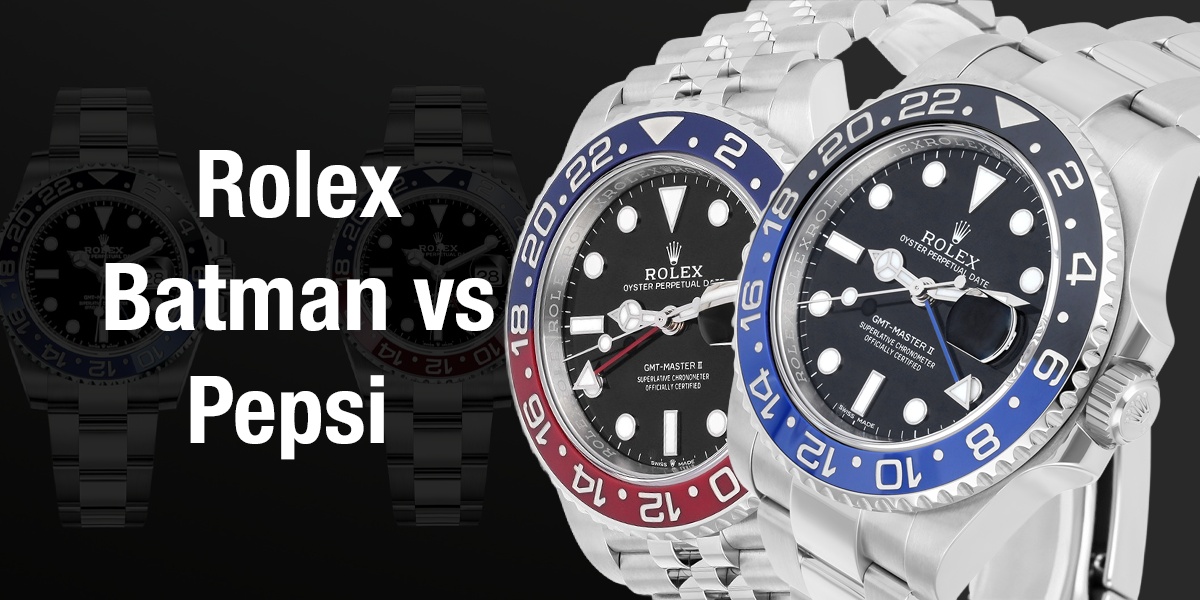
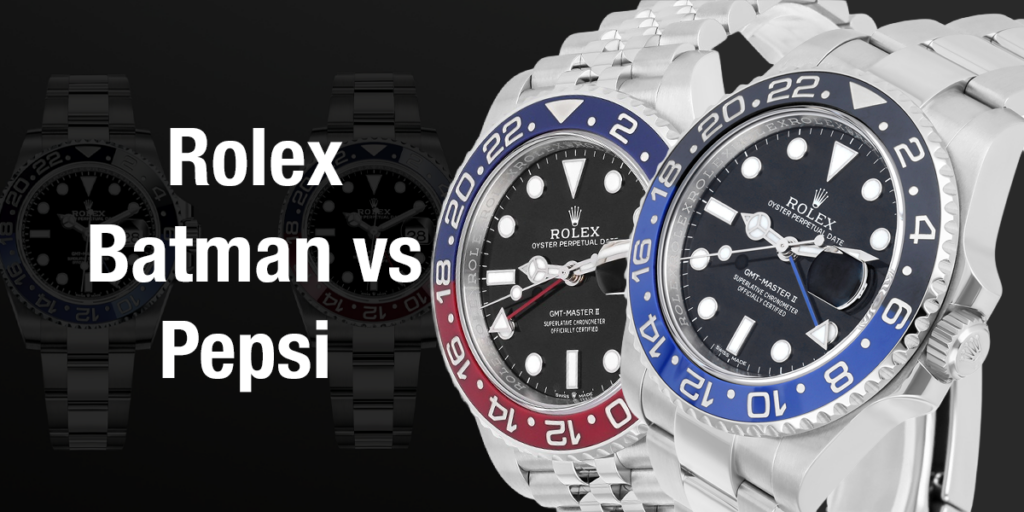
Rolex Batman vs Pepsi: Price, Specs, and Investment Value Compared
The choice between the Rolex Batman vs Pepsi goes beyond bezel colors. These two GMT-Master II models share similar technical specifications but trade at vastly

The choice between the Rolex Batman vs Pepsi goes beyond bezel colors. These two GMT-Master II models share similar technical specifications but trade at vastly different prices on the secondary market. The Pepsi ranges from $22,000 to $27,000. The Batman trades between $17,000 and $21,000. Both retail for $12,000 at authorized dealers, yet demand exceeds supply by a huge margin. This piece breaks down the Rolex GMT Batman vs Pepsi comparison and covers design differences with the Rolex Batman vs Pepsi price gap. We also look at which offers better Rolex Batman vs Pepsi investment potential to collect.
The GMT-Master debuted in 1955 through collaboration between Rolex and Pan American Airways. Pan Am needed a watch that could display two time zones at once for pilots flying transatlantic routes. Rolex responded with reference 6542, featuring a fourth hand tracking a 24-hour cycle paired with a rotating bezel graduated in 24 hours.
The red and blue bezel served a practical purpose. Blue represented nighttime hours while red indicated daytime. Pilots could distinguish between day and night at a glance. The bezel was crafted from Bakelite at first, but the material proved problematic as it cracked under stress and contained glowing radium numerals that posed radiation hazards. Rolex replaced Bakelite with aluminum in 1959 with the launch of reference 1675.
The Rolex GMT Batman vs Pepsi story took a dramatic turn in 2013. Rolex introduced reference 116710BLNR, nicknamed the Batman, featuring the first bi-color ceramic bezel in black and blue. Rolex had stated before this release that producing two-tone ceramic bezels was impossible.
The breakthrough came through a patented process. Rolex created a porous blue ceramic insert and then added black to the top half before hardening. The ‘BLNR’ designation stands for ‘Bleu Noir,’ French for ‘Blue Black’. This model ran on Caliber 3186 with a 48-hour power reserve and came with an Oyster bracelet.
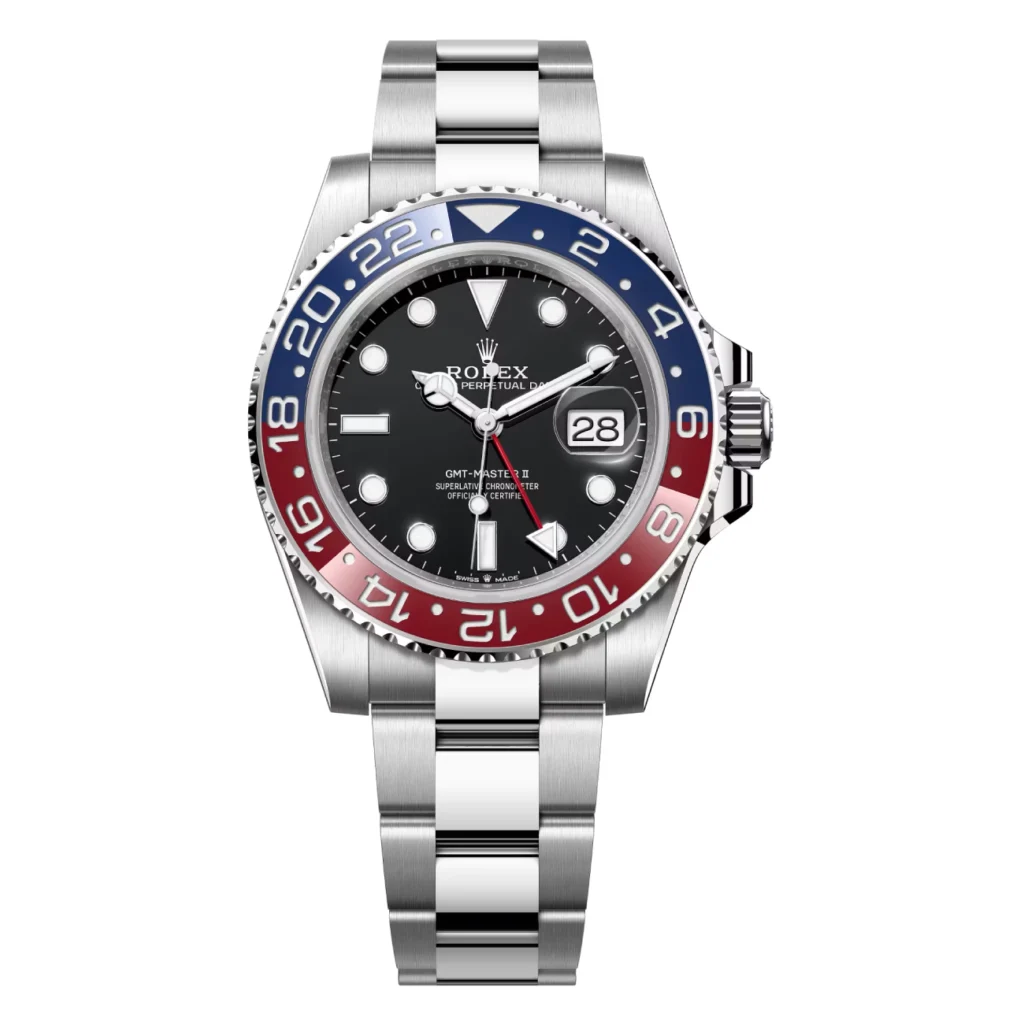
The Pepsi returned in ceramic form with reference 116719BLRO in 2014, but only in white gold due to production difficulties with the red ceramic. The steel Pepsi arrived in 2018 as reference 126710BLRO, paired with a Jubilee bracelet and the new Caliber 3285 movement offering 70 hours of power reserve.
The Batman received its first update as reference 126710BLNR in 2019. The new version switched from Oyster to Jubilee bracelet and adopted Caliber 3285. Rolex reintroduced the Oyster bracelet as an option for both the Rolex Pepsi vs Batman models in 2021.
1955: Reference 6542 debuts with Bakelite Pepsi bezel
1959: Reference 1675 switches to aluminum bezel
1989: Reference 16710 GMT-Master II offers Pepsi option
2013: Reference 116710BLNR Batman debuts with bi-color ceramic
2014: Reference 116719BLRO brings ceramic Pepsi in white gold
2018: Reference 126710BLRO delivers steel ceramic Pepsi
2019: Reference 126710BLNR updates Batman with Jubilee
2021: Oyster bracelet returns as option for both models
The bezel represents the most obvious difference in the Rolex GMT Batman vs Pepsi debate. The Pepsi features a red and blue Cerachrom ceramic insert where red indicates daytime hours (6AM-6PM) and blue represents nighttime on the 24-hour scale. This color combination creates bold, high-contrast esthetics. The red appears slightly brighter in sunlight while the blue segment shows subtle gradient effects depending on viewing angle.
The Batman’s black and blue Cerachrom bezel delivers a more subdued palette. The transition between colors appears more subtle. The black section absorbs light while the blue responds to it. The Pepsi bezel connects directly to aviation heritage, whereas the Batman presents a contemporary interpretation of GMT functionality. Many collectors note that the Batman coordinates more with business attire, while the Pepsi makes a dramatic statement.
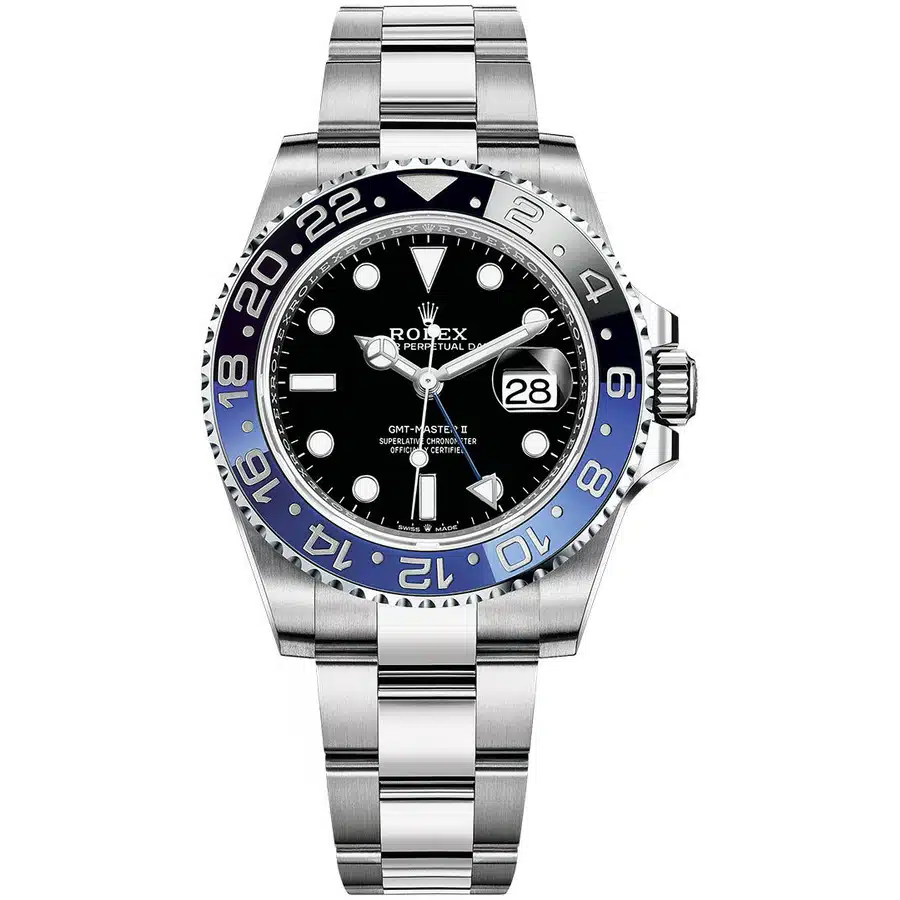
Both models share similar 40mm Oystersteel cases with 100 meters of water resistance. The case measures 12.1mm thick with a 48mm lug-to-lug distance. Rolex uses Oystersteel from the 904L steel family. This material offers exceptional corrosion resistance and maintains its finish in harsh environments.
The glossy black dial features crisp white indices filled with Chromalight luminescent material that emits a long-lasting blue glow in darkness. The dial layout has conventional hour, minute, and seconds hands plus an arrow-tipped 24-hour hand that circles once every 24 hours. A scratch-resistant sapphire crystal with Cyclops date magnifier sits above the dial. Both the Rolex Pepsi vs Batman models maintain this symmetrical dial configuration for optimal legibility.
Current production models come standard on the five-link Jubilee bracelet. This bracelet offers greater flexibility and a dressier appearance. The Jubilee features polished center links that catch light and create visual complexity. Rolex created this bracelet in 1945 and it provides supple comfort with its smaller, more articulation points.
The three-link Oyster bracelet presents a sportier, more utilitarian esthetic with broader brushed surfaces. Previous Batman models (116710BLNR) featured Oyster bracelets. Some enthusiasts seek discontinued Oyster-equipped versions for their tool-watch character. Both bracelets have the Oysterlock folding safety clasp and Easylink comfort extension that allows about 5mm length adjustment.
The Rolex Batman vs Pepsi investment consideration extends to styling versatility. The Batman’s darker color palette adapts to professional environments and daily wear without drawing excessive attention. The Pepsi leans toward expressive, heritage-driven styling. Bold colors make it visually distinctive in social settings.
Both the Rolex GMT Batman vs Pepsi models run on Caliber 3285, an entirely in-house manufactured self-winding mechanical movement. This caliber has the patented Chronergy escapement constructed from nickel-phosphorus, delivering high energy efficiency while resisting strong magnetic fields. The movement features a paramagnetic blue Parachrom hairspring that maintains stability across temperature variations and offers exceptional shock resistance.
The power reserve extends to around 70 hours, a substantial improvement over previous GMT movements. This extended reserve results from optimized barrel architecture combined with the Chronergy escapement’s superior efficiency. The oscillator has a large balance wheel with variable inertia, regulated through gold Microstella nuts and mounted on Rolex-designed Paraflex shock absorbers for boosted durability.
The Rolex Pepsi vs Batman models display two time zones at once through a 24-hour hand and bidirectional rotatable bezel. The winding crown operates in four positions: position 0 (fully screwed), position 1 (manual winding), position 2 (independent hour hand adjustment), and position 3 (complete time setting). Position 2 allows rapid-setting of the local hour hand in one-hour increments without stopping the watch or affecting the 24-hour GMT hand.
You can track a third time zone by rotating the bezel to arrange with the 24-hour hand, though only two zones display at once. The date changes instantaneously at midnight and links to local time rather than home time.
The 40mm Oyster case guarantees waterproofness to 100 meters (330 feet). The Triplock winding crown contains three sealed zones and around 10 components that have polymers for watertight seals and Oystersteel for mechanical elements. A scratch-resistant sapphire crystal protects the dial.
Every GMT-Master II receives Superlative Chronometer certification with dual testing stages. The movement first earns official chronometer certification from COSC and then undergoes additional Rolex testing after casing. The precision tolerance reaches -2/+2 seconds per day, substantially stricter than COSC’s standard acceptance criteria. This testing protocol simulates actual wearing conditions rather than static laboratory environments.
Rolex implemented price increases across the GMT-Master II lineup in 2026. Stainless steel models rose between 4.97% and 5.06%. The Batman now retails at $11,800 on the Oyster bracelet and $12,000 on the Jubilee configuration. The Pepsi carries an official list price of approximately $10,700 for the stainless steel version. These adjustments marked a big increase for stainless steel references. Previous years saw precious metal variants get larger percentage jumps.
The 2026 pricing changes narrowed the gap between authorized dealer costs and secondary market values. Some models now trade below retail on gray market platforms, especially in precious metal configurations. This move represents a most important market correction from the speculative peaks of 2022.
Secondary market pricing reveals a large premium over retail for both models. The Batman trades between $17,500 and $20,000 depending on condition and bracelet type. The discontinued reference 116710BLNR has found a consistent floor around $14,800. The current 126710BLNR commands higher premiums.
The Pepsi occupies a more elevated price bracket. Pre-owned stainless steel examples exceed $20,000, with newer models in exceptional condition reaching toward $27,000. Market listings show unworn 2026 Pepsi models trading around $34,000 to $36,000. This price disparity stems from the Pepsi’s heritage status and its connection to nearly 70 years of GMT-Master history.
Getting either model at retail requires patience. The Pepsi stands as one of the most difficult Rolex models to get from authorized dealers. Wait times can extend to ten years. Some salespeople decline to add names to lists altogether. Valued customers with purchase histories they’ve built over time might secure one within five years.
The Batman presents better odds, though multi-year wait times remain standard. Both models demonstrate demand that production capacity is nowhere near matching. This drives the strong secondary market premiums.
Bracelet choice influences resale values in subtle ways. The Pepsi on an Oyster bracelet is less common than the Jubilee version and often commands a slight premium due to lack of availability. Certain bracelet and bezel combinations carry rarity premiums that affect transaction prices in the pre-owned market.
Investment performance is different between these two GMT siblings. The Pepsi (126710BLRO) has appreciated 100-150% above current retail since its 2018 launch. The Batman (126710BLNR) demonstrates 60-100% appreciation since its 2019 debut on the Jubilee bracelet. Both models experienced peak valuations in 2022 before the luxury watch market went through systematic corrections.
The discontinued 116710BLNR Batman on an Oyster bracelet has nearly doubled in value from its original retail price of around $9,250. This discontinued reference now trades around $15,000 to $18,000, and collectors show increasing interest in pristine examples with complete documentation. Market data confirms the Pepsi commands 85% to 125% premiums above retail. The Batman trades at 40% to 75% over authorized dealer pricing.
The Pepsi benefits from its direct connection to the original 1955 GMT-Master created for Pan American Airways. This aviation heritage contributes to its collectibility and enduring appeal among serious collectors. The two-tone red and blue ceramic bezel presents greater manufacturing challenges, which may limit production numbers compared to the Batman’s single-color bezel.
The Batman represents technical state-of-the-art as the first bi-color ceramic GMT bezel. Its black and blue color scheme offers greater versatility for daily wear, which may increase long-term desirability among collectors who wear their watches. Expert analysts suggest the Batman’s more versatile esthetics contribute to broader market appeal.
The luxury watch market has stabilized following dramatic corrections from 2022 peaks. Prices declined around 15% from historical highs. Both GMT models continue commanding high premiums. Production constraints maintain elevated secondary market prices, as Rolex produces around one million watches annually against growing global demand.
The Pepsi offers stronger historical value and higher returns. Its heritage advantage suggests stronger long-term collector appeal. The Batman provides a more available entry point with excellent resale potential and demonstrates the least volatility among GMT models with minimal market fluctuations. Both references represent sound value preservation compared to many luxury items.
|
Feature |
Rolex Batman |
Rolex Pepsi |
|
Current Reference Number |
126710BLNR |
126710BLRO |
|
Bezel Colors |
Black and Blue |
Red and Blue |
|
Introduction Year |
2013 (first version: 116710BLNR) |
1955 (ceramic steel version: 2018) |
|
Movement |
Caliber 3285 |
Caliber 3285 |
|
Power Reserve |
70 hours |
70 hours |
|
Case Size |
40mm |
40mm |
|
Case Thickness |
12.1mm |
12.1mm |
|
Water Resistance |
100 meters (330 feet) |
100 meters (330 feet) |
|
Case Material |
Oystersteel (904L) |
Oystersteel (904L) |
|
Bracelet Options |
Jubilee (standard), Oyster (available) |
Jubilee (standard), Oyster (available) |
|
Dial Color |
Black with white indices |
Black with white indices |
|
Retail Price (2026) |
$11,800 (Oyster) / $12,000 (Jubilee) |
~$10,700 |
|
Secondary Market Range |
$17,000 – $21,000 |
$22,000 – $27,000 |
|
Unworn 2026 Models |
Not mentioned |
$34,000 – $36,000 |
|
Investment Appreciation |
60-100% above retail (since 2019) |
100-150% above retail (since 2018) |
|
Premium Over Retail |
40-75% |
85-125% |
|
Wait Time at AD |
Multi-year (slightly better than Pepsi) |
5-10 years (very difficult) |
|
Heritage Significance |
First bi-color ceramic bezel (2013) |
Original GMT-Master design (1955) |
|
Style Character |
Modern, versatile, subdued |
Bold, heritage-driven, expressive |
|
Best For |
Daily wear, business attire |
Statement piece, collectors |
|
Market Volatility |
Least volatile among GMT models |
Higher volatility, stronger heritage premium |
The Rolex Batman vs Pepsi decision comes down to what matters most to you. The Pepsi offers stronger investment returns and unmatched heritage, but you’ll pay $5,000 to $10,000 more on the secondary market. The Batman provides excellent value retention at a more available price point and greater styling versatility for everyday wear.
Choose the Pepsi if you want maximum appreciation potential and collector prestige. The Batman makes more sense if you prefer better value with a watch you’ll actually wear daily. Both models will hold their value nowhere near as poorly as most luxury purchases, so your personal style should guide the final decision.
The choice between the Rolex Batman vs Pepsi goes beyond bezel colors. These two GMT-Master II models share similar technical specifications but trade at vastly
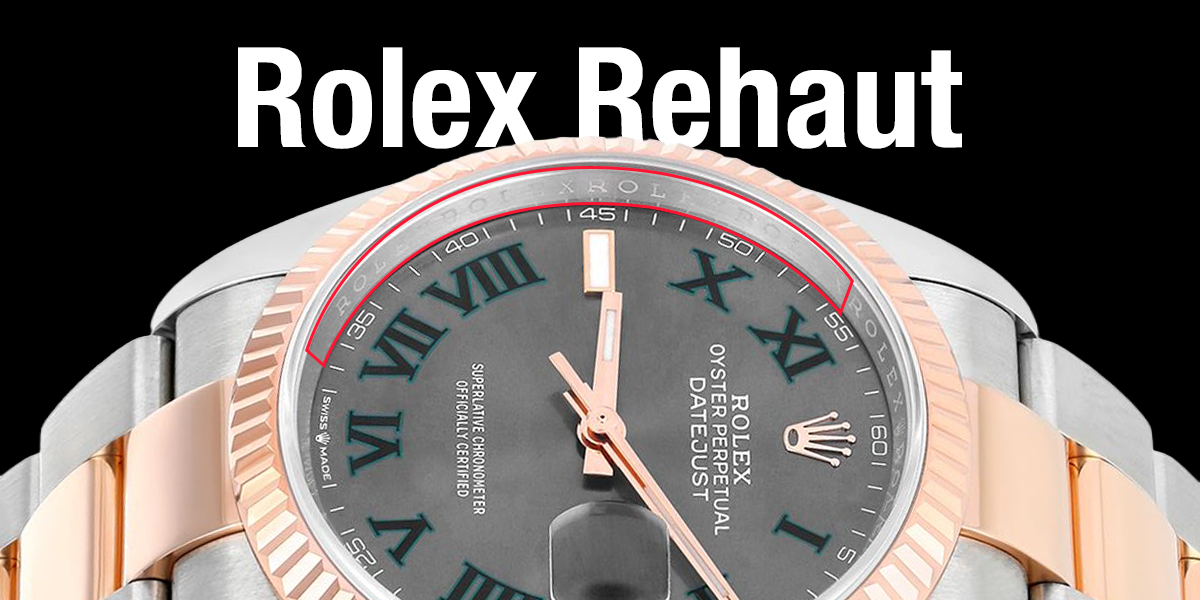
What is a Rolex Rehaut? A Rolex rehaut is the inner ring that surrounds the dial and sits between the watch face and the crystal.
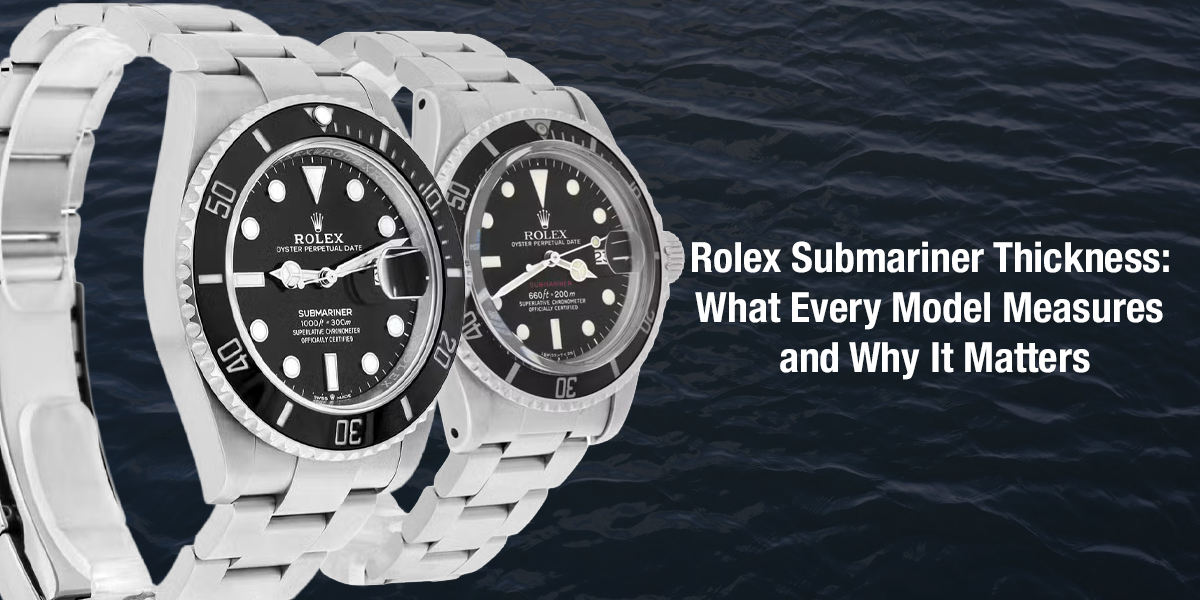
The Rolex submariner thickness has varied by a lot throughout its history. It ranges from 12.2mm to 15.2mm depending on the model and era. This