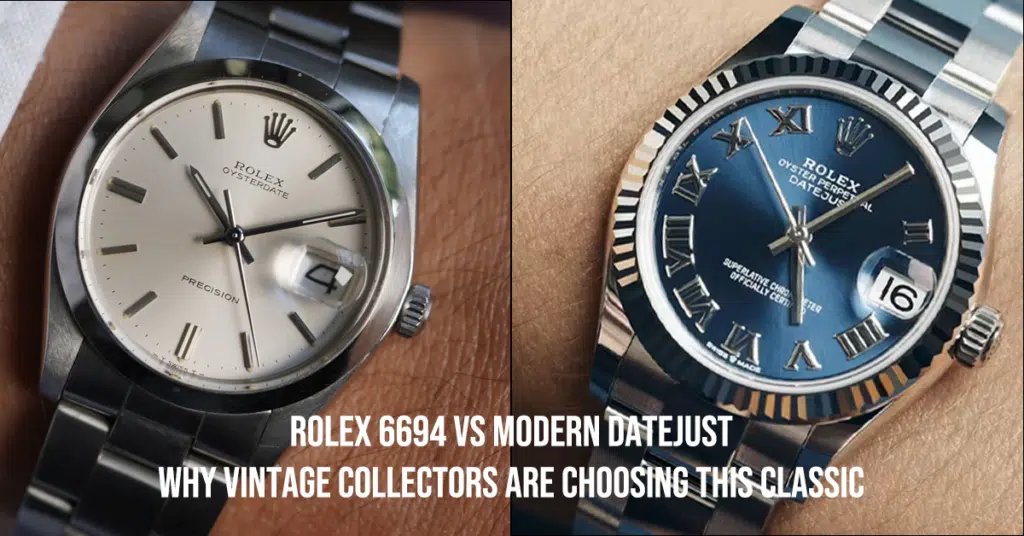
The Rolex 6694 Oysterdate Precision remains one of watchmaking’s most enduring classics. This timepiece still captures vintage enthusiasts’ attention though Rolex stopped making it decades ago. From the early 1960s to the late 1980s, this model wrote an amazing chapter in Rolex’s history. Modern Datejust watches might rule showroom talks, but the 6694 has earned its place as a prized vintage piece among collectors.
The rolex 6694 oysterdate precision gives watch lovers something rare in today’s market – a genuine Rolex at a more available price point. Rolex’s original budget-friendly option featured their signature date display at 3 o’clock. These days, you’ll see these timepieces selling between $3,500 and $6,500 in the pre-owned market. The watch’s 34mm case size and manual-wind movement showcase mid-20th-century watchmaking principles that collectors love.
This vintage timepiece stands out from modern watches in unique ways. A discontinued watch from decades past still draws new admirers. Many collectors now choose this classic over newer models – and you might want to think about doing the same.
Table of Contents
Rolex 6694 vs Datejust: Key Specs and Design Differences
The most noticeable difference between the rolex 6694 and the modern Datejust shows up in their physical dimensions. These differences go far beyond looks and reflect each watch’s era and purpose.
Case Size: 34mm vs 36-41mm
The vintage rolex 6694 oysterdate precision has a classic 34mm case diameter that might look small by today’s standards. Most wearers say it looks bigger on the wrist than its measurements suggest—almost like 35-36mm—thanks to its thinner, flatter case design and clean dial. This visual effect makes the watch work well for different wrist sizes.
Modern Datejust models come in sizes from 36mm to 41mm. The Datejust 36 keeps the traditional diameter that made the collection famous, while the Datejust 41 fits today’s priorities for bigger watches. You get more size options now, but none capture the vintage charm of the 6694’s modest size.
Movement: Manual-Wind vs Automatic
The biggest technical difference lies in the movement. The rolex 6694 uses either the Caliber 1225 or the older Caliber 1210 (in earlier models), both hand-wound mechanisms. The Cal. 1225 has 17 jewels and runs at 21,600 vph. This manual-winding feature sets the 6694 apart from most Rolex models made since automatic winding became standard, making it “Rolex’s last manual-wind watch”.
Modern Datejust watches all use self-winding “Perpetual” movements, usually the Caliber 3235 with a 70-hour power reserve. These automatic movements work better but make the case thicker.
Dial and Crystal: Acrylic vs Sapphire
The rolex 6694’s acrylic crystal can get scratched easily but polishes out well. When damaged, it usually cracks instead of shattering. The dial looks clean with just the Rolex name and “Precision” text.
Modern Datejust models use tough synthetic sapphire crystals that resist scratches better. Sapphire can shatter completely if hit hard enough and might damage the movement. Most new Datejust models also have the signature Cyclops lens over the date window.
Bracelet Options and Fit
The rolex 6694 has 19mm lugs (like vintage Daytonas) and usually comes with an Oyster bracelet that has a simple locking clasp. Watch collectors value these pieces more when they come with their original bracelet.
Modern Datejust models give you more choices with Oyster, Jubilee, and sometimes President bracelets, especially in precious metal versions. The new Datejust bracelets also feature the Easylink extension system that lets you adjust the fit by 5mm.
Vintage Rolex 6694 History and Collector Appeal
The rolex 6694 experience started in the early 1950s as Rolex introduced the Oysterdate line with reference 6094. This original model featured dauphine (sword-shaped) hands and a 17-jewel caliber 1215 movement. References 6294 and 6494 came next before Rolex created the fourth and final version—the rolex 6694 oysterdate precision. The production continued from the late 1950s until 1989.
Production Timeline: 1950s to 1989
The vintage rolex 6694 design stayed remarkably consistent through its three-decade run. Rolex catalogs featured it until 1988, making it one of the company’s longest-running models without major updates. This steadfast design proved its lasting appeal during an era of rapid horological advancement.
Manual-Wind Caliber 1225 and 1210
The early 6694 models featured the Caliber 1210, a 17-jewel manual movement that beat at 18,000 vibrations per hour. The upgraded Caliber 1225 came later with increased frequency to 21,600 vph for smoother operation and added a Breguet overcoil hairspring to improve stability. Both calibers provided a substantial 58-hour power reserve. The date function required rotating hands past midnight—a charming quirk that connects users to traditional watchmaking.
Dial Variants and Rare Editions
Conservative black, silver, and white dials marked the rolex 6694‘s debut. The 1970s and 1980s brought vibrant blue, green, yellow, and pink options to match changing preferences. Special editions emerged among other versions, like models created for the Abu Dhabi Defense Force with military crests.
Why Collectors Value the Simplicity
Collectors treasure the 6694 as “the watch that Rolex forgot”. The manual-winding mechanism creates a daily ritual that promotes a deeper connection with the timepiece. The clean, minimalist dial design without excess text appeals to enthusiasts who prefer understated elegance. This model stands as the final chapter in Rolex’s manual-wind story, marking a most important horological milestone.
Price Comparison and Investment Potential
The rolex 6694 gives budget-conscious collectors a compelling investment alternative to expensive modern models. Many enthusiasts make their final decision based on this price difference.
Rolex 6694 Price Range: $3,000–$6,500
The rolex 6694 oysterdate precision ranges from $3,000 to $6,500 in the pre-owned market. Buyers can find standard stainless steel models with silver dials at around $3,300. All the same, exotic variants cost more—watches with colorful dials like orange reach about $4,000. Gold variants start at $2,600, while pink dials with diamond indices sell for $3,500.
Modern Datejust Pricing: $7,000+
Modern Datejust models come with much higher price tags. New 36mm models start at $7,750, and Datejust 41 versions begin at $8,500. The steel Datejust 41 (ref. 126300) costs $8,050 at retail, but market prices usually reach $9,300. Two-tone and precious metal versions climb rapidly, with some models selling for more than $16,000.
Resale Value and Market Trends
The vintage rolex 6694 has shown solid appreciation, with a 10% increase in the last two years. The model dropped 5.2% in value last year, yet its five-year performance shows a 9.9% overall gain.
Long-Term Investment Outlook
Rolex timepieces hold their value remarkably well. The pre-owned luxury watch market reached $18.45 billion in 2023 and experts predict steady 9.2% yearly growth through 2030. The discontinued status of the 6694 might boost its future value as fewer pieces become available.
Which One Should You Buy? Use Cases and Buyer Profiles
The choice between a rolex 6694 and modern Datejust depends on your wrist size, collecting goals and what matters most to you. These timepieces attract different types of watch lovers based on their unique priorities.
Best for First-Time Rolex Buyers
The vintage rolex 6694 makes a perfect starting point to begin your Rolex collection. You’ll find it priced between $3,500 and $4,000, which makes it an attractive first Rolex purchase. This model stays under the radar compared to other well-known references and gives you a taste of luxury watchmaking without drawing too much attention. Watch enthusiasts love how it delivers authentic Rolex craftsmanship at a fraction of what modern models cost.
Ideal Wrist Sizes and Style Preferences
The 34mm case might look small by today’s standards, but the watch appears larger on the wrist than its size suggests. The watch’s slim profile and clean dial design create this visual effect. The rolex 6694 oysterdate precision works perfectly as a unisex piece that sits well on wrists of all sizes. You can pair it with anything from formal suits to weekend casual wear.
Daily Wear vs Collector’s Piece
The 6694’s manual-winding mechanism needs daily attention if you wear it regularly. This daily ritual helps build a special bond with your watch. The strong Oyster case provides 100m water resistance that handles everyday activities well. Collectors value this model since it stands as Rolex’s last manually-wound three-hand watch.
Availability on the Pre-Owned Market
You can easily find a rolex 6694 in Europe, the UK, and Hong Kong. Look for pieces that come with their original bracelets, though many owners love using leather straps thanks to the drilled lug holes. Make sure to buy from trusted dealers to avoid fakes, especially those that show up with unusually colorful dials.
Conclusion
The Rolex 6694 Oysterdate Precision offers a great alternative for watch lovers who want vintage charm without paying the high prices of modern Datejust models. The manual-winding movement gives you something special that’s hard to find in today’s digital world – a daily connection with your watch’s mechanical heart. Many collectors seek this unique bond, along with the watch’s clean dial design and modest 34mm case.
You’ll find the 6694’s price point attractive, as most pieces sell between $3,000-$6,500, while modern Datejust models start above $7,000. This means you get more value for your money while enjoying an authentic Rolex experience. The 6694 also marks the end of Rolex’s manual-wind era, giving it historical value that newer models can’t match.
Despite its smaller size compared to today’s watches, the 6694 looks great on wrists of all sizes because of its slim profile and balanced proportions. You can wear it anywhere – from important business meetings to casual weekend activities. Most owners say winding the watch each day becomes a cherished ritual rather than a task.
The market shows the 6694 holds its value well despite ups and downs, with about 10% growth over five years. We bought these watches to wear and enjoy them rather than just as investments.
The Rolex 6694 stands out as one of the best values in vintage Rolex collecting today. Modern Datejust models give you automatic movements and bigger cases, but the 6694 delivers real heritage, history, and craftsmanship at a lower price. Your choice depends on what matters more – modern features or vintage character. If you love classic watches, the 6694 should be at the top of your list.
FAQs
How does the Rolex 6694 compare to modern Datejust models?
The Rolex 6694 has a smaller 34mm case compared to modern Datejust sizes of 36-41mm. It features a manual-wind movement, while modern Datejusts have automatic movements. The 6694 has an acrylic crystal and simpler dial design, whereas modern versions use sapphire crystals and often have more dial text and features.
Is the Rolex 6694 a good investment?
The Rolex 6694 has shown steady appreciation, with a nearly 10% increase in value over five years. While it’s not guaranteed to be a high-yield investment, its discontinued status and historical significance as Rolex’s last manual-wind watch make it an attractive option for collectors.
What is the typical price range for a Rolex 6694?
The Rolex 6694 typically sells between $3,000 and $6,500 on the pre-owned market. Standard stainless steel models with silver dials are often found around $3,300, while rarer variants with colorful dials or special features can command higher prices.
Is the 34mm case size of the Rolex 6694 too small for modern wrists?
Despite its 34mm case size, the Rolex 6694 often wears larger than its measurements suggest due to its thin profile and clean dial design. It’s surprisingly versatile and can suit a wide range of wrist sizes, making it a popular choice for both men and women.
What makes the Rolex 6694 appealing to vintage watch collectors?
Collectors value the Rolex 6694 for its simplicity, manual-wind movement, and status as Rolex’s last manually-wound three-hand watch. Its clean dial design, long production run from the 1950s to 1989, and relative affordability compared to modern Rolex models also contribute to its appeal among vintage enthusiasts.
The audemars piguet arnold schwarzenegger collaboration stands as one of the most successful partnerships in luxury watchmaking, with 11 different timepieces created together. Arnold holds
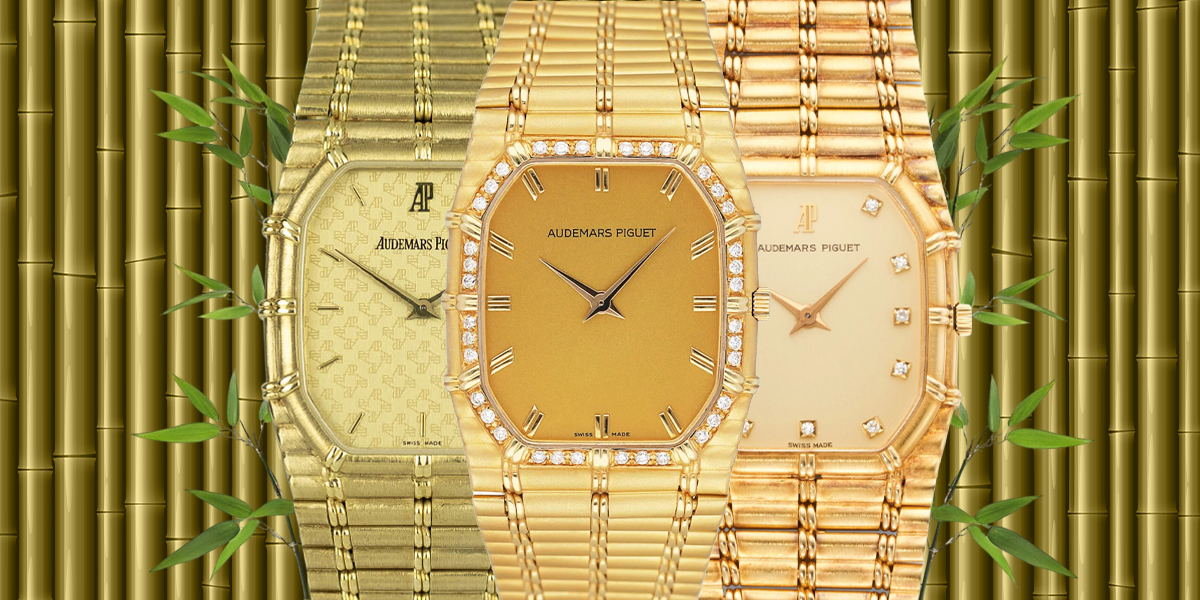
The Audemars Piguet Bamboo has quietly transformed from an obscure 1980s rarity into the ultimate vintage grail. Once slept on compared to other AP models,