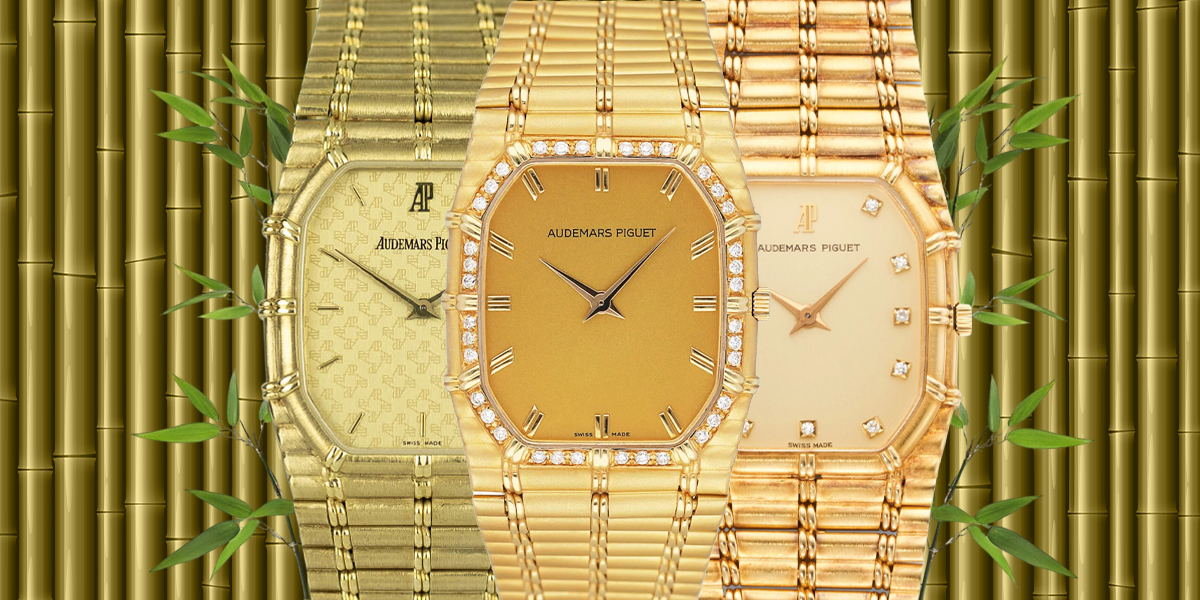
Audemars Piguet Bamboo Review: Why This Vintage Watch Became Every Collector’s Grail
The Audemars Piguet Bamboo has quietly transformed from an obscure 1980s rarity into the ultimate vintage grail. Once slept on compared to other AP models,

Ever wondered what makes one Rolex President different from another? When Rolex unleashed the Day-Date in 1956, they created something the watch world had never seen before—the first timepiece to display both the date and the day of the week spelled out in full. Pretty revolutionary stuff for its time.
Fast forward to the 18238 vs 118238 models, and you’re looking at how this iconic “President” watch evolved through generations while keeping that same prestigious DNA. But here’s where things get interesting.
The jump from Rolex 18238 to 118238 wasn’t just a simple update—it was a serious upgrade in the Day-Date’s story. Around 2000, Rolex introduced the 118238 with several refinements that transformed the classic design. Sure, both models stick to that perfect 36mm diameter, but the 118238 feels noticeably beefier on your wrist with its heavier, more solid construction.
And here’s the kicker: the newer reference packs significantly more gold than its predecessor. That’s not just about luxury—it’s about substance. This extra gold content helps explain why the 118238 typically costs about 1.5 times more than the 18238 on the pre-owned market.
Both these classic Presidents remain highly sought after by collectors, even though they’ve been discontinued to make way for the current yellow gold Day-Date 36 reference 128238. You’re looking at around $24,000 for a solid 118238 without diamonds, while the gem-set versions can push anywhere between $25,000 and $30,000.
So what exactly are these hidden differences that matter so much to Rolex enthusiasts? Let’s dig into the details because these subtle variations tell a fascinating story about how Rolex perfected the President over the decades.
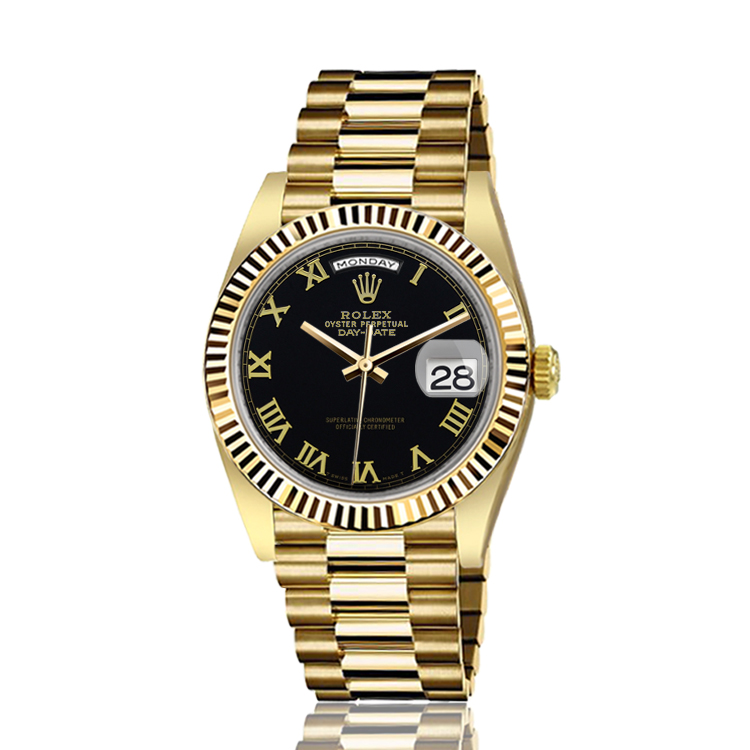
The Rolex Day-Date didn’t just appear perfect overnight. Since 1956, it’s been through several transformations, each one building on the last. The journey from reference 18038 to 118238 tells the story of how Rolex perfected the President, with each generation bringing meaningful technical and aesthetic improvements.
Here’s where things start getting interesting. The Rolex 18038, introduced in 1977, brought a substantial upgrade with its Caliber 3055 movement featuring the Single Quickset function. This innovation was a game-changer—you could finally adjust the date independently from the time-telling hands, eliminating that tedious process of rotating the hands repeatedly. But there was still a catch: changing the day display still required manually advancing the time until the day window changed.
The 18238, launched in 1988, solved this limitation with the Caliber 3155 movement and its revolutionary Double Quickset feature. Now you could adjust both day and date displays independently—a significant step forward in user convenience. The movement also gained additional stability through a double bridge for the escapement while maintaining the same 48-hour power reserve. This is where Rolex really started to understand what their customers needed.

Fast forward to 2000, and Rolex unveiled the 118238 as a replacement for the 18238. Initially powered by the same Caliber 3155, the 118238 focused on what you could see and feel. The case was refined with broader lugs featuring an entirely high-polished finish, creating a more pronounced wrist presence.
But the real upgrade came with the President bracelet. Rolex transitioned from hollow to solid links—a modification that required more gold, resulting in a heavier, more substantial feel on the wrist. The clasp evolved too, becoming a more secure concealed Crownclasp design, improving both comfort and aesthetics. The reason? Rolex was building watches that felt as premium as they looked.
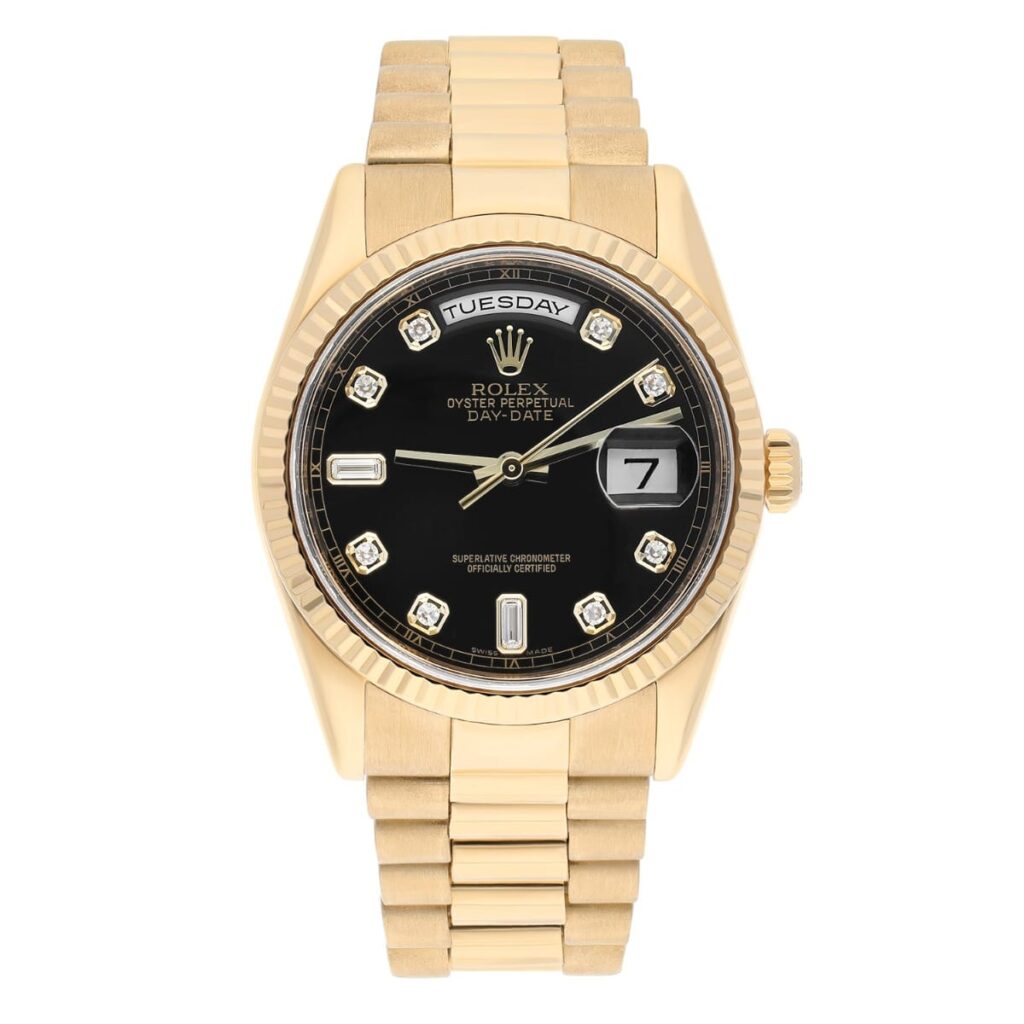
The 118238 represents a pivotal moment between vintage and modern Rolex designs. Earlier models maintained traditional proportions, but the 118238 introduced a more robust aesthetic that would influence subsequent generations.
After 2006, Rolex added another anti-counterfeit feature to the 118238: the rehaut engraving. This continuous “ROLEX” etching inside the bezel under the sapphire crystal, along with the unique serial number at 6 o’clock, became a hallmark of modern Rolex timepieces. It’s not just about security—it’s about establishing a new standard for what a modern Rolex should be.
The real story of these Presidents lies beneath their golden surfaces. When you’re comparing the 18238 and 118238 Day-Date models, the mechanical heart tells a fascinating tale of Rolex’s relentless pursuit of perfection.
Back in 1977, Rolex dropped the Caliber 3055 and changed everything. This movement brought a higher frequency rate of 28,800 beats per hour and introduced the single quickset feature. Suddenly, you could adjust the date independently from the time-telling hands—no more tediously rotating the hands through multiple 24-hour cycles just to change the date.
But Rolex wasn’t done. The Caliber 3155 debuted in 1988 with the reference 18238, and it addressed a major limitation: the double quickset function. Both movements share that same 28,800 vph frequency, giving you that characteristic smooth sweeping seconds hand. They also use identical free-sprung Nivarox hairspring arrangements with Breguet overcoil and Microstella-regulated Glucydur balance wheels.
Here’s where the Caliber 3155 really shines. With the earlier Caliber 3055, only the date could be adjusted independently. Want to change the day display? You’d have to rotate the hands through complete 24-hour cycles. The Caliber 3155 solved this headache by enabling separate adjustment of both day and date displays.
Operating the double quickset on an 18238 is straightforward. Pull the crown to the first position. Turn it clockwise to adjust the date, counterclockwise to change the day of the week. This seemingly minor enhancement dramatically improves the user experience, especially when setting the watch after periods of non-use.
Both movements incorporate the hacking seconds feature, first introduced to the Day-Date line in 1972. This function stops the seconds hand completely when the crown is pulled to the time-setting position, allowing precise synchronization with a reference time source.
Originally developed for military purposes during World War II, the hacking seconds feature enables you to coordinate time exactly—down to the second. This precision capability represents Rolex’s commitment to chronometric excellence, a trait that continues in modern Rolex movements.
The real differences between these two Presidents go way beyond what’s ticking inside. Physical distinctions between the 18238 vs 118238 models tell the story of Rolex’s evolving design philosophy across generations.

The 118238 wears noticeably larger than its predecessor, and it’s all about those broader lugs that feature an entirely high-polished finish. This might seem like a subtle change, but it gives the newer model a more pronounced presence on the wrist. The enhanced proportions contribute to a more substantial feel that sets it apart from the more understated profile of the 18238.
It’s one of those details that makes a difference when you’re actually wearing the watch. The 118238 just commands more attention.
Here’s where things get serious. The 118238 incorporated solid center links instead of the hollow ones found in earlier models. The result? The newer bracelet contains significantly more gold, making it heavier and more substantial. This enhanced construction provides better durability while simultaneously increasing the watch’s precious metal content.
You can feel the difference immediately when you handle both watches. The 118238’s bracelet has a weight and presence that screams quality.
The 18238 utilized a dual-metal clasp where Rolex combined copper with gold to strengthen it, giving a distinctive pinkish hue. The 118238 features an improved concealed folding Crownclasp that offers better security, comfort, and on-wrist esthetics. This refined clasp was eventually updated in 2003 to include Rolex engraving for added brand presence.
The Crownclasp isn’t just about looks—it’s about function too. Better security, smoother operation, and a cleaner appearance when you’re wearing it.
After 2006, Rolex introduced the rehaut engraving to the 118238 as an anti-counterfeit measure. This continuous “ROLEX ROLEX ROLEX” etching inside the bezel under the sapphire crystal, along with the unique serial number at 6 o’clock, has become a hallmark of modern Rolex timepieces. Previously, serial numbers were only visible by removing the bracelet.
This addition serves a dual purpose—it’s both a security feature and a subtle way to remind you you’re wearing a Rolex every time you glance at the dial.
The luminescent materials used on the hour markers transitioned from radioactive Tritium on earlier models to safer Luminova compounds on the 118238. This change provided improved brightness and longevity in low-light conditions without the concerns associated with radioactive materials.
Practical improvements like these show how Rolex kept refining the President even in areas most people never think about.
The money talk—because let’s face it, that’s what really matters when you’re deciding between these two Presidential references.
Here’s where the rubber meets the road. The 118238 typically commands around $24,000 for standard examples, with diamond-enhanced versions fetching between $25,000 and $30,000. The older 18238? You can often snag one for approximately $10,000 less. That’s a substantial difference that reflects both the modernized features and greater gold content of the 118238.
Think of the 118238 as sitting in the sweet spot of Rolex Day-Date pricing—positioned well above vintage models yet still about $10,000 below current retail models. This price positioning makes it attractive for collectors seeking modern features without paying current-production premiums.
Want to know the real reason behind that price gap? It’s simple: the amount of gold in each watch. The 118238’s solid-link bracelet contains substantially more precious metal than its predecessor’s hollow-link design. We’re talking real substance here.
A typical Day-Date contains approximately 99.86 grams of 18-karat gold, which equals about 74.91 grams of fine gold. At current prices, this translates to roughly $8,000-$10,000 in gold value alone. That’s a serious chunk of precious metal on your wrist.
Gold Rolex watches have demonstrated impressive value retention compared to steel models. The Day-Date has established itself as a particularly stable investment, with prices typically holding firm or appreciating over time. Market experts are saying “gold Rolex watches have suddenly started to offer strong relative value on the secondary market”.
Among collectors, the 118238 is increasingly recognized for its perfect balance between vintage charm and modern functionality. Its position as a transition model—featuring improved construction yet retaining the classic 36mm size—gives it unique appeal as both a wearable luxury item and potential investment piece.
Bottom line? Both watches hold their value well, but the 118238’s extra gold content and modern features typically justify its higher price point in the long run.
Want to see all these differences side by side? Here’s the breakdown that makes it crystal clear what you’re getting with each Presidential reference:
| Feature | Rolex 18238 | Rolex 118238 |
|---|---|---|
| Release Year | 1988 | 2000 |
| Movement | Caliber 3155 | Caliber 3155 |
| Quickset Function | Double Quickset | Double Quickset |
| Case Size | 36mm | 36mm |
| Lug Design | Traditional proportions | Broader lugs, fully polished |
| Bracelet Construction | Hollow links | Solid links |
| Clasp Type | Dual-metal (copper-gold) | Concealed Crownclasp |
| Bracelet Weight | Lighter | Heavier, more substantial |
| Rehaut Engraving | No | Yes (post-2006) |
| Luminescent Material | Tritium | Luminova |
| Anti-counterfeit Features | Basic | Enhanced (rehaut engraving, serial number at 6 o’clock) |
| Average Pre-owned Price | Approximately $14,000 | Approximately $24,000 |
| Special Versions Price | Not mentioned | $25,000-$30,000 (with diamonds) |
| Gold Content | Less | Significantly more |
This comparison tells you everything you need to know about making a choice between these two Presidents. The 118238 clearly offers more substantial construction and modern features, but you’re paying a premium for those upgrades. The 18238 gives you the same excellent movement and classic Day-Date functionality at a more accessible price point.
So there you have it—the story of two Presidents that look almost identical but tell completely different tales when you know what to look for. The Rolex 18238 and 118238 Day-Date models both deserve their place in the prestigious “President” lineage, but they’re definitely not the same watch wearing different clothes.
The 118238 stands out as a clear step forward in Rolex’s evolution. That solid link construction, those broader lugs, and all that extra gold content? These aren’t just fancy upgrades—they’re the reasons why you’ll pay significantly more for the 118238 on the pre-owned market. And honestly, you can feel the difference the moment you put either watch on your wrist.
What’s fascinating is how these physical changes tell the story of Rolex’s relentless pursuit of perfection. The jump from hollow to solid links wasn’t just about adding weight—it was about creating a more durable, substantial piece that would stand the test of time. That refined Crownclasp? It’s not just prettier than the earlier dual-metal design; it’s genuinely more secure and comfortable.
But here’s what’s really clever about Rolex’s approach: they didn’t mess with what was already working perfectly. Both references share that excellent Caliber 3155 with its practical double quickset function. Why fix what isn’t broken? Rolex had already nailed the mechanical side early in the Day-Date’s evolution, so they focused on making the physical watch better instead.
Your choice between these two Presidential references comes down to what matters most to you. Looking for classic Rolex character with that handy double quickset convenience at a more accessible price? The 18238 delivers exactly that. Want maximum wrist presence, modern anti-counterfeit features, and potentially stronger investment potential? The 118238 might be worth the premium, especially given its position as a bridge between vintage and contemporary designs.
Either way, you’re getting a President that will command respect for decades to come. Both watches represent Rolex at its finest—just separated by twelve years of thoughtful refinement and a healthy dose of additional gold.
The 118238 features a more substantial case with broader, fully polished lugs, a solid-link bracelet, and a concealed Crownclasp. It also contains more gold, making it heavier and typically more expensive on the pre-owned market compared to the 18238.
Both the 18238 and 118238 use the Caliber 3155 movement with double quickset functionality, allowing independent adjustment of both day and date displays. The main differences are in the watch’s external features rather than the movement itself.
Yes, the 118238 has a more robust appearance with broader lugs and a heavier bracelet. Post-2006 models also feature a rehaut engraving with “ROLEX” etched around the dial’s perimeter, which is absent in the 18238.
While both models tend to hold their value well, the 118238 often commands a higher price on the pre-owned market due to its more modern features and greater gold content. It’s seen as a transitional model, potentially offering stronger long-term investment potential.
The 118238 features a bracelet with solid center links, making it heavier and more durable than the hollow-link bracelet of the 18238. It also introduced an improved concealed Crownclasp, offering better security and a cleaner esthetic compared to the earlier dual-metal clasp.
The Audemars Piguet Bamboo has quietly transformed from an obscure 1980s rarity into the ultimate vintage grail. Once slept on compared to other AP models,
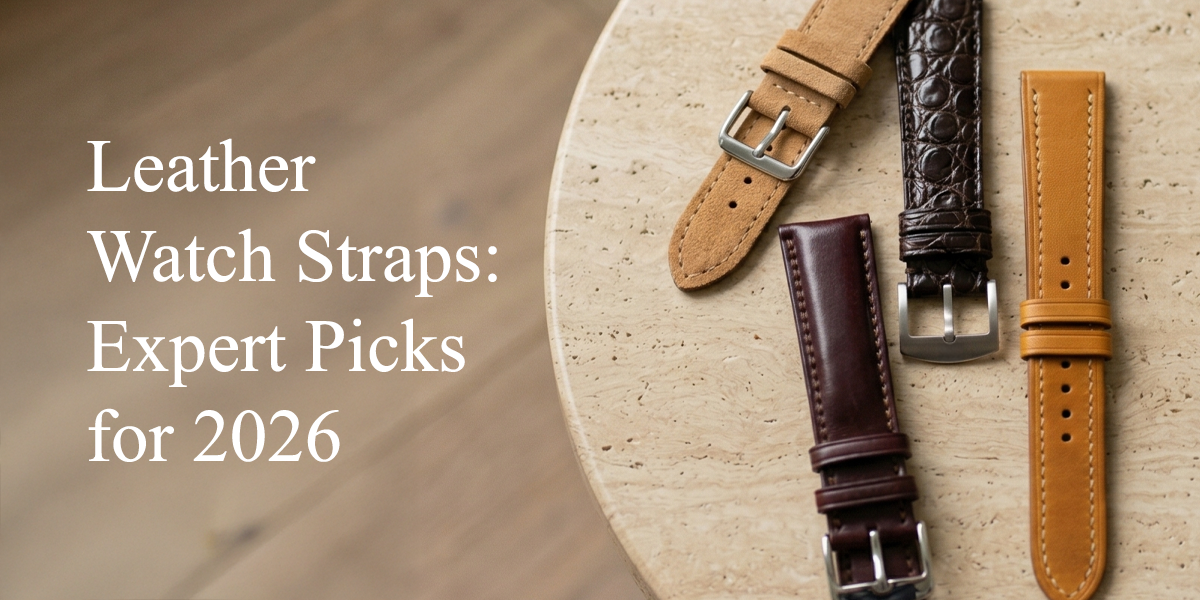
Choosing among the types of leather watch straps can turn your timepiece from ordinary to extraordinary. Attaching watches to leather straps dates back to the
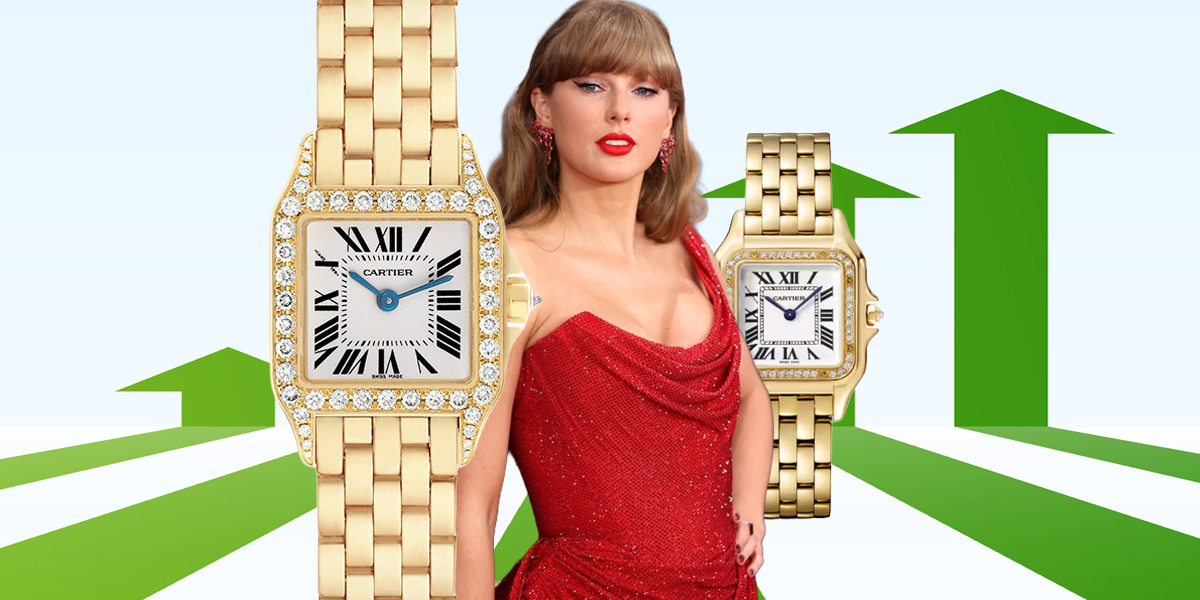
Taylor Swift’s Cartier watch in her viral engagement post turned a discontinued timepiece into the ninth most-liked Instagram post ever. The results were immediate and