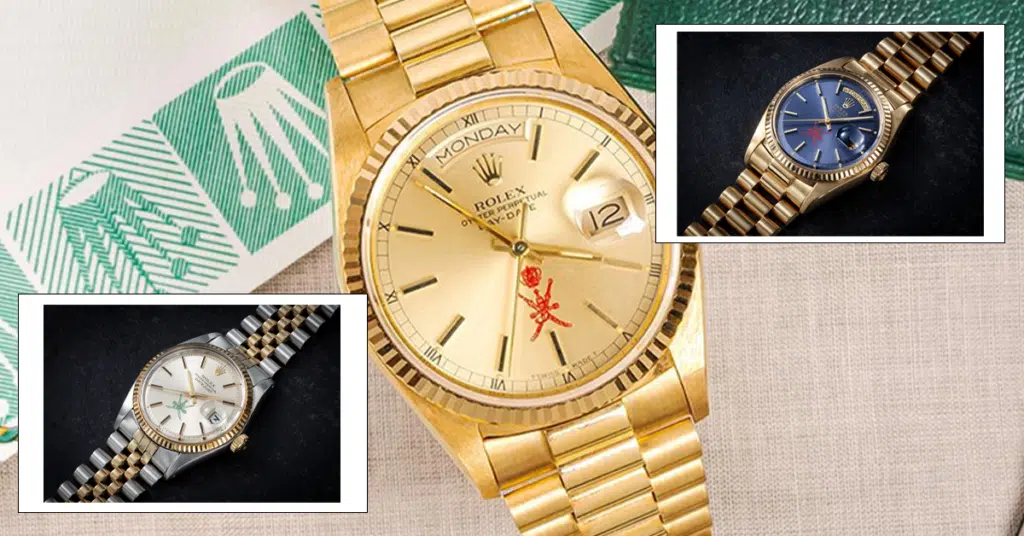
Khanjar Rolex watches stand among the most treasured pieces that collectors dream of owning. A green Khanjar dial Rolex Daytona stunned the watch world at Christie’s auction in 2017. The piece sold for an incredible 727,000 CHF (approximately $800,000). The sale became even more notable since it was just the second green Khanjar that made its way to auction.
These timepieces hold such high value for good reason. The rare Rolex Khanjar watches proudly display Oman’s signature dagger emblem. The Sultan of Oman commissioned these special pieces to give as prestigious gifts. The most valuable Omani Khanjar Rolexes came from an interesting chapter in history – they were given to British SAS soldiers who played a role in the 1970 coup. The market reflects their significance, with authentic khanjar Rolexes selling from $8,000 to upwards of $60,000. Some exceptional pieces fetch much more at auction. A yellow gold Daytona 6265 recently proved this point – Phillips sold it for CHF 570,000 (about $605,000 USD) in November 2023.
This piece will take you through the captivating story of Khanjar Rolexes. You’ll discover why these legendary timepieces keep breaking records in 2025, whether you’re a veteran collector or just getting interested in these remarkable watches.
Table of Contents
The Origin of Rolex Khanjar Watches
The Khanjar Rolex timepieces tell a remarkable story of political transformation and royal patronage. These exclusive watches emerged from an extraordinary partnership between a monarch, a prestigious London jeweler, and one of Switzerland’s finest watchmakers.
Sultan Qaboos and the rise of Oman
Qaboos bin Said’s journey began in 1940. He studied in England and trained at the Royal Military Academy Sandhurst. His return to Oman in 1964 led to an unexpected turn – his father placed him under house arrest for six years. British support helped Qaboos lead a successful coup d’état in 1970, which ended his father’s rule that started in 1932.
Qaboos wasted no time implementing bold reforms after claiming the throne. The country’s name changed from “Muscat and Oman” to “Sultanate of Oman,” and a new national flag showcased red, white, and green colors. The Khanjar—a curved dagger over crossed swords—became the national emblem. His 50-year reign until 2020 changed Oman from an isolated territory into a thriving modern nation.
The role of John Asprey in watch distribution
Qaboos’s time in England yielded more than education. His friendship with Tim Landon led to a vital connection with John Asprey, who owned one of London’s finest jewelry stores. This relationship sparked the creation of the legendary Khanjar watches.
Asprey bridged the gap between the Sultan and Swiss watchmakers. He received watches from manufacturers and added the Khanjar emblem through the décalque technique—transferring an engraved design onto the dial. Many watches bear Asprey’s signature on the caseback, which adds to their value. The mid-1970s saw Asprey open a Geneva showroom dedicated to Middle Eastern clients.
Why Rolex was chosen for these gifts
Rolex’s prestigious reputation made their timepieces the perfect choice for Sultan Qaboos’s diplomatic gifts. The Sultan commissioned these watches exclusively for dignitaries, military officials, and allies rather than public sale.
Rolex quietly approved these special editions, which never touched regular retail channels. The Khanjar appeared on various models, including the Day-Date, Datejust, GMT-Master, Sea-Dweller, and Daytona. Their scarcity—some models exist in single-digit numbers—and royal heritage make them incredibly valuable. British SAS soldiers who helped with the 1970 coup and subsequent Dhofar Rebellion received some of the most sought-after pieces.
Understanding the Khanjar Symbol on Rolex Dials
The Khanjar emblem on select Rolex timepieces tells a remarkable story that blends royal heritage with exclusivity. These special dials do more than showcase fine craftsmanship—they capture diplomatic relationships and national identity through carefully chosen design elements.
What the Khanjar emblem represents
The Khanjar symbol stands as Oman’s official royal crest. It shows a traditional J-shaped curved dagger (khanjar) placed over two crossed swords that form an X-shape. Sultan Qaboos introduced this emblem on Oman’s national flag after he rose to power in 1970. The symbol comes in two other forms: the Sultan’s personal emblem with a crown above the Khanjar, and a very rare police force version that features a crown and surrounding garland. These emblems served a bigger purpose than mere decoration—they helped boost the young Omani nation’s recognition among international dignitaries.
Dial placements: 6 o’clock vs 12 o’clock
Rolex placed the Khanjar on their dials in different spots, which makes them even more collectible. You’ll usually find the emblem a few millimeters above the 6 o’clock position or below the 12 o’clock index. On top of that, some rare pieces show the emblem at 3 o’clock or 9 o’clock. The Daytona models tell an interesting story—Rolex changed their standard dial layout to fit the emblem. They moved the “Rolex Oyster Cosmograph” text higher or sometimes removed “Rolex” completely. This flexibility with their iconic design shows just how much influence the Sultan had back then.
Color variations: red, green, gold, and black
Red might be the most common color for Khanjar emblems, but collectors can find some striking alternatives. The colors match Oman’s flag perfectly: red stands for battles against foreign invaders, white represents peace, and green shows the land’s fertility. You can also find very rare gold and black versions. The sort of thing I love about these watches is their value—green Khanjar Daytonas are particularly special. Only two have ever shown up at auction, with one selling for 727,000 CHF (about $800,000) at Christie’s in 2017. These different colors add yet another layer to the already rich world of Khanjar Rolexes.
Production and Rarity of Khanjar Rolex Models
The market value and collectibility of Khanjar Rolex timepieces soared as their production methods changed by a lot over decades.
Standard vs custom dial configurations
Two distinct approaches shaped Khanjar dial production. Asprey printed the emblem on standard production dials wherever space allowed. The second and much rarer approach used specially made dials with reserved areas for the Khanjar emblem. These custom configurations forced Rolex to remove standard text partially or completely—even their own brand name—to fit the royal symbol. The Sultan Qaboos’s unprecedented influence made Rolex alter their iconic designs.
Asprey-printed vs factory-applied logos
Asprey jewelers started by applying the Khanjar through the décalque technique—they transferred the design from an engraved metal plate onto the dial. In spite of that, as the relationship grew, Rolex began applying the emblem directly after the Sultan’s approval. Two Omani retailers—Khimji Ramdas and Al Qurum Jewelry—later received permission to apply the royal symbol.
Caseback engravings in modern models
The 2000s brought a major transformation. Manufacturers abandoned dial printing and started engraving the emblem on casebacks. Khimji Ramdas, Rolex’s authorized Omani dealer, commissioned these modern pieces that remain highly collectible even without the distinctive dial emblems. Yes, it is possible these pieces are nowhere near their true value when matched against their dial-emblazoned counterparts.
Other brands with Khanjar dials
Rolex stood as the Sultan’s preferred brand, yet he commissioned many prestigious timepieces with his royal emblem. Patek Philippe’s Nautilus, Audemars Piguet’s Royal Oak, Omega Constellation, Cartier Santos, and various IWC dress watches all bore his mark. Each piece tells a unique diplomatic story beyond its horological worth.
Why Khanjar Rolexes Sell for Top Dollar in 2025
Khanjar Rolexes command astronomical prices at auction houses worldwide, showcasing their exceptional status in the luxury watch market. These timepieces have evolved from diplomatic gifts to become highly sought-after collectibles.
Recent auction results and record sales
Royal treasures continue to shatter auction records consistently. A Day-Date “Rainbow” Ref. 18059 with “Red Khanjar” insignia reached CHF 1,079,500. A mid-1980s gem-set Daytona Ref. 6269 with engraved “Red Khanjar” caseback brought in CHF 1,378,900. The yellow-gold Daytona 6265 achieved CHF 570,000 (approximately $605,000) in November 2023. Some models with exceptional history have seen their prices soar dramatically. A green Khanjar Daytona, gifted to an English pilot, sold for $600,000 at Christie’s.
Market demand for rare dial variants
Khanjar emblazoned timepieces’ premium has grown exponentially. The Rolex Day-Date Oysterquartz ref. 19018 with Khanjar dial sells around $70,000, while standard versions fetch $16,000-$20,000. A yellow gold Day-Date President ref. 18038 with Khanjar dial sells for over $40,000, doubling its regular version’s price. Green Khanjar variants remain the most coveted pieces due to their extreme lack.
Collector interest in provenance and story
Historical significance drives these extraordinary valuations. British special forces’ watches from the Dhofar Rebellion tell compelling stories. Documented pieces achieve remarkable prices, like the Daytona given to a pilot who flew Sultan Qaboos from Muscat to Rome. Collectors consider these timepieces “the perfect storm” of desirability that combines historical significance, royal provenance, and extreme rarity.
Comparison with other co-signed Rolexes
Khanjar Rolexes stand unique among co-signed watches. These pieces served as diplomatic instruments rather than commercial products like Tiffany-signed dials or COMEX editions. Modern versions with caseback engravings offer compelling investment opportunities and typically double standard models’ prices. Watch expert Pizzigoni suggests “modern Khanjars” remain undervalued in today’s market.
Conclusion
Khanjar Rolexes stand without doubt as unique horological treasures in the watch collecting world. These remarkable timepieces started as royal diplomatic gifts and became auction-house sensations. Their story reveals their lasting appeal. Standard luxury watches deserve respect, but these emblazoned pieces offer something more – a direct link to Omani royal history and international diplomacy.
Each Khanjar Rolex comes with a story that adds by a lot to its worth. Sultan Qaboos reshaped his nation through modernization while building its identity through these prestigious gifts. The varying placements, colors, and applications of the emblem create an exciting taxonomy for collectors. Green dial variants remain almost mythical because of their lack.
Production methods moved from prominent dial emblems to subtle caseback engravings, yet serious collectors still chase these pieces. Modern Khanjar watches might still offer investment potential. They sell for twice the price of standard versions even without the distinctive dial emblems.
These pieces hold a special place compared to other co-signed Rolexes like Tiffany dials or COMEX editions. Their role as diplomatic instruments rather than commercial products makes them special. The watches given to British special forces during the Dhofar Rebellion illustrate this difference perfectly. Whether you’re a seasoned collector or just curious about these timepieces, their cultural importance, historical context, and exceptional craftsmanship explain why Khanjar Rolexes keep breaking records at auction houses worldwide through 2025 and beyond.
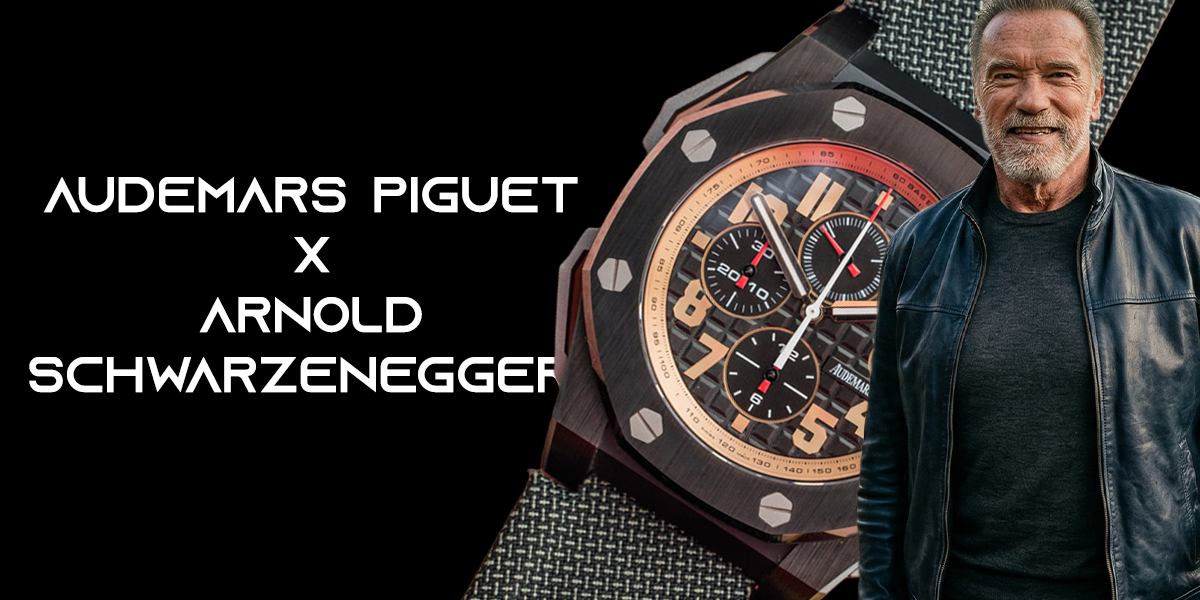
The audemars piguet arnold schwarzenegger collaboration stands as one of the most successful partnerships in luxury watchmaking, with 11 different timepieces created together. Arnold holds
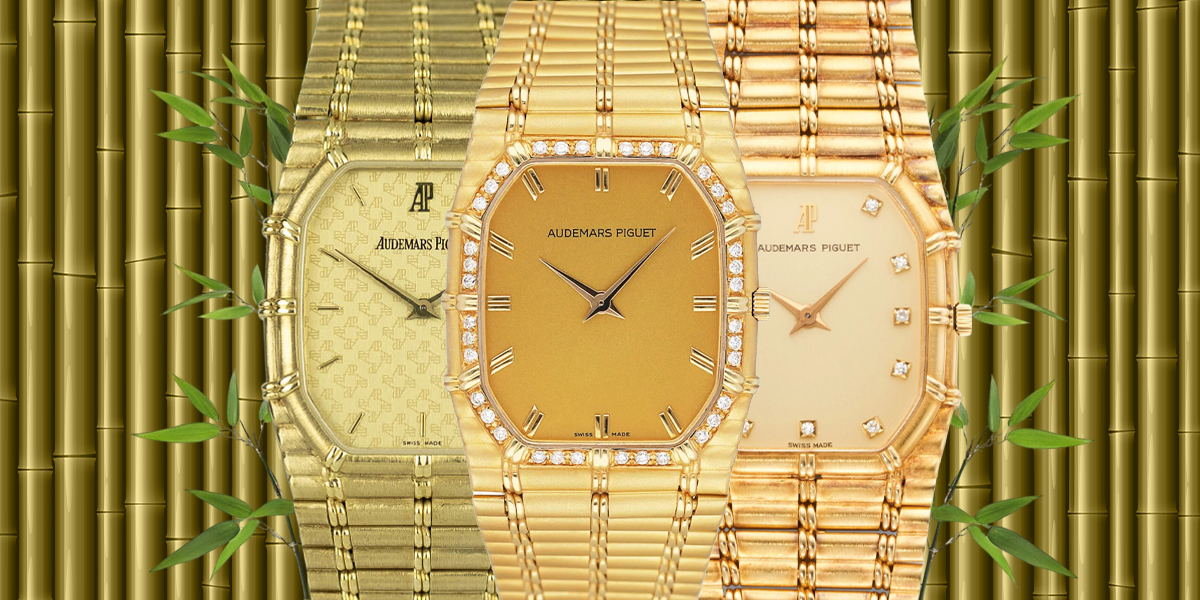
The Audemars Piguet Bamboo has quietly transformed from an obscure 1980s rarity into the ultimate vintage grail. Once slept on compared to other AP models,