What Is a Rolex Rehaut? Everything You Need To Know
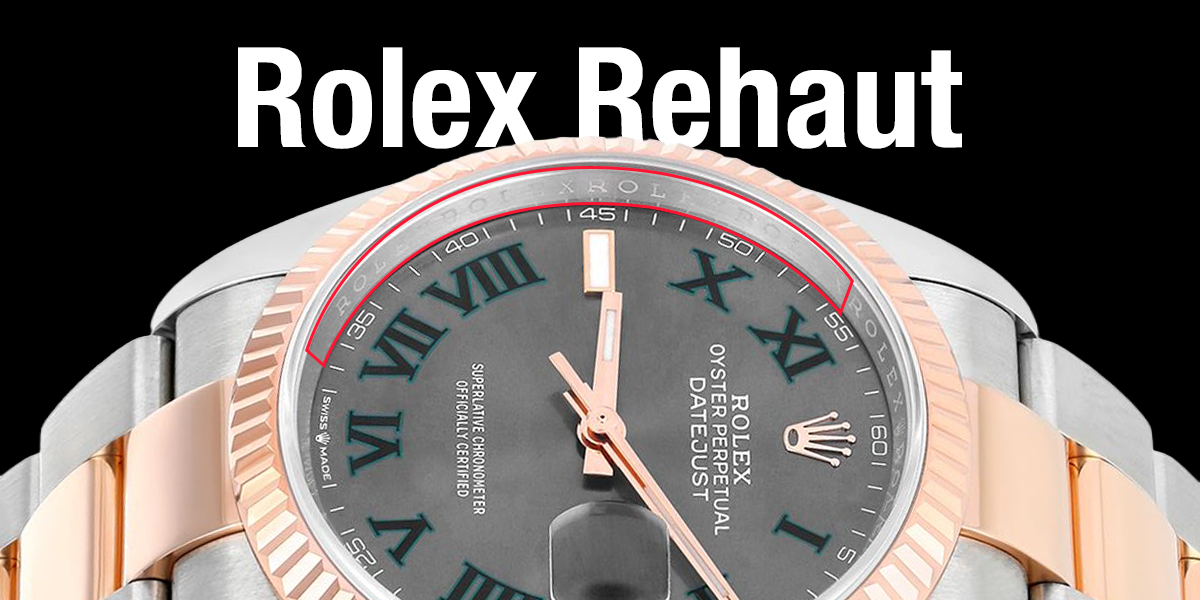
What is a Rolex Rehaut? A Rolex rehaut is the inner ring that surrounds the dial and sits between the watch face and the crystal.

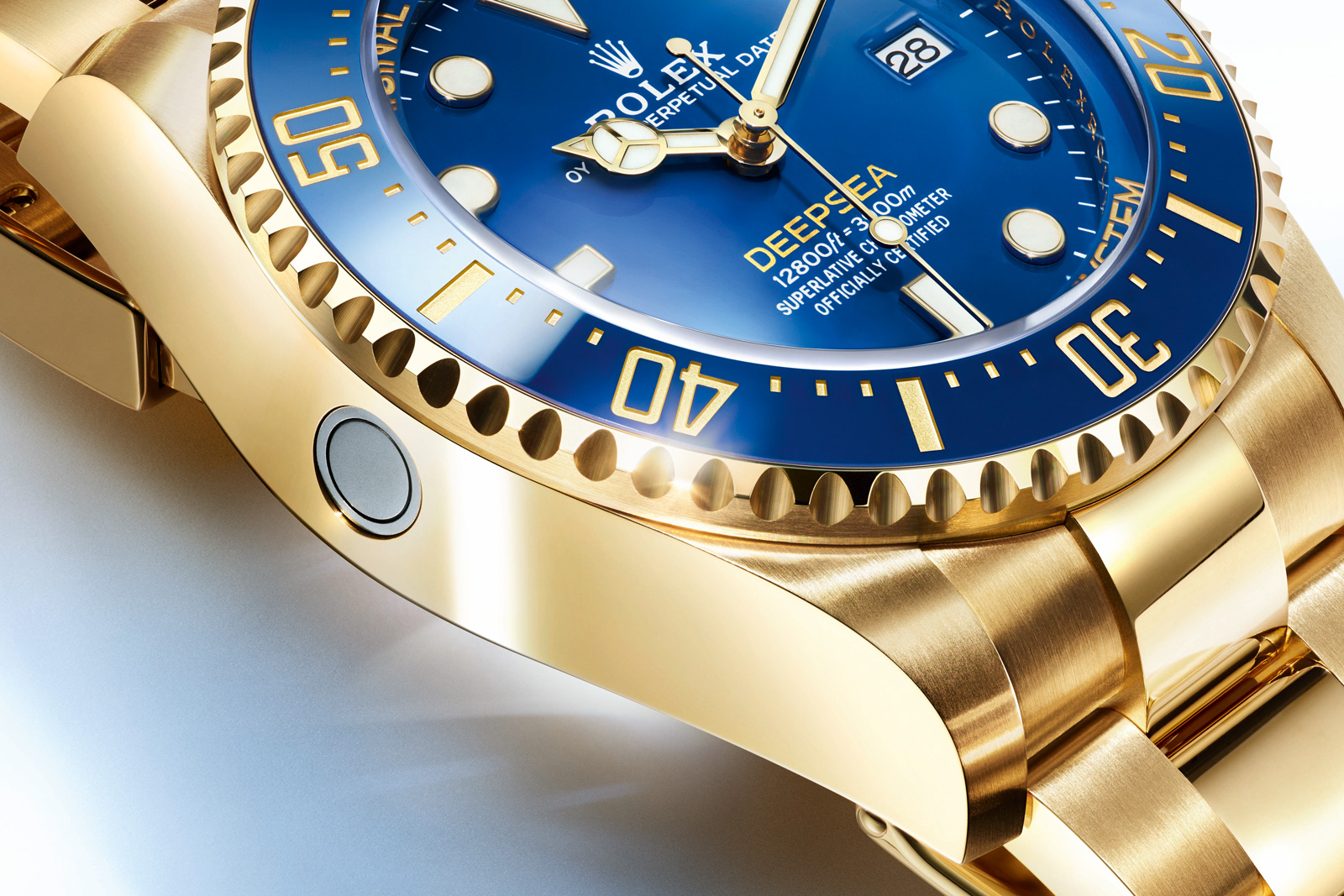
The sort of thing I love about Rolex diving watches is the choice between Sea-Dweller and Deepsea models. Rolex changed the game for professional diving watches by launching the Sea-Dweller in 1967. This remarkable timepiece boasts a depth rating of 1,220-meters (4,000 feet). The Deepsea takes things to another level with its ability to withstand depths of 3,900 meters (12,800 feet) – enough to handle pressure that equals 5,508.99 pounds per square inch.
These watches share Rolex’s reliable Caliber 3235 movement with its 70-hour power reserve, but their sizes differ by a lot. The Sea-Dweller sports a 43mm case, while its bigger sibling, the Deepsea, comes with a 44mm profile. A thicker 5mm sapphire crystal and titanium caseback make the Deepsea more resilient yet heavier. The price tags tell their own story – Sea-Dwellers range from $12,950 to $17,000, and Deepsea models cost between $13,850 and $14,150.
Learning about these exceptional diving watches’ unique features and capabilities is vital before making an investment. Let’s take a closer look at which Rolex diver might be your perfect match.

These two professional dive watches differ in their structure way beyond their underwater capabilities. They share Rolex’s iconic DNA, but each model’s physical characteristics serve unique purposes and attract different wearers.
The modern Sea-Dweller sports a 43mm case diameter, marking its rise from the traditional 40mm size. The Deepsea has managed to keep its substantial 44mm case since its 2008 debut. This 1mm difference might look small on paper, but the Deepsea sits much larger on the wrist with its 17.7mm thickness compared to the Sea-Dweller’s sleeker profile. The Deepsea’s total dimensions reach 48mm when you factor in its oversized crown.
The most striking visual difference shows up in their crystal setups. The Sea-Dweller employs a flat sapphire crystal with Rolex’s signature Cyclops magnification lens above the date window. The Deepsea features an impressive 5.5mm thick domed sapphire crystal that matches the thickness of some complete dress watches. This robust crystal helps achieve extraordinary pressure resistance without needing an extra-thick case.
Both watches come with ceramic bezels and 60-minute markers, but their dials tell unique stories. The Sea-Dweller’s dial shows off the signature red “SEA-DWELLER” text as a tribute to its heritage. The Deepsea comes in either black or the stunning “D-Blue” gradient dial that flows from deep blue to black—paying homage to James Cameron’s historic Mariana Trench dive. The Deepsea’s dial also displays “Original Gas Escape Valve” and “Ring Lock System” text around its edge.
The engineering makes these watches truly unique. The Sea-Dweller uses a classic solid stainless steel caseback. The Deepsea takes a different approach with its advanced multi-part system built around Rolex’s patented Ringlock design. A grade 5 TA6V titanium caseback flexes slightly under pressure and works with a nitrogen-alloyed steel support ring to redirect forces away from the crystal. This clever design makes the Deepsea about 10% thinner than other ultra-deep dive watches.
Professional dive watches stand out from other timepieces because of their remarkable underwater capabilities. These engineering marvels make it possible to explore depths where few humans dare to venture.
The Sea-Dweller boasts exceptional water resistance up to 1,220 meters (4,000 feet) and can withstand pressure of 1,734.06 pounds per square inch. This capability surpasses what most recreational and professional divers need. The Deepsea takes it even further with its extraordinary 3,900-meter (12,800-foot) water resistance. It handles a staggering 5,548.99 pounds per square inch of pressure. The Deepsea proves to be three times more pressure-resistant than its already impressive sibling.
The main difference in durability stems from their structural approaches. The Sea-Dweller uses a conventional case architecture like other Rolex diving watches. The Deepsea, however, features Rolex’s patented Ringlock System—an innovative 10-part design built around a nitrogen-alloyed steel compression ring. This nearly indestructible ring sits inside the case between the crystal and caseback. It redirects extreme pressures away from the case itself. The crystal and titanium back press against this ring as pressure increases, which actually creates a better seal at greater depths. This brilliant engineering allows the Deepsea to be about 10% slimmer than traditional construction would allow.
Rolex’s patented helium escape valve—developed in 1967—appears in both models with unique implementations. This clever unidirectional valve kicks in automatically when internal pressure exceeds external pressure by 2.5 bar. It lets helium molecules escape during decompression after saturation diving. This feature proves essential because tiny helium atoms that seep into the watch during deep-sea operations would expand during ascent and could force the crystal off the case. The Sea-Dweller’s valve comes in steel, while the Deepsea version uses RLX titanium on certain models. This titanium construction enhances its extreme depth capabilities even further.

The heart of any fine timepiece lies in its movement. Both deep sea and sea dweller models share a similar powerhouse beneath their distinctive exterior differences.
Rolex’s advanced Caliber 3235 movement powers both the Sea-Dweller and Deepsea models. This showcases the brand’s steadfast dedication to precision engineering. The self-winding mechanical movement delivers an impressive 70-hour power reserve. You can remove your watch on Friday evening and find it still running accurately on Monday morning. The Caliber 3235, launched in 2015, marks a remarkable development with new or redesigned components making up over 90% of its structure. This movement dramatically outperforms its predecessor while keeping similar physical dimensions, and it’s protected by 14 patents.
Rolex’s patented Chronergy escapement sits at the core of the Caliber 3235’s improved performance. This innovation streamlines processes by approximately 15%. We achieved this through reduced component mass and optimized geometry. The escapement features a skeletonized design with lighter parts that need less energy to start, stop, and change direction.
The pallet fork and escape wheel use nickel-phosphorus in their construction, which makes them highly resistant to magnetic interference. This paramagnetic property will give exceptional timekeeping even when exposed to magnetic fields in everyday life. The movement also features Rolex’s prominent blue Parachrom hairspring. This unique alloy of niobium, zirconium, and oxygen provides superior resistance to temperature variations, shocks, and corrosion.
The Sea-Dweller and Deepsea models surpass ordinary chronometer standards. The Swiss Official Chronometer Testing Institute (COSC) tests each movement for 15 days in multiple positions and temperatures. Rolex then conducts additional in-house testing after casing the movement.
This is a big deal as it means that Rolex’s Superlative Chronometer certification guarantees accuracy of -2/+2 seconds per day—twice as precise as COSC requirements. This certification includes accuracy, waterproofness, power reserve, and self-winding capability. Each watch undergoes full winding at testing commencement to verify its complete power reserve duration. The waterproofness testing happens in a hyperbaric tank with safety margins of 25% beyond rated depths. The green seal that comes with every Rolex timepiece symbolizes this extraordinary precision and reliability.
The financial commitment for a Sea-Dweller or Deepsea deserves careful thought beyond their technical features.
These professional divers’ price points reflect how complex their engineering is. The standard Sea-Dweller (ref. 126600) in Oystersteel costs $12,950, which makes it more available. The Yellow Rolesor Sea-Dweller (ref. 126603) costs $17,000 for buyers who want the two-tone look. The Deepsea collection starts at $13,850 for the black dial variant (ref. 136660). The signature D-Blue gradient dial version costs $14,150. The standard Deepsea’s $1,200 premium over the Sea-Dweller means a 9% higher investment gets you triple the water resistance.
Most Rolex sports models sell above retail price in the secondary market. Pre-owned Sea-Dweller ref. 126600 models start at $14,500, showing a modest premium over retail. The secondary market for two-tone Sea-Dwellers begins at $19,995. The previous Deepsea reference 126660 (similar to current models) starts at $15,995 for black dial versions. The desirable D-Blue variant commands $17,595. Recent market data shows the discontinued Sea-Dweller 16600 values around €10,000 in the pre-owned market based on condition.
Rolex leads the luxury watch market with an impressive 32.1% market share, which is three times larger than its nearest competition. This strong market position helps these watches hold their value exceptionally well. Watches that come with original box and papers now have a 15% higher chance of selling in 2024 compared to 2020. This trend shows collectors value complete sets more than ever. Each model’s collectibility varies – special editions like the D-Blue Deepsea usually make better investments. Rolex dive watches make up much of the overall market value. Estimates suggest all Submariner and Sea-Dweller watches made between 1953-2020 (nearly 4 million units) are worth almost $50 billion combined.
| Feature | Sea-Dweller | Deepsea |
|---|---|---|
| Case Diameter | 43mm | 44mm |
| Case Thickness | More modest profile | 17.7mm |
| Water Resistance | 1,220m (4,000 feet) | 3,900m (12,800 feet) |
| Pressure Resistance | 1,734.06 psi | 5,548.99 psi |
| Crystal | Flat sapphire with Cyclops | 5.5mm domed sapphire |
| Caseback | Stainless steel | Grade 5 TA6V titanium |
| Movement | Caliber 3235 | Caliber 3235 |
| Power Reserve | 70 hours | 70 hours |
| Special Dial Options | Red “SEA-DWELLER” text | Black or D-Blue gradient |
| Case Construction | Traditional architecture | Ringlock System (10-part design) |
| Helium Escape Valve | Steel | RLX titanium (certain models) |
| Base Retail Price | $12,950 | $13,850 |
| Two-Tone/Special Version Price | $17,000 (Yellow Rolesor) | $14,150 (D-Blue dial) |
| Pre-Owned Starting Price | $14,500 | $15,995 |
A side-by-side look at these remarkable timepieces shows that your priorities and needs will guide the choice between the Sea-Dweller and Deepsea.
The Sea-Dweller’s professional-grade water resistance reaches 1,220 meters with a more wearable 43mm case, which makes it perfect for almost any diving scenario. On top of that, it comes at a lower price point and offers better value while carrying Rolex’s iconic diving heritage. This watch’s capabilities go way beyond what most professional divers need, even though it’s not as extreme as its bigger sibling.
The Deepsea stands as Rolex’s engineering masterpiece with its extraordinary 3,900-meter depth rating and revolutionary Ringlock System. The watch measures slightly larger at 44mm and thicker at 17.7mm, yet delivers triple the water resistance through its innovative titanium caseback and compression ring design. The D-Blue gradient dial option adds a striking esthetic that you won’t find in the Sea-Dweller range.
Both watches pack the excellent Caliber 3235 movement with its impressive 70-hour power reserve and Superlative Chronometer certification. These models also feature helium escape valves, ceramic bezels, and exceptional build quality. The secondary market values both references above retail, which shows their desirability and limited availability.
The Sea-Dweller proves more comfortable and versatile for daily wear thanks to its modest size. The Deepsea draws collectors who want Rolex’s technical peak and appreciate its bold presence. Whatever model you pick, you’ll own a horological masterpiece that blends heritage, precision engineering, and unmatched underwater capability – an extraordinary timepiece built to last generations.
The key differences are in size, water resistance, and construction. The Sea-Dweller has a 43mm case and 1,220m water resistance, while the Deepsea has a 44mm case and 3,900m water resistance. The Deepsea also features a more complex Ringlock System and thicker crystal for extreme depth capabilities.
The Sea-Dweller is generally more comfortable for daily use due to its more modest dimensions. However, the choice depends on personal preference and wrist size. Both watches offer exceptional quality and prestige for everyday wear.
No, both the Sea-Dweller and Deepsea use the same Caliber 3235 movement. This movement provides a 70-hour power reserve and meets Rolex’s Superlative Chronometer standards for exceptional accuracy and reliability.
The Deepsea is slightly more expensive. The standard Sea-Dweller retails for $12,950, while the Deepsea starts at $13,850 for the black dial version. The price difference reflects the Deepsea’s more complex engineering and extreme depth rating.
Both models tend to hold their value well in the secondary market, often selling above retail prices. Limited editions like the D-Blue Deepsea may offer stronger investment potential. However, as with any luxury watch, they should primarily be purchased for personal enjoyment rather than as financial investments.
What is a Rolex Rehaut? A Rolex rehaut is the inner ring that surrounds the dial and sits between the watch face and the crystal.
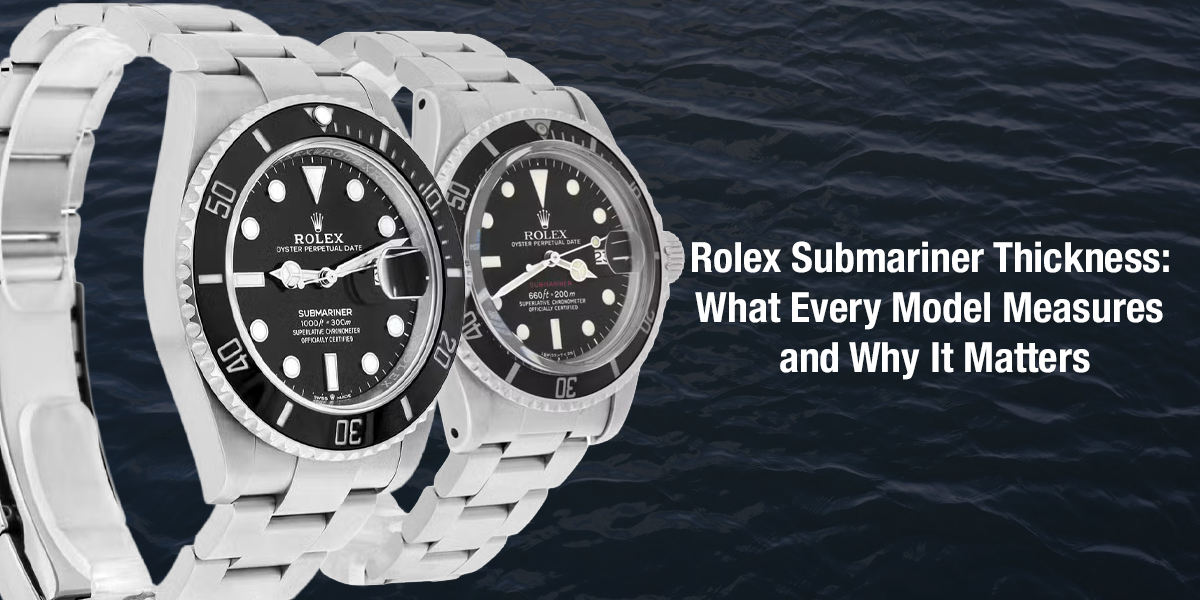
The Rolex submariner thickness has varied by a lot throughout its history. It ranges from 12.2mm to 15.2mm depending on the model and era. This
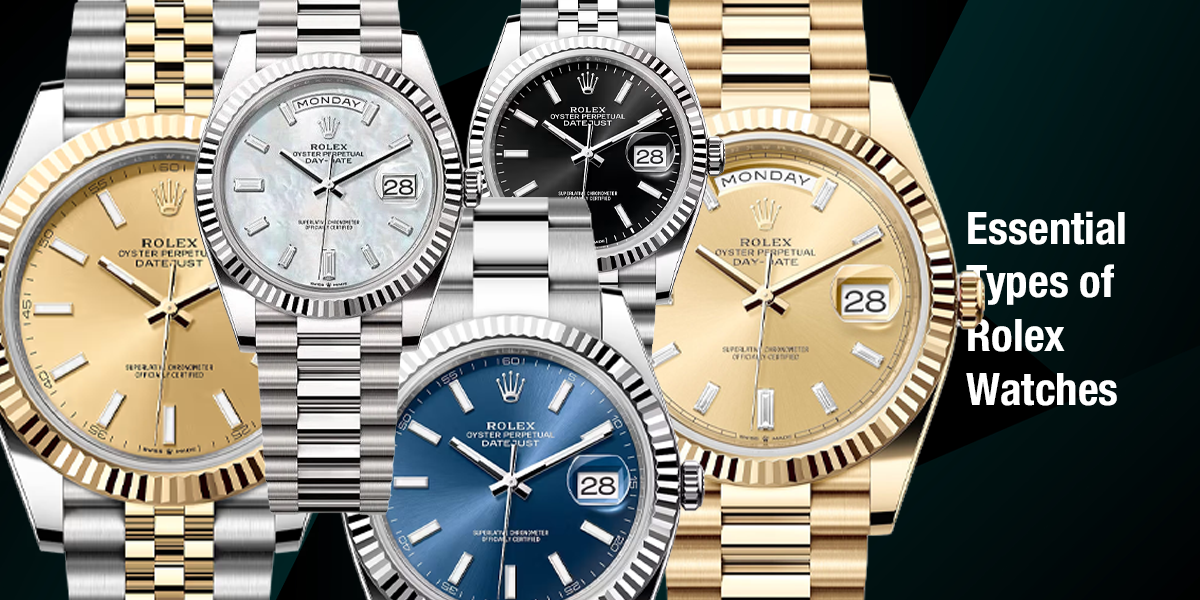
Since Rolex’s inception in 1905, the company has produced over 15 lines of timepieces, but choosing the right types of Rolex watches for your lifestyle