So which is better, IWC or Breitling? Ultimately it comes down to personal preference. However, if you know about each watch brand, the decision becomes obvious. Founded in 1869, IWC is a 155 year old brand. Their brand value is currently 779 Million CHF and they are the world’s 10th most recognizable luxury Swiss watch brand. Breitling is 140 years old, founded in 1884, with a brand value of 359 Million CHF. Breitling ranks at number 15 on the list of most recognizable Swiss watch brands. Both brands are Swiss made and both have compelling watches. There are many differences between these brands in terms of design, price point and overall style. We’ll compare overall brand offerings based on heritage and craftsmanship. We’ll also compare popular models head-to-head like Breitling Navitimer vs IWC Pilot Chronograph and IWC Aquatimer vs Breitling Superocean to help you decide which brand is best suited for your watch collection.
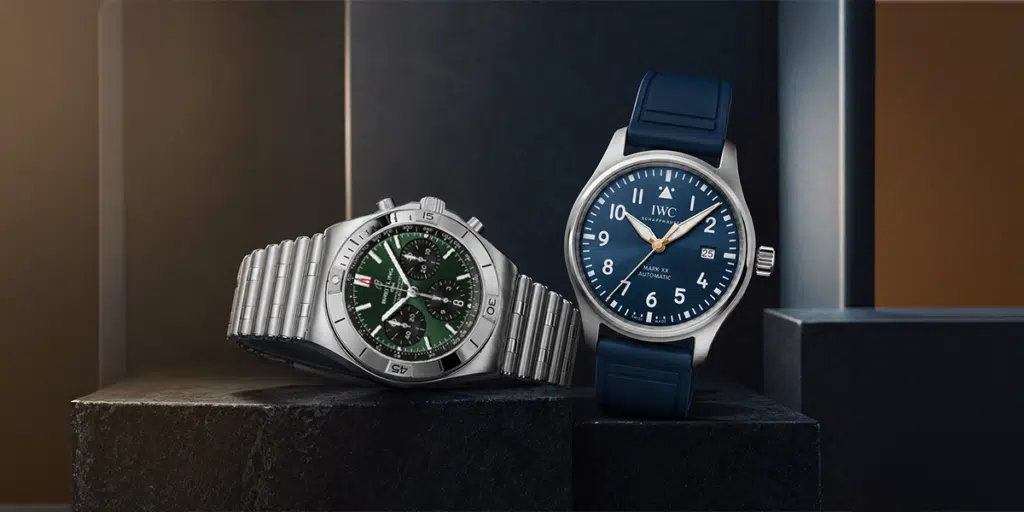
Table of Contents
Brand Heritage and Watchmaking History
IWC’s Swiss Legacy Since 1869
American watchmaker Florentine Ariosto Jones founded the International Watch Company in 1868 in Schaffhausen, Switzerland. Jones combined American manufacturing precision with Swiss craftsmanship and set up a modern factory powered by hydroelectric energy from the Rhine River. This made IWC the first and only Swiss watch firm founded by an American.
The factory at Baumgarten, built in 1875 adjacent to the Rhine, remains IWC’s headquarters. Jones brought industrialized production methods to Swiss watchmaking. This contrasted with the traditional établissage system used elsewhere. IWC operates under Richemont Group ownership and has developed notable collections including the Big Pilot’s Watch, Portugieser introduced in 1939, and the Mark series pilot watches launched in 1948.
Breitling’s Rise from 1884
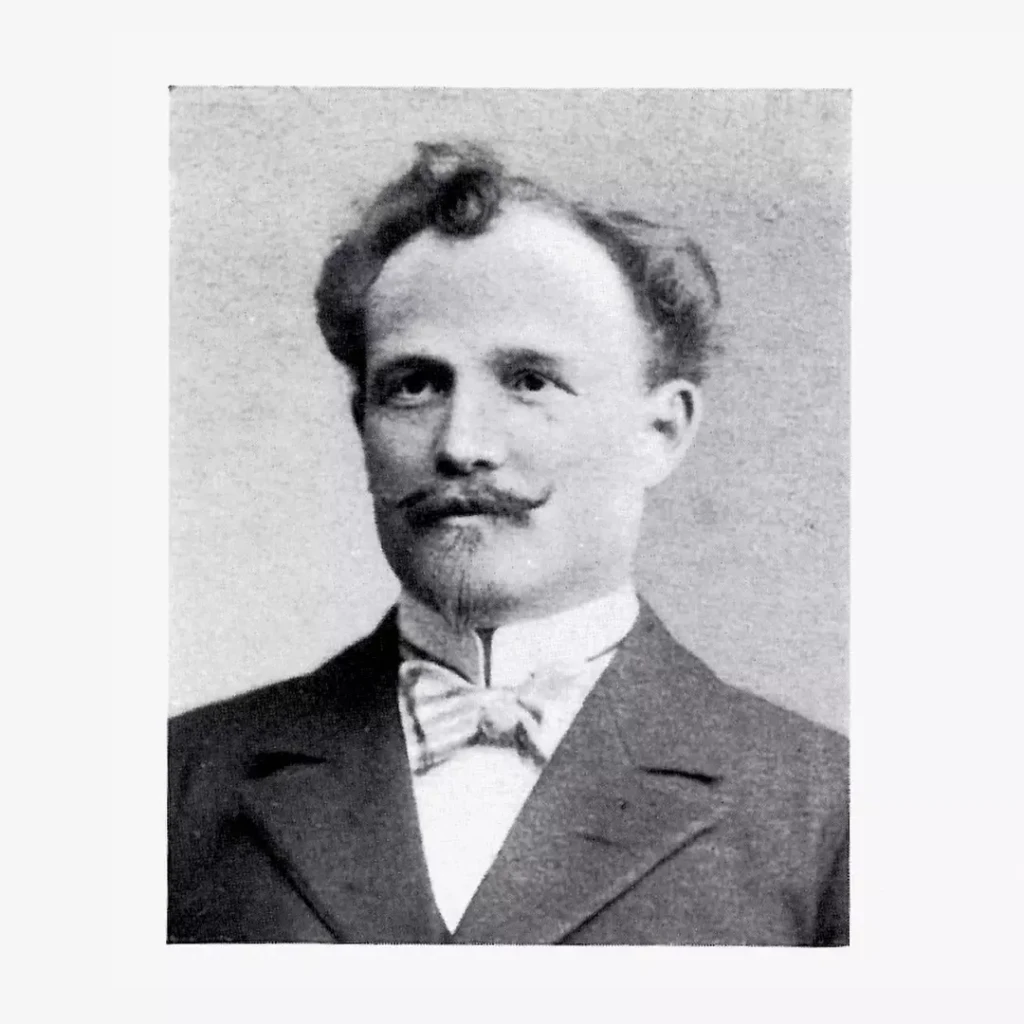
Léon Breitling opened his workshop in Saint-Imier in 1884. He specialized in chronographs and precision counters for scientific and industrial purposes. Switzerland experienced severe economic recession during the mid-1880s, but the 24-year-old stayed committed to creating instruments for measuring time. He relocated to La Chaux-de-Fonds in 1892 and transformed his small workshop into a full-scale factory.
Three generations shaped Breitling’s identity. Gaston Breitling took control in 1914 and created the first wristwatch chronograph in 1915. His son Willy assumed leadership in 1932 at age 19. He invented the modern two-pusher chronograph system in 1934. Willy founded the Huit Aviation division in 1938 and became the official supplier to the Royal Air Force.
Key Milestones and Industry Contributions
IWC introduced the Special Pilot’s Watch in 1936 and developed the robust Caliber 89 movement in 1946. The Pellaton winding system debuted in 1950, followed by the anti-magnetic Ingenieur in 1955. IWC pioneered Ceratanium in 2019, combining titanium’s lightness with ceramic’s hardness.
Breitling launched the Chronomat with circular slide rule in 1942 and the iconic Navitimer in 1952. The brand contributed to developing the first automatic chronograph movement in 1969 alongside Heuer and Büren. The Emergency watch with built-in distress transmitter arrived in 1995.
Modern Brand Positioning
Both manufacturers maintain distinct market positions. IWC focuses on refined engineering and aviation heritage through partnerships with the U.S. Navy’s Top Gun program. Breitling certifies all automatic movements as COSC chronometers and bridges tool watch functionality with luxury finishing. Partners Group acquired majority ownership of Breitling in 2022.
Quality and Craftsmanship Comparison
Movement Technology: In-House vs Third-Party Calibers
Movement production sets these manufacturers apart. IWC developed two core caliber families: the 69 series for chronographs (with 46 hours power reserve, 33 jewels, and 28,800 bph operation) and the 32 family for time-and-date watches (72 hours power reserve with 21 jewels). The IWC 32111 movement uses Val Fleurier as its base. Richemont owns both Val Fleurier and IWC, which makes most people call it an in-house caliber. This approach gives IWC control over production and helps manage development costs.
Breitling introduced the Manufacture Caliber B01 in 2009. This marked their first chronograph movement built entirely in-house. The B01 delivers 70 hours of power reserve and employs a column-wheel system with vertical clutch. Breitling also sources movements from ETA, Sellita and Dubois-Depraz for entry-level models and specialized complications, though all must meet COSC certification. Both brands balance manufacture movements with mutually beneficial alliances, though Breitling maintains stricter certification requirements for their entire lineup.
Case Back Design and Movement Display
IWC uses exhibition-style sapphire case backs to showcase their high-complication calibers. This feature appears less often in Breitling’s catalog. These transparent backs display finishing techniques that include Geneva stripes, perlage and engraved markings. These markings communicate movement specifications. IWC watchmakers assemble each timepiece by hand and bring together several hundred parts.
Breitling offers display case backs on manufacture caliber models like the Navitimer B01. These reveal decorated bridges and the oscillating weight. Many Breitling watches use solid case backs instead, especially quartz models where movement finishing opportunities differ from mechanical counterparts.

COSC Chronometer Certification Standards
Breitling submits 100% of their mechanical movements for COSC certification. This sets them apart from most manufacturers who certify only select calibers. The Contrôle Officiel Suisse des Chronomètres subjects each movement to 15 days of testing across five positions and three temperatures. The standard requires accuracy between -4 and +6 seconds per day. This certification takes ten months of production and 1,000 tests.
IWC doesn’t pursue COSC certification. They rely on internal testing and regulation standards instead. They adjust watches outside their 0-7 seconds per day specification at no charge. Top manufacturers like Patek Philippe skip COSC as well and consider their brand prestige and internal quality control sufficient validation.
Build Quality and Material Selection
Both manufacturers demonstrate exceptional material selection. IWC pioneered Ceratanium, which combines titanium’s lightness (33% lighter than steel) with ceramic’s scratch resistance through surface heat treatment. Their cases meet tolerances of 0.02 millimeters, with precision work that reaches 0.002 millimeters.
Breitling emphasizes durability through grade 5 titanium alloys and proprietary Breitlight composite materials. Their manufacture movements undergo a 16-year accelerated aging simulation. This includes 60,000 shocks at 500G, 100,000 crown winds and 3,456,000 oscillating weight turns.
Durability and Shock Resistance
IWC subjects prototypes to rigorous testing. This includes two-week saline baths at 37 degrees Celsius, UV exposure and temperature cycling from -20 to +70 degrees Celsius. The Ingenieur features a soft-iron Faraday cage that protects the movement from electromagnetic fields, much like the Rolex Milgauss. The IWC Big Pilot XPL stands out here. It was tested to withstand 30,000 Gs through a cantilevered spring suspension system.
Breitling builds watches for active use, with shock resistance that exceeds typical wear scenarios. Their testing protocols include impact resistance from various heights, acceleration testing up to 7G forces and magnetic field exposure.
Design Philosophy and Style Differences
IWC’s Refined and Sophisticated Esthetic
Design at IWC stems from engineering principles rather than decorative traditions. The brand has prioritized functional beauty where every detail serves a purpose for over 150 years. The Portugieser exemplifies this approach with its clean dial layout, slim bezels, and balanced proportions that create timeless appeal. The Portofino draws inspiration from the Italian Riviera and features refined lines and understated luxury.
IWC’s technical-instrument appearance emphasizes legibility through applied markers and generous lume. The Ingenieur collection showcases this engineering heritage with integrated H-link bracelets and round bezels featuring five functional screws. Case sizes range from 40mm to 46mm and offer strong wrist presence while maintaining contemporary proportions. The brand employs matte, satin, and polished finishes to create visual depth without unnecessary ornamentation.
Breitling’s Bold Sporty Character
Breitling built its reputation producing precision instruments for professionals where form followed function. The brand has made its mark through high-precision timepieces and aviation associations over 140 years. The Chronomat was designed for Italy’s Frecce Tricolori aerobatics team and features signature rider tabs at 15-minute intervals to protect the crystal. A steel Rouleaux bracelet adds durability.
Rugged stainless steel cases withstand scrapes, while textured bezels and crowns enable easy gripping. Large luminescent hands and hour markers ensure clarity in challenging conditions. The Navitimer‘s circular slide rule bezel remains recognizable and blends tradition with modern breakthroughs. Water resistance reaches up to 1,000 meters in diving models of all types, reflecting the brand’s commitment to active lifestyles.
Dial Complexity and Readability
IWC achieves legibility through contrast, color, and negative space rather than sheer size. The brand maintains excellent readability in size options of all types through strategic design choices. Breitling emphasizes bold dial configurations with oversized Arabic numerals and dynamic colors including yellow and red.
Size Options and Wrist Presence
IWC offers substantial range, from the 40mm Mark XX to the 46mm Big Pilot. Breitling’s catalog spans from 38mm vintage-inspired models to 48mm statement pieces. Both brands now provide smaller alternatives, including the IWC Big Pilot 43 and Breitling Navitimer 41.
Price Points and Value Retention
Entry-Level Watch Pricing: $3,000-$5,000 Range
Pricing structures reveal accessibility differences between these brands. Breitling’s entry point starts at around $3,550 for the Endurance Pro with SuperQuartz movement. The Superocean Automatic 36/42 retails between $5,600 and $5,700. IWC positions entry-level models between $3,500 and $5,500, featuring the Portofino Auto and Aquatimer divers. The pre-owned market sees the IWC Portofino 3565 trade between $4,300 and $4,800.
Mid-Range Models: $6,000-$10,000
Both manufacturers concentrate their popular collections within this bracket. Breitling’s Navitimer Automatic 41 and Chronomat Automatic GMT 40 retail between $5,700 and $10,300. IWC’s core offerings like the Portugieser Chronograph and Ingenieur revivals trade within $5,500 to $11,500. The IWC Pilot’s Watch Mark XX commands $6,150. The Portugieser Chronograph ranges from $6,900 to $7,400.
High-Complication Pieces Above $10,000
Breitling’s Navitimer B01 Chronograph with in-house movement starts at around $10,300. Precious metal versions reach $29,650, and tourbillon pieces with perpetual calendar exceed $255,000. IWC’s Big Pilot Perpetual Calendar changes hands between $22,000 and $32,000 on the secondary market. The vintage 1976 Ingenieur Jumbo SL demands $25,000 to $35,000. IWC’s high-complication Pilot’s Watches reach $85,900.
Resale Value and Depreciation Rates
Value retention is different between the two brands. Breitling entry-level models retain 50-60% of retail value, while iconic Navitimers hold 60-70%. IWC watches depreciate only 5-10%, substantially below the market average. Luxury watches depreciate for 20 years before appreciating, and IWC’s Da Vinci and Pilot models hold value well.
Pre-Owned Market Opportunities
Pre-owned Breitling models sell 20-30% below retail. The Chronomat B01 42 trades between $7,000 and $9,000 versus $9,300 to $13,550 new. IWC’s limited production of 70,000 to 120,000 watches each year supports strong secondary market values.
Head-to-Head Model Comparisons
Breitling Navitimer vs IWC Pilot Chronograph
Aviation chronographs reveal each brand’s character. The Breitling Navitimer B01 Chronograph 41 retails at $9,450 with its signature slide rule bezel and Caliber B01 delivering 70 hours of power reserve. The IWC Pilot’s Watch Chronograph 41 costs $7,600 and has a fixed bezel with Caliber 69385 providing 46 hours of reserve. The Navitimer measures 13.6mm thick with 30 meters water resistance. The IWC reaches 14.5mm but provides 100 meters water resistance. Both employ 41mm cases with exhibition case backs, though the IWC has day-date functions versus the Navitimer’s date-only display.
IWC Aquatimer vs Breitling Superocean
Dive watch engineering diverges here. The IWC Aquatimer commands $6,100 with its innovative SafeDive external/internal bezel system and Caliber 32111 that provides 120 hours of power reserve. The Breitling Superocean 42 retails at $5,200 and uses a traditional unidirectional bezel with Caliber B17 providing 38 hours of reserve. Both achieve 300 meters water resistance in 42mm cases. The Aquatimer’s mechanical bezel system prevents accidental rotation underwater. The Superocean accepts bold styling with oversized markers, while the Aquatimer maintains refined proportions.
IWC Portugieser vs Breitling Premier
The Portugieser represents IWC’s dress watch heritage. Breitling’s Premier collection launched in 1943 and emphasizes subtlety over rugged functionality. Premier models range from $4,450 to $8,400 with various complications from time-only to chronographs.
Ingenieur vs Chronomat GMT
The IWC Ingenieur Automatic 40 lists at $11,700 with Caliber 32111 and 120 hours reserve. The Breitling Chronomat Automatic GMT 40 retails at $6,150 with Caliber B32 and GMT function. The Ingenieur provides 100 meters water resistance versus the Chronomat’s 200 meters.
Big Pilot vs Avenger Series
IWC’s Big Pilot maintains classic aviation DNA. Breitling’s Avenger emphasizes military robustness with oversized cases designed for glove operation.
Comparison Table: IWC vs Breitling
|
Attribute |
IWC |
Breitling |
|
Founded |
1869 (by Florentine Ariosto Jones) |
1884 (by Léon Breitling) |
|
Brand Value |
779 Million CHF |
359 Million CHF |
|
Swiss Brand Ranking |
10th |
15th |
|
Current Ownership |
Richemont Group |
Partners Group (majority, acquired 2022) |
|
Annual Production |
70,000 to 120,000 watches |
Not mentioned |
|
COSC Certification |
Not pursued; internal testing standards (0-7 seconds/day) |
100% of mechanical movements COSC certified |
|
In-House Movements |
Caliber 69 series (chronographs), Caliber 32 family (time-and-date) |
Manufacture Caliber B01 (introduced 2009); also uses ETA, Sellita, Dubois-Depraz |
|
Proprietary Materials |
Ceratanium (titanium + ceramic, 33% lighter than steel) |
Grade 5 titanium alloys, Breitlight composite |
|
Design Philosophy |
Refined, sophisticated, engineering-focused, functional beauty |
Bold, sporty, professional instruments, form follows function |
|
Case Size Range |
40mm to 46mm (typically) |
38mm to 48mm |
|
Exhibition Case Backs |
Used frequently, especially on high-complication models |
Offered on manufacture caliber models (e.g., Navitimer B01) |
|
Entry-Level Pricing |
$3,500 – $5,500 |
$3,550 – $5,700 |
|
Mid-Range Pricing |
$5,500 – $11,500 |
$5,700 – $10,300 |
|
High-Complication Pricing |
Up to $85,900+ |
Up to $255,000+ |
|
Resale Value Retention |
90-95% (5-10% depreciation) |
50-70% depending on model |
|
Pre-Owned Market Discount |
Not mentioned |
20-30% below retail |
Specific Model Comparisons
Aviation Chronographs: Navitimer vs Pilot Chronograph
|
Specification | Breitling Navitimer B01 Chronograph 41  |
IWC Pilot’s Watch Chronograph 41 
|
|
Price |
$9,450 |
$7,600 |
|
Movement |
Caliber B01 |
Caliber 69385 |
|
Power Reserve |
70 hours |
46 hours |
|
Case Size |
41mm |
41mm |
|
Thickness |
13.6mm |
14.5mm |
|
Water Resistance |
30 meters |
100 meters |
|
Bezel |
Signature slide rule bezel |
Fixed bezel |
|
Case Back |
Exhibition |
Exhibition |
|
Complications |
Date only |
Day-date functions |
Dive Watches: Aquatimer vs Superocean
|
Specification |
IWC Aquatimer 
|
Breitling Superocean 42 
|
|
Price |
$6,100 |
$5,200 |
|
Movement |
Caliber 32111 |
Caliber B17 |
|
Power Reserve |
120 hours |
38 hours |
|
Case Size |
42mm |
42mm |
|
Water Resistance |
300 meters |
300 meters |
|
Bezel System |
SafeDive external/internal bezel (prevents accidental rotation) |
Traditional unidirectional bezel |
|
Styling |
Refined proportions |
Bold styling with oversized markers |
Sports Watches: Ingenieur vs Chronomat GMT
|
Specification |
IWC Ingenieur Automatic 40 
|
Breitling Chronomat Automatic GMT 40 
|
|
Price |
$11,700 |
$6,150 |
|
Movement |
Caliber 32111 |
Caliber B32 |
|
Power Reserve |
120 hours |
Not mentioned |
|
Case Size |
40mm |
40mm |
|
Water Resistance |
100 meters |
200 meters |
|
Special Features |
Soft-iron Faraday cage (anti-magnetic) |
GMT function |
Pre-Owned Market Examples
|
Model |
Pre-Owned Price Range |
Retail Price Range |
|
IWC Portofino 3565 |
$4,300 – $4,800 |
Not mentioned |
|
IWC Pilot’s Watch Mark XX |
Not mentioned |
$6,150 |
|
IWC Portugieser Chronograph |
Not mentioned |
$6,900 – $7,400 |
|
IWC Big Pilot Perpetual Calendar |
$22,000 – $32,000 |
Not mentioned |
|
IWC Ingenieur Jumbo SL (1976) |
$25,000 – $35,000 |
Vintage |
|
Breitling Chronomat B01 42 |
$7,000 – $9,000 |
$9,300 – $13,550 |
|
Breitling Endurance Pro |
Not mentioned |
$3,550 |
|
Breitling Superocean Automatic 36/42 |
Not mentioned |
$5,600 – $5,700 |
Conclusion
The IWC vs Breitling decision depends on what you value most in a timepiece. Breitling offers bold sporty designs with 100% COSC certification at more available price points, especially in the $5,000-$10,000 range. Their watches depreciate more but remain excellent value propositions.
IWC delivers refined engineering with superior value retention (90-95%) and innovative materials like Ceratanium. You’ll pay a premium upfront. The investment holds much better in the long run though.
Choose Breitling if you want certified chronometer performance and aggressive styling. IWC is your brand if you prioritize sophisticated design and resale value. Either way, you’re getting exceptional Swiss watchmaking heritage.
Enjoying our watch coverage? Get more of it in Google Search.